
Desserts
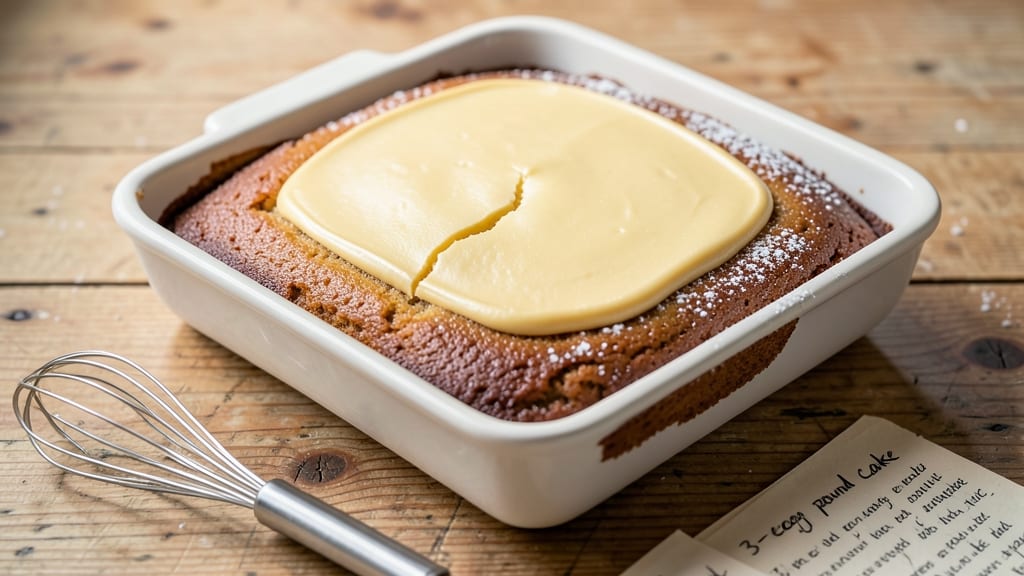
This 3-egg pound cake recipe delivers the classic dense, buttery texture you crave with a vanilla kiss that makes every slice irresistible. The secret lies in creaming butter and sugar properly—this step transforms ordinary cake into something extraordinary, with layers that stay moist for days.
I developed this version after testing countless variations, and it consistently yields a cake that's rich, tender, and perfectly balanced.
What sets this pound cake apart is its simplicity—just six core ingredients work together to create that signature texture. The 3 eggs provide structure without making the cake dry, while the butter-to-flour ratio ensures richness without heaviness.
Baking at 325°F allows even heat distribution, preventing cracks while developing deep golden color. The vanilla extract infuses subtle sweetness that enhances rather than overpowers.
By the time it emerges from the oven, you'll have a cake with moist layers that slice cleanly and crumb-free. The aroma alone—warm vanilla, buttery richness—will have everyone anticipating that first bite.
This isn't just dessert; it's a centerpiece that elevates any gathering, whether served plain or with fresh berries and whipped cream.
Perfect for birthdays, holidays, or spontaneous treats, this cake keeps beautifully for up to 5 days at room temperature or frozen for months. The recipe scales easily too—double or triple for crowds without sacrificing texture. Here's how to make it perfectly every time.
Ingredients for 3 egg pound cake
Six essential ingredients crafting a pound cake with legendary moisture and vanilla depth.
| Ingredient | Amount | Notes |
|---|---|---|
| Unsalted Butter 🧈 | 1 cup | Cold, cubed for proper creaming |
| Granulated Sugar 🍚 | 1 ½ cups | Superfine preferred for smooth texture |
| Large Eggs 🥚 | 3 whole | Room temperature for even mixing |
| All-Purpose Flour 🌾 | 2 cups | Sifted, spooned and leveled |
| Pure Vanilla Extract 🌿 | 1 ½ tbsp | Bottled vanilla preferred |
| Baking Powder 🍞 | 1 ½ tsp | Aluminum-free for best results |
| Salt 🧂 | ½ tsp | Fine sea salt preferred |
| Whole Milk 🥛 | ½ cup | Room temperature for best incorporation |
The butter-to-flour ratio is non-negotiable here—1 cup butter to 2 cups flour creates that signature dense yet tender crumb. Land O'Lakes unsalted butter is my go-to for consistent results, though any high-quality brand works. For sugar, superfine granulated sugar dissolves more smoothly, but regular granulated works if you pulse it in a food processor first. The eggs must be room temperature—cold eggs create air pockets that can cause cracks during baking. Whole milk adds moisture without altering the cake's structure, but if you're avoiding dairy, substitute with an equal amount of almond milk.
Vanilla extract is where subtle flavors shine—bottled vanilla has more depth than imitation. Need a substitution? 1 teaspoon vanilla sugar works in a pinch, though it adds sweetness. For the baking powder, Rumford Aluminum-Free is my preferred brand as it doesn't affect the cake's color. If you're using a different brand, check the box—some require more than others. The salt might seem negligible, but fine sea salt dissolves better than coarse. For flour, King Arthur or Gold Medal brands yield the most consistent results, but any all-purpose flour will work if sifted properly.
This cake keeps beautifully—5 days at room temperature wrapped in plastic, or 3 months in the freezer if properly wrapped. For best results, store in an airtight container with a slice of bread to maintain moisture. The cake reheats wonderfully—10 seconds in the microwave restores its warm, buttery aroma. Portion before freezing for easy serving. For a restaurant-quality finish, dust with powdered sugar or serve with fresh berries.
Why You'll Love This Recipe
- Three-Egg Magic: I swear by this—just three eggs, butter, and sugar create a cake that’s lighter than my mood on a Monday. No fancy mixers or whisking until your arm falls off; a wooden spoon and a bowl do the heavy lifting.
- Vanilla Kiss: That single teaspoon of pure vanilla extract? It’s the secret weapon. Rich, warm, and just sweet enough to make you want to cut yourself a second slice before the cake even cools.
- Weeknight Wonder: Between us, this is my go-to for dinner parties or lazy Sundays. Bake it once, slice it for breakfast toast, pack it for lunches, or serve it with tea—it’s the ultimate crowd-pleaser that doesn’t scream “I spent all day in the kitchen.”
- Budget Baked Bliss: Three eggs and a stick of butter? That’s it. No wasted ingredients, no last-minute grocery runs for specialty items. Honestly, it’s the kind of recipe that makes me feel like I’m feeding a houseful of people without breaking the bank.
Step-by-step instructions for perfectly moist pound cake
This method delivers tender layers with a delicate crumb—no dryness, no cracks, just pure vanilla richness.
Cream Butter and Sugar to Ribbon Stage
In a stand mixer fitted with the paddle attachment, beat the 1 cup unsalted butter and 1.5 cups granulated sugar on medium speed for 3-4 minutes. You're aiming for a light, fluffy texture that nearly doubles in volume and leaves faint ribbons when the beaters are lifted. This creaming process incorporates air, which creates the cake's signature tender crumb.
I press down on the butter mixture with a spatula halfway through to ensure all the sugar dissolves completely. If you see any undissolved sugar at this stage, continue beating for another 30 seconds. The butter should be pale and smooth—this is your foundation for a moist cake.
Add Eggs One at a Time for Even Incorporation
Add the 3 whole large eggs, one at a time, mixing on low speed for 30 seconds after each addition until fully incorporated. The mixture will look slightly curdled at first, but don't worry—this is normal. After the third egg, increase the speed to medium and beat for another 1-2 minutes until the mixture is thick and pale.
This gradual addition prevents the eggs from cooking in the butter mixture, which could lead to a dense cake. The eggs should be at room temperature—this ensures even distribution throughout the batter. If you're short on time, you can briefly warm the eggs in warm water for 5 minutes before using.
Alternate Dry Ingredients with Milk for Optimal Moisture
In a separate bowl, whisk together the 2 cups all-purpose flour, 1.5 teaspoons baking powder, and 0.5 teaspoon salt. With the mixer on low speed, add one-third of the flour mixture and mix just until combined. Then add half of the 0.5 cup whole milk and mix again until smooth.
Repeat this alternating process—add another third of the flour mixture, followed by the remaining milk, and finish with the last third of the flour. This technique prevents gluten development and ensures even distribution of leavening agents. The batter should be smooth but slightly thick, like heavy pudding.
Fold in Vanilla and Prepare for Baking
Remove the bowl from the mixer and gently fold in the 1.5 tablespoons pure vanilla extract using a silicone spatula. Be careful not to overmix—just combine until the vanilla is evenly distributed. The batter should be smooth with no visible streaks of flour.
Pour the batter into a 9-inch round cake pan (or two 8-inch round pans) that has been lightly greased with butter and lined with parchment paper. The batter should fill the pan about two-thirds full. Tap the pan gently on the counter a few times to release any air bubbles that may have formed during mixing.
Bake at Low Temperature for Even Cooking
Preheat your oven to 325°F—this lower temperature ensures even cooking without a domed top. Place the cake pan in the center rack of the oven and bake for 50-60 minutes, or until a toothpick inserted into the center comes out clean.
Here's the thing—pound cake benefits from slow baking. The lower temperature allows the moisture to distribute evenly, preventing a dry crust while keeping the interior tender. If the top browns too quickly, tent the cake with aluminum foil. Let the cake cool in the pan for 15 minutes, then transfer to a wire rack to cool completely before slicing.
Pro Tips For Making 3 Egg Pound Cake
- Melt Butter Slowly: Don’t dump cold butter straight into the sugar—it’ll seize up your mixer and leave you with a greasy, uneven batter. Warm the butter to room temp (press your finger in; if it leaves a slight indent, it’s ready) before creaming. I learned this the hard way after wrestling with a mixer that sounded like it was fighting a losing battle.
- Weigh Your Flour: Scooping flour from the bag packs in air, and that’s the enemy of a tender pound cake. Use a kitchen scale for the flour—150g for this recipe—and spoon it in gently, then level it off. I was skeptical until I tried it; the texture is noticeably smoother, and the crumb stays light instead of dense.
- Don’t Overmix the Eggs: Once you add the eggs to the butter-sugar mix, stop mixing the second everything’s just combined. Overmixing incorporates too much air, which can cause the cake to collapse or develop tunnels. Give it 20-30 seconds max—just enough to see no streaks of egg yolk left.
- Bake Until Internal Temp: A toothpick isn’t foolproof—some pound cakes stay moist enough to look "done" while still underbaked. Pull it out when the center hits 205°F (96°C) on an instant-read thermometer. I skip the toothpick test now; this method guarantees a cake that’s fully set but still rich and moist, not dry.
Creative variations of these flavors
Classic Vanilla Twist
This base recipe already delivers that signature vanilla kiss, but you can amplify it with 1 teaspoon vanilla bean paste for depth. Scrape the seeds from a high-quality vanilla bean and add them directly to the batter along with the extract.
For a boozy twist, replace 2 tablespoons of milk with 2 tablespoons bourbon or rum—I love Maker's Mark bourbon for its caramel notes. 🌿
Citrus Zest Infusion
Brighten up the flavor profile by adding 1 tablespoon lemon or orange zest mixed into the dry ingredients. The citrus cuts through the richness beautifully while adding a subtle tang.
Pair it with 1 teaspoon lemon extract for an extra pop. For a tropical variation, try lime zest combined with ½ teaspoon lime extract.
Spiced Chai Version
Transform this into a cozy chai-spiced cake by adding 1 teaspoon ground cinnamon, ½ teaspoon ground cardamom, ½ teaspoon ground ginger, and ¼ teaspoon ground cloves to the dry ingredients.
Warm the milk with a 1-inch cinnamon stick for 5 minutes, then strain before using. Top with a dusting of powdered sugar and a sprinkle of cinnamon for a festive touch. 🌶️
Chocolate-Dipped Layers
For a decadent twist, divide the batter between two pans and bake as directed. Once cooled, slice the first cake horizontally and spread with ½ cup melted dark chocolate (I use Ghirardelli 60% cocoa).
Layer the second cake on top, then dust with powdered sugar. This creates a stunning marbled effect with rich chocolate pockets throughout. 🍫
Nutty Crunch Add-Ins
Fold in ½ cup toasted walnuts or pecans during the final mixing stage for texture. For extra richness, toast the nuts with 1 tablespoon brown sugar and a pinch of salt before adding.
Alternatively, try chopped candied pecans for a sweet crunch. These variations work especially well with the vanilla base, complementing its buttery flavor. 🌰
Seasonal Fruit Variations
Swap the vanilla extract for 1 tablespoon almond extract and fold in 1 cup fresh berries (strawberries, raspberries, or blueberries) during the final mixing stage. For summer, try peaches or mango, and for winter, cranberries or pears work beautifully.
The fruit adds natural sweetness and moisture, making the cake feel extra special. 🍓
Nutrition facts
Frequently asked questions
Why does this recipe use only 3 eggs instead of the traditional 5?
This version delivers the same rich texture with fewer eggs while keeping the cake tender and moist. The key is proper creaming and the butter-to-flour ratio—this creates the classic pound cake density without needing extra eggs. It's also more budget-friendly and reduces waste.
Can I make this cake without a stand mixer?
Use a hand mixer or even a sturdy whisk. For creaming butter and sugar, beat them vigorously for 5-7 minutes until light and fluffy. When adding eggs, mix on low speed for 30 seconds between each egg. The alternating method for dry ingredients works the same way—just stir gently by hand.
Why does my cake crack on top?
Cracking usually happens from rapid heat or uneven baking. Try these fixes: Lower the oven temp to 325°F and bake for 50-60 minutes (not hotter). Place a baking sheet under the pan to reflect heat upward. Also, make sure your eggs and butter are room temperature—cold ingredients cause uneven rising.
How do I store leftovers to keep them moist?
Wrap tightly in plastic wrap and store at room temperature for 5 days, or freeze for 3 months. For extra moisture, place a slice of bread in the container with the cake. When serving, reheat slices in the microwave for 10-15 seconds to restore that warm, buttery aroma.
Can I substitute butter with oil?
Not recommended for this recipe—pound cake relies on butter for its signature richness and texture. However, if you must, use ¾ cup melted coconut oil (cooled slightly) and reduce the milk by 2 tablespoons. The cake will be slightly denser but still delicious. For best results, stick with butter.