
Desserts
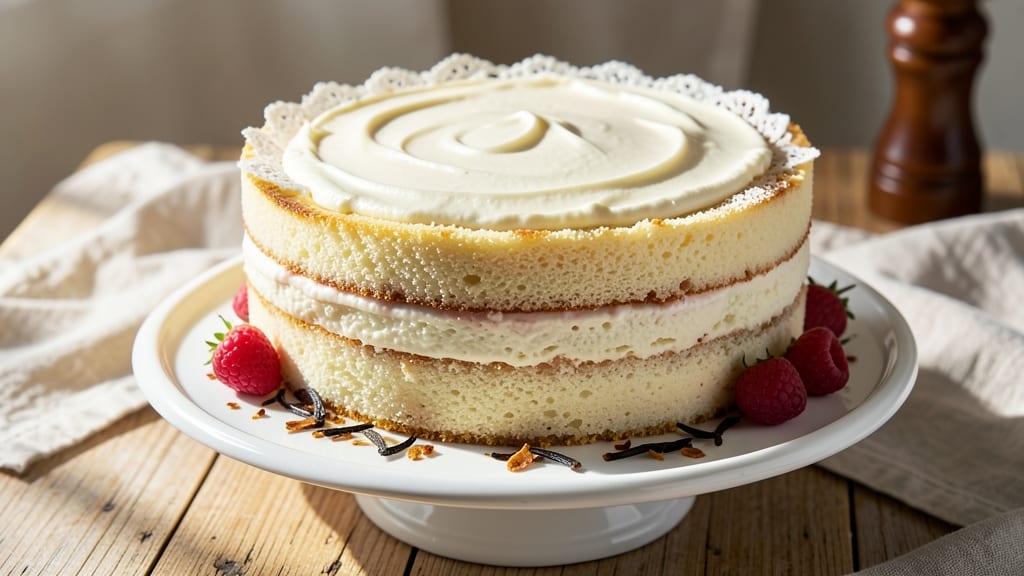
This 3-egg vanilla cake recipe delivers moist layers without oil, proving that rich texture comes from technique, not shortcuts. The secret lies in properly creaming butter and sugar, then folding in three eggs with precision—each element playing a crucial role in creating that signature tender crumb.
What makes this recipe stand out is the balance: vanilla extract enhances flavor while keeping the cake light, and buttermilk adds subtle tang without heaviness.
Most vanilla cakes rely on oil for moisture, but this version achieves the same result with three whole eggs, whipped to incorporate air that creates lift and prevents dryness. The baking process is straightforward—350°F for 25-30 minutes—but the preparation requires patience.
We'll discuss the exact timing for folding and mixing to ensure those signature moist layers that disappear too quickly from store-bought versions.
What you'll end up with is a golden-domed cake with a tender crumb that stays moist for days, thanks to the egg-based moisture system. The vanilla flavor is bright and aromatic, not overpowering, and the texture is so light it practically melts in your mouth.
This isn't just another vanilla cake—it's the kind that makes people ask for seconds without needing frosting.
The best part? This recipe scales perfectly for any occasion, from birthday celebrations to everyday treats. We'll also cover simple decorating ideas that elevate the presentation without complicating the process. Let's get started on creating a cake that's as impressive as it is delicious.
Ingredients for 3 egg vanilla cake
Eight essential ingredients create a cake so moist it defies convention—no oil, just perfect technique.
| Ingredient | Amount | Notes |
|---|---|---|
| Unsalted Butter 🧈 | 1 cup | Cold, cubed for creaming |
| Granulated Sugar 🍚 | 1 ½ cups | Superfine preferred for smoothness |
| Large Eggs 🥚 | 3 whole | Room temperature, separated |
| Pure Vanilla Extract 🌿 | 2 tsp | Bourbon or Madagascar preferred |
| All-Purpose Flour 🌾 | 2 cups | Sifted, spooned lightly |
| Baking Powder 🧂 | 2 tsp | Aluminum-free for best results |
| Salt 🧂 | ½ tsp | Fine sea salt preferred |
| Buttermilk 🥛 | 1 cup | Fresh, not powdered |
| Vegetable Oil 🫒 | 2 tbsp | For greasing pans |
The butter and sugar are non-negotiable for that signature tender crumb. Use European-style butter (like Plugrá) for higher fat content—it whips to a lighter consistency. If your sugar is granulated, pulse it in a food processor for 30 seconds to mimic superfine texture. Eggs must be room temperature—cold yolks won't emulsify properly, leading to dense layers. For vanilla, Madagascar bourbon extract adds depth, but imitation works in a pinch. The buttermilk adds subtle tang without heaviness—substitute 1 cup plain yogurt thinned with 1 tbsp milk if unavailable.
Flour matters here—King Arthur or Gold Medal brands yield consistent results due to protein content. Baking powder should be fresh (test by mixing 1 tsp with 3 tbsp hot water—it should foam immediately). For oil-free moisture, the eggs do double duty: yolks add richness while whites incorporate air for lift. Separate eggs carefully—even a trace of yolk in the whites weakens structure. The vegetable oil is only for greasing; it doesn't contribute to moisture in the batter. If you're concerned about egg safety, use pasteurized eggs or a commercial egg substitute blend designed for baking.
Store the cake in an airtight container at room temperature for up to 3 days—it actually improves overnight as flavors meld. For longer storage, wrap tightly in plastic and refrigerate for up to 5 days, though texture may dry slightly. Freeze for 3 months by wrapping individual slices in parchment. Reheat slices at 300°F for 5-7 minutes to restore moisture. This cake's magic lies in its simplicity—no frosting needed, though a light dusting of powdered sugar adds elegance for special occasions.
Why You'll Love This Recipe
- Here’s what sold me: creamy, buttery layers that don’t require folding in a mountain of whipped egg whites. The sugar caramelizes just enough to give it that golden crust, while the vanilla extract (not imitation!) infuses every bite. It’s the kind of cake that tastes indulgent, even when you’re cutting corners.
- Three-Ingredient Magic: I swear by this—just butter, sugar, eggs, and flour. That’s it. No measuring cups to lose, no extra bowls to wash. The eggs bind everything perfectly, and the vanilla? It’s the secret weapon that makes this taste like a bakery’s dream, not my kitchen.
- Rich Without Effort: Here’s what sold me: creamy, buttery layers that don’t require folding in a mountain of whipped egg whites. The sugar caramelizes just enough to give it that golden crust, while the vanilla extract (not imitation!) infuses every bite. It’s the kind of cake that tastes indulgent, even when you’re cutting corners.
- Weeknight or Celebration: Between us, this is my go-to for birthdays, last-minute potlucks, or when I just need dessert now. The small batch (thanks to just three eggs) means I can bake one pan and call it a day—or double it for a crowd. Honestly, the only thing stopping me is whether to serve it plain or with a dusting of powdered sugar.
Step-by-step instructions for 3 egg vanilla cake
Master this classic technique for a tender, oil-free vanilla cake with perfect moisture.
Cream Butter and Sugar to Light and Fluffy
In a stand mixer fitted with the paddle attachment, beat the 1 cup unsalted butter (cold, cubed) and 1.5 cups granulated sugar on medium speed for 3-4 minutes. You're looking for a pale, thickened mixture that nearly doubles in volume—the butter should leave ribbons when the beaters are lifted. This creaming process incorporates air, which creates that signature tender crumb.
Here's the thing about cold butter—it creates tiny air pockets that expand during baking, giving you a light texture. If your butter starts to melt too quickly, reduce the speed to medium-low and let it gradually incorporate. The mixture should be smooth with no visible sugar crystals remaining.
Add Eggs and Vanilla for Maximum Moisture
Add the 3 whole large eggs (room temperature) one at a time, mixing on low speed for 30 seconds after each addition until fully incorporated. Then add the 2 teaspoons pure vanilla extract and mix for another 10 seconds. The eggs should blend completely without any streaks.
Room temperature eggs emulsify better with the butter mixture, preventing curdling and ensuring a smoother batter. If your eggs are straight from the fridge, let them sit in warm water for 10 minutes first. The vanilla extract should be fully dissolved—this is where the cake gets its signature aroma. Don't skip this step; it makes all the difference in flavor development.
Alternate Dry and Wet Ingredients Gently
In a separate bowl, sift together the 2 cups all-purpose flour, 2 teaspoons baking powder, and 0.5 teaspoon salt. With the mixer on low speed, add one-third of the flour mixture and mix just until combined. Then add half of the 1 cup buttermilk and mix until incorporated. Repeat this process, ending with the last third of flour mixture.
This alternating method prevents gluten development while ensuring even distribution of leavening agents. The buttermilk adds moisture without making the cake dense—it's the secret to that perfect crumb. Stop mixing as soon as all ingredients are combined; overmixing develops gluten and makes the cake tough. The batter should be thick but pourable.
Prepare Pans and Bake to Perfect Doneness
Preheat your oven to 350°F. Grease two 8-inch round cake pans with 2 tablespoons vegetable oil and line the bottoms with parchment paper. Divide the batter evenly between the pans and smooth the tops with a spatula. Bake for 25-30 minutes or until a toothpick inserted in the center comes out clean.
Don't open the oven during baking—this causes the cakes to sink. The edges should be golden brown while the centers remain slightly springy. When you pull them out, let them cool in the pans for 10 minutes before transferring to a wire rack. This resting period prevents them from collapsing as they cool completely.
Pro Tips For Making 3 Egg Vanilla Cake
- Cream Butter and Sugar Slowly: Use a stand mixer or hand mixer on medium speed for about 3-4 minutes until the butter and sugar are light and fluffy—not just pale, but with visible volume. I learned this the hard way: rushing this step means less air in the batter, and your cake will turn out dense. (Yes, even if you're impatient like me.)
- Room-Temp Eggs Matter: Pull eggs out of the fridge 30 minutes before using so they’re just warm to the touch. Cold eggs won’t incorporate as smoothly into the butter mixture, and you’ll end up with streaks of raw egg in your batter. Trust me, your cake’s texture will thank you.
- Don’t Overmix the Flour: Once you fold in the dry ingredients, stop mixing the second everything is just combined—no flour streaks, no dry pockets. Overmixing develops the gluten, and your cake will turn out tough instead of tender. Think "minimal effort, maximum result."
- Check Doneness with a Toothpick: Insert a toothpick into the center when the cake looks done—it should come out with a few moist crumbs, not wet batter. If you pull it out too soon, your cake will sink. If you wait too long, it’ll dry out. Aim for that happy medium, and you’ll nail it every time.
Best sauces and condiments for this recipe
Classic Vanilla Glaze
This simple 3-ingredient glaze elevates your cake without overpowering its delicate vanilla flavor. Mix ½ cup powdered sugar with 2 tablespoons heavy cream and 1 teaspoon vanilla extract until smooth.
Drizzle over the cooled cake layers or spread evenly for a clean finish. For extra shine, brush with 1 teaspoon apricot jam before glazing. 💛
Whipped Cream Frosting
Light and airy, this frosting pairs perfectly with the cake's tender crumb. Whip 1 cup heavy cream with 2 tablespoons powdered sugar and 1 teaspoon vanilla extract until soft peaks form.
Add a pinch of salt to enhance flavor. Pipe between layers or spread over the top for a rustic look. For a twist, fold in 1 tablespoon lemon zest for brightness.
Chocolate Ganache
Rich and velvety, this ganache adds depth to the vanilla cake. Heat ½ cup heavy cream until steaming, then pour over 8 ounces chopped dark chocolate (60% cocoa). Let sit for 2 minutes, then stir until smooth.
Spread over the cake while warm or pour over the top for a dramatic drizzle. For extra flair, top with crushed hazelnuts or sea salt flakes.
Lemon Curd Filling
Bright citrus cuts through the sweetness beautifully. Make a simple curd by simmering ½ cup lemon juice, ½ cup sugar, 2 egg yolks, and 2 tablespoons butter until thickened.
Spread between layers or dollop on top with fresh berries. This filling also works as a standalone topping for individual slices. ✨
Caramel Sauce
Warm, buttery caramel adds a luxurious touch. Cook ½ cup granulated sugar in a saucepan until melted, then slowly whisk in ¼ cup heavy cream and 2 tablespoons butter.
Simmer for 3 minutes, then drizzle over the cake or serve on the side for dipping. For extra richness, fold in 1 tablespoon chopped pecans before serving.
Berry Compote
Fresh or frozen berries make a vibrant topping. Simmer 1 cup mixed berries (strawberries, blueberries, raspberries) with 2 tablespoons sugar and 1 teaspoon lemon juice until thickened (5-7 minutes).
Spread over the cake or spoon alongside slices. This works especially well with the vanilla cake's natural sweetness, adding a fruity contrast. 🍓
Nutrition facts
Frequently asked questions
Why does this recipe use only 3 eggs instead of 4 or more?
Three eggs create the perfect balance of moisture and structure for this cake. Each egg contributes fat (yolks) for richness and protein (whites) for lift, but three prevent density while still delivering that signature tender crumb. Using more would make the cake too heavy, while fewer would compromise texture.
Can I substitute buttermilk if I don't have any?
Yes! Mix 1 tablespoon lemon juice or vinegar with 1 cup milk, let sit for 5 minutes until slightly thickened, then use as a 1:1 substitute. The acidity mimics buttermilk's tang, which helps activate the baking powder for proper rise. Never use powdered buttermilk—it lacks the moisture needed for this recipe.
What's the secret to getting perfectly moist layers?
The three keys are: room-temperature eggs (they emulsify better), alternating dry/wet ingredients (prevents gluten overdevelopment), and not overmixing after adding flour. The buttermilk also plays a crucial role—its acidity tenderizes the gluten while adding moisture that keeps the crumb soft for days.
How do I know when the cake is fully baked?
Insert a toothpick into the center—the cake is done when it comes out with a few moist crumbs but no wet batter. The edges should be golden brown while the top springs back slightly when gently pressed. Overbaking dries out the cake, so pull it out when it's just barely underdone; it'll continue cooking as it cools.
Can I make this cake in a different pan size?
Yes, but adjust baking time accordingly. For a 9-inch round pan, reduce time by 5-7 minutes (20-25 minutes total). For a 9x13-inch sheet pan, spread batter ½-inch thick and bake 18-22 minutes. Always check for doneness with a toothpick. The cake's moisture content means it won't brown as quickly as denser cakes.