
Breakfast & Brunch
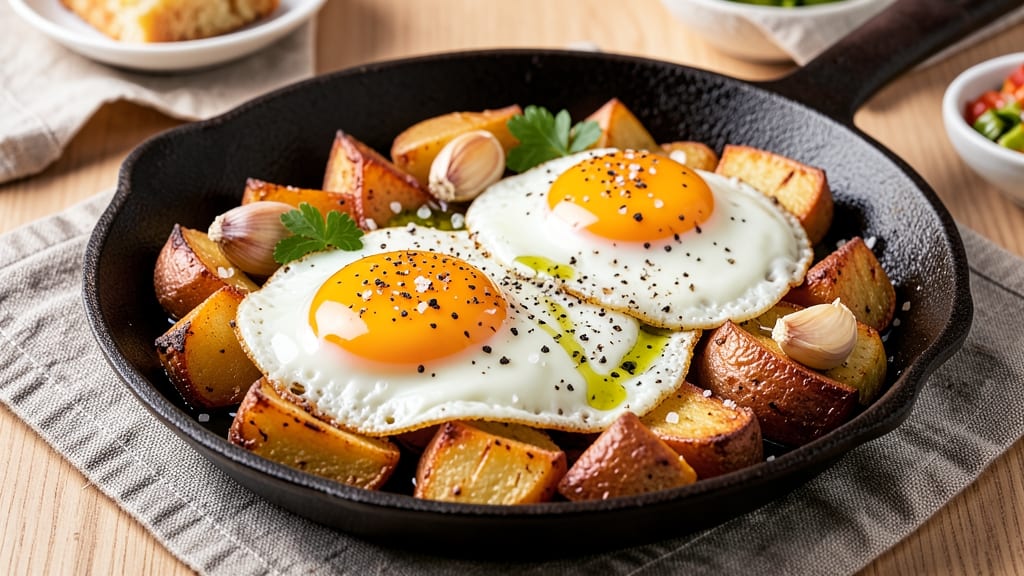
Spanish fried eggs transform a simple breakfast into a Spanish tapas masterpiece with their crispy edges and molten yolks. This recipe delivers the authentic huevos rotos experience—crispy potatoes, perfectly fried eggs, and all the flavor of Spain in every bite. The secret lies in high-quality olive oil and precise frying technique, ensuring that crispy crust without sacrificing that luxurious runny yolk.
What makes this dish special is its simplicity—just potatoes, eggs, and olive oil, with optional additions like chorizo or fresh herbs for extra depth. The potatoes are fried until golden and crispy, creating the perfect base for the eggs.
The key is frying the eggs in small batches, allowing the oil to maintain its temperature for that signature crispy edge.
By the time you plate this dish, you'll have a restaurant-worthy breakfast with crispy potatoes, perfectly fried eggs, and all the rich, savory flavors of Spain. The contrast between the crispy edges and runny yolks is pure satisfaction, and the simplicity makes it perfect for any morning or brunch.
Serve with a sprinkle of fresh herbs, a slice of chorizo, or a dollop of aioli for the full Spanish experience. This recipe is all about authenticity and simplicity—no fancy techniques, just great flavor. Let's get cooking!
Ingredients for spanish fried egg
Four essential ingredients transform ordinary eggs into Spanish tapas perfection.
| Ingredient | Amount | Notes |
|---|---|---|
| Large Potatoes (Russet or Yukon Gold) 🥔 | 2 lb | Cut into 1-inch thick slices, par-cooked |
| Large Eggs 🥚 | 4 whole | Room temperature for even cooking |
| Extra-Virgin Olive Oil 🫒 | 2 cups | High smoke point, fruity variety |
| Sea Salt 🧂 | 1 ½ tsp | Diamond Crystal preferred for texture |
| Freshly Ground Black Pepper 🌶️ | ½ tsp | Freshly cracked for optimal flavor |
| Garlic Cloves 🧄 | 4 cloves | Minced for aroma infusion |
| Smoked Paprika 🌶️ | ½ tsp | For subtle smoky depth |
| Fresh Thyme Leaves 🌿 | ¼ cup | Chopped, for garnish |
| Spanish Chorizo 🥓 | 4 oz | Sliced, optional for extra flavor |
| Lemon Wedges 🍋 | 2 whole | For serving, optional |
The potatoes and olive oil are the foundation of this dish. Russet or Yukon Gold potatoes provide the ideal starchy base, while extra-virgin olive oil—specifically a fruity, high-quality variety—ensures that crispy crust without burning. For the potatoes, pre-cut them into 1-inch slices before par-cooking to ensure even browning. The olive oil should be Spanish or Italian, available at specialty stores like Whole Foods or Trader Joe's. Avoid the cheap, heavily processed varieties—they lack the flavor and smoke point needed for crispy edges. The potatoes should be par-cooked until tender but still firm, then fried in batches to maintain oil temperature.
No smoked paprika? Regular paprika with a pinch of liquid smoke works in a pinch, though it won’t be as authentic. Fresh thyme is ideal, but dried thyme at one-third the amount is a solid substitute. For the eggs, room temperature is non-negotiable—cold eggs won’t cook evenly and risk breaking. If you’re skipping the chorizo, add a dash of smoked salt to the potatoes for depth. The lemon wedges are optional but recommended—they cut through the richness and add a bright contrast. For extra crispiness, double-fry the potatoes once they’re golden: remove them, let them cool slightly, then fry again for 1-2 minutes.
Store the par-cooked potatoes in an airtight container in the fridge for up to 2 days, covered with a damp paper towel to retain moisture. The fried potatoes reheat beautifully in a skillet with a splash of olive oil for 2-3 minutes until crispy again. For the eggs, fry them fresh—they don’t reheat well. If you’re prepping ahead, keep the olive oil in a cool, dark place (like a glass jar in the pantry) to preserve its flavor and smoke point. The chorizo, if using, can be stored in the fridge for up to 1 week or frozen for 3 months. For a restaurant-quality touch, serve immediately after frying for that signature crispy edge and runny yolk.
Why You'll Love This Recipe
- One-Pan Magic: I swear by this—just slice the potatoes, fry them golden, and crack eggs into the same pan. No extra dishes, no stress, just pure, satisfying simplicity. The eggs slide right into the crispy potato nest like they were meant to be there.
- Crispy-Creamy Obsession: That first bite? The potatoes stay fluffy inside while the edges turn into a shatteringly crisp shell, then the runny yolk—chef’s kiss—mixes with the salty, oily goodness. It’s the kind of dish that makes you pause mid-bite and go, “Wait, I made this?”
- Lazy Brunch Champion: Between us, this is my go-to when I can’t be bothered with fancy breakfasts. Serve it straight from the pan with a sprinkle of flaky salt, or let the leftovers sit in the fridge overnight—they’re even better cold, sliced and packed for lunch. No rules, just results.
- Budget Breakfast Win: Russets are cheap, eggs are cheap, olive oil lasts forever. This feeds four for under $5 and still feels like a treat. Honestly, I make it when I’m pinching pennies, but no one ever guesses—it’s that good. Even my picky teenager doesn’t complain.
Step-by-step instructions for Spanish fried eggs
Master the technique for perfectly crispy edges and silky runny yolks every time.
Prepare the Potatoes for Crispy Base
Slice the 2 lb Large Potatoes (Russet or Yukon Gold) into 1-inch thick pieces. This thickness ensures they cook evenly while developing that satisfying crispy exterior. Spread them on a baking sheet and par-cook in a 400°F oven for 20-25 minutes, flipping halfway, until they're tender when pierced with a fork but still firm.
Here's the thing—par-cooking prevents soggy potatoes later. You want them to hold their shape while absorbing minimal oil. After par-cooking, let them cool completely before proceeding. This step is non-negotiable for achieving that perfect crispy texture when fried.
Create the Perfect Frying Oil Mixture
In a heavy-bottomed skillet, combine 2 cups Extra-Virgin Olive Oil with 4 cloves minced Garlic Cloves and 0.5 tsp Smoked Paprika. Heat over medium heat until the oil shimmers but doesn't smoke—around 350°F. This temperature range is critical; too hot and you'll burn the eggs, too cool and they'll absorb oil instead of crisping.
I like to test the oil by dropping a small piece of potato in—if it sizzles immediately and turns golden in 30 seconds, your oil is ready. Keep the heat steady; fluctuations can lead to uneven cooking. The garlic and paprika infuse the oil with flavor while maintaining that high smoke point for crispy edges.
Fry the Potatoes to Golden Perfection
Add the par-cooked potatoes to the skillet in a single layer, being careful not to overcrowd. Fry for 4-5 minutes per side until they develop a deep golden brown crust. You'll see the edges become crispy while the centers remain tender—this is your visual cue to flip them.
Don't rush this step. The potatoes should release easily from the pan when ready. If they stick, your oil isn't hot enough. Once golden, remove them to a paper towel-lined plate to drain excess oil. The residual oil will keep them warm while you prepare the eggs.
Fry the Eggs for Crispy Edges and Runny Yolks
Let the oil cool slightly to 325°F—this lower temperature prevents the eggs from cooking too quickly. Crack the 4 whole Large Eggs into small ramekins for easy sliding. Gently lower each egg into the oil using a metal spatula, keeping the yolks intact.
Fry for 2-3 minutes until the whites are set but still slightly translucent around the edges, and the yolks remain completely liquid. The whites should release easily from the pan when gently nudged with a spatula. This is the moment that matters: if you wait too long, the yolks will firm up.
Assemble and Garnish for Presentation
Place each fried egg atop a crispy potato half. Sprinkle with 0.25 cup chopped Fresh Thyme Leaves and 0.5 tsp Freshly Ground Black Pepper. The thyme adds a bright, herbal note that cuts through the richness of the eggs and potatoes.
For serving, add 4 oz sliced Spanish Chorizo alongside and offer the 2 whole Lemon Wedges for a tangy contrast. The chorizo adds a smoky depth, while the lemon brightens the dish. Serve immediately while the eggs are at their peak—crispy edges and molten yolks that glisten like liquid gold.
Pro Tips For Making Spanish Fried Egg
- Preheat Oil Properly: Heat your olive oil in a deep skillet until it shimmers at 350°F (175°C)—use a thermometer if you’re unsure. Cold oil will soak into the potatoes like a sponge, and hot oil gives that crispy crust we all crave. I learned this the hard way after frying soggy spuds that tasted like wet cardboard.
- Cut Potatoes Evenly: Slice your potatoes into ½-inch thick rounds, no thicker, no thinner—consistency is everything. Uneven pieces mean some will cook faster, others slower, and you’ll end up with a mix of mushy and overdone. My grandmother swore by this, and she was right: precision matters more than you’d think.
- Salt Potatoes Mid-Fry: Toss the fried potatoes in salt while they’re still hot, not after they’ve cooled. The heat helps the salt adhere, and it keeps them crispy longer. I used to wait until the end, and by then, the salt just slid off like I’d forgotten it entirely.
- Fry Eggs in Warm Oil: Let the oil cool slightly after frying the potatoes—just enough to sizzle but not smoke when you crack the egg in. A screaming-hot pan burns the whites before the yolks set, and you’ll end up with rubbery, sad eggs. Start hot, finish gentle—that’s the golden rule.
Common mistakes when making this recipe
Overcrowding the Pan
Frying too many potatoes or eggs at once drops the oil temperature, leading to soggy, greasy results instead of crispy edges. I’ve made this mistake more than once—trust me, it’s a game-changer to work in batches.
For potatoes, fry in a single layer with at least 1 inch of space between each piece. For eggs, limit to 2-3 at a time in a 10-inch skillet to maintain that perfect 325°F temperature. 🔥
Skipping the Par-Cook
Raw potatoes straight into hot oil will absorb too much oil and turn greasy instead of crispy. The par-cooking step (oven at 400°F for 20-25 minutes) ensures the potatoes are tender inside while staying firm enough to crisp up beautifully.
If you skip this, your dish will lack that satisfying texture contrast between the crispy exterior and tender interior.
Using Low-Quality Oil
Not all olive oils are created equal—using a cheap, heavily processed oil will burn before the potatoes and eggs reach their ideal temperature. Stick to extra-virgin olive oil with a high smoke point, like Spanish or Italian varieties from brands like Colavita or Bertolli.
These oils add flavor and maintain stability at high heat, preventing bitter flavors or smoke.
Overcooking the Eggs
The whites should be set but still slightly translucent, and the yolks must remain completely liquid. Overcooking by even 30 seconds turns the yolk from silky to rubbery.
Use a timer and watch closely—the whites should release easily from the pan when gently nudged with a spatula. If they stick, your oil isn’t hot enough.
Ignoring Oil Temperature
Frying at inconsistent temperatures is the fastest way to ruin your dish. Use a thermometer to monitor the oil—potatoes need 350°F, while eggs prefer 325°F. Without precise control, you risk burning the edges or leaving them greasy.
I recommend the Thermoworks Thermapen for accuracy—it’s a small investment that makes a big difference. 🌡️
Not Letting Eggs Rest
After frying, let the eggs sit for 1-2 minutes before serving. This allows the whites to set slightly while keeping the yolks molten. Skipping this step can cause the yolk to burst when you cut into it.
Plate immediately after resting for that perfect presentation—crispy edges and a glistening, runny yolk.
Nutrition facts
Frequently asked questions
Can I make Spanish fried eggs without potatoes?
Traditional Spanish fried eggs (huevos rotos) always include potatoes as the crispy base, but you can adapt this recipe! Try using crispy fried plantains or thinly sliced zucchini for a low-carb version. For extra texture, use crispy prosciutto or toasted baguette slices instead. Just ensure your base is sturdy enough to hold the egg.
How do I keep the eggs runny without overcooking?
The secret is precise timing and oil temperature. Fry eggs at 325°F for 2-3 minutes max—whites should be set but still slightly translucent. Use a thermometer and watch closely. If your oil isn't hot enough, the whites will absorb oil instead of crisping. For extra insurance, crack eggs into ramekins before sliding them into the pan.
What's the best way to reheat leftover Spanish fried eggs?
Unfortunately, fried eggs don't reheat well—the yolks turn rubbery. Instead, keep them warm in a 200°F oven for 5-10 minutes while you reheat the potatoes separately in a skillet with fresh olive oil for 2-3 minutes until crispy again. For best results, always fry eggs fresh and serve immediately for that perfect runny yolk.
Can I use butter instead of olive oil?
While butter adds rich flavor, it has a lower smoke point (350°F) than olive oil, making it risky for frying. For best results, stick with extra-virgin olive oil—it handles high heat better and enhances the Spanish flavors. If you want butter's taste, add a small pat to the finished dish instead of using it for frying.
What makes this different from regular fried eggs?
Spanish fried eggs (huevos rotos) focus on three key elements: crispy potatoes as the base, high-heat olive oil frying for that signature crust, and runny yolks served immediately. Unlike American fried eggs, this version is more like a rustic tapas dish—simple but packed with texture and flavor. The potatoes are par-cooked for extra crispiness, and the dish is often served with chorizo or herbs.