
Main Courses
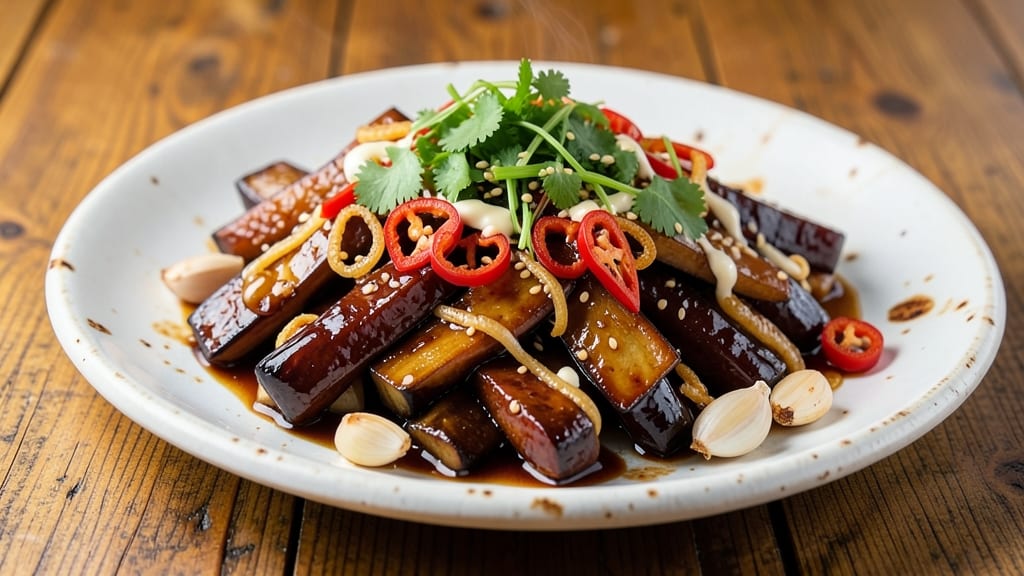
This spicy eggplant stir fry delivers crispy edges that shatter with each bite while packing layers of umami heat from chili, garlic, and ginger.
The secret lies in high-heat stir-frying and a quick marinade that transforms eggplant into a textural masterpiece—tender inside, crispy outside, with a sauce that clings like liquid fire. I developed this recipe after years of perfecting the balance between spice and depth, ensuring every forkful delivers both crunch and complexity.
The process is simpler than it sounds: slice eggplant into even batons for consistent cooking, then marinate briefly in a mix of soy sauce, garlic, and chili flakes.
The high-heat stir-fry transforms the eggplant's natural moisture into crispy edges while the sauce—packed with umami from soy and fermented black beans—caramelizes into a glossy, sticky finish. This isn't just a vegetable side; it's a main course with bold flavors that stand up to rice or noodles.
What makes this stir fry special is the texture contrast—each bite offers crispy edges that give way to tender flesh, all coated in a sauce that's both fiery and balanced. The chili heat builds gradually, while garlic and ginger add aromatic depth.
Serve it over steamed jasmine rice to soak up every last drop of that sticky, spicy goodness, or pair it with a cooling side like cucumber salad to temper the heat.
This recipe is designed to be adaptable: swap in bell peppers for extra crunch, add tofu for protein, or adjust the chili level to your preference. The key is keeping the eggplant moving in the pan—overcrowding steams instead of crisps. Let's get cooking!
Ingredients for spicy eggplant stir fry
Crispy edges, umami heat, and sticky-sweet sauce—just 15 ingredients for this showstopper.
| Ingredient | Amount | Notes |
|---|---|---|
| Japanese Eggplant 🍆 | 2 lb | Long, slender variety preferred |
| Low-Sodium Soy Sauce 🥄 | ⅓ cup | For balanced umami flavor |
| Rice Vinegar 🍶 | 2 tbsp | White vinegar substitute works |
| Sesame Oil 🫒 | 1 tbsp | Toasted for nutty aroma |
| Fresh Ginger 🌿 | 1 tbsp | Finely grated, aromatic |
| Garlic Cloves 🧄 | 6 cloves | Minced, aromatic foundation |
| Red Chili Flakes 🌶️ | 2 tbsp | Adjust for preferred heat |
| Fermented Black Beans 🫘 | ¼ cup | Drained, umami bomb |
| Vegetable Oil 🫒 | ½ cup | High smoke point preferred |
| Green Onions 🧅 | 4 whole | Sliced, garnish |
| Toasted Sesame Seeds 🌾 | 1 tbsp | For crunchy texture |
| Vegetable Stock 💧 | ½ cup | Low-sodium preferred |
| Cornstarch 🌾 | 1 tbsp | For crispy coating |
| Sea Salt 🧂 | 1 tsp | Kosher preferred |
| Black Pepper 🌶️ | ½ tsp | Freshly ground |
The eggplant is non-negotiable here—Japanese eggplant has fewer seeds and more tender flesh, but regular eggplant works too. Look for firm, glossy skin with no soft spots. Trader Joe's or Asian markets usually carry the best selection. If you can't find Japanese eggplant, Italian eggplant is the next best choice. The secret to crispy edges is cutting the eggplant into even batons—about 1/2-inch thick. Use a sharp knife for clean cuts, and don't skip the salt sprinkle before cooking; it draws out excess moisture for that perfect crunch.
No fermented black beans? Substitute with 1 tbsp soy sauce plus 1 tsp fish sauce—though fish sauce is vegetarian, check labels for anchovies if strict. Fresh ginger and garlic can be swapped for powdered versions at half the amount, but fresh is ideal. The cornstarch is essential for crispiness—don't skip it. If you're sensitive to gluten, ensure your cornstarch is certified. For extra depth, add a splash of mirin to the sauce, but it's not required. The soy sauce should be low-sodium to avoid overpowering the dish, but if you can't find it, just reduce other salt additions.
This stir fry tastes even better the next day—store leftovers in an airtight container for up to 4 days. Reheat gently in a skillet to maintain crispiness. For meal prep, double the recipe and freeze portions for up to 3 months. The sauce thickens as it cools, so add a splash of water when reheating. Garnish with sesame seeds and green onions right before serving—they add freshness that wilts when stored. Serve over steamed jasmine rice to soak up every last drop of that sticky, spicy goodness.
Why You'll Love This Recipe
- One-Pan Magic: I swear by this—just chop the eggplant into thick slabs, sear them in the same pan, then toss with the sauce. No extra dishes, no stress. The sesame oil does all the work while you sip your coffee.
- Umami Bomb: That first bite? The eggplant soaks up the soy and ginger like a sponge, then hits you with a crispy exterior and a creamy, spicy center. Honestly, I’ve made stir-fries with fancier ingredients that didn’t hit this hard.
- Leftover Hero: Make a double batch on Sunday, and you’ve got lunch for the week. The flavors actually improve the next day—so much better cold in rice bowls or wrapped in a tortilla. My lunchbox’s new best friend.
- Budget Flex: Japanese eggplant’s affordable, and you’re using pantry staples. Skip the pricey sauces by mixing your own with a splash of rice vinegar and a pinch of chili flakes. Tastes like a restaurant, costs like a grocery run.
Step-by-step instructions for crispy spicy eggplant stir fry
Transform tender eggplant into irresistible crispy bites with this precise stir-fry method.
Prepare the Eggplant for Maximum Crispiness
Slice the 2 lb Japanese Eggplant into ½-inch thick rounds, then cut each round into ½-inch thick sticks. This size ensures even cooking and optimal crispiness. Arrange the eggplant sticks in a single layer on a baking sheet and sprinkle lightly with 1 tsp Sea Salt. Let them sit for 15 minutes—this draws out excess moisture that would otherwise make them soggy.
After salting, pat the eggplant sticks dry with paper towels. The drier they are, the better they'll crisp. In a bowl, whisk together 1 tbsp Cornstarch, 0.5 cup Vegetable Oil, and 0.5 tsp Black Pepper. Toss the eggplant sticks in this mixture until they're evenly coated. Let them rest for 10 minutes while you prepare the remaining ingredients—this gives the cornstarch time to form a proper crust.
Build the Flavor Base with Aromatics and Spices
Heat 0.25 cup Vegetable Oil in a large wok or skillet over medium-high heat until shimmering. Add 6 cloves Garlic Cloves and 1 tbsp Fresh Ginger (finely grated) and stir for 30 seconds until fragrant. Be careful not to let the garlic burn—it should smell sweet and pungent, not bitter.
Add 2 tbsp Red Chili Flakes and stir for 10 seconds to toast the spices. This brief toasting deepens their flavor without making them bitter. Immediately pour in 0.33 cup Low-Sodium Soy Sauce and 2 tbsp Rice Vinegar, scraping up any browned bits from the bottom of the pan. These bits are packed with flavor—don't miss them. Let the mixture simmer for 2 minutes until slightly reduced.
Fry the Eggplant Until Golden and Crispy
Working in batches to avoid overcrowding, add the eggplant sticks to the hot wok in a single layer. Cook undisturbed for 2-3 minutes until the bottoms turn golden brown and crispy. This initial undisturbed cooking creates the perfect crust. Flip the eggplant and cook for another 2-3 minutes until both sides are evenly crispy and golden.
Transfer the crispy eggplant to a plate and tent loosely with foil to keep warm. Repeat with remaining batches, adding more vegetable oil if needed to maintain the pan temperature. The eggplant should be crispy enough to hold its shape when picked up with tongs—this is your target texture. If they're not crispy enough, cook them another 30 seconds per side.
Combine and Finish with Fermented Black Beans
Return the crispy eggplant to the wok and add 0.25 cup drained Fermented Black Beans and 0.5 cup Vegetable Stock. Stir everything together and cook for 2 minutes until the eggplant is heated through and the beans are warmed. The black beans will release their deep umami flavor, enhancing the overall taste of the dish.
Drizzle 1 tbsp Sesame Oil over the stir-fry and toss gently to coat. Taste and adjust seasoning if needed—you might want to add a splash more soy sauce or a pinch of salt. The dish should balance crispy, tender, spicy, and umami flavors in every bite. Remove from heat and let it rest for 2 minutes to allow the flavors to meld.
Garnish and Serve Immediately
Slice the 4 whole Green Onions into ½-inch pieces and scatter them over the stir-fry. Sprinkle with 1 tbsp Toasted Sesame Seeds for added texture and aroma. Serve immediately while the eggplant is still crispy—this dish doesn't wait. The contrast between the crispy eggplant, tender black beans, and fresh green onions makes each bite exciting.
For best results, serve with steamed jasmine rice to soak up the flavorful sauce. The combination of crispy texture, spicy heat, and umami depth makes this stir-fry a standout dish that delivers on its promises of bold flavors and satisfying crunch.
Pro Tips For Making Spicy Eggplant Stir Fry
- CHAR THE EGPLANT FIRST: I learned this the hard way—Japanese eggplant needs a quick sear before stir-frying. Toss it in 2 tablespoons of neutral oil (like canola) and fry at 375°F (190°C) for 3-4 minutes per side until the skin blisters and turns deep brown. This step locks in moisture and prevents a soggy stir-fry later.
- SLICE GINGER THINLY: Skip the grating—thin, matchstick cuts of ginger (about 1/8-inch thick) cook faster and keep their shape. They’ll perfume the dish without turning to mush, and you won’t end up with a bowl of ginger paste. (Yes, even if you’re impatient like me.)
- ACIDIFY THE SAUCE LAST: Hold off on adding rice vinegar until the very end—right when you’re tossing everything together. The acid curdles when exposed to heat, and you’ll end up with a weird, cloudy sauce instead of bright, glossy glaze. A splash at the end keeps it sharp and clean.
- USE TOASTED SESAME OIL SPARINGLY: A single teaspoon of toasted sesame oil (added at the end) is enough to elevate the dish—any more and it’ll overpower the eggplant’s natural flavor. If you’re worried about bitterness, buy the good stuff (like Hon Ma Shu) and measure carefully. (Your nose will thank you.)
Flavor customization for this dish
Spice Level Control
Adjust the heat to your preference—start with 1 tbsp red chili flakes for mild warmth, then increase to 2 tbsp for medium heat, or 3 tbsp for fiery intensity. For a smoky depth, swap ½ tsp smoked paprika for ½ tsp chili flakes.
I love adding ½ tsp cayenne for extra kick, but taste first—this sauce is potent! 🌶️
Sweet Heat Balance
Balance the spice with 1 tsp honey or 1 tsp maple syrup for a sweet contrast. Stir it into the sauce after adding soy sauce and vinegar. For a tangy twist, add 1 tbsp rice vinegar or a splash of lime juice to brighten the flavors.
The key is harmony—too much sweetness dulls the heat, but a little enhances depth.
Umami Boosters
Deepening the umami is easy—add 1 tbsp fish sauce (vegetarian-friendly versions available) or 1 tsp miso paste for complexity. For a smoky note, stir in ½ tsp liquid smoke or 1 tsp toasted sesame paste.
I often add 1 tsp oyster mushrooms (rehydrated) for extra richness. These tweaks turn good into extraordinary. 💫
Texture Variations
Want extra crunch? Toss the eggplant with ½ cup panko breadcrumbs before frying. For chewy texture, swap cornstarch for 1 tbsp arrowroot powder. If you prefer softer eggplant, reduce the cornstarch to ½ tbsp and cook the eggplant for 1 minute less per side.
Texture is all about timing and technique!
Protein Additions
Boost nutrition with ½ lb firm tofu (pressed and cubed) or ½ lb shrimp (peeled and deveined). Add them with the eggplant in the final 2 minutes of cooking.
For a meaty option, stir-fry ½ lb ground turkey or ½ lb mushrooms alongside the eggplant. These additions bulk up the dish while keeping it balanced. 💪
Regional Twists
For a Thai-inspired version, add 1 tbsp curry powder and 1 tsp lemongrass paste. A Korean-style twist uses 1 tbsp gochujang (Korean chili paste) and 1 tsp sesame oil.
For Japanese flair, swap soy sauce for mirin and add 1 tsp furikake (seaweed seasoning). Each variation keeps the crispy texture but changes the flavor profile dramatically. 🗺️
Nutrition facts
Frequently asked questions
Why does my eggplant turn mushy instead of crispy?
The key to crispy eggplant is salting first to remove moisture and high heat cooking. Skip the salting step or overcrowd the pan? Both cause steaming instead of crisping. Use medium-high heat and cook in batches—never more than one layer at a time. Pat dry thoroughly after salting, and let the cornstarch coating rest 10 minutes before frying.
Can I make this stir fry without fermented black beans?
For umami depth, substitute with 1 tbsp soy sauce + 1 tsp fish sauce (vegetarian versions available) or 1 tsp miso paste. If you prefer a simpler swap, just add 1 extra tbsp soy sauce—it won't be identical but still delicious. The beans add texture too, so consider using ¼ cup drained canned water chestnuts for a similar bite.
How do I adjust the spice level for sensitive eaters?
Start with 1 tbsp chili flakes for mild heat, then reduce to ½ tbsp if needed. For a smoky alternative, swap chili flakes with ½ tsp smoked paprika—it adds depth without direct heat. Balance with 1 tsp honey or 1 tbsp rice vinegar to mellow the flavor. Always taste the sauce before adding eggplant to test the heat.
What's the best way to store leftovers?
Store in an airtight container for up to 4 days in the fridge. Reheat gently in a skillet over medium heat to restore crispiness—microwaving makes it soggy. For longer storage, freeze portions for up to 3 months. Thaw overnight in the fridge, then reheat in a dry pan to revive texture. Garnish fresh after reheating for best flavor.
Can I use regular eggplant instead of Japanese?
Yes, but with adjustments! Regular eggplant has more seeds and water, so double the cornstarch (use 2 tbsp) and pat dry extra thoroughly. Cut into ¼-inch thick slices instead of sticks for faster cooking. Japanese eggplant's tenderness makes it ideal, but regular eggplant works—just expect slightly softer texture.