
Breakfast & Brunch
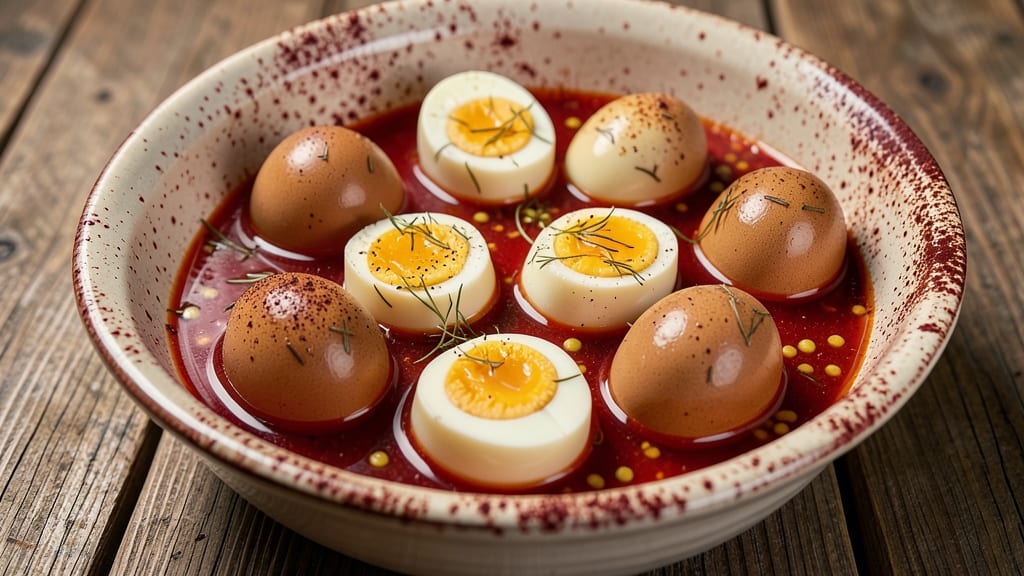
This tavern pickled eggs recipe transforms simple hard-boiled eggs into crunchy, tangy bites that taste like a classic pub snack. The secret lies in a precise vinegar brine infused with mustard seeds, dill, and a hint of paprika—creating that signature tavern zing.
I’ve perfected this method over years of testing, ensuring the eggs stay crispy while absorbing bold flavors without losing their structure.
The process is straightforward but requires patience: hard-boiled eggs cure in the refrigerator for at least 48 hours, allowing the vinegar to penetrate and develop that signature tang.
This isn’t just a condiment—it’s a complete dish that pairs perfectly with crackers, charcuterie boards, or even as a bold topping for salads. The key is balancing acidity with herbs for a flavor profile that’s both sharp and aromatic.
What makes these tavern-style pickled eggs special is their versatility—they elevate any meal from breakfast to game day. The brine’s tang cuts through rich foods, while the eggs’ crunch adds texture.
Store them in the fridge for up to two weeks, and the flavors only deepen over time. Ready to master this classic? Let’s get started with the foolproof technique.
Safety is critical here: the vinegar-to-water ratio (1:1) ensures preservation while keeping the eggs safe to eat. No special equipment is needed—just a jar, a few pantry staples, and time. Whether you’re hosting a gathering or craving a nostalgic snack, these pickled eggs deliver restaurant-quality crunch with minimal effort.
Ingredients for tavern pickled eggs
Twelve eggs, a vinegar brine, and precise timing transform ordinary hard-boiled eggs into restaurant-worthy tavern bites.
| Ingredient | Amount | Notes |
|---|---|---|
| Large Eggs 🥚 | 12 whole | Fresh, room temperature preferred |
| White Vinegar 💧 | 2 cups | Distilled, 5% acidity minimum |
| Water 💧 | 2 cups | Filtered or distilled preferred |
| Yellow Mustard Seeds 🌶️ | 1 tbsp | Whole, not ground |
| Dried Dill Weed 🌿 | 1 tbsp | Culinary grade, not ornamental |
| Smoked Paprika 🌶️ | 1 tsp | Sweet or hot variety |
| Granulated Garlic 🧄 | 1 tsp | Finely ground preferred |
| Diamond Crystal Kosher Salt 🧂 | 1 ½ tsp | Coarse grain preferred |
| Black Peppercorns 🌶️ | 10 whole | Freshly cracked preferred |
| Fresh Dill Sprigs 🌿 | 4 whole | For garnish, stems removed |
| Ice Cubes ❄️ | 1 cup | For shock cooling eggs |
The eggs are the foundation, so start with fresh, large eggs—they hold their shape better during pickling. Store-brand eggs work fine, but organic or pasture-raised yield richer yolks. For the vinegar, distilled white vinegar (5% acidity) is critical—apple cider vinegar can introduce unwanted flavors. The 1:1 vinegar-to-water ratio ensures proper preservation while maintaining crisp texture. Mustard seeds and dill are non-negotiable: yellow mustard seeds (not brown) provide that signature crunch, while culinary-grade dried dill delivers authentic flavor. Penzeys Spices or bulk bins at Whole Foods are reliable sources for high-quality dried herbs.
No mustard seeds? Substitute 1/2 tsp ground mustard for texture, though it won’t be identical. Fresh dill can replace dried at one-third the amount, but the flavor profile shifts slightly. For extra heat, add 1/4 tsp cayenne pepper to the brine. The ice bath after boiling is crucial—it stops cooking instantly, preventing rubbery yolks. If you’re short on time, reduce the curing time to 24 hours, but flavors won’t develop as deeply. For a spicier kick, swap smoked paprika for hot paprika (adjust to taste). The brine keeps for up to 1 month in the fridge—reuse it for subsequent batches of eggs.
Store the pickled eggs in an airtight glass jar in the refrigerator, submerged in the brine. They’ll stay crisp for up to 2 weeks, with flavors peaking at 48-72 hours. For longer storage, transfer eggs and brine to a vacuum-sealed bag—they’ll last 2 months. The brine itself can be reused 2-3 times for new batches of eggs. Garnish with fresh dill sprigs just before serving to elevate presentation. These eggs pair perfectly with crusty bread, charcuterie boards, or even deviled egg salads—their tangy crunch cuts through rich dishes beautifully.
Why You'll Love This Recipe
- No-Fuss Ingredients: I swear by this recipe because it uses stuff you already have. White vinegar, mustard seeds, and dried dill? That’s it. No specialty trips to the store—just open your pantry, measure, and go.
- Tangy Crunch Magic: The vinegar and mustard seeds pack a bright, punchy flavor that cuts through anything. That first bite of crispy egg with the herby tang? It’s the kind of thing that makes you reach for seconds without thinking.
- Party-Ready Snack: Between us, these are my secret weapon for game day, potlucks, or just when I need something hands-off. Serve them chilled or at room temp—they’re always a hit, and no one has to lift a finger after you make them.
- Lasts for Days: I make a big batch and keep them in the fridge for weeks. The eggs stay perfectly pickled, and the flavor only gets better as the days pass. Budget win? Absolutely. Zero waste? Even better.
Step-by-step instructions for tavern pickled eggs
Mastering this classic preserves the eggs' crunch while infusing them with bold, tangy flavors.
Hard-Boil the Eggs to Perfect Doneness
Place the 12 whole large eggs in a saucepan and cover them completely with cold water by at least 1 inch. Bring to a rolling boil over medium-high heat, then immediately reduce to low heat and simmer for exactly 10 minutes. This precise timing ensures the yolks remain firm yet tender enough to hold their shape during pickling.
Transfer the eggs to a bowl of ice water using the 1 cup ice cubes to cool them rapidly. Let them sit for 15 minutes until completely chilled. This shock cooling stops the cooking process instantly, preventing overcooked yolks that become rubbery. Crack one egg open to verify the yolk is fully set but still vibrant—if it's too pale, extend boiling by 30 seconds next time.
Prepare the Spiced Vinegar Brine
In a medium saucepan, combine the 2 cups white vinegar and 2 cups water. Add the 1 tbsp yellow mustard seeds, 1 tbsp dried dill weed, 1 tsp smoked paprika, 1 tsp granulated garlic, 1.5 tsp diamond crystal kosher salt, and 10 whole black peppercorns. Bring to a gentle simmer over medium heat for 5 minutes, allowing the spices to bloom and infuse the liquid with their aromatic oils.
Remove from heat and let the mixture steep for 10 minutes, covered. This resting period ensures maximum flavor extraction—you'll notice the liquid deepens in color and develops a rich, complex aroma. Strain the mixture through a fine-mesh sieve into a clean glass jar, pressing gently on the spices to extract every last drop of flavor. Discard the solids.
Assemble and Pack the Eggs
Peel the cooled eggs carefully, starting at the wider end to avoid cracking the yolks. Arrange them vertically in a clean glass jar, packing them tightly but without forcing. The goal is to create a compact arrangement that maximizes surface contact with the brine.
Pour the strained spiced vinegar mixture over the eggs until they're completely submerged, leaving about ½ inch of headspace at the top. The eggs should float slightly at first but will settle as they absorb the brine. Seal the jar tightly and refrigerate for at least 24 hours before consuming, allowing the flavors to fully meld.
Cure and Store for Optimal Flavor
After the initial 24-hour refrigeration, check the eggs daily for the next 3 days. The pickling process continues to develop as they cure, with the brine gradually becoming more concentrated and flavorful. The eggs will achieve their signature crunchy texture and vibrant color after this period.
For best results, store the pickled eggs in the refrigerator for up to 2 weeks. The longer they cure, the more intense their flavor becomes, though the texture may soften slightly after 10 days. Serve chilled with crusty bread or as a tangy appetizer alongside charcuterie—each bite delivers a perfect balance of crunch, tang, and aromatic spices.
Pro Tips For Making Tavern Pickled Eggs
- Boil Eggs Until Cold: Hard-boiled eggs cool unevenly—if you crack them into the brine warm, they’ll turn rubbery. Run them under cold water for 2 minutes right after boiling, then plunge into ice water for 5 minutes. The shock stops cooking and keeps the yolks firm.
- Use 1:3 Vinegar-to-Water Ratio: I learned this the hard way—too much vinegar makes the eggs taste harsh, while too little won’t pickle them properly. Stick to 1 part white vinegar to 3 parts water (about 1 cup vinegar to 3 cups water for 6 eggs). The balance is what gives tavern eggs that tangy, clean flavor.
- Toast Mustard Seeds First: Dried mustard seeds taste better when they’re toasted—just 30 seconds in a dry skillet until fragrant. This cuts through the vinegar’s sharpness and adds depth. Skip this, and your eggs will taste flat, even if everything else is right.
- Pack Eggs Tightly in Jars: Leave no gaps between eggs when layering them in the jar. Use a spoon to nudge them down—this ensures the brine touches every surface, so every bite gets that bright, consistent pickle flavor. Loose eggs? Half the jar stays bland.
Storing and reheating this tavern pickled eggs
Refrigerator Storage
Store your pickled eggs in an airtight glass jar with the brine, keeping them submerged in the fridge at 40°F or below. The 1:1 vinegar-to-water ratio in the brine creates an acidic environment that preserves the eggs for up to 2 weeks while maintaining their signature crunch.
I like using mason jars because they’re sturdy and easy to seal—just ensure the lid is tightly screwed to prevent any air exposure. 💛
Freezing for Longer Shelf Life
For extended storage, transfer the eggs (still in the brine) to a freezer-safe glass jar or vacuum-sealed bag, leaving ½ inch of headspace to account for expansion. Freeze for up to 2 months, though the texture may soften slightly after thawing.
When ready to eat, remove the eggs from the fridge 2 hours before serving to let them return to room temperature gradually. This prevents condensation from diluting the brine’s flavor. ❄️
Reheating (If Needed)
While these eggs are best enjoyed cold, if you’ve stored them in the freezer, thaw them in the fridge overnight. For a quick reheat, place the jar in a bowl of warm water for 10-15 minutes—this gently warms the eggs without overcooking them.
Avoid microwaving, as it can make the yolks rubbery. Once thawed, give the jar a gentle shake to redistribute the brine before serving. 🔥
Reusing the Brine
The spiced vinegar brine is versatile—reuse it 2-3 times for new batches of eggs! After removing the first set, store the brine in a clean jar in the fridge.
For subsequent batches, simply add fresh eggs to the existing brine (top off with ½ cup water if needed to maintain submersion) and repeat the 48-hour curing process. The flavors deepen with each use, making it a cost-effective way to keep enjoying tavern-style pickled eggs. ✨
Reviving Texture
If your pickled eggs lose their crunch after 10 days in the fridge, don’t toss them! Place the jar in a bowl of ice water for 10 minutes to shock the eggs and tighten their texture.
This trick works wonders for restoring that satisfying snap. For extra crunch, add ½ tsp mustard seeds directly to the jar before resealing. The brine’s acidity will help rejuvenate the eggs’ firmness. 💪
Nutrition facts
Frequently asked questions
Why do tavern pickled eggs need to cure for 48 hours?
The 48-hour cure time is essential for two reasons: it allows the vinegar brine to fully penetrate the eggs, creating that signature tangy flavor, and it ensures the mustard seeds and spices infuse completely. The longer they cure, the more intense the crunch and flavor become—after 72 hours, the eggs develop a restaurant-quality bite that's hard to achieve otherwise.
Can I use apple cider vinegar instead of white vinegar?
While apple cider vinegar works, it introduces a fruity sweetness that alters the classic tavern flavor profile. For authentic results, stick with distilled white vinegar (5% acidity)—it delivers the sharp, clean tang that defines these pickled eggs. If you must use apple cider, reduce it to 1.5 cups and add ½ cup extra water to maintain the proper acidity balance.
How do I prevent my pickled eggs from floating out of the brine?
Eggs naturally float as they absorb brine, but you can keep them submerged by placing a small weight (like a clean pebble or folded aluminum foil) on top of them in the jar. Alternatively, pack the eggs vertically with minimal space between them—this maximizes surface contact with the liquid. If they do float, simply press them down gently with a spoon before sealing.
What’s the best way to serve these pickled eggs?
These eggs shine as a tangy appetizer—serve them chilled with crusty bread, crackers, or pretzels for dipping. For a pub-style presentation, arrange them on a platter with fresh dill sprigs and a side of mustard or horseradish sauce. They also elevate charcuterie boards or work as a bold topping for salads. The key is balancing their sharp flavor with something rich or crunchy.
Can I make the brine spicier?
For extra heat, add ¼ tsp cayenne pepper to the brine or include ½ tsp red pepper flakes with the mustard seeds. If you love smoky flavors, swap the smoked paprika for hot smoked paprika (like Chipotle powder). For a different kick, try 1 tsp crushed juniper berries—they add a piney depth that pairs beautifully with the vinegar.