
Soups & Stews
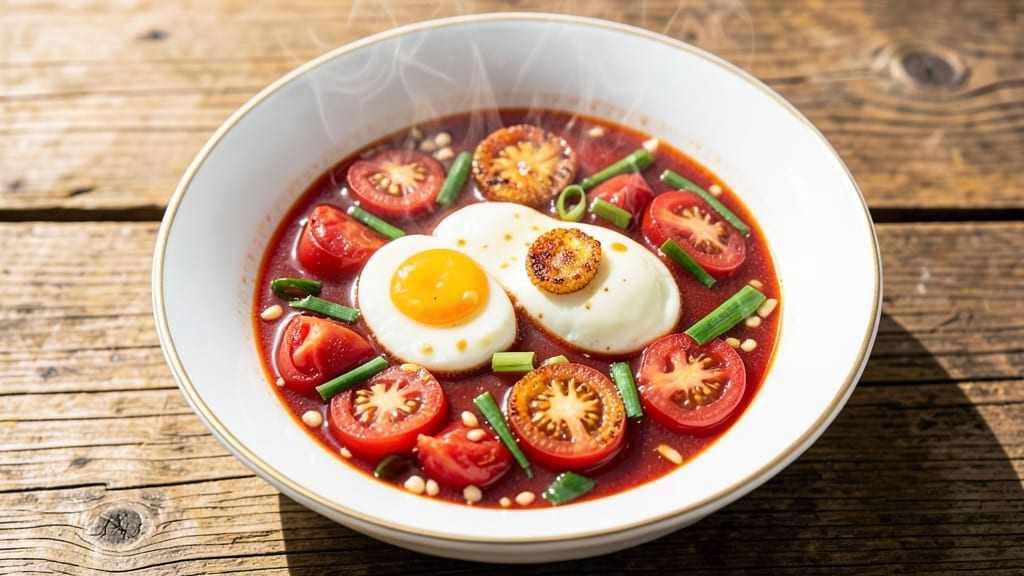
This tomato egg Chinese soup delivers the perfect balance of silky broth, tender tomatoes, and delicate poached eggs—each element playing its part in a harmonious bowl. The recipe captures the essence of Chinese home cooking, where simplicity meets depth through careful technique and fresh ingredients.
What makes this dish special is how the tomatoes transform into a velvety base when simmered just right, while the eggs poach to silky perfection, their yolks staying runny for that first luxurious bite.
The foundation of this soup lies in its broth, built from scratch with tomatoes, garlic, and a touch of soy sauce for umami depth. Unlike many Western soups, this version relies on fresh tomatoes rather than canned, ensuring bright acidity and natural sweetness.
The eggs are poached separately to maintain their shape and texture, then gently folded into the broth at the very end—this is where the magic happens, creating a dish that's both comforting and refined.
What you'll end up with is a silky, aromatic soup that's rich yet light, with the tomatoes providing a subtle sweetness that balances the savory notes. The poached eggs add a luxurious element, their yolks melting into the warm broth when stirred.
This is the kind of soup that feels like a hug on a chilly day, yet is simple enough to prepare on a weeknight. Serve it with a sprinkle of green onions and a drizzle of chili oil for an extra layer of flavor.
Perfect for meal prep or a quick lunch, this tomato egg soup adapts well to dietary preferences—swap the chicken broth for vegetable broth for a vegetarian version. The recipe scales easily, making it ideal for sharing with family or friends. Let's get started on creating this comforting classic.
Ingredients for tomato egg soup chinese
Fresh tomatoes and silky poached eggs create this comforting Chinese classic.
| Ingredient | Amount | Notes |
|---|---|---|
| Fresh Tomatoes 🍅 | 1 ½ lb | Ripe, vine-ripened preferred |
| Chicken Broth 💧 | 4 cups | Low-sodium preferred |
| Garlic Cloves 🧄 | 4 cloves | Minced for depth of flavor |
| Fresh Green Onions 🧅 | ¼ cup | Thinly sliced for garnish |
| Large Eggs 🥚 | 4 whole | Fresh, cold for poaching |
| Light Soy Sauce 🍶 | 1 tbsp | For umami balance |
| Sesame Oil 🫒 | ½ tbsp | Toasted for aroma |
| White Rice Vinegar 🍋 | 1 tbsp | Brightens flavor |
| Salt 🧂 | ½ tsp | Adjust to taste |
| White Pepper 🌶️ | ¼ tsp | For subtle heat |
| Chili Oil 🔥 | 1 tbsp | For serving |
| Vegetable Oil 🫒 | ½ tbsp | For poaching |
The tomatoes are the soul of this soup—vine-ripened ones have the best balance of sweetness and acidity. Heirloom varieties work best, but any ripe grocery store tomatoes will do in a pinch. Trader Joe's and Whole Foods carry excellent options, or grow your own if you're lucky enough. Avoid green or mealy tomatoes—they'll turn the broth bitter. The chicken broth should be homemade if possible, but Swanson or Pacific Foods low-sodium versions work well for convenience. For extra depth, toast your garlic cloves in the oil before adding them to the broth.
No fresh tomatoes? Ripe canned San Marzano tomatoes (drained and crushed) will save the day—just skip the vinegar. Running short on green onions? Scallions or chives work just as well for garnish. The poached eggs are where this soup shines, so don't cut corners—cold eggs poach better than room temperature ones. For a vegetarian version, swap the chicken broth for vegetable broth and add 1 tbsp miso paste for umami. The sesame oil is non-negotiable—toasted sesame oil has a completely different flavor profile than the untoasted kind.
This soup tastes even better the next day as flavors meld. Store in the fridge for up to 3 days, or freeze for 2 months. The poached eggs can be made ahead and kept in the fridge for 1 day—just reheat gently before adding to the broth. For meal prep, double the recipe and portion into containers. The chili oil should be stored in the fridge after opening and used within 2 weeks—it's worth making your own with chili flakes and oil if you're feeling ambitious.
Why You'll Love This Recipe
- No-Chop Nightmare: I swear by this recipe when I’m too tired to even think about mincing garlic. Just crush a few cloves, toss them in the broth with chopped tomatoes, and let the heat do the work—no knife skills required.
- Garlic-Egg Magic: That moment when the silky eggs poach in the broth and the garlic-infused tomato base hits your spoon? Pure satisfaction. The eggs stay creamy, the broth sings with umami, and the green onions add a bright finish—like a flavor hug in a bowl.
- Leftovers That Beg for More: Between us, this soup only gets better the next day. The flavors meld, the eggs soften just right, and it reheats in minutes. I’ve served it cold as a summer lunch (with crusty bread) or reheated for lazy weeknight dinners—no one ever turns it down.
- Pantry to Table in 20: Honestly, this is my go-to when I’m broke or busy. A handful of tomatoes, a carton of eggs, and whatever broth I have on hand—no fancy ingredients, just real, hearty flavor. It’s the kind of dish that makes you wonder why you ever ordered takeout.
Step-by-step instructions for tomato egg Chinese soup
This method delivers a velvety tomato broth with perfectly poached eggs—every spoonful balances rich umami and bright acidity.
Prepare the Tomato Base
Heat the 0.5 tablespoon vegetable oil in a medium pot over medium-high heat. Add the 1.5 lb fresh tomatoes, cut into large chunks, and cook for 5-6 minutes until they begin to soften and release juices. The tomatoes should collapse slightly but not brown—this preserves their natural sweetness.
Add the 4 cloves minced garlic cloves and stir for 30 seconds until fragrant. Pour in the 4 cups chicken broth and bring to a gentle simmer. Let it cook uncovered for 15 minutes, stirring occasionally, until the tomatoes break down completely and the mixture reduces slightly. You're building a concentrated tomato flavor—this is your soup's foundation.
Season and Simmer the Broth
Reduce heat to low and stir in the 1 tablespoon light soy sauce, 1 tablespoon white rice vinegar, 0.5 teaspoon salt, and 0.25 teaspoon white pepper. Simmer gently for 10 minutes, skimming off any foam that rises to the surface. The broth should now be smooth with a deep red color and a balanced taste—savory from the soy, bright from the vinegar, and subtly spiced.
Add the 0.5 tablespoon sesame oil and stir gently. The aroma should become more complex—nutty from the sesame, with lingering tomato sweetness. Taste and adjust seasoning if needed, remembering that the poached eggs will add richness. Keep the soup at a gentle simmer—never boiling—as you prepare the eggs.
Poach the Eggs Perfectly
Fill a deep bowl with cold water and place it next to your stove. Crack each of the 4 whole large eggs into a small bowl or ramekin. The eggs should be cold—this helps them poach more cleanly. Gently stir the water in the bowl to create a gentle vortex, then carefully slide one egg into the center. Poach for 3 minutes until the whites are set but the yolks remain runny.
Use a slotted spoon to transfer the poached egg to the simmering soup. Repeat with the remaining eggs, adding them 1 minute apart so they all finish cooking simultaneously. The eggs should float just below the surface—never submerged—to maintain their delicate texture. The soup's gentle heat will finish cooking them to perfection.
Finish and Serve
Once all eggs are poached, ladle the soup into bowls. Drizzle each serving with 1 tablespoon chili oil and sprinkle with 0.25 cup thinly sliced fresh green onions. The chili oil adds a subtle heat that cuts through the richness, while the green onions provide freshness and color. Serve immediately while the eggs are warm at the center.
Each spoonful should deliver a perfect balance: velvety tomato broth, tender egg whites, and a silky yolk that coats your tongue. The contrast between the warm soup and cool egg yolk is what makes this dish truly special. For best results, serve with warm crusty bread to soak up every last drop of that luxurious broth.
Pro Tips For Making Tomato Egg Soup Chinese
- Blanch Tomatoes First: I learned this the hard way—skipping this step means your soup turns into a watery, seedy mess. Drop halved tomatoes into boiling water for 30 seconds, then shock in ice water. The skins slip right off, and your soup stays smooth and vibrant. (Yes, even if you’re impatient like me.)
- Salt Broth Early: Season the chicken broth before adding tomatoes—this balances the acidity better. Start with 1 teaspoon salt per liter, taste after 5 minutes, then adjust. Tomatoes will mellow out, but you can’t fix under-seasoned broth later.
- Swirl Eggs Hot: Pour the beaten eggs into the simmering soup slowly while stirring vigorously in a figure-eight motion. The heat should be medium-high, not boiling—you want soft, silky curds, not scrambled bits. If the soup cools too fast, the eggs turn rubbery.
- Use Garlic Oil: Sauté minced garlic in 1 tablespoon neutral oil until just golden (about 30 seconds)—this adds depth without burning. Add it to the soup at the end to infuse flavor without overpowering the tomatoes. (Skip the raw garlic; it tastes harsh.)
Flavor customization for this recipe
Sweet-Tart Balance
Adjust the acidity-sweetness ratio by tweaking the white rice vinegar and tomato selection. For extra sweetness, add 1 tsp sugar or 1 tbsp honey to the broth.
If your tomatoes are tart, reduce vinegar to ½ tbsp and add ¼ tsp cornstarch (mixed with water) to thicken the broth slightly. I find heirloom tomatoes (like Brandywine) add natural sweetness, while Roma tomatoes lean more tart—great for balancing with extra vinegar. 🍯
Spice Level Control
Customize heat with chili oil or Sichuan peppercorns. For mild heat, use ½ tbsp chili oil and skip the peppercorns. For a spicy kick, add 1 tsp chili crisp (like Lao Gan Ma) or ½ tsp crushed red pepper flakes directly to the broth.
If using Sichuan peppercorns, toast 1 tsp in a dry pan for 30 seconds until fragrant, then crush and stir into the soup. The numbing-spicy sensation pairs perfectly with the silky eggs. 🌶️
Umami Depth
Boost savory notes with mushroom powder or dried shrimp. Stir in ½ tsp mushroom powder (like umami powder) for an earthy depth, or add 1 tbsp finely chopped dried shrimp (soaked in warm water for 10 minutes) for a coastal-inspired twist.
For a vegetarian option, replace soy sauce with 1 tbsp miso paste and add 1 tbsp nutritional yeast for a cheesy, umami punch. The eggs will absorb these flavors beautifully. 🍄
Herbaceous Twists
Brighten the soup with cilantro, basil, or Thai basil. Finely chop 2 tbsp fresh cilantro or Thai basil and stir into the broth during the final 5 minutes of simmering. For a garlic-chive variation, add 2 tbsp chopped chives along with the green onions at serving.
If you love herbs de Provence, sprinkle ½ tsp into the broth—it pairs surprisingly well with the tomatoes. The herbs add freshness that cuts through the richness of the eggs. 🌿
Creamy Variations
Add silken tofu or coconut milk for a velvety texture. Blend ½ cup silken tofu with ¼ cup broth until smooth, then stir into the finished soup. For a tropical twist, replace 1 cup broth with ½ cup coconut milk and add ½ tsp lime zest.
The creaminess complements the poached eggs without overpowering the tomato base. I love this version for a lighter, dairy-free option. 🥥
Protein Swaps
Incorporate shredded chicken, tofu, or shrimp for extra protein. Poach ½ lb chicken breast in the broth during the final 10 minutes, then shred before serving. For a vegan option, add ½ lb firm tofu (pressed and cubed) to the broth for 8 minutes before removing.
If using shrimp, add ½ lb peeled shrimp in the last 3 minutes of cooking—they’ll stay tender and absorb the tomato flavors. 🦐
Nutrition facts
Frequently asked questions
Can I use canned tomatoes instead of fresh?
Yes, but choose ripe, high-quality canned tomatoes like San Marzano and drain them well. Skip the vinegar since canned tomatoes are already acidic. For best results, crush them by hand before adding to the broth. The texture will be slightly different but still delicious!
How do I make the eggs poach perfectly every time?
Use cold eggs straight from the fridge and poach them in simmering (not boiling) water with a pinch of salt. Stir the water to create a gentle vortex before adding the egg. Cook for 3 minutes for runny yolks, or 3.5 minutes for slightly firmer yolks. The key is patience—rushing will make them rubbery!
Can I prepare this soup ahead of time?
Make the broth up to 2 days ahead and store it in the fridge. Reheat gently on the stove, then poach the eggs fresh when ready to serve. For meal prep, you can even assemble the soup (without eggs) and reheat it—just add the eggs right before serving to keep them silky.
What's the secret to balancing the flavors?
The magic is in the acidity-sweetness ratio. The vinegar brightens the tomatoes while the soy sauce adds umami depth. Taste as you go—if it's too tart, add a pinch of sugar; if too bland, a splash more soy sauce. The poached eggs should complement, not overpower, the broth's flavors.
Is there a vegetarian version of this soup?
Yes! Replace the chicken broth with vegetable broth and add 1 tbsp miso paste for umami. You can also stir in ½ cup silken tofu blended with broth for creaminess. The tomatoes and vinegar will still shine as the base flavor, making it just as satisfying.