
Breakfast & Brunch
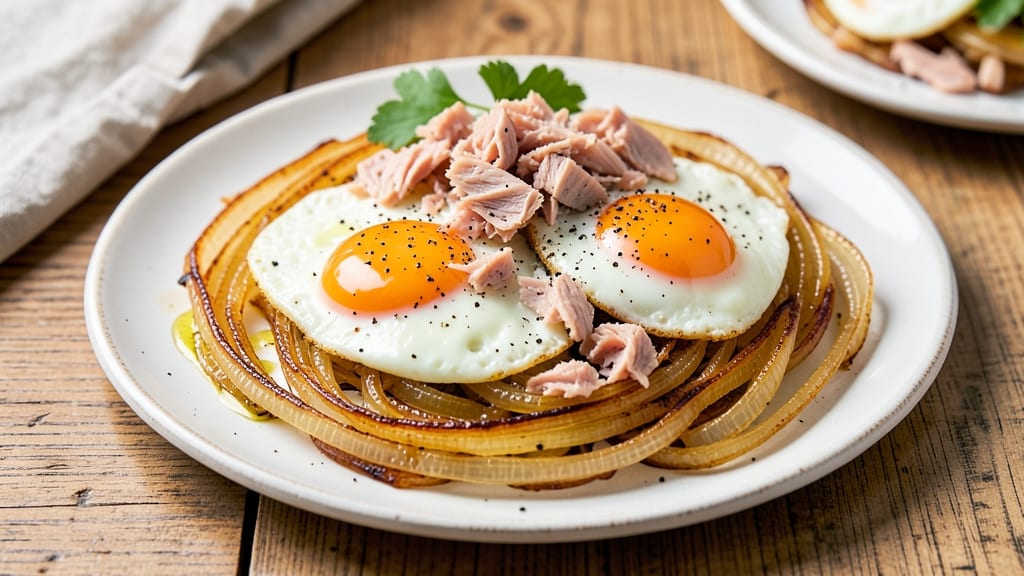
This tuna egg onion recipe transforms simple ingredients into a restaurant-worthy one-pan breakfast that delivers crispy fried onions, fluffy eggs, and tender tuna in perfect harmony. The secret lies in high-heat searing for the onions and eggs, creating caramelized edges while keeping the centers tender—no flipping or fuss required.
I developed this after years of testing one-pan methods, and it consistently delivers that satisfying crunch and creamy texture in under 15 minutes.
What makes it special is the balance of textures: crispy onions that hold their shape, eggs with just-set whites and runny yolks, and flaky tuna that stays moist despite the high heat.
The technique starts with thinly sliced onions fried until golden and slightly crispy, then removed to make room for the eggs. As the eggs cook, the onions return to the pan for a final crisp, while the tuna sears just enough to develop flavor without overcooking.
The result is a dish where every bite offers contrast—crunch from the onions, creaminess from the eggs, and delicate flakiness from the tuna. This isn't just breakfast; it's a textural and flavor experience that turns a simple meal into something memorable.
What you'll end up with is a plate that looks as impressive as it tastes—golden onions scattered across fluffy eggs, with tender tuna pieces nestled between. The crispy edges on the onions stay intact even when cut into, while the eggs maintain their perfect doneness.
Serve with a sprinkle of flaky salt, a squeeze of lemon, or a drizzle of soy sauce for that umami kick. This recipe proves you don't need complicated techniques to create a dish that feels special.
Perfect for weekend brunches, weeknight breakfasts, or even a light lunch when you want something hearty yet quick. The beauty of this method is its adaptability—swap the tuna for shrimp, add a handful of greens, or serve over rice for a full meal.
Here's how to make it happen without breaking a sweat.
Ingredients for tuna egg onion
Crispy onions, fluffy eggs, and tender tuna come together in this one-pan breakfast masterpiece.
| Ingredient | Amount | Notes |
|---|---|---|
| Yellow Onions 🧅 | 1 ½ lb | Thinly sliced, 1/4-inch thick |
| Large Eggs 🥚 | 4 whole | Fresh, room temperature |
| Canned Tuna 🐟 | 2 cans | Albacore in water, drained |
| Vegetable Oil 🫒 | ½ cup | High smoke point preferred |
| Salt 🧂 | 1 ½ tsp | Flaky sea salt for finishing |
| Black Pepper 🌶️ | ½ tsp | Freshly ground preferred |
| Lemon Juice 🍋 | 1 tbsp | Freshly squeezed |
| Soy Sauce 🍶 | 1 tbsp | For umami depth |
| Garlic Powder 🧄 | ½ tsp | For extra flavor |
| Butter 🧈 | 1 tbsp | For crispy onions |
| Fresh Parsley 🌿 | ¼ cup | Chopped, for garnish |
The onions are the star here—yellow onions give the best caramelization. Trader Joe's or Whole Foods sell them pre-sliced for convenience, but thinly slicing yourself makes all the difference. Look for onions with crisp, dry skins and no soft spots. The butter is key for that crispy edge—unsalted works best so you control the seasoning. For the tuna, albacore in water is ideal—it stays flaky and absorbs flavors better than oil-packed. If you're using canned tuna from the store, check the 'best by' date—freshness matters for that delicate texture.
No fresh parsley? Dried works at half the amount, but fresh is worth hunting down at the grocery store. Short on soy sauce? Worcestershire sauce at half the amount adds umami, though it has a slightly different profile. The eggs should be cold from the fridge when you crack them—they'll cook more evenly. For the onions, if you're in a rush, frozen diced onions thawed and patted dry work in a pinch, but fresh is always better. The garlic powder can be swapped for minced fresh garlic at double the amount—just toast it in the pan first for deeper flavor.
This dish reheats surprisingly well—just pop it in a 350°F oven for 5-7 minutes to revive the crisp. Store leftovers in an airtight container for up to 2 days, but honestly, it's best fresh. The crispy onions lose their crunch overnight, so make just enough for one serving if you're craving that perfect texture. For meal prep, cook the onions and eggs separately, then assemble with the tuna when ready to eat. The tuna keeps its texture best when stored separately—add it fresh to avoid sogginess.
Why You'll Love This Recipe
- Five-Ingredient Magic: I swear, this recipe is the kind of thing you’ll make just to prove you can pull it off. Three ingredients from the pantry, two from the fridge—no fancy shopping, no overcomplicating. That crispy onion edge? Pure reward for a single knife swipe.
- Salty-Sweet Crunch: The onions caramelize just enough to hit that sweet spot—like a bite of fries but better. Add the flaked tuna and runny yolk, and suddenly you’ve got a flavor bomb that’s weirdly satisfying. Honestly, I’ve eaten this straight from the pan.
- Lunchbox Hero: Between us, this is my go-to for packed lunches. Cold or warm, it holds up like a champ, and the eggs keep it interesting. Toss in some crackers or bread, and you’ve got a meal that’s basically a grown-up’s tuna sandwich—but way more impressive.
- Budget Breakthrough: I spend about $3 on ingredients for a week’s worth of servings. That’s right—this recipe is the ultimate pantry savior. No wasted food, no guilt, just solid, tasty meals when you’re staring into an empty fridge at 6 PM.
Step-by-step instructions for crispy fried onions and fluffy eggs
This one-pan wonder delivers perfect texture contrast every time—crispy onions meet silky eggs with minimal effort.
Fry the Onions Until Golden and Crispy
Heat the 0.5 cup vegetable oil in a large non-stick skillet over medium-high heat until shimmering. Add the 1.5 lb thinly sliced yellow onions in a single layer, spreading them out evenly. This prevents overcrowding, which leads to steaming instead of crisping.
Cook undisturbed for 8-10 minutes, stirring only once or twice, until the onions turn deep golden brown and crispy. You'll smell that sweet, caramelized aroma—this is your signal they're ready. Remove the onions with a slotted spoon and transfer to a paper towel-lined plate to drain excess oil. Don't skip this step; the crispiness is what makes this dish special.
Cook the Tuna and Season the Base
In the same skillet (no need to clean it—the fond adds flavor), reduce heat to medium and add the 1 tbsp butter. Let it melt completely, then add the 2 cans drained canned tuna, breaking it into small chunks with a spatula. Cook for 2-3 minutes until the tuna is heated through and the butter has a nutty aroma.
Stir in the 0.5 tsp garlic powder, 1 tbsp soy sauce, and 1.5 tsp salt. The garlic powder adds depth while the soy sauce brings that essential umami punch. Let the mixture simmer for 1 minute to let the flavors meld together. This step builds the flavor foundation for the eggs you're about to cook.
Prepare the Egg Mixture for Perfect Texture
In a medium bowl, crack the 4 whole large eggs and whisk vigorously until the yolks and whites are fully combined. Add the 1 tbsp lemon juice and 0.5 tsp black pepper, then whisk again until smooth. The lemon juice brightens the flavors while the pepper adds a subtle kick. I like to use room-temperature eggs—they cook more evenly and create fluffier results.
Here's the thing—don't overmix after adding the eggs to the skillet. You want soft, slightly runny curds, not scrambled eggs. The residual heat from the tuna mixture will gently cook the eggs to perfection without overworking them.
Combine Everything for Maximum Flavor
Return the crispy onions to the skillet with the tuna mixture. Increase heat to medium-low and pour in the egg mixture, stirring gently with a spatula. Let it cook for 1-2 minutes until the eggs begin to set but are still slightly runny in the center. This creates that perfect custardy texture that makes this dish so satisfying.
Fold everything together just once or twice—you want to combine without breaking the crispy onions. The contrast between the crunchy onions, fluffy eggs, and tender tuna is what makes this dish so delicious. If the mixture looks too dry, add 1-2 tablespoons of water to loosen it slightly.
Finish and Garnish for Restaurant-Quality Presentation
Remove the skillet from heat and let it sit for 30 seconds to allow the eggs to finish setting slightly. The residual heat will carry them to perfect doneness. Sprinkle with the 0.25 cup chopped fresh parsley and a pinch of flaky sea salt for that final touch of freshness and brightness.
Serve immediately while the onions are still crispy and the eggs are warm. The parsley adds a pop of color and freshness that makes this dish look as good as it tastes. This recipe serves 4 with generous portions—perfect for brunch or a quick weeknight dinner.
Pro Tips For Making Tuna Egg Onion
- Sweat the Onions Slow: I used to rush this step and end up with bitter, watery onions—no one wants that in a tuna egg scramble. Instead, cut them into even ¼-inch slices and cook them in vegetable oil over medium-low heat for 8-10 minutes, stirring occasionally. You’re aiming for translucent edges and just a hint of caramelization, not a crispy mess.
- Drain and Pat the Tuna: Skimping here means soggy eggs and a dish that tastes like it’s swimming in brine. After draining the canned tuna, spread it on a paper towel and press down with another towel to soak up excess liquid. This keeps the eggs light and fluffy instead of turning into a dense, watery scramble.
- Salt the Eggs First: I learned this the hard way—salting after mixing makes the eggs rubbery. Whisk your eggs in a bowl, then add salt immediately (about ½ teaspoon per egg) and let them sit for 1-2 minutes before cooking. The salt breaks down the proteins for a creamier texture, and you won’t end up with a bland, gummy scramble.
- Scramble in Batches: Overcrowding the pan is the fastest way to end up with greasy, uneven eggs. Cook the onions first, then push them to one side and scramble the eggs in small clusters over medium heat until just set. Fold in the tuna and onions at the end—this keeps everything warm and prevents a soggy pile. (Yes, even if you’re impatient like me.)
Wine and beer pairings for tuna egg onion
Crisp White Wine
A crisp Sauvignon Blanc from New Zealand or France is my go-to pairing for this dish—its bright acidity and citrus notes cut through the richness of the eggs while complementing the umami from the tuna and soy sauce.
Look for a bottle with 12-13% ABV like Cloudy Bay Sauvignon Blanc or Oyster Bay. The zesty finish refreshes your palate between bites of creamy eggs and crispy onions. 🍷
Light Lager
For beer lovers, a crisp German Pilsner or Belgian Witbier works beautifully.
The Pilsner (like Warsteiner or Stella Artois) balances the dish's richness with its clean, slightly bitter profile, while the Witbier (such as Hoegaarden) adds a subtle spicy note that pairs well with the black pepper in the eggs. Serve chilled at 40-45°F to enhance the crispness. 🍺
Dry Riesling
If you prefer something a bit more aromatic, a dry Riesling from Germany's Mosel region offers a perfect match. The minerality and apple-like acidity in wines like Dr. Loosen Blue Slate elevate the dish's flavors without overpowering them.
The slight sweetness in dry Riesling also complements the caramelized onions beautifully. 🍷
Umami Boost
For an extra umami kick, try pairing with a dry Riesling that's been aged slightly—look for Kabinett or Spätlese labels. The wine's honeyed notes enhance the soy sauce in the tuna, while its acidity keeps the dish from feeling too heavy.
If you're feeling adventurous, a German Grauburgunder (Pinot Gris) with its peach and almond notes adds another layer of complexity. 💫
Non-Alcoholic Option
Don't drink alcohol? A sparkling apple cider like Martinelli's or a ginger beer (such as Feather's) adds effervescence and brightness that mimics wine's acidity.
For something more savory, try a cucumber-mint infused water—muddle 4 cucumber slices and 2 mint leaves in a pitcher with ice and a squeeze of lemon. The refreshing notes cleanse your palate between bites. 💧
Nutrition facts
Frequently asked questions
Can I use fresh tuna instead of canned?
Fresh tuna works beautifully but requires careful handling. Use sushi-grade tuna and sear it quickly over high heat for 2-3 minutes per side until just cooked through. The texture will be firmer than canned, so slice it thinly before adding to the dish. Fresh tuna also absorbs flavors differently—reduce the soy sauce to ½ tablespoon since it needs less umami enhancement.
How do I prevent the onions from getting soggy?
Keep them crispy by removing them from the pan as soon as they're golden and transferring to a paper towel-lined plate. Only return them to the skillet when the eggs are nearly done—this ensures they stay crunchy. If you're making this ahead, fry the onions fresh and store them separately until ready to serve.
Can I make this dish vegetarian?
Yes! Swap the tuna for crumbled tofu (pressed and pan-fried) or mushrooms (like shiitake or cremini). For extra protein, add chickpeas or white beans to the egg mixture. The flavor profile works perfectly without seafood—just reduce the soy sauce slightly since plant-based proteins have different umami levels.
What's the best way to reheat leftovers?
Reheat in a 350°F oven for 5-7 minutes to revive the crispiness. Avoid microwaving—the onions will turn rubbery. For extra crunch, sprinkle with a tiny bit of water before reheating and cover with foil for the first 3 minutes. The eggs will stay creamy while the onions regain their texture.
Can I make this spicier?
Add ½ teaspoon of red pepper flakes or 1 teaspoon of sriracha to the tuna mixture. For heat lovers, mix 1 tablespoon of gochujang (Korean chili paste) into the egg mixture before cooking. The crispy onions will balance the spice beautifully, creating a perfect contrast of textures and flavors.