
Breakfast & Brunch
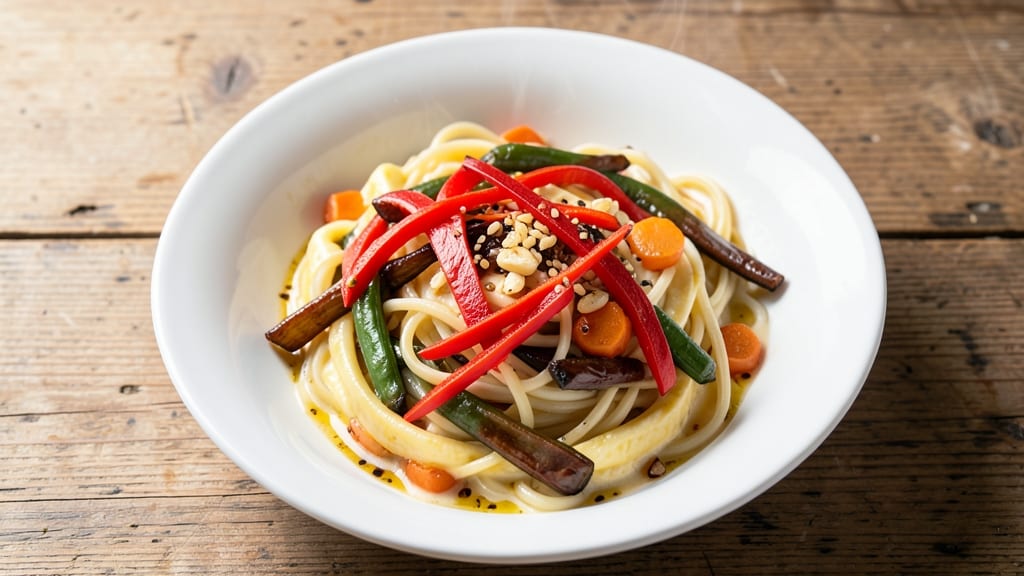
This veggie egg noodles recipe transforms simple ingredients into a savory stir-fry with silky egg ribbons that melt in your mouth. The secret lies in perfectly cooked egg strands—light, tender, and infused with garlic, ginger, and soy—wrapped around vibrant vegetables and chewy noodles.
It’s a dish that balances protein, freshness, and umami in every bite, proving vegetarian meals can be hearty and satisfying without compromise.
The beauty of this recipe is its versatility and speed—ready in 20 minutes with minimal prep. You’ll start with a quick stir-fry of garlic, ginger, and an aromatic blend of bell peppers, snap peas, and carrots, all tossed in a light soy-ginger sauce.
Then, the star: silky egg ribbons, cooked low and slow to maintain their delicate texture, draped over fresh noodles for a restaurant-worthy finish.
What you’ll end up with is a visually stunning dish—bright vegetables contrasting with golden egg ribbons and glossy noodles—packed with flavor but light enough for breakfast or a quick lunch.
The egg adds a luxurious, protein-rich element, while the vegetables bring freshness and crunch. It’s the kind of meal that feels indulgent yet wholesome, perfect for weeknights or weekend brunches.
Serve it immediately with a sprinkle of sesame seeds and sliced green onions for extra freshness, or let it sit for 5 minutes to let the flavors meld.
Pair with a side of steamed greens or a simple miso soup to round out the meal. Here’s how to make it—simple, foolproof, and delicious.
Ingredients for veggie egg noodles
Six eggs, vibrant veggies, and a handful of pantry staples—this stir-fry comes together faster than takeout.
| Ingredient | Amount | Notes |
|---|---|---|
| Large Eggs 🥚 | 6 whole | Room temperature for silky texture |
| Fresh Egg Noodles 🍜 | 8 oz | Wide or ribbon noodles preferred |
| Red Bell Pepper 🌶️ | 1 whole | Sliced into thin strips |
| Snap Peas 🌱 | 1 cup | Fresh or frozen, thawed |
| Carrots 🥕 | 2 medium | Julienned into matchsticks |
| Garlic Cloves 🧄 | 4 cloves | Minced finely for aroma |
| Fresh Ginger 🌿 | 1 inch | Peeled and grated finely |
| Low-Sodium Soy Sauce 🥢 | 2 tbsp | For balanced umami flavor |
| Sesame Oil 🫒 | 1 tbsp | Toasted for nutty aroma |
| Vegetable Oil 🫒 | 2 tbsp | High smoke point for stir-frying |
| Green Onions 🧅 | 2 whole | Sliced thin for garnish |
| Toasted Sesame Seeds 🌰 | 1 tsp | For crunchy finish |
| Salt 🧂 | ½ tsp | Adjust to taste |
| Black Pepper 🌶️ | ¼ tsp | Freshly ground preferred |
The egg ribbons are the star, so fresh eggs make all the difference. Trader Joe's or local farms often carry the best—look for cartons labeled 'large' or 'extra-large'. The noodles? Fresh egg noodles from the Asian aisle (like Taste of China brand) give that chewy texture, but sub with ramen noodles in a pinch. For the veggies, organic bell peppers have more flavor, but conventional works fine. Snap peas? Buy them fresh—they're sweeter than frozen. The ginger should smell bright and zesty, not musty. If it's been in your drawer too long, grab a new root from the produce section.
No snap peas? Snow peas or sugar snap peas work too—just trim the ends. Short on bell peppers? Zucchini or yellow squash in thin strips holds up well. The soy sauce can be tamari for gluten-free, but Kikkoman low-sodium is my go-to. Sesame oil? Light toasted sesame oil from Asian markets has better flavor than the dark, but either works. For extra umami, add a dash of fish sauce (if vegetarian, use coconut aminos). The carrots? Orange baby carrots are perfect for julienning—no peeling needed. Fresh ginger? If you can't find it, ground ginger at half the amount works in a bind.
Eggs keep best in the fridge for 3 weeks—use the oldest first for this recipe. Fresh noodles? Cook them right before serving—they get gummy fast. The stir-fry reheats well, but the egg ribbons get rubbery. Eat within 2 days for best texture. Store leftovers in an airtight container with a paper towel to absorb moisture. Freezing? Not ideal for the egg ribbons, but you can freeze the veggie stir-fry portion separately for 2 months. Garnish with sesame seeds and green onions right before serving—those add the final pop of color and freshness.
Why You'll Love This Recipe
- Minimal Chopping Required: I swear by this trick—just slice the bell pepper and carrots into thin strips (no julienne skills needed) while the noodles boil. Snap peas? Toss them in whole. Less prep, more time to actually eat.
- Crispy Eggs, Silky Noodles: The secret’s in the eggs—soft centers with golden edges—paired with chewy egg noodles that hold up like a dream. Add a quick stir-fry of those bright veggies, and suddenly your plate looks and tastes like a restaurant dish.
- Lunchbox Hero: Between us, this is my go-to for packed lunches. Cold or reheated, the noodles stay satisfying, and the eggs add protein that keeps everyone full. (Yes, even my picky 10-year-old eats it.)
- Budget Meal Magic: Eggs, carrots, and bell peppers stretch into three servings with zero waste. Fresh egg noodles? Often cheaper than pasta, and way more flavorful. Dinner for four, costing less than takeout for two.
Step-by-step instructions for silky egg noodle stir-fry
Here's how to create tender egg ribbons and crisp-tender vegetables in one perfect dish.
Prepare the Egg Ribbons
In a medium bowl, whisk together the 6 whole large eggs until the yolks and whites are fully combined and the mixture is smooth. I like to use a fork for this - it gives you just enough aeration without overworking the eggs. Add 0.5 teaspoon salt and 0.25 teaspoon black pepper, then whisk again until evenly distributed.
Heat 1 tablespoon vegetable oil in a 10-inch nonstick skillet over medium-low heat. The oil should be hot enough to shimmer when you flick a drop with your finger, but not smoking. Pour the egg mixture into the skillet, tilting it slightly to spread the eggs evenly across the surface. Let them cook undisturbed for 2-3 minutes until the edges begin to set but the center still looks slightly runny.
Here's the trick: when you see the edges start to pull away from the pan but the center is still custard-like, use a spatula to gently fold the eggs from one side to the other, creating thin ribbons. Continue folding and pressing down lightly until all the egg forms silky strands. Remove from heat and set aside - these ribbons will continue cooking slightly when mixed with the vegetables.
Stir-Fry the Vegetable Medley
In the same skillet, add the remaining 1 tablespoon vegetable oil and increase heat to medium-high. Add the 2 medium carrots (julienned into matchsticks) and 1 whole red bell pepper (sliced into thin strips), spreading them out in an even layer. Stir-fry for 3-4 minutes until the carrots soften slightly but still retain a crisp texture, and the bell pepper begins to blister at the edges.
Add the 1 cup snap peas and the 4 cloves minced garlic, stirring constantly for 2 minutes until the garlic becomes fragrant and the snap peas brighten in color. Here's where it gets good - sprinkle in the 1 inch finely grated fresh ginger and 2 tablespoons low-sodium soy sauce, tossing everything together for 1 minute to let the flavors meld. The vegetables should be vibrant and just tender-crisp at this stage.
Cook the Egg Noodles
While the vegetables cook, bring a large pot of water to a rolling boil and add 8 ounces fresh egg noodles. Cook according to package instructions until al dente - I find 2-3 minutes less than the package suggests gives the best texture. Drain immediately and rinse briefly under cold water to stop the cooking process, then drain again thoroughly.
Return the noodles to the pot and toss with 1 tablespoon toasted sesame oil while still hot. This step prevents sticking and adds that nutty aroma. Transfer the noodles to a large serving bowl and immediately add the egg ribbons and vegetable mixture on top. Toss everything together vigorously for 1-2 minutes until the noodles absorb the vegetable juices and everything is evenly coated.
Finish and Serve
Return the skillet to medium heat and add 1 tablespoon sesame oil. Let it heat for 30 seconds until fragrant, then pour this oil over the noodle mixture. The aroma will fill your kitchen - that's your signal it's ready. Taste and adjust seasoning if needed, adding a splash more soy sauce if the dish needs more umami depth.
Garnish with 2 whole green onions (sliced thin) and 1 teaspoon toasted sesame seeds just before serving. The contrast of textures - silky egg ribbons, tender-crisp vegetables, and chewy noodles - makes every bite exciting. Serve immediately while hot, as the noodles will continue to soften slightly as they sit.
Pro Tips For Making Veggie Egg Noodles
- Blanch Peppers First: I learned this the hard way—roasting or sautéing whole red bell peppers first makes them far easier to slice. Cut them in half, char-side down in a dry pan for 3-4 minutes, then peel off the skin while warm. The flesh softens so much faster when you toss them into the noodles later, and the smoky flavor actually ties the dish together.
- Cut Carrots Thin: Skip the thick rounds—julienne or matchstick-cut carrots cook in the same time as snap peas and stay crisp. Use a mandoline if you’re impatient (yes, even if you’re bad with knives), or just hack them into 1/8-inch sticks. Overcooked carrots turn mushy and ruin the texture contrast.
- Don’t Overcrowd the Pan: I used to dump all the veggies in at once, and the snap peas would steam instead of sear. Work in batches—cook the carrots and bell peppers first, then push them to the sides and add the peas. A hot, slightly crowded pan gives them those golden blisters that make the dish look (and taste) restaurant-worthy.
- Reserve Egg Water: Fresh egg noodles release starch like crazy when cooked, and that’s the glue holding your dish together. Save 1/2 cup of the pasta water before draining, then splash it in at the end. It’ll help the sauce cling to the noodles instead of making a sad, dry pile. (Trust me, you’ll regret skipping this.)
Essential equipment for great veggie egg noodles
Skillet Essentials
Your 10-inch nonstick skillet is the star of this dish—it’s where the magic happens with both the egg ribbons and vegetable stir-fry. I recommend a well-seasoned cast iron skillet (like Lodge) for even better heat distribution, but a high-quality nonstick pan works too.
Avoid cheap nonstick—it can’t handle the medium-high heat needed for stir-frying without releasing toxins. 🔥
For the egg ribbons, the skillet must be preheated to medium-low—too hot, and they’ll cook too fast on the outside while staying raw inside. A spatula with a flexible edge (like OXO Good Grips) helps create those silky strands without tearing. Keep it nearby!
Noodle Cooking Tools
You’ll need a large pot with a tight-fitting lid to boil your 8 oz fresh egg noodles—this prevents water from boiling over. I use a stainless steel pot (like All-Clad) because it heats water quickly and evenly.
A fine-mesh strainer (preferably with long handles) makes draining noodles effortless, and a wooden spoon helps toss them with sesame oil post-drain.
Pro tip: If you don’t have fresh egg noodles, ramen noodles work in a pinch—just rinse them well after cooking to remove excess starch. A small bowl for tossing the noodles with sesame oil keeps everything contained while preventing splatters. 🍜
Knives and Cutting
A sharp chef’s knife (like Mercer Culinary) is a must for julienning carrots and slicing bell peppers—dull knives crush veggies, making them mushy. For the garlic and ginger, a microplane or fine grater ensures they’re finely textured, which is key for flavor infusion.
I also keep a cutting board with non-slip pads (like OXO Good Grips) to prevent sliding while chopping.
If you’re short on time, a mandoline speeds up julienning carrots, but be cautious—always use the safety guard! For snap peas, simply trim the ends with a knife or kitchen shears. Precision here ensures even cooking and a visually appealing dish. ✨
Measuring and Mixing
Accurate measurements matter, especially for the soy sauce and sesame oil. A small measuring spoon set (like OXO Good Grips) makes it easy to portion out 2 tbsp soy sauce and 1 tbsp sesame oil without spills.
For whisking eggs, a balloon whisk or fork works—just avoid over-whisking, which can make the ribbons tough.
A medium mixing bowl (8–10 inches) holds the egg mixture while whisking, and a small bowl catches any drips from the skillet. For garnishes, a fine-mesh strainer helps portion sesame seeds evenly, and a pair of kitchen scissors trims green onions quickly. 🌿
Nutrition facts
Frequently asked questions
Can I make this recipe with dried noodles instead of fresh?
Fresh egg noodles are ideal for their chewy texture, but you can substitute with dried ramen or udon noodles. Cook them according to package instructions, rinse with cold water to stop cooking, and toss with 1 tablespoon sesame oil before mixing with the egg and vegetables. For extra flavor, add a splash of soy sauce to the cooking water.
How do I get the egg ribbons to be silky instead of rubbery?
The secret is low and slow heat and patience! Use medium-low heat in your skillet, let the eggs cook undisturbed for 2-3 minutes until edges set but centers stay runny, then gently fold into ribbons. Overcooking or high heat makes them tough. Also, use room-temperature eggs for even cooking.
Can I prep this dish ahead of time?
You can prep components separately up to 24 hours ahead: cook the noodles and store them in the fridge with a paper towel to absorb moisture, chop all vegetables, and whisk the egg mixture. However, do not cook the egg ribbons ahead—they lose their silky texture when reheated. Assemble everything right before serving for best results.
What if I don’t have sesame oil?
You can substitute with avocado oil or neutral oil, but the nutty aroma is key! For extra flavor, add ½ teaspoon toasted sesame seeds directly to the noodles after cooking. If you want umami depth, a dash of fish sauce (or coconut aminos for vegetarian) in the vegetable stir-fry works too.
How do I adjust the spice level?
Start with the recipe as written for a balanced flavor. For more heat, add ½ teaspoon red pepper flakes to the vegetable stir-fry. For a milder version, reduce the soy sauce to 1 tablespoon and add ½ teaspoon sugar to balance. Always taste before serving!