
Breakfast & Brunch
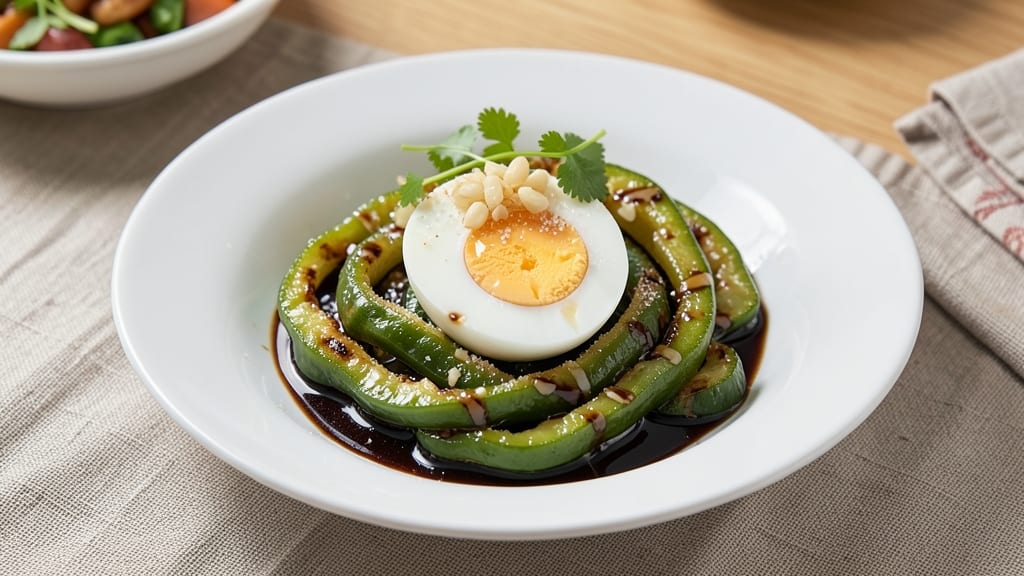
This Vietnamese bitter melon and egg recipe transforms a polarizing ingredient into a silky, savory dish that balances bitterness with rich, creamy egg ribbons. The secret lies in proper preparation—cleaning the bitter melon thoroughly and stir-frying it just until tender, then swirling in beaten eggs for that signature delicate texture.
I first discovered this dish at a Hanoi street food stall, where the contrast of textures and flavors made it unforgettable.
The technique is simpler than it sounds: first, the bitter melon is sliced and blanched to remove its natural bitterness, then stir-fried with garlic, soy sauce, and a touch of sugar to create a sweet-savory base.
The eggs are beaten to ribbons and cooked low and slow, creating a velvety coating over the melon. This method ensures every bite delivers that perfect harmony of textures—crisp edges on the melon, tender egg strands, and a light, aromatic sauce.
What makes this dish special is how it turns a vegetable many people avoid into something addictive. The bitterness is mellowed but still present, creating a complex flavor profile that pairs beautifully with steamed rice or fresh herbs.
The dish is quick to prepare but feels like a restaurant-quality meal, making it perfect for breakfast or a light lunch. Once you try it, you’ll understand why this is a Vietnamese home cook staple.
For those new to bitter melon, don’t be intimidated—the key is proper preparation and balancing flavors. This recipe includes tips for reducing bitterness and achieving that signature egg ribbon texture. Let’s get cooking—your taste buds will thank you.
Ingredients for vietnamese bitter melon egg
These fresh ingredients transform bitter melon into a silky, savory Vietnamese classic.
| Ingredient | Amount | Notes |
|---|---|---|
| Bitter Melon (Goya) 🍆 | 2 lb | Peeled, deseeded, sliced thin |
| Large Eggs 🥚 | 6 whole | Room temperature, beaten |
| Garlic Cloves 🧄 | 4 cloves | Minced, aromatic |
| Light Soy Sauce 🥄 | ¼ cup | For umami balance |
| Dark Soy Sauce 🥄 | 1 tbsp | For color depth |
| Granulated Sugar 🍚 | 1 tbsp | Balances bitterness |
| Neutral Oil (Vegetable or Canola) 🫒 | ½ cup | High smoke point |
| Green Onions 🧅 | 4 whole | Sliced, for garnish |
| Fresh Cilantro 🌿 | ¼ cup | Chopped, optional garnish |
| White Peppercorns 🌶️ | ½ tsp | Freshly ground |
| Salt 🧂 | ½ tsp | Adjust to taste |
| Steamed Jasmine Rice 🍚 | 2 cups | For serving |
The bitter melon is the star, so choose firm, bright green ones—avoid any with soft spots or yellowing. Most Asian markets carry them fresh, but if you're at a regular grocery store, look for the smaller, denser varieties. The key to reducing bitterness is thorough prep: slice, soak in salted water for 10 minutes, then rinse well. Trader Joe's and H Mart are great spots for quality bitter melon if you're in the US. For the eggs, room temperature is crucial—they'll whip up smoother and create those signature ribbons. I always use free-range eggs for richer flavor, but any good-quality eggs will work.
No bitter melon? Substitute with zucchini or eggplant, but you'll lose that signature texture and flavor. Short on soy sauce? Coconut aminos work in a pinch, though the flavor won't be identical. The sugar is non-negotiable—it's what tames the bitterness and creates that sweet-savory balance. For the oil, avocado oil has the highest smoke point if you're frying, but vegetable oil is fine for stir-frying. The green onions and cilantro are optional but add freshness—skip them if you're sensitive to strong flavors. Want extra umami? Add a dash of fish sauce (though this would make it non-vegetarian), or use vegetable-based fish sauce instead.
Bitter melon keeps for 3-4 days in the fridge, wrapped in a damp towel to maintain crispness. The prepped melon slices can be blanched ahead and stored in ice water for up to 2 days. Eggs should be used within 3 days of beating for best texture. This dish reheats beautifully—just warm gently in a pan with a splash of water to prevent drying. Portion into containers for easy lunches, and store with a layer of oil on top to preserve freshness. The rice can be made fresh or reheated with a splash of water to restore moisture.
Why You'll Love This Recipe
- One-Pan Magic: I swear by this recipe because it’s that simple—just slice the bitter melon, crack in the eggs, and let the garlic and soy sauces work their magic. No chopping boards, no extra bowls, just a sizzle and a stir.
- Umami Bomb: That dark soy sauce? It’s the secret weapon here—deep, caramelized flavor that cuts through the bitterness of the goya while the light soy keeps it bright. The eggs get perfectly runny, soaking up every drop.
- Lunchbox Hero: Between us, this is my go-to for packed lunches. The eggs hold up surprisingly well, and the bitter melon stays crisp when reheated (or eaten cold—no judgment). Toss it in a container with rice, and you’ve got a meal that’s actually exciting.
- Budget Win: Bitter melon is cheap, eggs are cheap, and a few cloves of garlic last forever. I’ve made this for under $3 per serving, and it still feels like a restaurant dish. Plus, leftovers? They’re even better the next day—if you can resist eating them all at once.
Step-by-step instructions for stir-fried bitter melon with silky egg ribbons
Master this Vietnamese classic where tender bitter melon meets delicate egg ribbons in a savory-sweet sauce.
Prepare the Bitter Melon and Egg Mixture
Begin by slicing the 2 lb bitter melon (Goya) lengthwise into ¼-inch thick strips, then peel and remove the seeds using a spoon. This step is crucial—the bitter melon's flesh should be completely clean to avoid any bitterness from the seeds. Place the sliced bitter melon in a colander and rinse under cold water to remove any lingering bitterness, then pat dry thoroughly with paper towels.
In a medium bowl, beat the 6 whole large eggs until just combined—no need to overbeat, as this can make the egg ribbons tough. Add ½ tsp salt and ½ tsp freshly ground white peppercorns to the eggs, mixing gently to distribute evenly. Set the egg mixture aside while you prepare the stir-fry base.
Stir-Fry the Bitter Melon with Aromatics
Heat ½ cup neutral oil (vegetable or canola) in a large wok or skillet over medium-high heat until shimmering but not smoking. Add the 4 cloves minced garlic and stir for 30 seconds until fragrant—this prevents the garlic from burning, which would make the dish bitter.
Add the prepared bitter melon strips in a single layer, spreading them out evenly. Stir-fry for 3-4 minutes until the edges begin to soften slightly but still retain a slight crunch. Avoid overcrowding the pan, as this will steam the bitter melon instead of searing it. If needed, work in batches to ensure even cooking.
Create the Egg Ribbons and Combine Flavors
Reduce the heat to medium-low and pour the beaten egg mixture into the wok, tilting the pan to spread it into a thin, even layer. Let the eggs cook undisturbed for 10-15 seconds until the edges begin to set but the center remains slightly runny. Using a spatula, gently fold the eggs into soft ribbons while continuing to cook for another 10 seconds—this creates the signature silky texture.
Immediately add ¼ cup light soy sauce, 1 tbsp dark soy sauce, and 1 tbsp granulated sugar to the wok. Stir everything together for 1-2 minutes until the bitter melon is fully coated in the sauce and the eggs are just set. The dark soy sauce will give the dish its signature deep color, while the sugar balances the bitterness of the melon.
Finish and Garnish
Remove the wok from heat and let the stir-fry rest for 1 minute to allow the flavors to meld. Garnish with 4 sliced green onions and ¼ cup chopped fresh cilantro for brightness and freshness. Serve immediately over 2 cups steamed jasmine rice, ensuring each portion gets a generous helping of both the bitter melon and egg ribbons.
This dish is best enjoyed fresh, as the bitter melon continues to soften slightly even after cooking. The contrast of the silky egg ribbons against the slightly crisp bitter melon creates a perfect balance of textures, while the savory-sweet sauce ties everything together. Adjust the sugar to taste if you prefer a less sweet finish.
Pro Tips For Making Vietnamese Bitter Melon Egg
- Scorch the Melon First: Sear the bitter melon slices in a dry pan for 30 seconds per side before adding oil—this caramelizes the natural sugars and cuts through the bitterness. I learned this the hard way after eating a batch that tasted like raw cabbage. The slight char also adds depth that raw melon just can’t match.
- Use Aged Dark Soy: Skip the cheap dark soy sauce—it’ll just make your dish taste like artificial molasses. Aged dark soy (the kind used in Vietnamese cooking) adds a rich, almost caramelized umami that balances the bitterness without overpowering. Trust me, your future self will notice the difference when you taste the first bite.
- Crack Eggs Directly In: Dump the eggs straight into the hot pan with the melon instead of pre-whisking—this creates a quick, crispy crust on the bottom while keeping the yolks runny. Pre-whisking makes the eggs too tender, and you’ll end up with a soggy mess. Sounds weird, but it works every time.
- Salt the Garlic: Toss the minced garlic in a pinch of salt before cooking—it mellows the sharpness and prevents it from burning. I was skeptical until I tried it, and now I never cook garlic without it. The flavor becomes sweeter and more integrated into the dish.
Essential equipment for great vietnamese bitter melon egg
Wok Essentials
For this recipe, a 14-inch carbon steel wok is ideal—it heats up quickly and distributes heat evenly for that perfect stir-fry sear. I use a Made In wok from Amazon because it’s affordable, durable, and conducts heat like a dream.
If you don’t have a wok, a large, deep skillet with sloped sides works too, but avoid non-stick—it won’t give you the same Maillard reaction for browning the garlic and bitter melon. 🔥
Heat Control Tools
A cast iron lid is a game-changer for controlling heat during the egg ribbon step. When you pour the eggs into the wok, cover it immediately to trap heat and create those signature silky strands.
I keep a Lodge cast iron lid handy for this exact purpose—it’s heavy enough to regulate temperature perfectly. For precise monitoring, a laser thermometer (like the ThermoWorks IR Thermometer) helps track the oil’s temperature without guesswork.
Prep Station Must-Haves
Set up a prep station with a sharp chef’s knife (I swear by Mercer Culinary Genesis) and a mandoline for uniform bitter melon slices—consistency is key for even cooking. A fine-mesh colander and paper towels are non-negotiable for rinsing and drying the melon.
For the eggs, a whisk (like the OXO Good Grips) ensures smooth ribbons without over-beating. Pro tip: Keep a small bowl of ice water nearby to plunge cooked melon slices if you need to pause prep.
Sauce and Seasoning Gear
Measure your soy sauces and sugar in a small liquid measuring cup for precision—this dish relies on balancing flavors. A microplane for garlic is faster than mincing with a knife, and a small saucepan comes in handy if you need to warm the sauce separately.
For garnishes, scissors make quick work of slicing green onions, while a pair of kitchen shears trims cilantro stems efficiently. 🌿
Serving Essentials
Serve this dish immediately over steamed jasmine rice in individual bowls or a large family-style platter. I love using rectangular ceramic plates to showcase the vibrant colors of the bitter melon and egg ribbons.
For extra presentation, keep a small bowl of extra sauce on the table so guests can adjust sweetness to taste. A tongs helps portion the dish neatly, and small serving spoons allow for easy second helpings.
Nutrition facts
Frequently asked questions
Why does bitter melon need to be blanched before cooking?
Blanching removes the natural bitterness and milky sap that can make the dish unpleasant. Soak the slices in salted water for 10 minutes, then rinse thoroughly—this step is what transforms the polarizing ingredient into something silky and savory. Skipping it will leave a bitter aftertaste that even the egg ribbons can't mask.
Can I make this recipe with regular melon instead of bitter melon?
Not recommended—bitter melon's unique texture and flavor are essential to this dish. If you're avoiding bitter melon, try zucchini or eggplant as a substitute, but the result won't be the same. The bitterness is what balances perfectly with the sweet-savory egg sauce, creating that signature Vietnamese flavor profile.
How do I get the perfect egg ribbons every time?
Use room temperature eggs and beat them just until combined—overbeating makes them tough. Pour them into the hot wok at medium-low heat, then immediately cover with a lid to trap heat. Let them set for 10-15 seconds before gently folding into ribbons. The key is patience and low heat!
Is this dish vegetarian? Can I add meat?
Yes, it's vegetarian as written, but you could add shrimp or pork for a non-vegetarian version. If adding meat, cook it separately first and mix in at the end. The traditional recipe keeps it simple with just bitter melon and eggs, but Vietnamese home cooks often customize it to their taste.
How long will leftovers keep, and can I reheat them?
Store leftovers in an airtight container for up to 2 days in the fridge. Reheat gently in a pan with a splash of water to prevent drying. The texture changes slightly when reheated—it's best enjoyed fresh, but it still tastes delicious. For longer storage, freeze portions for up to 1 month.