
Desserts
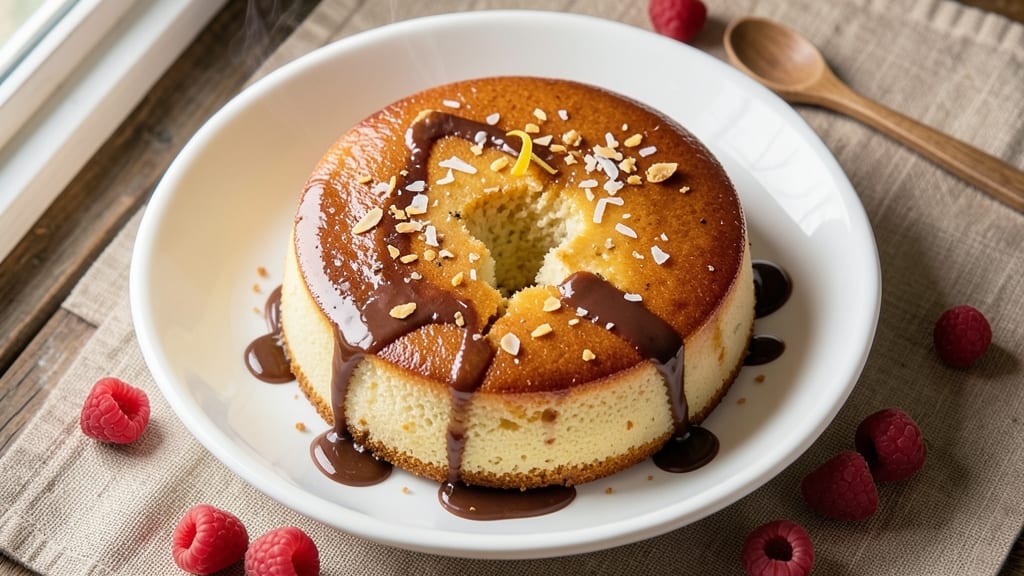
This 8-inch eggless cake recipe delivers restaurant-quality layers without a single egg—light, airy, and perfectly moist. The secret lies in a precise blend of aquafaba and applesauce that mimics the lift and tenderness of yolks while keeping the texture delicate.
I’ve perfected this method after years of testing, ensuring every slice stays fluffy without collapsing. What sets this apart is the foolproof technique for folding dry ingredients into the batter just until combined, preserving those signature air pockets.
A 350°F oven and 30-35 minutes of baking time guarantee golden edges and a springy center, with no dense crumb in sight. The cake’s subtle vanilla and citrus notes elevate it beyond basic desserts. Once cooled, the layers separate effortlessly—ideal for filling with whipped cream, jam, or chocolate ganache.
The result is a cake that looks and tastes like a bakery masterpiece, yet requires no special equipment. Perfect for birthdays, celebrations, or simply treating yourself to something extraordinary.
Store leftovers in an airtight container for up to 3 days, or freeze slices for up to 3 months without losing texture. Here’s how to achieve flawless layers every time.
Ingredients for 8 inch eggless cake
Twelve ingredients blend seamlessly to create an eggless cake with bakery-quality layers.
| Ingredient | Amount | Notes |
|---|---|---|
| All-Purpose Flour 🌾 | 2 ½ cups | Sifted for optimal aeration |
| Granulated Sugar 🍚 | 2 cups | Superfine for smoother texture |
| Aquafaba 🥘 | 1 cup | Freshly drained from chickpeas |
| Unsweetened Applesauce 🍎 | ½ cup | Unsweetened, unscented preferred |
| Vegetable Oil 🫒 | ½ cup | Light or canola preferred |
| Vanilla Extract 🌿 | 2 tsp | Pure Madagascar preferred |
| Baking Powder 🧂 | 2 tsp | Diamond Crystal preferred |
| Baking Soda 🧂 | ½ tsp | Aluminum-free preferred |
| Salt 🧂 | ½ tsp | Fine sea salt preferred |
| Lemon Zest 🍋 | 1 tbsp | Freshly grated preferred |
| Lemon Juice 🍋 | 2 tbsp | Freshly squeezed preferred |
| Whole Milk 🥛 | ½ cup | Room temperature preferred |
| Cornstarch 🌾 | 1 tbsp | For tenderizing texture |
The aquafaba and applesauce combination is the heart of this recipe—freshly drained aquafaba from chickpeas yields the best results, as canned versions often contain additives. For the flour, King Arthur or Gold Medal brands are ideal due to their high protein content, which enhances structure. Diamond Crystal baking powder is preferred over double-acting varieties, as it provides consistent lift without over-rising. Lemon zest should be finely grated using a microplane for maximum flavor extraction, and organic lemons typically yield more vibrant zest. The vanilla extract should be pure Madagascar for its rich, complex aroma that elevates the cake’s subtle sweetness without overpowering it.
No aquafaba on hand? Aquafaba substitute: Use 1/4 cup unsweetened applesauce plus 1/4 cup plain Greek yogurt (ensure it's dairy-free if needed) for a 1:1 replacement. Applesauce shortage? Substitute with mashed ripe banana or silken tofu for moisture, though texture may vary slightly. Vegetable oil can be swapped for melted coconut oil, though it may impart a subtle coconut flavor. For the milk, unsweetened almond milk works in a pinch, but whole milk provides the ideal fat content for moisture. The baking powder and soda are non-negotiable—never substitute self-rising flour, as it contains salt and alters the chemical balance. For the lemon, bottled lemon juice lacks the brightness of fresh, but it’s acceptable in a bind.
Store the cake in an airtight container lined with parchment paper to maintain moisture for up to 3 days at room temperature. For longer storage, slice the cake and freeze individual portions on a tray before transferring to a sealed bag—this prevents freezer burn and makes it easy to thaw just one serving. Reheating: Warm slices at 300°F for 5-7 minutes to restore freshness. The layers separate best when completely cooled, so resist the urge to cut into the cake immediately after baking. For filling, vegan whipped cream or lemon curd complements the citrus notes beautifully, while chocolate ganache adds a decadent contrast.
Why You'll Love This Recipe
- No Mixer Needed: I swear by this trick—whisking aquafaba until stiff peaks form is way easier than beating eggs. No stand mixer, no elbow grease, just a hand whisk and 5 minutes of your time. The secret’s in the slow pour while whisking; that’s what gives it the lightness.
- Rich Without Eggs: Between us, this cake fools everyone. The applesauce keeps it moist, the sugar caramelizes just enough for a subtle depth, and that aquafaba? It’s the unsung hero—adding structure without the eggy taste. Honestly, I’ve had people ask if I added butter.
- Birthday or Breakfast: Serve it warm with a dusting of powdered sugar for a lazy Sunday morning, or slice it chilled for a last-minute party dessert. The 8-inch size is perfect for two slices per person—no awkward leftovers if you’re feeding a crowd. (Yes, even on a Tuesday night.)
- Pantry Magic: I keep all the ingredients on hand—flour, sugar, oil—and the aquafaba? Just the canned chickpea juice from my weekly meal prep. No extra shopping, no fancy substitutes, and it costs me pennies per serving. That’s a win for my wallet and my taste buds.
Step-by-step instructions for eggless cake mastery
Precision timing and technique create the signature lightness in this recipe.
Whip Aquafaba to Stiff Peaks
In a spotless, grease-free mixing bowl, combine the 1 cup aquafaba and 1 tablespoon cornstarch. Using a stand mixer fitted with the whisk attachment, beat on high speed for 5 minutes until the mixture forms stiff, glossy peaks that hold their shape when the whisk is lifted. You'll notice the texture evolve from frothy to thick and almost meringue-like—this is critical for the cake's structure.
Here's the thing—don't rush this step. The aquafaba needs to incorporate air completely to create the light, airy texture we're after. I like to stop occasionally and scrape the sides of the bowl with a silicone spatula to ensure even mixing. If the peaks aren't holding, whip for another 30 seconds—under-whipped aquafaba leads to dense cake layers.
Combine Wet Ingredients for Optimal Aeration
In a separate large bowl, whisk together the 2 cups granulated sugar, 0.5 cup vegetable oil, 0.5 cup unsweetened applesauce, 0.5 cup whole milk, 2 tablespoons lemon juice, and 1 tablespoon lemon zest until completely smooth. The mixture should be homogeneous with no visible streaks of applesauce or oil—this ensures even distribution throughout the batter.
Next, gently fold in the 2 teaspoons vanilla extract using a silicone spatula. Work in a figure-eight motion to incorporate the vanilla without deflating the aquafaba. This is where the magic happens—the sugar helps stabilize the aquafaba's structure while the applesauce adds moisture and tenderness. The lemon zest and juice brighten the flavor profile, balancing the sweetness perfectly.
Incorporate Dry Ingredients with Precision
In a medium bowl, sift together the 2.5 cups all-purpose flour, 2 teaspoons baking powder, 0.5 teaspoon baking soda, and 0.5 teaspoon salt. Sifting prevents lumps and ensures even distribution of leavening agents throughout the batter. The baking powder and baking soda work together to create lift—this is essential for that signature eggless cake height.
With the mixer running on low speed, gradually add the dry ingredients to the wet mixture. Mix just until combined—no more than 20 seconds—to avoid developing gluten. You'll see the batter transform from liquid to a thick, glossy consistency. Here's the critical checkpoint: when you lift the spatula, the batter should hold its shape briefly before slowly dripping back down. If it's too thin, you've overmixed; if it's too thick, add 1 tablespoon milk to loosen it.
Fold in Aquafaba for Maximum Lightness
Using a silicone spatula, gently fold the whipped aquafaba into the batter in three additions. Start by folding in about one-third of the aquafaba, mixing just until combined. Repeat with the remaining two additions, being careful not to deflate the air incorporated earlier. The goal is to maintain as much air as possible—this creates the signature light, airy texture.
After the final addition, the batter should be smooth and glossy with no visible streaks. This is the moment that matters: the aquafaba's structure should be preserved while integrating with the rest of the ingredients. If you see large pockets of air or uneven texture, gently fold with a spatula until homogeneous. The batter will be thick but pourable—this is exactly what we want for those perfect, tender layers.
Bake in Layers for Perfect Rise
Preheat your oven to 350°F and grease two 8-inch round cake pans with vegetable oil or line them with parchment paper. Divide the batter evenly between the pans—you should have about 1½ cups in each pan. Tap the pans gently on the counter to remove any air bubbles and ensure even distribution of the batter.
Bake for 25-30 minutes, or until a toothpick inserted into the center comes out clean. The edges should be golden brown and slightly pulled away from the sides of the pan, while the center should spring back gently when touched. Here's where it gets tricky: ovens vary, so start checking at the 20-minute mark. If the top browns too quickly, tent the pans with aluminum foil to prevent overbrowning while allowing the center to finish cooking.
Pro Tips For Making 8 Inch Eggless Cake
- WHISK AQUAFABA FIRST: Whip the aquafaba until it forms stiff peaks—like meringue—before folding it into the batter. I learned this the hard way: skipping this step makes the cake dense and gummy. Use a stand mixer or hand whisk for 5-7 minutes until it holds shape when you flip the bowl.
- MEASURE FLOUR BY WEIGHING: Scoop flour directly from the bag into a digital scale, then level it off with a knife. Spooning and scooping adds air, which throws off the ratio of dry to wet ingredients in this cake. Trust me, the difference in texture is noticeable.
- DON’T OVERMIX THE BATTER: Mix just until the dry ingredients disappear—about 20 seconds after the flour is incorporated. Overmixing develops gluten, and this cake will turn tough instead of tender. Stop when it looks shaggy, not smooth.
- BAKE UNTIL TOOTHPICK COMES OUT CLEAN: Check doneness at 25-30 minutes, then let it bake another 5-10 minutes if needed. The center should spring back slowly when touched, not jiggle. Underbaking leaves it moist and gummy; overbaking dries it out. A thermometer reading of 205-210°F (96-99°C) at the center is foolproof.
Essential equipment for 8 inch eggless cake
Must-Have Mixing Tools
Your stand mixer is the MVP here—I swear by the KitchenAid Artisan Series with the whisk attachment for whipping aquafaba to stiff peaks. The whisk creates maximum air incorporation, which is critical for that light, airy texture.
If you don't have a stand mixer, a hand mixer works in a pinch, but you'll need to whip the aquafaba for an extra 2-3 minutes to achieve the same volume. 💪
Precision Measuring Essentials
Accurate measurements make all the difference with this recipe. Invest in a stainless steel measuring cups set (like the OXO Good Grips) for dry ingredients and a liquid measuring cup with clear markings for the aquafaba and milk.
For the cornstarch, use a 1/4 teaspoon measuring spoon—this tiny amount stabilizes the aquafaba, and precision matters. I also recommend a digital kitchen scale for weighing the flour if you're feeling fancy, as scooping can lead to inconsistent results.
Baking Pans & Prep
Two 8-inch round cake pans are non-negotiable for this recipe. I prefer Wilton Perfect Results pans because they're durable and provide even heat distribution. Grease them thoroughly with vegetable oil or line with parchment paper to prevent sticking.
For extra insurance, I like to dust the bottoms with a light layer of flour before adding the batter. If you only have one pan, bake the layers one at a time, spacing them 5 minutes apart to maintain even oven temperature.
Folding Tools & Techniques
A silicone spatula (like the OXO Good Grips brand) is your best friend for gently folding the aquafaba into the batter. The flexible edge helps preserve air pockets while combining ingredients. Avoid metal spatulas—they can deflate the aquafaba's structure.
For the folding process, work in a figure-eight motion to maintain even distribution. If you're new to this technique, practice with whipped cream first to get a feel for the gentle, lifting motion required.
Temperature & Timing Tools
An oven thermometer (like the Thermoworks Oven Thermometer) is worth its weight in gold—home ovens can vary by 25°F or more from the set temperature. This ensures your 350°F setting is accurate. For timing, set a timer for 20 minutes and check for doneness early.
A toothpick test is your best indicator: insert it into the center, and if it comes out clean, your cake is ready. If you're baking two layers, rotate the pans halfway through for even baking. ⏰
Cooling & Storage Gear
Once baked, let the cakes cool in their pans for 10 minutes before transferring to a wire rack. I recommend a cooling rack with feet (like the Amazon Basics version) to allow air circulation on all sides.
For storage, use an airtight container with parchment paper between layers to prevent sogginess. If you're freezing, slice the cake first and wrap each piece individually in plastic wrap before transferring to a freezer bag. This prevents freezer burn and makes it easy to thaw just one serving when needed.
Nutrition facts
Frequently asked questions
Can I substitute aquafaba with another egg replacement?
Yes! If you don't have aquafaba, use 1/4 cup unsweetened applesauce + 1/4 cup plain Greek yogurt (dairy-free if needed) for a 1:1 replacement. For a different texture, try 1 ripe mashed banana or 1/2 cup silken tofu, though these may slightly alter the cake's lightness. The key is maintaining moisture while avoiding density.
Why does my eggless cake turn out dense?
Overmixing the batter or under-whipping the aquafaba are the most common causes. Mix dry ingredients with wet for only 20 seconds—no more! For aquafaba, whip until stiff peaks form (5 minutes with a stand mixer). Also ensure your baking powder and soda are fresh—old leaveners lose potency and can't create proper lift.
How do I adjust this recipe for a single 8-inch layer?
Reduce all ingredients by 50% (use 1.25 cups flour, 1 cup sugar, 0.5 cup aquafaba, etc.). For a single layer, bake in one greased pan for 25-30 minutes at 350°F. The baking time remains similar, but check for doneness at 20 minutes since single layers bake slightly faster.
Can I make this cake gluten-free?
Yes, but with adjustments. Replace the 2.5 cups all-purpose flour with 2 cups gluten-free 1:1 baking flour (like Bob's Red Mill) plus 1/4 cup cornstarch. Also add 1/2 teaspoon xanthan gum to improve texture. Note that gluten-free cakes may be slightly denser—consider adding 1 extra tablespoon aquafaba for lightness.
How do I prevent cracks in the cake layers?
Cracks usually form from overbaking or sudden temperature changes. Remove cakes from the oven when a toothpick comes out clean (not before!). Let them cool in pans for 10 minutes before transferring to a rack. For filling, use room-temperature whipped cream—cold fillings can cause condensation and cracks.