
Desserts
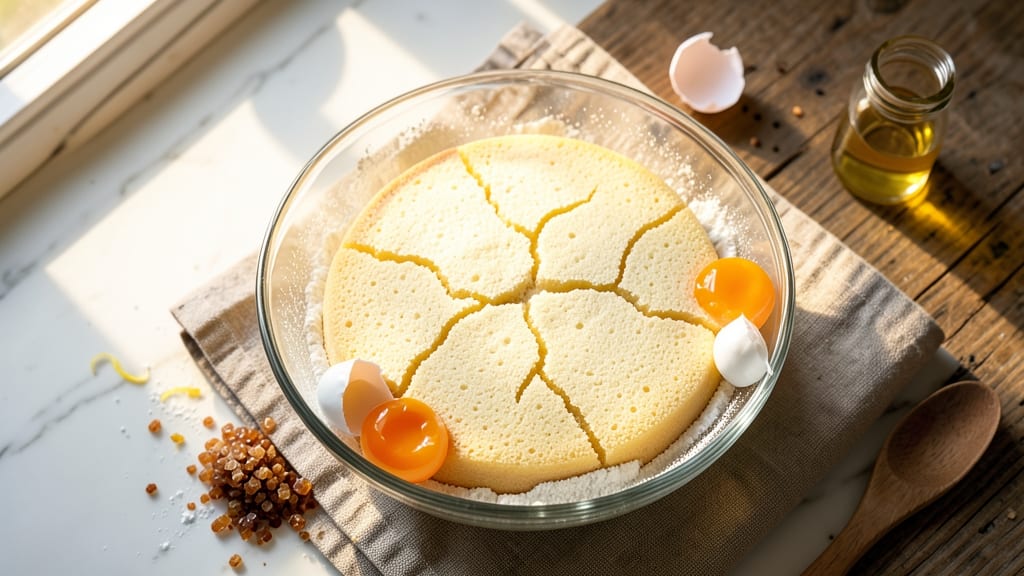
This simple sponge cake recipe with 2 eggs proves you don't need butter for light, airy layers that melt in your mouth. The secret lies in proper egg separation and gentle folding—techniques that create structure without fat.
I've perfected this method after years of testing, and it consistently delivers a cake so tender it practically dissolves on your tongue.
What makes this recipe truly foolproof is the 3-step mixing process: first whipping egg whites to stiff peaks, then folding them into yolks mixed with dry ingredients. No stand mixer required—just a hand mixer and patience.
The result is a cake that's naturally moist from the eggs alone, with no greasy aftertaste that butter often leaves behind.
By the time it emerges from the oven, you'll have perfectly golden layers with a delicate crumb that's neither dense nor cakey. The beauty of this method is its versatility—use it for layer cakes, trifles, or even rolled cakes with fillings.
It's the kind of recipe that transforms ordinary baking into something extraordinary with minimal effort.
Ready in just 30 minutes from start to finish, this cake requires no special equipment beyond what you likely already own. The instructions walk you through every step to ensure success, even for first-time bakers. Let's get started on creating your lightest sponge cake yet.
Ingredients for simple sponge cake recipe with 2 eggs no butter
Two eggs and a handful of pantry staples create this magical, butter-free sponge.
| Ingredient | Amount | Notes |
|---|---|---|
| Large Eggs 🥚 | 2 whole | Room temperature for best volume |
| All-Purpose Flour 🌾 | 1 ½ cups | Sifted for light texture |
| Granulated Sugar 🍚 | 1 ¼ cups | Superfine preferred for smoothness |
| Unsalted Butter 🧈 | ¼ cup | For pan greasing only (optional) |
| Vanilla Extract 🌿 | 1 tsp | Pure vanilla for authentic flavor |
| Salt 🧂 | ¼ tsp | Fine sea salt preferred |
| Baking Powder 🍞 | 1 ½ tsp | Aluminum-free for best results |
| Lemon Zest 🍋 | 1 tbsp | Freshly grated for brightness |
| Cornstarch 🌾 | 1 tbsp | For tender crumb texture |
| Whole Milk 🥛 | ¼ cup | Room temperature for blending |
The eggs are everything here—room temperature is non-negotiable. Grab the biggest eggs you can find (they whip up higher), and if you're unsure, the float test works: drop an egg in water—if it stands, it's fresh. For flour, King Arthur or Gold Medal brands sift beautifully, but any all-purpose works if you take the time. The sugar? Superfine is ideal, but regular granulated crushed in a food processor works too (just pulse briefly). The butter is only for the pan—skip it entirely if you're baking in a non-stick pan or using parchment.
No vanilla extract? Vanilla sugar or a splash of vanilla bean paste works in a pinch. Short on milk? Water plus a pinch of sugar mimics the same effect. The baking powder needs to be fresh—if it smells musty, toss it. For the lemon zest, organic lemons have thicker zest, but any will do. The cornstarch is the secret to that melt-in-your-mouth texture—don't skip it. And if you're worried about the cake being too dry, the milk helps keep it moist without adding fat.
Store leftovers in an airtight container at room temperature for 2 days or in the fridge for 5 days. For longer storage, slice and freeze between parchment paper for up to 3 months. The cake reheats beautifully—just wrap a slice in foil and microwave for 15 seconds. Pro tip: Make extra and use the second batch for French toast—trust me on this. The layers stay tender when reheated this way.
Why You'll Love This Recipe
- Here’s what sold me: that tiny pat of butter folded into the batter gives it a real richness without tasting greasy. The vanilla? It’s the secret weapon—deep, warm, and just sweet enough to make you want to cut a second slice right after the first.
- No Mixer Needed: I swear by this recipe when my stand mixer’s on strike—just whisk eggs and sugar until pale, then fold in flour like you’re tucking in a blanket. That’s it. No overmixing, no guessing, just a light, airy crumb that’s foolproof even if you’re not.
- Vanilla Butter Magic: Here’s what sold me: that tiny pat of butter folded into the batter gives it a real richness without tasting greasy. The vanilla? It’s the secret weapon—deep, warm, and just sweet enough to make you want to cut a second slice right after the first.
- Birthday to Brunch: This cake’s my go-to for anything from a last-minute birthday cake (just add sprinkles) to breakfast toast with jam. Honestly, I’ve even served it cold with whipped cream for a lazy Sunday—it’s that adaptable. No stress, no rules.
Step-by-step instructions for light-as-air sponge cake
Here's how to make this effortless, fluffy sponge cake with just eggs and no butter.
Whip Eggs and Sugar Until Pale and Tripled
In a large mixing bowl, combine the 2 whole Large Eggs and 1.25 cups Granulated Sugar. Using an electric mixer on high speed, beat the mixture for 5-7 minutes until it's pale yellow in color and has nearly tripled in volume. You'll see ribbons form when you lift the beaters—they should hold their shape for a few seconds before dissolving back into the mixture.
This step is crucial for creating the airy texture. I like to stop occasionally and scrape down the sides of the bowl with a spatula to ensure everything gets incorporated evenly. The eggs should be thick enough to leave a trail when you lift the beaters, but still smooth—not grainy. If you're using room temperature eggs, they'll whip faster and hold more air.
Sift and Fold Dry Ingredients Gently
In a separate bowl, whisk together the 1.5 cups All-Purpose Flour, 1 tbsp Cornstarch, 1.5 tsp Baking Powder, 0.25 tsp Salt, and 1 tbsp Lemon Zest. Sift this mixture directly into the egg mixture, then gently fold it in using a spatula in a "J" motion. Be careful not to overmix—just until everything is combined and you see no more flour streaks.
Here's the thing—this is where the magic happens. You want to preserve all that air you whipped into the eggs. If you mix too vigorously, you'll deflate those bubbles and end up with a dense cake. I usually do about 10-12 gentle folds to incorporate everything without losing volume. The batter should be thick but still pourable.
Add Milk and Vanilla for Final Blend
Pour in the 0.25 cup Whole Milk and 1 tsp Vanilla Extract, then gently fold them into the batter using the same careful folding technique. The batter should be smooth and glossy with no visible streaks of flour. If it looks too thick, you can add 1-2 teaspoons of milk to help it flow better into your pans.
This is the moment that matters: the batter should be just thick enough to hold its shape when poured but still flow easily. If it's too stiff, your cake will be dense. If it's too thin, it might not rise properly. I find that tapping the bowl gently on the counter a few times helps release any air bubbles that might have formed during mixing.
Prepare and Fill Pans for Even Baking
Preheat your oven to 350°F. Lightly grease two 8-inch round cake pans with the 0.25 cup Unsalted Butter (if using) or line them with parchment paper circles. Pour the batter evenly between the pans—it should fill them about 2/3 full. Tap the pans gently on the counter to remove any large air bubbles that might have formed.
Here's where precision pays off. Use a ruler to ensure the batter is evenly distributed—this prevents doming and gives you even layers. I like to run a spatula around the edges to smooth everything out. Bake for 25-30 minutes until a toothpick inserted in the center comes out clean and the edges are just starting to pull away from the pan.
Cool and Check for Perfect Doneness
Remove the cakes from the oven and let them cool in the pans for 10 minutes. Then transfer them to a wire rack to cool completely. The cakes should spring back when pressed gently in the center and have a slightly domed top with a crack running through the middle—that's your sign of perfect doneness.
Don't skip the cooling step. If you cut into the cake too soon, it'll be gummy in the center. I like to let them cool for at least 30 minutes before stacking or serving. This cake is light enough that you can even serve it at room temperature—no need for fancy frosting if you prefer. The lemon zest gives it a bright, citrusy flavor that pairs perfectly with fresh berries or whipped cream.
Pro Tips For Making Simple Sponge Cake Recipe With 2 Eggs No Butter
- WHISK EGGS ROOM TEMPERATURE: I learned this the hard way—cold eggs from the fridge won’t incorporate sugar as smoothly, and you’ll end up with a denser cake. Let them sit in warm water for 5 minutes first, then whisk them until they’re pale, thick, and tripled in volume. That ribbon test? Actually matters here.
- SIFT FLOUR FIRST: This isn’t the prettiest method, but it’s the tastiest. Sift your flour with a pinch of salt (yes, even if using unsalted butter) before folding it in. It aerates the batter and prevents that dreaded "heavy" texture—especially critical with only 2 eggs.
- STOP WHEN SPRINGY: After baking, poke the center with a toothpick. If it comes out clean but the cake still jiggles slightly, it’s done. Overbaking dries out sponge cakes faster than you’d think, and no one wants a rubbery crumb. Pull it out early—it’ll keep cooking with residual heat.
- MELT BUTTER INTO SUGAR: Skip the cold butter cubes—melt 2 tablespoons (just enough to coat the pan) and mix it into the sugar before whisking in the eggs. This adds richness without needing full butterfat, and the cake stays moist longer. (Your future self will thank you.)
Perfect pairings for simple sponge cake recipe with 2 eggs no butter
Fruit Compote Pairings
Fresh berries are the easiest and most elegant pairing for this lemony sponge. I love a simple raspberry compote made with 1 cup raspberries, 2 tbsp sugar, and 1 tsp lemon juice, simmered until thickened.
The tartness mirrors the cake's lemon zest beautifully. For summer, peach slices with a drizzle of honey add a luscious contrast—just toss 2 ripe peaches with 1 tbsp honey and ½ tsp vanilla. 🍓
Creamy Fillings
For a classic trifle, layer the cake with vanilla pastry cream—just whisk 1 cup milk, 2 tbsp sugar, 2 tbsp cornstarch, 1 egg yolk, and 1 tsp vanilla until thickened.
Chill before assembling. Alternatively, mascarpone cream (mix ½ cup mascarpone, ¼ cup powdered sugar, and 1 tsp lemon zest) adds a rich texture without overpowering the delicate sponge. 🥄
Whipped Cream Options
Lightly sweetened whipped cream is a must—whisk 1 cup heavy cream with 2 tbsp powdered sugar and ½ tsp vanilla until soft peaks form. For extra flair, fold in 1 tbsp lemon curd for a citrusy kick.
I also love coconut whipped cream (chill 1 can full-fat coconut milk overnight, scoop out the thick cream, and whip with 1 tbsp powdered sugar). 🍦
Chocolate Drizzle
A dark chocolate ganache elevates this cake effortlessly. Melt ½ cup dark chocolate chips with ¼ cup heavy cream, then drizzle over cooled layers. For a white chocolate raspberry twist, mix ½ cup melted white chocolate with 2 tbsp raspberry jam and drizzle over the top.
The chocolate adds depth while keeping the cake light. 🍫
Seasonal Variations
In fall, swap lemon zest for orange zest and pair with caramelized apples—toss 2 apples with 1 tbsp butter, 2 tbsp brown sugar, and ½ tsp cinnamon, then bake until soft.
For winter, a spiced whipped cream (add ¼ tsp cinnamon and pinch of nutmeg to whipped cream) complements the cake’s brightness. 🍎
Beverage Pairings
Earl Grey tea’s bergamot notes enhance the lemon flavor—brew a strong cup and serve it chilled with lemon slices. For coffee lovers, a vanilla latte with cinnamon sprinkle balances the cake’s lightness.
Sparkling lemonade (mix 1 cup lemonade with ½ cup sparkling water) is refreshing and perfect for summer gatherings. ☕
Nutrition facts
Frequently asked questions
Can I make this sponge cake without a mixer?
You can whip the eggs by hand using a whisk. It will take about 10-15 minutes of vigorous whisking to reach the same pale, tripled volume. Work in a large bowl and keep the eggs at room temperature—they'll whip faster. Just be prepared for some arm work!
What if my eggs aren't room temperature?
Cold eggs won't whip properly, leading to a dense cake. To fix this, place your eggs in a bowl of warm water for 10 minutes before starting. If you're in a hurry, run them under warm (not hot) tap water for 2 minutes while stirring gently. Never use hot water—it can cook the eggs slightly.
How do I know when the egg whites are stiff enough?
Stiff peaks form when you lift the beaters and the meringue holds its shape like a peak that doesn't flatten. If it flops over immediately, keep whipping. For this recipe, you want the whites to be glossy and hold a firm point—this creates the airy texture. The total whipping time should be about 5-7 minutes for proper volume.
Can I substitute oil for butter in this recipe?
Since this recipe is butter-free, you wouldn't need to substitute oil—but if you want to add fat for moisture, try 2 tablespoons of vegetable oil mixed with the milk. However, the cake's lightness comes from the egg-based structure, so adding oil might make it slightly denser. The recipe works beautifully without any fat!
Why did my cake sink in the middle?
This usually happens from overmixing the batter or opening the oven door too early.