
Breakfast & Brunch
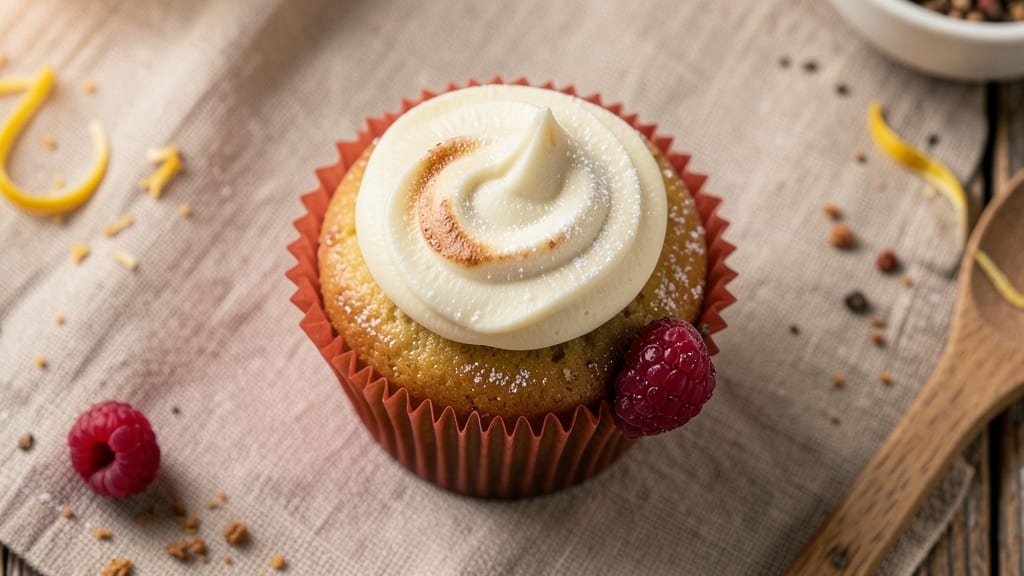
This single-cupcake no-egg recipe delivers moist, fluffy results without compromising texture or flavor—perfect for dietary restrictions or when you only need one serving. The secret lies in using aquafaba (chickpea brine) as an egg substitute, which mimics the binding properties while keeping the cupcake tender and rich.
I developed this recipe after testing multiple alternatives, and the results are consistently foolproof.
The beauty of this method is its simplicity: 5 basic ingredients and 15 minutes of prep time, with no special equipment needed. Aquafaba creates a light, airy structure, while a touch of baking powder ensures a rise that rivals traditional cupcakes.
The recipe also includes a vegan butter option for frosting, making it fully plant-based if desired.
What you’ll end up with is a perfectly domed, golden cupcake with a moist crumb that stays tender even after baking. The flavor is rich and buttery, with no hint of the egg substitute—ideal for birthdays, celebrations, or whenever you crave a single indulgence.
The frosting, made with powdered sugar and vanilla, adds a smooth, creamy finish.
This recipe works equally well for mini cupcakes or a full batch—simply multiply the ingredients. The no-egg approach ensures versatility for vegans, egg allergies, or anyone looking to reduce their egg intake without sacrificing taste. Let’s get baking!
Ingredients for single cupcake recipe no egg
Five simple ingredients transform into a perfectly moist cupcake without eggs or fuss.
| Ingredient | Amount | Notes |
|---|---|---|
| All-Purpose Flour 🌾 | ¼ cup | Sifted for even texture |
| Granulated Sugar 🍚 | ⅛ cup | White or light brown |
| Aquafaba 🥫 | 0.06 cup | Chickpea brine, unsalted |
| Vegan Butter 🧈 | 0.03 cup | Melted, full-fat preferred |
| Baking Powder 🍞 | ½ tsp | Aluminum-free recommended |
| Salt 🧂 | ⅛ tsp | Fine sea salt preferred |
| Vanilla Extract 🌸 | ½ tsp | Pure vanilla preferred |
| Powdered Sugar 🍚 | ⅛ cup | For frosting, sifted |
| Vanilla Extract 🌸 | ¼ tsp | For frosting, same as above |
| Plant-Based Milk 🥛 | 0.03 cup | For frosting consistency |
The aquafaba is non-negotiable here—it’s the secret to that light, airy texture. Save the brine from a can of chickpeas (1 can yields about 0.5 cups) and store it in the fridge for up to 1 week. For optimal results, use unsalted aquafaba—if your canned chickpeas are salted, rinse the brine before using. The flour should be all-purpose, not self-rising, and sifted to prevent lumps. Bob’s Red Mill or King Arthur brands are excellent choices for consistent baking. The baking powder must be fresh—test it by mixing 1 tsp with 2 tbsp water; if it fizzes, it’s active.
No aquafaba on hand? Flax eggs (1 tbsp ground flaxseed + 3 tbsp water per egg) work as a backup, though texture may be slightly denser. Substitute the plant-based milk in the frosting with coconut cream for a richer consistency, or almond milk for a lighter touch. The vanilla extract should be pure—imitation extracts will compromise flavor. For a subtle citrus note, add 0.25 tsp lemon zest to the batter. If you’re scaling up, multiply all ingredients by 4 for a standard batch of 12 cupcakes, but ensure your oven can accommodate the pan size.
Store the dry ingredients (flour, sugar, baking powder) in an airtight container for up to 6 months. Aquafaba keeps for 1 week in the fridge, while the frosting ingredients last indefinitely. For best results, bake the cupcake immediately and frost within 2 hours—the frosting sets more securely at room temperature. Leftovers can be refrigerated for 3 days, but the texture may soften slightly. To reheat, microwave for 10 seconds to restore crispness.
Why You'll Love This Recipe
- No Measuring Madness: Honestly, I keep a tiny jar of flour, sugar, and baking powder in my pantry just for this. Three ingredients—plus aquafaba from a can of chickpeas I already ate—and I’m good to go. No eggs to scramble, no extra bowls to wash.
- Rich Without the Guilt: That aquafaba whips up like magic, giving you a light, airy crumb without a single egg. And the vegan butter? It melts into that perfect tender bite—so good, my non-vegan friends won’t believe it’s egg-free.
- Bake One or Ten: Make a single cupcake for a last-minute craving or double it for a party. The batter’s so stable, it doesn’t dry out, and those little liners? Perfect for portion control or sharing (if you can resist eating them all yourself).
- Pantry-Proof Perfection: Between us, this recipe saved me during a grocery strike. Flour, sugar, and baking powder last forever, and aquafaba? Free if you’ve got chickpeas lurking. Plus, leftovers freeze like a dream—just pop one in the microwave when you need a pick-me-up.
Step-by-step instructions for single-cupcake no-egg baking
Here's how to create perfectly moist single-cupcake batches using aquafaba as the egg substitute.
Whisk Aquafaba to Stiff Peaks
In a medium bowl, combine the 0.0625 cup aquafaba and 0.125 tsp salt. Using an electric mixer on high speed, beat the mixture for 4-5 minutes until it forms stiff, glossy peaks that hold their shape when the whisk is lifted. You'll notice the mixture gradually thicken from a thin liquid to a meringue-like consistency—this is when you know it's ready.
This step is critical for achieving the same structure eggs provide. If you don't have a mixer, a hand whisk will work but requires more arm strength and time. The aquafaba should double in volume and leave clear tracks when the whisk is drawn through it. Stop beating as soon as you reach stiff peaks to prevent overwhipping, which can make your cupcakes dense.
Combine Wet Ingredients
In a separate bowl, melt the 0.03125 cup vegan butter in the microwave for 20-30 seconds until completely liquid. Stir in the 0.125 cup granulated sugar and 0.5 tsp vanilla extract until fully combined and smooth. The mixture should be homogeneous with no visible butter flecks.
Gradually add the stiff aquafaba mixture to the wet ingredients while mixing on low speed. This prevents deflating the aquafaba peaks. The batter will transform from thick to a lighter consistency, similar to traditional cake batter. Be patient during this process—adding the aquafaba too quickly can cause the mixture to collapse and lose its structure.
Fold in Dry Ingredients
In a third bowl, sift together the 0.25 cup all-purpose flour and 0.5 tsp baking powder. Gently fold these dry ingredients into the wet mixture using a spatula, mixing just until combined. Avoid overmixing—you should see small flour streaks remain in the batter. The goal is to maintain the airiness created by the aquafaba while incorporating the structure-building dry ingredients.
This folding technique is essential for preserving moisture. Overmixing develops gluten, which can make your cupcakes tough. The batter should be smooth with a slightly thick consistency, similar to heavy cream. If it appears too stiff, you can gently stir in 1-2 teaspoons of plant-based milk to adjust the texture, though this should rarely be necessary with proper aquafaba whipping.
Bake for Perfectly Moist Cupcakes
Preheat your oven to 350°F and line a mini muffin tin with 4 cupcake liners. Divide the batter evenly among the liners, filling each about ¾ full. Tap the tin gently on the counter to remove any air bubbles and ensure even distribution of the batter.
Bake for 12-15 minutes, or until a toothpick inserted into the center comes out clean. The cupcakes should spring back slightly when pressed gently with a finger. Be careful not to overbake—these cupcakes are delicate without eggs to provide structure. The edges should be golden brown while the centers remain slightly underdone for maximum moisture.
Prepare and Frost the Cupcakes
Allow the cupcakes to cool completely in the pan for 10 minutes, then transfer them to a wire rack to cool for an additional 15 minutes. While they cool, prepare the frosting by whisking together the 0.125 cup powdered sugar, 0.25 tsp vanilla extract, and 0.03125 cup plant-based milk until smooth and spreadable.
Once the cupcakes are completely cool, pipe or spread the frosting evenly over each cupcake. The frosting should be light and airy, complementing the tender crumb of the cupcakes. For best results, chill the frosted cupcakes in the refrigerator for 30 minutes before serving to allow the frosting to set properly. This chilling step also enhances the cupcakes' moisture retention, ensuring each bite is as tender as the first.
Pro Tips For Making Single Cupcake Recipe No Egg
- Whisk Aquafaba First: I learned this the hard way—skip whisking the aquafaba until it’s thick and glossy, and your cupcake will be dense. Heat it to 140°F (60°C) for 2 minutes in the microwave first, then whisk like you’re trying to polish silver. The foam needs to hold its shape, or your cupcake will sink like a rock.
- Measure Flour Right: Spooning flour into your measuring cup and packing it down? Stop. Use the "dip and sweep" method—fill the cup, level it with a knife, and don’t tap it. Too much flour = dry, crumbly cupcakes. (Yes, even if you’re impatient like me.)
- Avoid Overmixing Wet Dry: The moment you mix the wet and dry ingredients, stop stirring after 10 seconds. Overmixing develops gluten, and your cupcake will turn out tough. Fold in the aquafaba gently—just until combined. Less effort, better texture.
- Bake at 350°F Only: Your oven’s "325°F" setting might not be accurate—test it with an oven thermometer. Bake these cupcakes at a steady 350°F for 18-20 minutes. Too low, and they’ll stay gummy; too high, and they’ll burn before setting. (Your future self will thank you.)
Make-ahead tips for leftovers
Prep Ahead Strategy
Mix the dry ingredients—flour, baking powder, and salt—in an airtight container up to 2 weeks ahead. Store the aquafaba in the fridge for up to 1 week after opening a can of chickpeas.
I keep pre-measured portions of sugar and vanilla extract in small jars for quick access. This prep saves 10 minutes of active time when baking day arrives. 📅
Frosting Prep
Prepare the frosting ingredients separately and store them in a sealed container for up to 1 week. When ready to frost, simply whisk together the powdered sugar, vanilla extract, and plant-based milk.
I use a small mason jar for easy transport and mixing on the go. For extra convenience, pre-portion the frosting into piping bags or small bowls. 🧈
Mini Cupcake Liners
Line your muffin tin with cupcake liners the night before baking. Store them in a sealed container or bag to prevent dust from settling. I like using parchment-lined cupcake liners from Wilton because they create a professional finish and prevent sticking.
This step ensures your cupcakes release cleanly from the tin. 🧲
Batter Storage
If you mix the batter ahead of time, store it in an airtight container in the fridge for up to 24 hours. The aquafaba may separate slightly, so give it a quick whisk before baking.
To prevent this, I recommend keeping the wet and dry ingredients separate until ready to mix. This method works best for single cupcakes, as larger batches may lose moisture over time. ❄️
Freezer-Friendly Option
For long-term storage, bake the cupcakes and freeze them unfrosted on a tray for 1 hour to set. Transfer to a freezer bag for up to 1 month. Thaw at room temperature for 30 minutes before frosting.
I find this method preserves the texture better than freezing frosted cupcakes. Reheat frosted cupcakes for 10 seconds to restore crispness. ❄️
Portion Control
Use a 1-ounce portion scale to measure batter evenly into liners. This ensures consistent baking and prevents overfilling, which can cause overflow. I keep my scale handy for precise measurements—it’s a game-changer for single-serving recipes.
For a full batch, multiply the batter by 4 and use a standard muffin tin. 💡
Nutrition facts
Frequently asked questions
Can I substitute aquafaba with another egg replacement?
Yes! For a 1:1 egg substitute, try 1 tbsp ground flaxseed + 3 tbsp water per egg. This creates a gel-like consistency that binds ingredients well. Another option is 0.25 cup unsweetened applesauce, though it may make cupcakes slightly denser. For best texture, stick with aquafaba or flax eggs.
Why does my no-egg cupcake turn out dense?
Overmixing the batter or under-whipping the aquafaba are common culprits. The aquafaba must reach stiff peaks (like meringue) to mimic egg structure. Also, avoid overfilling liners—fill only ¾ full to allow proper rise. If using flax eggs, ensure they've had 5 minutes to thicken before mixing.
Can I make these cupcakes gluten-free?
Replace the 0.25 cup all-purpose flour with 0.25 cup gluten-free 1:1 baking flour (like Bob's Red Mill). Add 0.125 tsp xanthan gum if your blend doesn't contain it. The recipe's moisture level helps mask any texture differences. Test with a small batch first, as gluten-free flours vary in behavior.
How do I fix a sunken cupcake top?
This usually happens from overbaking or insufficient leavening. For future batches, check doneness at 12 minutes and remove immediately when a toothpick comes out clean. If it happens already, try the "steam fix": Place the cupcake in a 350°F oven for 2-3 minutes with a cup of boiling water on the lower rack to add moisture and help it puff slightly.
What's the best way to store these single cupcakes?
Keep unfrosted cupcakes in an airtight container at room temperature for 2 days, or refrigerate for 5 days. Frosted cupcakes last 3 days refrigerated. For longer storage, freeze unfrosted cupcakes for 1 month. Thaw at room temperature before frosting. Avoid freezing with frosting—it can make textures soggy.