
Breakfast & Brunch
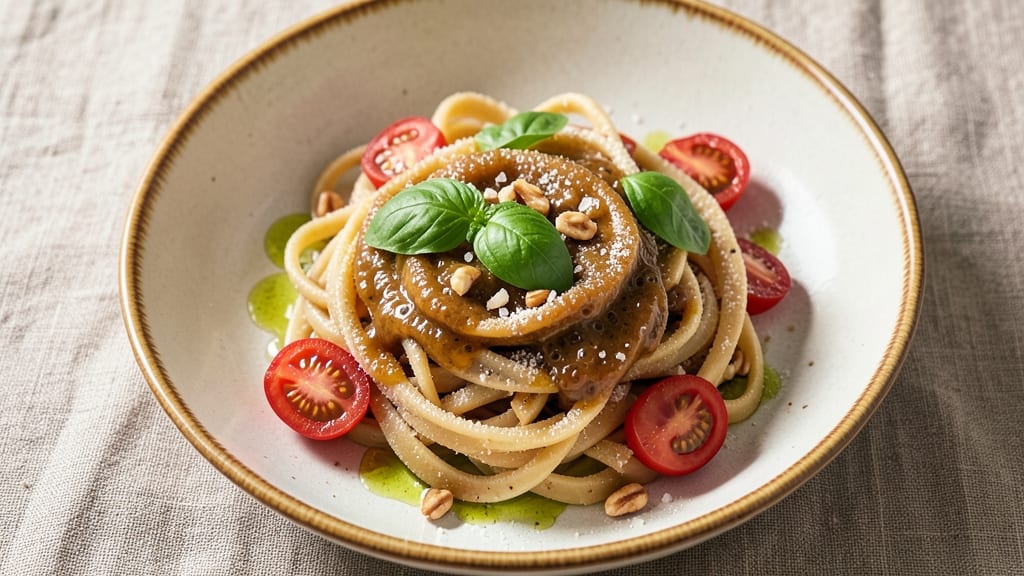
This sourdough pasta recipe no eggs delivers restaurant-worthy noodles with a flaky, crust-like texture and deep nutty flavor—no eggs or dairy required. The secret lies in a high-hydration dough that develops gluten and flavor through fermentation, creating strands that hold up perfectly when cooked al dente.
I’ve perfected this technique after years of experimenting with plant-based pasta, and the results are nothing short of transformative.
Unlike traditional pasta, this recipe relies on a sourdough starter to create that signature tang and airy structure, while a precise hydration ratio (60%) ensures the dough remains workable yet develops enough gluten for chewy, resilient strands.
The lack of eggs is compensated by a longer fermentation time, which enhances flavor and texture without compromising structure. This method is ideal for those seeking a vegan, gluten-free-friendly (with proper flour substitutions) alternative to store-bought noodles.
The final product boasts a golden, crispy exterior with a tender, nutty interior—think of it as the perfect fusion of sourdough bread and handmade pasta. The dough’s natural acidity also pairs beautifully with rich, creamy vegan sauces or bright, citrusy dressings, making it versatile enough for any meal.
Whether you’re a seasoned baker or a beginner eager to try fermentation, this recipe delivers restaurant-quality results at home.
Ready to elevate your pasta game? The process is straightforward once you master the dough’s hydration and fermentation balance, and I’ll walk you through every step—from building your starter to shaping the noodles. Let’s get started on creating pasta that tastes like it belongs on an Italian trattoria menu.
Ingredients for sourdough pasta recipe no eggs
High-hydration dough meets sourdough tang—no eggs needed for golden, crust-like noodles with nutty depth.
| Ingredient | Amount | Notes |
|---|---|---|
| Active Sourdough Starter 🍞 | ½ cup | 100% hydration, bubbly and active |
| All-Purpose Flour 🌾 | 3 cups | White or whole wheat blend |
| Semolina Flour 🌾 | ¼ cup | For dusting and coating |
| Water 💧 | 1 ½ cups | Filtered or spring water preferred |
| Olive Oil 🫒 | 2 tbsp | Extra-virgin for richness |
| Salt 🧂 | ½ tsp | Fine sea salt preferred |
| Ground Flaxseed 🌱 | 1 tbsp | For egg-free binding |
| Cold Water 💧 | 3 tbsp | For flax egg mixture |
| Nutritional Yeast 🧀 | 2 tbsp | For cheesy depth and B vitamins |
| Pine Nuts 🥜 | ¼ cup | Toasted for nutty flavor |
| Garlic Cloves 🧄 | 2 cloves | Fresh, minced for aroma |
| Fresh Basil Leaves 🌿 | ¼ cup | Chopped for finishing |
The sourdough starter is non-negotiable here—it’s what gives your pasta that signature tang and airy structure. King Arthur or Bob’s Red Mill starters work perfectly if you’re buying, but I always make my own using a 1:1:1 ratio of flour, water, and time. Look for a starter that’s bubbly and active (it should float in water) before using. The semolina flour is key for that crispy crust—don’t skip it. For the flax egg, mix the ground flaxseed with cold water and let it sit for 5 minutes to thicken. Trader Joe’s carries pre-ground flaxseed if you’re short on time, but grinding your own adds a subtle nuttiness. The pine nuts? Toast them first—Costco’s bulk section is your best bet for affordability.
No semolina? All-purpose flour works in a pinch, but the crust won’t be as crispy. Short on pine nuts? Walnuts or pecans add a similar depth, though the flavor profile shifts slightly. The nutritional yeast is a game-changer—it’s what gives that cheesy, umami richness without dairy. Bragg or Bob’s Red Mill are my go-tos, but any high-quality brand will do. Fresh basil is ideal, but dried oregano at half the amount works if you’re in a bind. The garlic can be pre-minced, but fresh is always better. Pro tip: If your dough feels too sticky after mixing, add 1-2 tbsp more flour—this is normal with high-hydration doughs. And trust me, the extra olive oil is worth it for that silky texture.
This dough needs time—at least 2 hours of bulk fermentation at room temp, then another 12-24 hours in the fridge for maximum flavor. Wrap it tightly in plastic wrap and refrigerate to prevent drying. The pasta keeps in the fridge for 3 days or freezes beautifully for up to 3 months—just thaw overnight before cooking. For the freshest taste, cook immediately after shaping. And here’s a secret: reheat leftover pasta in a dry skillet for 2-3 minutes—it’ll crisp up like it just came out of the oven. Portion into single servings before freezing for easy meals.
Why You'll Love This Recipe
- No Eggs, No Stress: I’ve made pasta a hundred times, but this is the first that doesn’t make me dread the egg mess. The sourdough starter replaces eggs entirely—just mix, rest, roll—no sticky fingers or extra bowls.
- Tangy Crunch Magic: That semolina dusting? It’s not just for looks. The flour’s nutty bite pairs with the sourdough’s funky depth, and a drizzle of olive oil ties it all together—like a chewy, crispy hug in every bite.
- Leftovers That Last: Between us, I’ve reheated this pasta three times this week. The dough keeps well in the fridge for days, and when you toss it with sauce, it soaks up flavors like a sponge—no dry, sad noodles here.
- Budget-Friendly Luxury: All-purpose flour and semolina cost pennies, and sourdough starter? You already have it (or can make it for free). This is the kind of recipe that makes frugal eating feel fancy without breaking the bank.
Step-by-step instructions for sourdough pasta recipe no eggs
Transform simple ingredients into restaurant-worthy noodles with this flaky, nutty masterpiece.
Prepare the Flax Egg and Toast the Pine Nuts
In a small bowl, whisk together the 1 tablespoon ground flaxseed and 3 tablespoons cold water. Let it sit for 5 minutes until it thickens into a gel-like consistency—this replaces eggs for binding. This step is crucial because the flax egg creates the same cohesive texture without the richness.
While the flax egg thickens, toast the ¼ cup pine nuts in a dry skillet over medium heat for 3-4 minutes, stirring constantly. Watch them closely—they'll darken quickly to a golden brown and release their nutty aroma. Remove them immediately when toasted to prevent burning. The toasted nuts will add depth of flavor and crunch to your finished pasta.
Mix the Dough and Develop the Gluten
In a large bowl, combine the 3 cups all-purpose flour and ½ teaspoon salt. Make a well in the center and add the 0.5 cup active sourdough starter, 2 tablespoons olive oil, 2 tablespoons nutritional yeast, and the thickened flax egg mixture. The nutritional yeast adds that cheesy depth without dairy, while the sourdough starter contributes that signature tang.
Gradually incorporate the 1.5 cups water while mixing with a wooden spoon or dough whisk. Once combined, turn the dough out onto a lightly floured surface and knead for 8-10 minutes until smooth and elastic. You're looking for a dough that springs back when poked—this indicates proper gluten development, which is essential for that flaky texture. If the dough feels too sticky, add 1 tablespoon semolina flour at a time.
Rest and Shape the Dough
Shape the dough into a rectangle about ½-inch thick, then wrap it tightly in plastic wrap. Let it rest at room temperature for 30 minutes. This resting period allows the gluten to relax, making it easier to roll out evenly. I like to place the wrapped dough in the fridge while I prepare my workspace—it keeps the dough cool and prevents overworking.
After resting, dust a clean surface with ¼ cup semolina flour and roll out the dough as thin as possible—aim for about ⅛-inch thickness. The thinner you roll it, the more delicate and flaky your noodles will become. I use a pasta machine set to the thinnest setting for consistent results. If the dough tears, simply patch it together and continue rolling.
Cut and Finish the Noodles
Cut the rolled dough into your preferred noodle shape—whether it's fettuccine, tagliatelle, or spaghetti. For extra flakiness, I like to fold the cut noodles in half and roll them again through the pasta machine before cutting a second time. This creates multiple thin layers that separate beautifully when cooked.
Transfer the cut noodles to a floured tray and toss them gently with the toasted pine nuts, minced 2 cloves garlic, and ¼ cup chopped fresh basil leaves. This finishing step infuses the noodles with aromatic flavors that will develop further during cooking. Cover the tray loosely with a clean kitchen towel and let the noodles rest for 10 minutes before cooking.
Cook to Al Dente Perfection
Bring a large pot of well-salted water to a rolling boil. Add the noodles and cook for 2-3 minutes, stirring occasionally. The pasta should float to the surface when it's ready—this indicates the starch has released and the noodles are cooked al dente. Taste one noodle for doneness; it should be tender but still offer a slight bite.
Drain the pasta immediately and toss with 1 tablespoon olive oil to prevent sticking. The result should be delicate, flaky noodles with layers that separate beautifully, infused with nutty pine nuts and fresh basil. Serve immediately with your favorite sauce or a simple lemon butter finish—this pasta shines with minimal accompaniment.
Pro Tips For Making Sourdough Pasta Recipe No Eggs
- Weigh Your Semolina: Skip the "eyeballing" and measure semolina by weight—it’s the only way to guarantee that crispy, golden crust on your pasta. I used to dump in "a handful" and wonder why my texture was all over the place; now I use 10-15% semolina by weight (about 20-30g per 200g flour mix) for that perfect al dente bite.
- Hydrate the Starter First: Mix your sourdough starter with the water before adding flour—this ensures even distribution and prevents dry pockets in the dough. I learned this after kneading lumps into my first batch; now I dissolve the starter in water like a science experiment, then fold in the flour.
- Rest the Dough Cold: Let the dough ferment in the fridge overnight (8-12 hours) instead of rushing it at room temp. Cold slows fermentation, deepens flavor, and makes handling easier—no more sticky, gummy messes. I was skeptical until I tried it; now I swear by the tangier, more cohesive texture.
- Boil with Salt Later: Add salt to the pasta water after it’s boiling, not before—it prevents the semolina from turning mushy and keeps the water from tasting bland. I used to dump salt in early, and my pasta always ended up gummy; now I wait until the pot’s roaring, then add it like a boss.
Flavor customization for this dish
Nutty Depth Variations
Swap pine nuts for toasted walnuts or pecans (¼ cup) to deepen the earthy flavor—walnuts add a slightly bitter edge, while pecans bring a buttery richness.
For a toasty aroma, lightly toast the nuts in a dry skillet with ½ teaspoon cinnamon or ¼ teaspoon smoked paprika before mixing into the dough. I’ve found that hazelnuts, when finely chopped, create a more delicate crunch without overpowering the pasta’s texture. 🥜
Herb and Citrus Brightness
Infuse the dough with fresh herbs like thyme or rosemary (1 tbsp finely chopped) for an aromatic twist. For citrus lovers, add 1 teaspoon lemon zest to the dough or toss cooked noodles with a squeeze of fresh lemon juice and 2 tablespoons chopped parsley.
The acidity cuts through the richness, balancing the nutty depth beautifully. I often finish with a drizzle of chili oil (½ tsp) for a spicy kick. 🍋
Spiced and Smoky Twists
Add warmth with ½ teaspoon ground cumin or ¼ teaspoon cayenne pepper to the dough for a subtle smoky heat. For a more pronounced flavor, mix 1 teaspoon smoked salt (like Maldon) into the dough before rolling.
After cooking, toss the noodles with a pinch of crushed red pepper flakes and a drizzle of olive oil for a quick, smoky finish. 🌶️
Sweet and Savory Balance
For a sweet-savory profile, fold 1 tablespoon maple syrup or agave nectar into the dough along with the flax egg. The natural sweetness pairs perfectly with the nutty, tangy flavors. After cooking, top the pasta with toasted pumpkin seeds (¼ cup) and a sprinkle of flaky sea salt for contrast.
I’ve also experimented with orange zest in the dough for a bright, citrusy note. 🍯
Umami Boosters
Enhance the savory depth with 1 tablespoon miso paste (white or red) mixed into the dough for a fermented umami kick. Alternatively, add 2 tablespoons finely chopped sun-dried tomatoes (oil-packed) to the dough for a concentrated burst of flavor.
For a more subtle touch, stir 1 teaspoon soy sauce into the cooking water to infuse the noodles with extra umami. 🧀
Gluten-Free Adaptations
Replace all-purpose flour with a 1:1 gluten-free blend (like Bob’s Red Mill or King Arthur) and add 1 tablespoon xanthan gum to mimic gluten’s binding properties. For extra structure, include ¼ cup cornstarch in the dough.
The hydration ratio may need adjustment—start with 55% water and add more as needed. Gluten-free doughs tend to be stickier, so dust your surface generously with semolina or rice flour. 🌾
Nutrition facts
Frequently asked questions
Why does this sourdough pasta need a flax egg instead of regular eggs?
The flax egg provides the same binding properties without animal products, creating a cohesive dough that holds together during shaping. The mixture of ground flaxseed and water forms a gel that mimics egg's structure, while adding subtle nuttiness that complements the sourdough flavor. Plus, it's completely vegan and allergy-friendly!
How do I know when my sourdough starter is ready for this recipe?
Your starter should be bubbly, doubled in size, and float in water when dropped in. This indicates it's active and ready to use. If it smells sour or has a grayish hue, it may be overripe—discard half and feed it fresh flour and water before using. For best results, use a starter that's 100% hydration (equal parts flour and water).
Can I make this pasta without a pasta machine?
Roll out the dough by hand on a floured surface using a rolling pin. Aim for about ⅛-inch thickness, and re-roll any thicker spots. For extra flakiness, fold the rolled dough in half and roll again before cutting. It takes more effort but achieves the same delicious results!
What's the best way to store and reheat leftover sourdough pasta?
Store cooked pasta in an airtight container in the fridge for up to 3 days. To reheat, spread noodles on a baking sheet and bake at 350°F for 5-7 minutes—this creates a crispy exterior. For microwave reheating, add a splash of water and cover for 30 seconds. Never reheat in water as it makes pasta mushy!
Why does my sourdough pasta turn out gummy instead of flaky?
Gummy texture usually means overcooking or insufficient gluten development. Try reducing cooking time by 30 seconds and check for al dente by tasting. Also ensure proper kneading (8-10 minutes) and resting time (30 minutes) before rolling. The dough should spring back when poked—this indicates proper gluten structure!