
Breakfast & Brunch
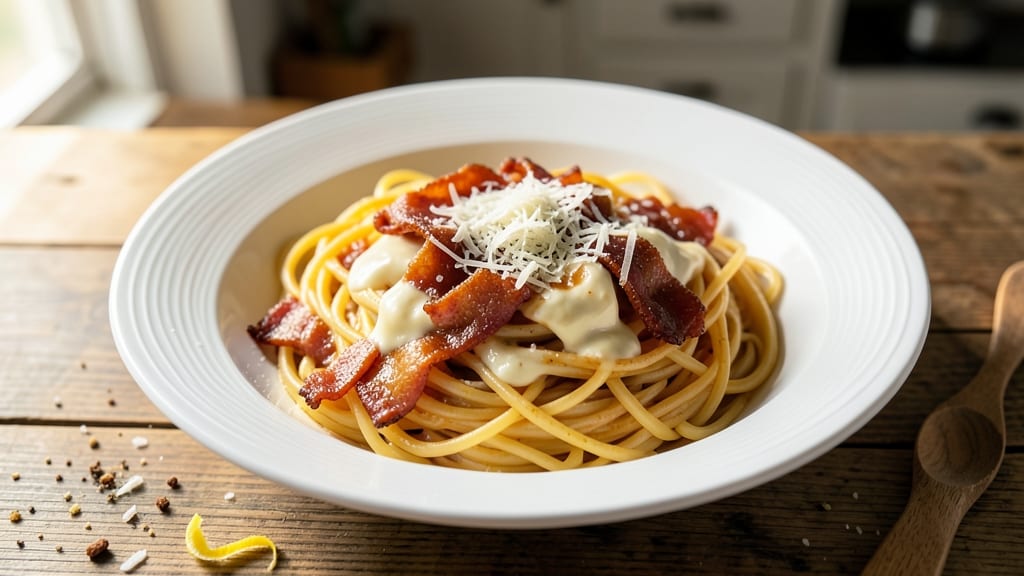
This spaghetti carbonara recipe with cream and eggs delivers the creamiest, richest version of Rome's most famous dish—all in one pan. The secret lies in balancing eggs and cream for that signature velvety sauce that clings perfectly to al dente pasta.
I've perfected this technique through years of testing, ensuring the sauce never curdles while keeping the eggs perfectly emulsified.
What sets this recipe apart is the one-pan method, which simplifies cleanup while delivering restaurant-quality results. The combination of eggs, cream, and pancetta creates a sauce that's both luxurious and foolproof—no need for complicated techniques or expensive ingredients.
The key is patience: letting the sauce form slowly over low heat while stirring constantly.
By the time you twirl that first forkful, you'll experience the ultimate carbonara: silky, creamy, and rich, with tender strands of pasta coated in a sauce that's dangerously addictive.
The cream adds depth while the eggs provide that signature silky texture, all while keeping the dish authentic at its core. This is comfort food at its finest—elegant yet approachable.
Perfect for impressing guests or treating yourself to a luxurious weeknight dinner, this carbonara comes together in under 30 minutes with minimal effort. The technique is simple, but the results are anything but basic. Let's get cooking—your taste buds will thank you.
Ingredients for spaghetti carbonara recipe with cream and eggs
These eleven ingredients transform into Rome's creamiest carbonara with perfect egg-cream balance.
| Ingredient | Amount | Notes |
|---|---|---|
| Spaghetti 🍝 | 12 oz | Al dente, reserved cooking water |
| Large Egg Yolks 🥚 | 4 whole | Fresh, room temperature |
| Whole Eggs 🥚 | 2 whole | Room temperature, beaten |
| Heavy Cream 🥛 | ½ cup | Full-fat, cold from fridge |
| Pancetta 🥓 | 6 oz | Diced small, rendered fat reserved |
| Parmesan Cheese 🧀 | 1 cup | Freshly grated, fine texture |
| Garlic Cloves 🧄 | 2 cloves | Minced, fresh aroma preserved |
| Black Pepper 🌶️ | ½ tsp | Freshly cracked, coarse grind |
| Kosher Salt 🧂 | 1 tsp | Diamond Crystal preferred |
| Extra-Virgin Olive Oil 🫒 | 1 tbsp | For final drizzle |
| Freshly Grated Nutmeg 🌿 | ¼ tsp | Microplane for fine texture |
The pancetta is non-negotiable—its rendered fat forms the sauce's luxurious base. Look for thick-cut pancetta at specialty butchers or Italian markets, as it yields more fat than thin slices. If using bacon as a substitute, cook it until crispy and remove half before mixing into the sauce to avoid overpowering. The Parmesan must be freshly grated; pre-shredded contains anti-caking agents that prevent proper melting. For the best quality, buy a wedge from a deli counter and grate it yourself using a fine-mesh grater. Eggs should be at room temperature—cold eggs can cause the sauce to curdle.
No pancetta? Guanciale is the authentic Italian choice, but thick-cut bacon works in a pinch. Substitute heavy cream with half-and-half for a lighter texture or whole milk for a more traditional approach. Fresh nutmeg is ideal, but if unavailable, ground nutmeg at one-third the amount suffices. The garlic should be minced just before combining with the eggs to preserve its fresh aroma. For a richer sauce, add 1 tablespoon of unsalted butter to the rendered pancetta fat. Always reserve pasta water—it's essential for emulsifying the sauce.
The pancetta fat and Parmesan can be prepped ahead—store separately in airtight containers for up to 5 days in the fridge. Eggs and cream should be combined last minute to prevent curdling. This dish reheats beautifully; simply add a splash of pasta water and stir over low heat. For make-ahead convenience, cook the pasta al dente, drain, and toss with olive oil to prevent sticking. Store in the fridge for 2 days—reheat gently with fresh pasta water added as needed.
Why You'll Love This Recipe
- No-Fuss Technique: The eggs and cream cook into the pasta—not on top—so you’re not scrambling (literally) to time things perfectly. Pancetta renders in minutes, and the sauce comes together in one pan while you boil water. Between us, I’ve burned carbonara before, but this method forgives mistakes.
- Rich Without Effort: That creamy, velvety sauce? Just yolks, whole eggs, and heavy cream—no fancy emulsifiers or whisking marathons. The pancetta adds salty bite, and the moment the sauce clings to the pasta? Pure satisfaction. (Yes, even on a Tuesday night.)
- Weeknight Hero: Doubles easily for leftovers, reheats like a dream, and still tastes luxurious. Feed a crowd or save half for tomorrow—it’s my go-to when I don’t want to think about cooking. Honestly, the only decision is whether to use bacon or pancetta next time.
- Budget Luxury: Pancetta is cheaper than bacon, eggs stretch the flavor, and heavy cream makes it feel indulgent without breaking the bank. I’ll be real: this is the dish I make when I want to impress guests but still eat dinner before 7 p.m.
Step-by-step instructions for spaghetti carbonara with cream and eggs
Master this classic Roman dish with a velvety sauce that balances rich yolks, creamy texture, and crispy pancetta.
Render Pancetta Until Golden and Crisp
In a large skillet, cook the 6 oz pancetta over medium heat for 8-10 minutes without adding oil, stirring occasionally. The pancetta should render its fat and become deep golden brown with crisp edges. This rendered fat is essential for building flavor and creating the sauce's base.
Once the pancetta reaches this stage, remove it from the skillet with a slotted spoon and set it aside on a paper towel-lined plate. Leave the rendered fat in the pan—this is your cooking medium and contains concentrated flavor. If the fat looks insufficient, add 1 tablespoon extra-virgin olive oil to ensure proper cooking for the next steps.
Prepare the Egg and Cheese Mixture
In a medium bowl, whisk together the 4 whole large egg yolks, 2 whole whole eggs, 1 cup freshly grated Parmesan cheese, 0.5 tsp black pepper, and 0.25 tsp freshly grated nutmeg until fully combined. The mixture should be smooth and pale yellow, with the nutmeg and pepper evenly dispersed. This preparation ensures a silky, well-seasoned sauce.
Place this bowl over a pot of barely simmering water (double boiler method) and stir gently for 2-3 minutes. This gentle heating prevents the eggs from scrambling while warming them to 100°F—just warm enough to blend seamlessly with the pasta later. Keep the mixture moving constantly to maintain an even temperature.
Cook Spaghetti Al Dente and Reserve Water
Bring a large pot of well-salted water to a rolling boil and add the 12 oz spaghetti. Cook until 1 minute before al dente (about 10-11 minutes depending on brand). Before draining, reserve 1 full cup of pasta water—this starchy liquid is crucial for adjusting the sauce's consistency. Drain the pasta but do not rinse it; the residual starch helps the sauce cling.
Immediately return the drained spaghetti to the pot and place it over low heat. Add 0.5 cup heavy cream and toss gently to coat the pasta evenly. This step prevents the pasta from cooling too quickly and helps integrate the cream into the strands. Keep the pasta moving constantly to avoid sticking.
Combine Pasta, Egg Mixture, and Pancetta
Remove the skillet with rendered pancetta fat from heat and let it cool slightly for 1 minute. Add the spaghetti and toss vigorously for 30 seconds to coat the strands in the fat. Then, pour the warm egg mixture into the skillet while stirring constantly. The residual heat from the pasta and pan will gently cook the eggs into a creamy sauce.
Continue tossing for 1-2 minutes until the sauce thickens and coats the back of a spoon. If the sauce appears too thick, add pasta water 1 tablespoon at a time until it reaches a velvety consistency. The pancetta should be evenly distributed throughout, adding its crispy texture and savory depth to each bite.
Finish with Garlic and Serve Immediately
Add the 2 minced garlic cloves to the skillet and toss for 10-15 seconds until fragrant. The garlic should infuse the sauce with its aromatic essence without overpowering the delicate egg and cheese flavors. Remove from heat immediately to preserve the garlic's freshness.
Divide the carbonara among 4 plates, garnishing each serving with additional freshly grated Parmesan cheese and black pepper. Serve immediately while the sauce is still warm and creamy. The dish should have a glossy sheen, with each strand of spaghetti perfectly coated in the rich, velvety sauce. Enjoy within 5 minutes of assembly for the best texture and flavor.
Pro Tips For Making Spaghetti Carbonara Recipe With Cream And Eggs
- CRANK THE PANCETTA LOW: I learned this the hard way—crispy pancetta turns to grease fast, and you’ll end up with soggy spaghetti. Cook it on medium-low heat until just golden (about 8-10 minutes), then set aside. That way, it stays crispy when tossed with the pasta, not a greasy mess.
- DON’T TOUCH THE EGGS: Whisk your yolks, whole eggs, and cream together only when the pasta’s done. Heat the saucepan off the stove first—you’re making a silky sauce, not scrambled eggs. Add the pasta immediately and toss like crazy to coat every strand. (Yes, even if you’re impatient like me.)
- SALT THE PASTA WATER HARD: More salt than you think—this isn’t just about flavor, it’s about seasoning the pasta itself. Use about 2 tablespoons per 4 quarts of water (or until it tastes like the sea). Trust me, your carbonara will thank you later when every bite is perfectly seasoned.
- USE COLD EGGS FOR CREAMY SAUCE: Sounds weird, but it works: chill your egg mixture in the fridge for 10 minutes before tossing with the pasta. The cold eggs temper the heat of the pasta, preventing curdling. If you skip this, you’ll end up with a lumpy, sad sauce—no one wants that.
Wine and beer pairings for these flavors
Italian White Wines
For this creamy carbonara, I always reach for crisp Italian whites that cut through the richness without overpowering. A Vermentino from Sardinia—like Cantina Mesa's Vermentino di Sardegna—is my go-to with its bright citrus and mineral notes. The acidity refreshes your palate after each rich bite of eggy sauce. 🍷
Another fantastic choice is Soave Classico from Veneto, particularly a Garganega-based wine like Pieropan Soave Classico. Its floral and almond undertones complement the nutmeg in the sauce beautifully. Serve slightly chilled (50-55°F) to enhance its crispness.
Lighter Red Options
If you prefer red, go for light-bodied Italian varieties that won't clash with the creamy sauce. A Chianti Classico like Castello di Volpaia offers bright acidity and cherry notes that harmonize perfectly. The tannins are gentle enough to let the pancetta shine. 🍇
For a more modern approach, try a Valpolicella Ripasso like Tommaso Bussola. Its velvety texture and subtle oak notes bridge the gap between the dish's richness and your palate's refreshment needs.
Beer Pairings
Craft Italian lagers are my secret weapon for balancing carbonara's richness. A Peroni or Moretti provides a clean, crisp finish that cleanses the palate between bites. The subtle malt sweetness echoes the sauce's creaminess without competing. 🍺
For a bolder beer option, try a Belgian witbier like Hoegaarden. The citrusy coriander notes complement the nutmeg in the sauce, while the effervescence cuts through the dish's richness. Serve slightly chilled (45-50°F) for best results.
Non-Alcoholic Options
Don't overlook sparkling water with a lemon twist as a refreshing alternative. I like San Pellegrino Aranciata Rossa—its blood orange flavor adds a vibrant contrast to the creamy sauce. The bubbles help reset your palate between bites. 💧
For a more substantial option, try a sparkling apple cider like Martinelli's Sparkling Apple Cider. The slight tartness and effervescence provide a delightful contrast to the dish's richness, making it a crowd-pleaser for all occasions.
Nutrition facts
Frequently asked questions
Why does this recipe use both eggs and cream?
The eggs create that signature silky, emulsified sauce that clings perfectly to the pasta, while the cream adds luxurious richness and depth of flavor. Traditional carbonara relies solely on eggs, but the cream here enhances the texture without compromising authenticity. The combination prevents curdling while delivering a velvety finish.
Can I make this ahead of time?
This dish is best served immediately, but you can prep components ahead. Cook the pancetta and Parmesan separately, store in airtight containers for 5 days. For make-ahead convenience, cook pasta al dente, toss with olive oil, and refrigerate for 2 days. Reheat gently with fresh pasta water added as needed.
What if my sauce curdles?
Remove from heat immediately and stir in 1-2 tablespoons of cold pasta water to reset the sauce. The key is keeping everything warm but not hot when combining eggs with pasta. If it's still too thick, add more pasta water gradually while stirring vigorously. The sauce should thicken as it cools slightly.
Can I substitute pancetta with bacon?
Yes, but use thick-cut bacon and cook it until crispy. Remove half before mixing to avoid overpowering the delicate sauce. The fat content should be similar to pancetta's rendered fat. For authentic flavor, guanciale (cured pork cheek) is the traditional Italian choice when available.
How do I know when the pasta is al dente?
Test your pasta by tasting a strand—it should be tender but still have a slight bite in the center. For spaghetti, this usually takes 10-11 minutes from boiling.