
Breakfast & Brunch
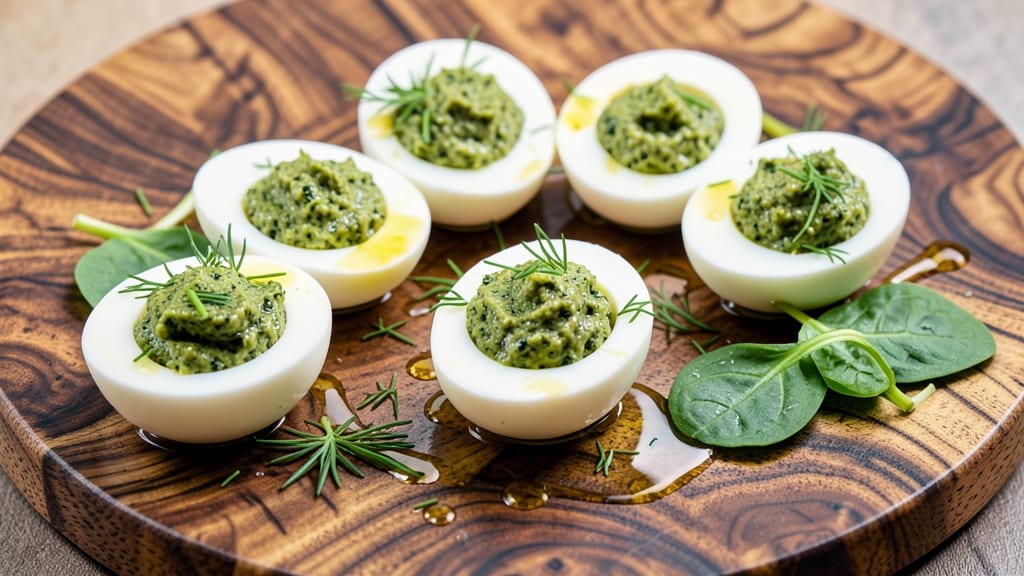
This spinach deviled eggs recipe transforms a classic brunch staple into a vibrant, herb-infused vegetarian showstopper. The secret lies in blending tender spinach into the yolk filling, creating a luscious green cream that pairs perfectly with crisp celery topping.
Perfect for brunch gatherings or light lunches, these eggs deliver restaurant-quality elegance with simple techniques.
The process begins with perfectly boiled eggs—firm whites and creamy yolks—then gently folded with wilted spinach, herbs, and a touch of tangy mustard. The filling stays velvety smooth while the celery topping adds satisfying crunch.
What makes this recipe stand out is how the spinach transforms the classic deviled egg into something fresh, visually striking, and packed with flavor without any meat.
By the time you plate these, you’ll have herb-infused yolk cream with a vibrant green hue and a texture that’s impossibly creamy. The celery topping stays crisp, creating contrast with every bite. This vegetarian version proves deviled eggs can be just as satisfying—and far more colorful—than traditional recipes.
Serve these at parties, potlucks, or as a light weeknight dinner with crusty bread. The recipe scales easily, and leftovers keep beautifully in the fridge for up to two days. Ready to elevate your brunch game?
Ingredients for spinach deviled eggs
Twelve ingredients transform classic deviled eggs into a vibrant, herb-infused vegetarian masterpiece.
| Ingredient | Amount | Notes |
|---|---|---|
| Large Eggs 🥚 | 8 whole | Freshly boiled, firm yolks preferred |
| Fresh Baby Spinach 🌿 | 2 cups | Packed, stems removed for smooth texture |
| Dijon Mustard 🍯 | 1 tbsp | High-quality for tangy depth |
| Extra-Virgin Olive Oil 🫒 | 2 tbsp | For richness and smoothness |
| Fresh Chives 🌿 | ¼ cup | Finely chopped for herbaceous flavor |
| Fresh Dill 🌿 | ¼ cup | Finely chopped, stems removed |
| Lemon Juice 🍋 | 1 tsp | Freshly squeezed for brightness |
| Crisp Celery Stalks 🥬 | 2 whole | Finely chopped for crunchy topping |
| Diamond Crystal Kosher Salt 🧂 | ½ tsp | For seasoning and balancing flavors |
| Freshly Ground Black Pepper 🌶️ | ¼ tsp | Cracked for subtle heat |
| Vegetable Mayonnaise 🥫 | 2 tbsp | For creamy texture (vegan option) |
| Unsalted Butter 🧈 | 1 tbsp | Softened for binding filling |
The eggs are the foundation—farm-fresh from local grocers or Whole Foods ensure optimal quality. Look for eggs with bright, unbroken shells and store them in the coldest part of your fridge. The spinach should be fresh baby spinach, not wilted—Trader Joe's or Costco often carry the best quality. For the herbs, fresh chives and dill make all the difference; dried versions won't provide the same brightness or texture. If you can't find fresh, dried will work, but use half the amount. The celery should be crisp, with no brown spots—organic celery from the produce section is ideal for this recipe.
No Dijon mustard? Yellow mustard thinned with water works in a pinch, though it lacks depth. Vegetable mayonnaise is essential for a vegetarian version—brands like Hellmann's Vegan or Just Mayo are excellent choices. If you're using regular mayonnaise, ensure it's egg-free, as some brands contain traces. For the olive oil, extra-virgin is non-negotiable—it adds richness and pairs beautifully with the herbs. The butter should be unsalted to control the seasoning, but if you only have salted, reduce the added salt slightly. Lemon juice can be substituted with white wine vinegar, though it adds a slightly different tang.
Boiled eggs keep for up to 1 week in the fridge, but for best results, use them within 3 days of boiling. The filling can be prepared ahead and stored in an airtight container for 2 days, though the celery topping is best added just before serving to maintain crispness. To reheat, gently warm the filling in a small saucepan over low heat, stirring occasionally. The celery topping stays fresh for 1 day in the fridge, so plan accordingly. For a crowd, double the recipe—these eggs disappear quickly at parties.
Why You'll Love This Recipe
- No Boil-Before-Baking Hassle: I swear by this method—hard-boil your eggs the night before while you’re already cooking dinner. The next morning, you’re just slicing, blending, and filling. No last-minute timing stress, no peeling disasters.
- Spinach’s Secret Umami Punch: That wilted spinach in the filling? It’s not just green—it’s the reason this isn’t your boring deviled egg. The Dijon and olive oil turn it into this rich, herby depth that makes every bite feel like a little flavor upgrade.
- Picnic-Proof Power Moves: These hold up beautifully in a cooler for hours—no soggy tops, no sad yolks. Pack them for a beach day, a potluck, or even your lunchbox. The chives stay crisp, and the spinach keeps its color. (Yes, even in July heat.)
- Leftovers That Don’t Suck: Half the batch? No problem. Reheat gently in the microwave (30 seconds, covered) and they’re almost as good as fresh. Honestly, I’ve eaten them cold straight from the fridge too—because they’re that good, and I’m that lazy.
Step-by-step instructions for herb-infused spinach deviled eggs
Transform classic deviled eggs with a vibrant spinach and herb filling that delivers freshness and depth.
Hard-Boil Eggs to Perfect Firmness
Place the 8 whole large eggs in a saucepan and cover them with cold water by about 1 inch. Bring to a boil over high heat, then immediately remove from heat, cover, and let sit for 12 minutes. This timing ensures firm yolks that hold their shape when pierced. Transfer eggs to an ice bath for 10 minutes to stop cooking and cool completely. The shells should peel easily—if they don't, gently tap them on a hard surface before peeling.
Once peeled, slice eggs in half lengthwise and carefully remove yolks into a mixing bowl. Reserve the whites for serving. I like to use a small spoon to scoop yolks cleanly—this prevents any white from mixing in and clouding the filling. Set aside 4 egg whites for garnish and keep the remaining 4 for assembly.
Sauté Spinach Until Just Wilted
Heat 2 tablespoons extra-virgin olive oil in a nonstick skillet over medium heat. Add the 2 cups fresh baby spinach (stems removed) and sauté for 2-3 minutes until just wilted but still vibrant green. Overcooking turns spinach bitter, so remove it as soon as it collapses. Transfer to a colander and press out excess moisture with a clean kitchen towel—this keeps the filling from becoming watery.
While still warm, finely chop the spinach using a sharp knife or pulse briefly in a food processor. The texture should be smooth but still retain some bite. Set aside to cool slightly before mixing with other ingredients.
Whip the Herb-Infused Yolk Filling
In a medium bowl, combine the spinach, 8 egg yolks, 1 tablespoon Dijon mustard, 2 tablespoons vegetable mayonnaise, 1 tablespoon softened unsalted butter, 0.5 teaspoon Diamond Crystal kosher salt, and 0.25 teaspoon freshly ground black pepper. Using a hand mixer or whisk, beat on medium speed for 2-3 minutes until smooth and creamy. The mixture should be thick enough to hold its shape when piped but still spreadable.
Stir in 1 teaspoon lemon juice, 0.25 cup finely chopped fresh chives, and 0.25 cup finely chopped fresh dill. The herbs should be evenly distributed—this is where the filling gets its signature brightness. Taste and adjust seasoning if needed, adding a pinch more salt or pepper as necessary.
Pipe and Top for Crunchy Contrast
Fit a piping bag with a small round tip (or use a zip-top bag with a corner snipped off) and fill with the yolk mixture. Pipe 1 teaspoon of filling into each egg white half, pressing gently to create a slight mound. The filling should come just to the top edge—this ensures every bite includes both the creamy center and crisp white.
Finely chop the 2 whole crisp celery stalks and sprinkle evenly over all eggs. The celery adds a satisfying crunch that cuts through the richness of the filling. For extra garnish, press a tiny chive or dill sprig into each egg half. Serve immediately or refrigerate for up to 2 hours before serving.
Pro Tips For Making Spinach Deviled Eggs
- Boil Eggs Until Cool: Start the eggs in cold water—yes, even if you’re eager to get going. Once boiling, turn the heat down to a gentle simmer and cook for exactly 11 minutes. I learned this the hard way: overcooking makes the yolks rubbery, and undercooking leaves them runny. Let them cool in the pot for another 10 minutes before peeling, or the whites will stick like glue.
- Wilt Spinach Dry: Sauté the baby spinach in olive oil until it’s completely collapsed and the moisture has evaporated—this isn’t just about flavor, it’s about texture. Wet spinach in the filling makes the deviled eggs soggy. Use a nonstick pan and stir constantly; if you walk away, you’ll end up with a sad, limp pile.
- Mash Yolks Thoroughly: Don’t just stab the yolks with a fork and call it a day. Mash them against the inside of the bowl until they’re smooth, like a thick paste. This ensures the filling binds properly and doesn’t separate when you pipe it back in. A silicone spatula helps—it’s less messy than a fork.
- Chill Before Serving: After piping the filling, pop the eggs in the fridge for at least 20 minutes before serving. This lets the flavors meld and prevents the yolks from oozing out when you cut into them. Trust me, skipping this step means a messy plate and disappointed guests.
Troubleshooting this dish
Eggs Too Runny?
Overcooked yolks are the #1 reason deviled eggs fail. If your yolks are still liquidy after boiling, extend the cook time by 1-2 extra minutes—I’ve found 13-14 minutes total works best for perfectly set yolks.
For a foolproof test, pierce a yolk with a pin: if it’s firm but still slightly springy, it’s ready. If you’re short on time, use room-temperature eggs—they cook more evenly than cold ones. 🥚
Filling Too Watery?
The spinach’s moisture is the culprit here. After wilting, press the spinach in a clean kitchen towel to squeeze out excess liquid—this is non-negotiable. If your filling still looks thin, add ½ teaspoon more Dijon mustard or 1 extra tablespoon of softened butter to thicken it.
For extra insurance, chill the filling for 30 minutes before piping—it’ll firm up beautifully. 🌿
Celery Losing Crunch?
Celery’s natural moisture makes it notorious for going limp. To keep it crisp, chop it just before serving and store the whole stalks in the fridge (not cut) until ready to use.
For extra crunch, toss the chopped celery with ½ teaspoon lemon juice right before sprinkling—this brightens the flavor and preserves texture. If you’re prepping ahead, store the celery in a damp paper towel in an airtight container. ✨
Filling Separating?
This happens when the mayo or butter isn’t fully emulsified. Beat the filling on medium-high speed for 3-4 minutes until it’s thick and glossy—you’ll see it hold its shape when you lift the whisk. If it still separates, add 1 extra tablespoon of mayonnaise and mix again.
For extra stability, fold in 1 teaspoon of cornstarch (mixed with 1 tsp water) at the end. The filling should coat the back of a spoon smoothly. 🥫
Herbs Too Strong?
Fresh herbs can overpower if not balanced. If your filling tastes overwhelmingly herby, reduce the chives and dill to 2 tablespoons total (instead of ½ cup each) and add 1 extra teaspoon of lemon juice to brighten the palette.
For a milder flavor, use dried herbs (½ teaspoon each) but bloom them in 1 tablespoon warm water first. Taste as you go—seasoning builds! 🌿
Egg Whites Cracking?
This is usually from temperature shock or rough handling. Let the boiled eggs cool completely before peeling, and use a small spoon to gently loosen the shells from the whites. If they crack during transport, place them cut-side down on a tray lined with parchment paper to catch any filling.
For extra stability, chill the assembled eggs for 15 minutes before serving—the filling will firm up and hold better. 💪
Nutrition facts
Frequently asked questions
Can I use frozen spinach instead of fresh?
Fresh baby spinach is ideal for its vibrant flavor, but frozen works in a pinch! Thaw and drain it thoroughly, then squeeze out excess moisture with a clean towel. Use 1 cup frozen spinach (thawed and drained) for every 2 cups fresh—it loses volume when cooked. For best results, sauté it just until heated through (no need to wilt fully).
How do I make these vegetarian-friendly?
This recipe is already vegetarian—just ensure your mayonnaise is egg-free (like vegan mayo) and check butter labels for animal rennet. For a completely plant-based version, replace eggs with tofu or chickpea flour "eggs" (mix ¼ cup chickpea flour + ½ cup water per egg equivalent), but texture will differ.
Can I prepare the filling ahead of time?
The filling keeps beautifully in an airtight container for 2 days in the fridge. Just pipe it into the egg whites 1-2 hours before serving to let flavors meld. For longer storage, freeze the filling (without celery) for up to 1 month
What if I don't have a piping bag?
No problem! Use a zip-top bag with a tiny corner snipped off or a small spoon for piping. For extra precision, transfer filling to a resealable container with a spout—just press gently to fill each egg half. A butter knife works too, though it's messier. The key is speed to avoid overmixing.
How can I make these gluten-free?
This recipe is naturally gluten-free, but double-check your mayo and mustard labels for hidden gluten. For extra safety, use certified gluten-free Dijon mustard** and ensure celery is fresh (not processed). The filling's texture remains unchanged—just verify all ingredients meet your dietary needs.