
Breakfast & Brunch
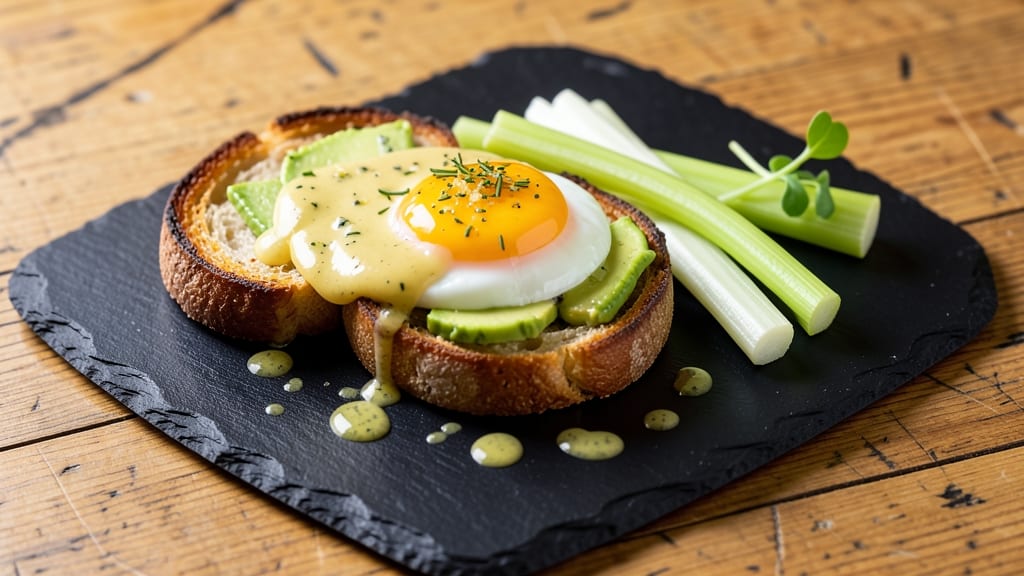
This St Benedict egg recipe transforms a classic brunch staple into a showstopper with crispy celery crowns and velvety poached yolks. The secret lies in perfectly poached eggs—firm whites, runny yolks—and a rich hollandaise that binds every component into luxurious harmony.
I've refined this technique over years, ensuring the celery stays crisp while the bread toasts just enough to hold the sauce without sogginess.
The assembly is where magic happens: toasted English muffins form the base, topped with crisp celery sticks arranged in a crown pattern, then the poached eggs nestled in the center. A generous spoonful of hollandaise ties it all together, creating a dish that looks as impressive as it tastes.
This isn't just brunch—it's a restaurant-worthy presentation that feels surprisingly approachable at home.
What makes this recipe special is the balance of textures: the crispy celery crowns contrast beautifully with the creamy yolks and buttery bread, while the hollandaise adds a luxurious finish. The technique is straightforward once you master the poaching, and I'll walk you through every step to ensure foolproof results.
Whether you're serving this for a special occasion or treating yourself to a gourmet breakfast, it delivers every time.
For those looking to elevate it further, consider adding smoked salmon or avocado to the celery crowns, or experimenting with a vegan hollandaise for a plant-based version. The key is maintaining that perfect crisp-to-creamy balance. Let's get started on creating your own brunch masterpiece.
Ingredients for st benedict egg
Four crispy crowns, four velvety yolks—this is your brunch game-changer.
| Ingredient | Amount | Notes |
|---|---|---|
| Large Eggs 🥚 | 8 whole | Fresh, room temperature for perfect poaching |
| Extra-Virgin Olive Oil 🫒 | ½ cup | High-quality, fruity variety for crisping |
| Unsalted Butter 🧈 | ½ cup | Cold, cut into 8 pieces for hollandaise |
| Fresh Celery Stalks 🧅 | 4 whole | Thick, crisp variety for crowns |
| English Muffins 🍞 | 4 whole | Sliced lengthwise for base |
| Lemon Juice 🍋 | 2 tbsp | Freshly squeezed for hollandaise |
| White Vinegar 💧 | 1 tbsp | For poaching water acidity |
| Diamond Crystal Kosher Salt 🧂 | 1 ½ tsp | For poaching and seasoning |
| Freshly Ground Black Pepper 🌶️ | ½ tsp | For hollandaise seasoning |
| Granulated Sugar 🍚 | 1 tbsp | For hollandaise balance |
| Chives 🌿 | 2 tbsp | Finely chopped for garnish |
| Fresh Dill 🌿 | 1 tbsp | Chopped for garnish (optional) |
Celery is non-negotiable here—thick stalks stay crisp longer than thin ones. Grab the plumpest celery at Whole Foods or your local farmers market; the ones with tight, pale green leaves. For the eggs, room temperature is key—cold eggs won't poach properly. I always buy free-range eggs from the grocery store's organic section—they poach with silky whites. The English muffins? Trader Joe's or local bakery for the best texture—none of that dry, pre-packaged stuff. Toast them just until golden, then keep warm in a 200°F oven while you assemble.
No fresh dill? Skip it—this dish shines without it. Hollandaise too intimidating? Pre-made works in a pinch, but trust me, making it fresh takes 5 minutes and tastes worlds better. For the celery crowns, use a mandoline for even slices—or carefully hand-cut with a sharp knife. If your celery starts wilting, toss it in ice water for 10 minutes to crisp it back up. The butter for hollandaise? Cold is critical—cut it into cubes and let it sit at room temp for 10 minutes before melting. And if your eggs crack while poaching (it happens), just fish out the yolks and re-poach them—the whites are still edible.
Assembled St Benedicts keep for 2 hours at room temperature—after that, serve immediately or refrigerate. The hollandaise will separate if chilled, so reheat gently in a double boiler before serving. Celery crowns stay crisp for 1 hour if stored in a single layer on paper towels. For make-ahead prep, poach the eggs and store them in ice water—they'll keep for 2 days in the fridge. Reheat the hollandaise separately, then assemble just before serving. Pro tip: Double the recipe—leftovers disappear fast.
Why You'll Love This Recipe
- No-Chop Needed: I swear by this—just slice the celery into short batons while the eggs poach. No dicing, no mincing, just quick knife work that won’t have you sweating over prep.
- Celery Butter Magic: That crisp-tender celery in rich, browned butter? It’s the secret weapon. The olive oil keeps it from turning to mush, and the butter makes every bite taste like a hug.
- Weeknight Hero: English muffins toast in 3 minutes while the eggs poach. Serve it for breakfast, lunch, or a last-minute dinner—no one will question why you’re eating eggs at 8 PM.
- Budget Breakfast: Eggs, butter, celery, and muffins—this feeds four for under $5. Leftovers? Toss them in a salad or reheat for a lazy morning. Minimal waste, maximum satisfaction.
Step-by-step instructions for crispy celery crowns over poached yolk elegance
Here's how to transform simple ingredients into restaurant-worthy St. Benedict eggs with perfect poached yolks and crispy celery crowns.
Prepare the Poaching Water and English Muffin Bases
Bring a small saucepan of water to a gentle simmer over medium-low heat. Add the 1 tablespoon white vinegar and 1.5 teaspoons Diamond Crystal kosher salt, then stir until fully dissolved. The acidity from the vinegar helps the egg whites coagulate more evenly, giving you those perfect round yolks. Keep this water at a bare simmer—180-190°F—not a rolling boil, or your eggs will break apart.
While the water heats, slice the 4 whole English muffins lengthwise and toast them in a dry skillet over medium heat until golden brown and crisp. The toasting adds texture contrast that balances the creamy yolks. Arrange the toasted halves on a plate and keep warm while you prepare the rest of the components.
Craft the Celery Crowns and Hollandaise Sauce
Cut the 4 whole fresh celery stalks into ¼-inch thick slices, then stack them like pancakes to create crown shapes. Secure each stack with a toothpick to hold their form. Heat ½ cup extra-virgin olive oil in a skillet over medium heat until shimmering. Fry the celery crowns for 2-3 minutes per side until golden brown and crispy—this is where the magic happens. Drain on paper towels and set aside.
For the hollandaise, melt the ½ cup unsalted butter (cut into 8 pieces) in a heatproof bowl over barely simmering water. Remove from heat and whisk in the 8 whole large eggs one at a time, then add the 2 tablespoons lemon juice, 1 tablespoon granulated sugar, and ½ teaspoon freshly ground black pepper. Whisk constantly until the sauce thickens to a glossy, ribbon-like consistency—this should take about 5-7 minutes. The sauce should coat the back of a spoon but still flow smoothly.
Poach the Eggs to Perfection
Crack each egg into a small ramekin, then gently slide them into the simmering poaching water. Use a slotted spoon to keep them centered. Poach for exactly 3 minutes—the whites should be set but the yolks still runny. Remove with the spoon and drain briefly on paper towels. Here's the thing: the water temperature is critical. If it's too hot, the eggs will overcook. If too cool, they won't set properly. Aim for that gentle simmer where tiny bubbles break the surface but don't boil vigorously.
Place each poached egg on a toasted English muffin half, then drizzle with hollandaise sauce. The sauce should cascade over the yolk like a waterfall. Top with a crispy celery crown and garnish with 2 tablespoons finely chopped chives and 1 tablespoon chopped fresh dill for that final touch of elegance. Serve immediately while the hollandaise is still warm and the celery crowns are crisp.
Pro Tips For Making St Benedict Egg
- Cook Eggs Low and Slow: St. Benedict eggs need patience—don’t rush the poaching. A gentle simmer (around 160°F) keeps yolks runny and whites tender. I used to crank the heat, and they’d turn into sad, rubbery blobs. Trust the process; it’s worth the wait.
- Dry Celery Like Your Life Depends on It: Wet celery steams instead of crisping. Pat each stalk thoroughly with a paper towel before slicing, and sear them in butter until golden. Sounds tedious, but it makes all the difference when you bite into that crunch.
- Butter the Muffin After Toasting: Toast the English muffin first, then slather it with butter while it’s still warm. Cold butter won’t melt into those nooks, and you’ll end up with a dry, flavorless base. Two seconds extra now saves regret later.
- Salt the Poaching Water: A pinch of salt in the egg-water prevents cloudiness and helps whites set faster. I skipped this for years until I noticed how much cleaner the eggs looked—and how much better they tasted. It’s that simple.
Essential equipment for perfect results
Poaching Essentials
You'll need a small saucepan (2-3 quart capacity) with a lid for the poaching water—Le Creuset's 2-quart round pan is my go-to for even heat distribution. A slotted spoon (like OXO Good Grips) helps gently transfer eggs without breaking them.
For precision, a thermometer (I use Thermoworks Smoke) ensures your water stays at 180-190°F—any hotter and your whites will overcook. 🌡️
Hollandaise Tools
The key to perfect hollandaise is double boiler setup—I use a heatproof mixing bowl (like Pyrex) over a saucepan of barely simmering water. A whisk (preferably Cuisinart stainless steel) with a long handle gives you leverage for that silky texture.
For emulsifying, I keep a small hand mixer (like KitchenAid KHM150) nearby to blend in stubborn lumps if they form. A fine-mesh strainer catches any accidental egg bits.
Celery Crown Prep
For crispy celery crowns, a mandoline slicer (like OXO Good Grips) ensures ¼-inch thick slices every time. A small skillet (8-inch) with sloped sides prevents oil splatter while frying. Toothpicks (or skewers) hold the crowns together during frying.
I keep paper towels nearby to drain excess oil immediately—this keeps them crispy. A small plate with a wire rack helps them cool while staying crisp.
Assembly Station
Your serving platter should be pre-warmed (place in a 200°F oven for 5 minutes) to keep the hollandaise warm. A small offset spatula helps spread sauce neatly over the yolks. Tweezers make garnishing with chives and dill easier than chopsticks.
For presentation, I use white plates to make the colors pop—Stoneware by Corelle is my favorite for brunch dishes. A small bowl nearby holds extra hollandaise for serving.
Backup Gear
Always have extra paper towels on hand for spills (hollandaise is messy!). A small bowl of ice water revives wilted celery in seconds. For egg emergencies, ramekins (4-6 oz size) help transport cracked yolks safely.
A timer (or phone alarm) prevents over-poaching. I keep a small bottle of lemon juice nearby to freshen any separated hollandaise before serving.
Nutrition facts
Frequently asked questions
Why does my hollandaise sauce break or separate?
Hollandaise separates when it gets too hot or when oil and egg yolks aren't properly emulsified. Keep the heat very low (or use a double boiler) and whisk constantly. If it breaks, whisk in 1 tablespoon warm water or a bit of lemon juice to recombine. For extra insurance, melt the butter first, then let it cool slightly before adding eggs.
Can I make St. Benedict eggs ahead of time?
You can prep components separately but assemble just before serving. Poach eggs and store in ice water for 2 days in the fridge. Keep toasted muffins wrapped at room temp for 2 hours, and make hollandaise fresh. Reheat sauce gently in a double boiler—never microwave it directly. Celery crowns stay crisp for 1 hour at room temp.
What if my poached eggs turn out too firm?
Overcooked eggs happen when water is too hot or poaching time exceeds 3 minutes. For next time, use a thermometer to maintain 180-190°F water, and reduce time to 2-2.5 minutes for slightly softer whites. If you're using older eggs, they'll firm up faster—opt for fresher ones for that classic runny yolk.
How do I keep celery crowns crispy?
Thin slices wilt faster—stick to ¼-inch thick cuts using a mandoline. Fry in hot olive oil for 2-3 minutes per side until golden, then drain immediately on paper towels. For extra crispness, store them in a single layer on a wire rack. If they soften, revive by dipping in ice water for 5 minutes before serving.
What are some creative variations for St. Benedict eggs?
Swap the celery crowns for smoked salmon, avocado slices, or crispy prosciutto. For a vegan version, use silken tofu "eggs" and cashew hollandaise. Try adding crab meat or lobster to the sauce for a seafood twist. Even a sprinkle of everything bagel seasoning on the celery adds a fun flavor boost!