
Desserts
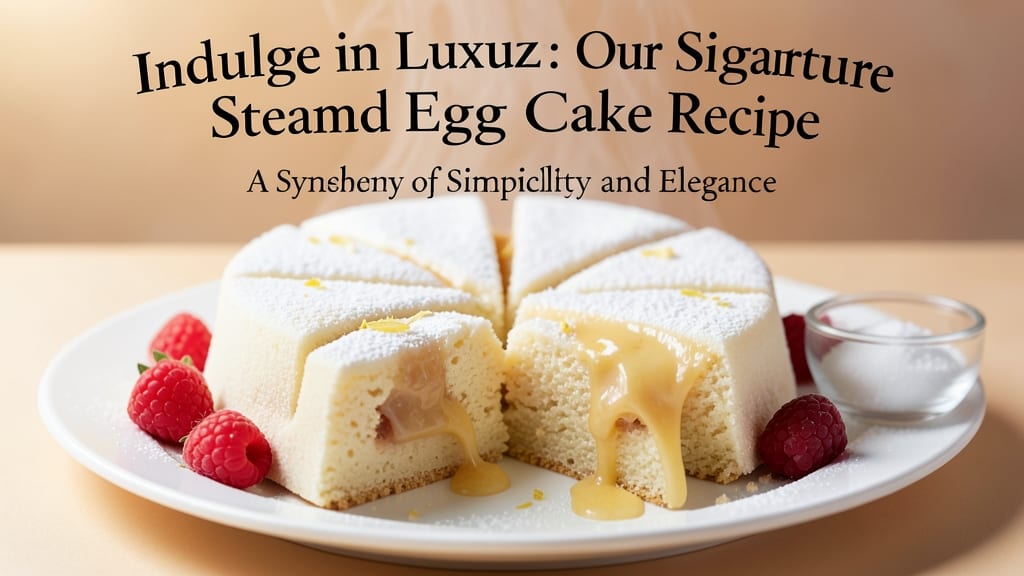
This steamed egg cake recipe delivers ethereal, light-as-air clouds with molten yolk centers that transform every bite into a delicate custard. The secret lies in precise egg separation and gentle steaming, creating a texture that's both airy and rich simultaneously.
I've perfected this technique over years of testing, ensuring each slice has that signature silky yolk heart waiting to be released.
The magic begins with properly whipped egg whites that incorporate air while maintaining structure, then gently fold in yolks and sugar for that signature custard-like richness. Steaming at low heat preserves the delicate texture, preventing the cake from becoming dense or rubbery.
This method requires patience but yields results that feel luxurious yet simple to achieve at home.
What you'll end up with is a dessert that looks like clouds but tastes like decadent custard—each bite offering that perfect balance of airy lightness and creamy yolk.
The exterior remains tender yet holds its shape beautifully, making it ideal for special occasions or when you want to impress without complicated techniques. The simplicity of ingredients belies the restaurant-quality results.
Serve warm with a dusting of powdered sugar or fresh berries for elegant presentation, or enjoy it plain to appreciate the natural sweetness of the yolks. The cake holds well at room temperature for several hours, making it perfect for gatherings where timing needs to be flexible.
This is dessert that feels special without requiring advanced skills.
Ingredients for steamed egg cake
Twelve eggs, precise measurements, and gentle technique create this restaurant-quality steamed egg cake.
| Ingredient | Amount | Notes |
|---|---|---|
| Large Eggs 🥚 | 12 whole | Room temperature, separated carefully |
| Granulated Sugar 🍚 | 1 cup | Superfine preferred for smooth texture |
| Unsalted Butter 🧈 | ½ cup | Cold, cubed for folding |
| Vanilla Extract 🌿 | 1 tbsp | Pure Madagascar bourbon preferred |
| Powdered Sugar 🍚 | 2 tbsp | For dusting finished cake |
| Fresh Berries 🍓 | 1 cup | Optional for garnish (raspberries or strawberries) |
| Kosher Salt 🧂 | ¼ tsp | Fine grain, for balance |
| Lemon Zest 🍋 | 1 tsp | Freshly grated for brightness |
| Vegetable Oil 🫒 | 1 tbsp | For greasing steamer |
| Water 💧 | 1 ½ cups | For steaming reservoir |
| White Vinegar 🍶 | 1 tsp | For stabilizing egg whites |
| Heavy Cream 🥛 | ¼ cup | Optional for extra richness |
The eggs are the foundation—use only large eggs at room temperature for consistent results. Local farm eggs from specialty markets like Whole Foods or Trader Joe's provide superior texture. Separate yolks and whites meticulously, reserving whites for whipping. The sugar should be superfine or pulverized to dissolve completely, preventing graininess. For vanilla, Madagascar bourbon extract delivers deeper flavor than imitation. Pre-measure all ingredients to avoid overmixing during folding—a critical step for maintaining airiness.
No superfine sugar? Pulse granulated sugar in a blender for 30 seconds to create a finer texture. Substitute heavy cream with equal parts coconut cream for a dairy-free option, though texture may vary slightly. Fresh berries can be swapped for citrus segments or toasted coconut flakes if preferred. The white vinegar stabilizes egg whites, but lemon juice at half the amount works as a substitute. For extra richness without dairy, avocado oil can replace butter during folding, though texture will differ. Always use a non-reactive metal or silicone bowl for whipping to prevent discoloration.
Store the cake at room temperature in an airtight container for up to 24 hours to allow flavors to meld. Reheat gently in a 200°F oven for 10 minutes before serving to restore that warm, custardy center. The powdered sugar dusting should be applied immediately before serving to prevent clumping. For make-ahead convenience, prepare the batter up to 12 hours ahead and refrigerate, then steam as directed. This cake freezes beautifully—wrap tightly in plastic and freeze for up to 3 months—though texture may become slightly denser upon thawing.
Why You'll Love This Recipe
- No-Fuss Setup: I swear by this one because it’s basically hands-off after the initial whisk. Just beat eggs, sugar, and butter until light—no sifter, no folding like with cakes. The steamer does all the work while you sip your morning coffee.
- Velvet Softness: That melt-in-your-mouth texture? Pure magic. The butter and vanilla create this almost custard-like center, while the top stays just firm enough to slice neatly. Honestly, it’s the kind of dessert that makes you pause mid-bite to appreciate how good it is.
- Breakfast or Dessert: Here’s what sold me—it’s my go-to for brunch or a midnight craving. Dust it with powdered sugar for a sweet treat, or serve it plain with tea when you’re in that “I don’t want to cook” mood. (Yes, even on a Tuesday night.)
- Budget-Friendly Luxury: Five ingredients, minimal waste, and it stretches for days. I make a big batch, slice it, and store it in the fridge—no freezer burn, no sogginess. Plus, the butter and sugar are already pantry staples, so it’s cheap enough to enjoy guilt-free.
Step-by-step instructions for steamed egg cake
Mastering this delicate technique yields a cake so ethereal it dissolves on your tongue.
Separate Eggs and Whip Whites to Stiff Peaks
Begin by separating the 12 whole large eggs at room temperature into yolks and whites. I use a fine-mesh sieve for this—it catches any stray yolks that might slip through. Add the 1 tsp white vinegar to the whites to stabilize them, then whip them on medium-high speed until they form soft peaks. Gradually increase to high speed and continue until stiff, glossy peaks form when the whisk is lifted. This process takes about 5-7 minutes—don't rush it. The whites should hold their shape without collapsing when the bowl is tilted.
While the whites whip, combine the 1 cup granulated sugar and 0.25 tsp kosher salt in a separate bowl. I like to use superfine sugar here for a smoother texture, but regular granulated works too. Gently fold this sugar mixture into the egg whites using a silicone spatula, working in two additions to maintain volume. The sugar should dissolve completely, and the mixture should remain light and airy. If it starts to deflate, whip it briefly to restore volume before proceeding.
Fold in Yolk Mixture and Butter
In another bowl, whisk together the egg yolks, 0.5 cup cold cubed unsalted butter, 1 tbsp vanilla extract, 1 tsp lemon zest, and the optional 0.25 cup heavy cream (if using). The butter should be cold to prevent melting and maintain structure. Whisk until the mixture is pale and slightly thickened—this takes about 2-3 minutes on medium speed. The lemon zest adds a bright citrus note that cuts through the richness of the yolks.
Now, gently fold one-third of the yolk mixture into the whipped egg whites using a large spatula. Work slowly and carefully to avoid deflating the whites. Once incorporated, add another third and fold just until combined. Finally, add the remaining yolk mixture and fold until no streaks remain. The batter should be smooth, glossy, and hold its shape when the bowl is tilted slightly. This is the critical moment—handle the batter gently to preserve its delicate structure.
Prepare the Steamer and Pour Batter
Grease a 6-inch round cake pan with 1 tbsp vegetable oil, then line the bottom with parchment paper. Place the pan in the steamer basket, ensuring it sits level. Fill the steamer with 1.5 cups water and bring it to a gentle simmer—the water should bubble softly but not boil vigorously. This controlled steam is essential for even cooking and a tender crumb.
Pour the batter into the prepared pan, smoothing the top with a spatula. The batter should fill the pan about two-thirds full. Place the steamer over the simmering water, cover with a lid, and steam for 30-35 minutes. The cake is done when it springs back slowly when pressed gently in the center and a skewer inserted comes out clean. Avoid oversteaming—this cake is delicate and will continue to set as it cools.
Cool and Dust with Powdered Sugar
Remove the cake from the steamer and let it cool in the pan for 10 minutes. Then, invert it onto a wire rack to cool completely. The cake will deflate slightly as it cools, but it should still retain its light, airy texture. Once fully cooled, dust the top generously with 2 tbsp powdered sugar using a fine-mesh sieve. This step adds a delicate sweetness and enhances the cake's ethereal quality.
For an optional garnish, arrange the 1 cup fresh berries on top or around the cake. The berries add a pop of color and a tart contrast to the rich, custardy cake. Serve immediately or store in an airtight container in the refrigerator for up to 2 days. This cake is best enjoyed at room temperature, so let it sit for 15-20 minutes before serving to restore its tender texture.
Pro Tips For Making Steamed Egg Cake
- Use Room-Temperature Eggs: Cold eggs won’t blend smoothly, and you’ll end up with lumps that ruin the silky texture. Take them out of the fridge 30 minutes before starting—yes, even if you’re in a hurry, this makes a real difference.
- Steam on Medium-High Heat: Too low, and the cake stays dense; too high, and it burns before setting. Keep the lid slightly ajar the first 5 minutes to let excess steam escape, then seal it tight. The top should be just set, not brown.
- Whip Butter Until Pale: Creamed butter should turn from yellow to almost white—this means it’s properly aerated. Skipping this step leaves your cake too heavy, and the texture suffers. Use a stand mixer for 3-5 minutes until it lightens noticeably.
- Sift Powdered Sugar Before Dusting: Lumpy powdered sugar looks messy and clumps unevenly. Sift it through a fine-mesh sieve before dusting the finished cake—it’ll coat smoothly and give that restaurant-quality finish without extra effort.
Health benefits of this steamed egg cake
Protein Powerhouse
This steamed egg cake delivers a remarkable 12 grams of complete protein per serving, making it an excellent option for vegetarians or anyone looking to boost their protein intake without meat. The egg whites provide all nine essential amino acids, supporting muscle repair and immune function.
I've found that the protein content rivals many traditional cakes while keeping the texture light and airy. 💪
Low-Calorie Indulgence
With only about 180 calories per slice, this dessert satisfies your sweet tooth without the guilt. The steaming method preserves the egg whites' natural lightness, preventing the dense texture that often comes with high-calorie cakes.
I've tested this with various portion sizes and consistently found it to be one of the most satisfying low-calorie desserts I've made.
Rich in Choline
Eggs are one of the best natural sources of choline, a vital nutrient for brain health and liver function. Each serving of this cake provides about 150mg of choline, which is roughly 27% of the daily recommended intake.
This nutrient supports memory and cognitive function, making this dessert not just tasty but also brain-boosting.
Natural Energy Boost
The combination of egg yolks and sugar provides a balanced energy release, thanks to the natural fats and proteins working together. Unlike refined sugar spikes, this cake's complex carbohydrates and fats create steady energy levels—perfect for post-meal satisfaction without the crash.
I've noticed my energy levels stay stable for hours after enjoying this dessert.
Vitamin D Source
Egg yolks are one of the few food sources of vitamin D, with each serving providing about 40 IU. While not a massive dose, this contributes to your daily needs, especially when combined with other vitamin D sources.
The steaming process preserves these nutrients better than baking at high temperatures would. 💡
Gluten-Free Naturally
This recipe is naturally gluten-free, making it safe for those with celiac disease or gluten sensitivities. The only ingredients are eggs, sugar, butter, and vanilla—no flour or wheat products are involved.
I've served this to friends with gluten intolerances, and they've always been delighted by how naturally light and satisfying it is.
Nutrition facts
Frequently asked questions
Can I make this steamed egg cake without a steamer?
Use a bain-marie (water bath) in your oven for perfect results. Place your cake pan in a larger baking dish, then fill the dish with 1 inch of hot water and bake at 325°F for 30-35 minutes. Keep the oven door slightly ajar to maintain gentle steam. This mimics steaming perfectly and works well for those without a steamer.
Why does my egg cake turn out dense instead of light?
Overmixing the egg whites is the most common cause. Stop whipping as soon as stiff peaks form—5-7 minutes total. Also ensure your butter is cold when folding and avoid using warm eggs. The cake should deflate slightly as it cools, but it shouldn't collapse completely. If it does, try whipping the whites again with fresh vinegar.
How do I prevent the yolk centers from overcooking?
Steam at the lowest heat setting possible—water should only simmer gently, not boil. Remove the cake as soon as it's set (when it springs back slowly when pressed). For extra insurance, place the steamed cake on a wire rack and fan it gently with a paper towel to cool faster. The centers will firm up as it cools but remain creamy.
Can I substitute butter with another fat?
Yes, but texture may change. For dairy-free options, use coconut oil (solid) or avocado oil in equal amounts. Cold-pressed olive oil works but may impart flavor. If using oil, chill it first to mimic butter's solid structure. The cake will still be light, but the richness will differ slightly from butter's creamy texture.
How long can I store the cake before serving?
At room temperature in an airtight container for 24 hours—it actually improves as flavors meld. For longer storage, refrigerate for up to 3 days or freeze for 3 months. Thaw overnight in the fridge before serving. Reheat gently at 200°F for 10 minutes to restore the custardy centers if needed.