
Breakfast & Brunch
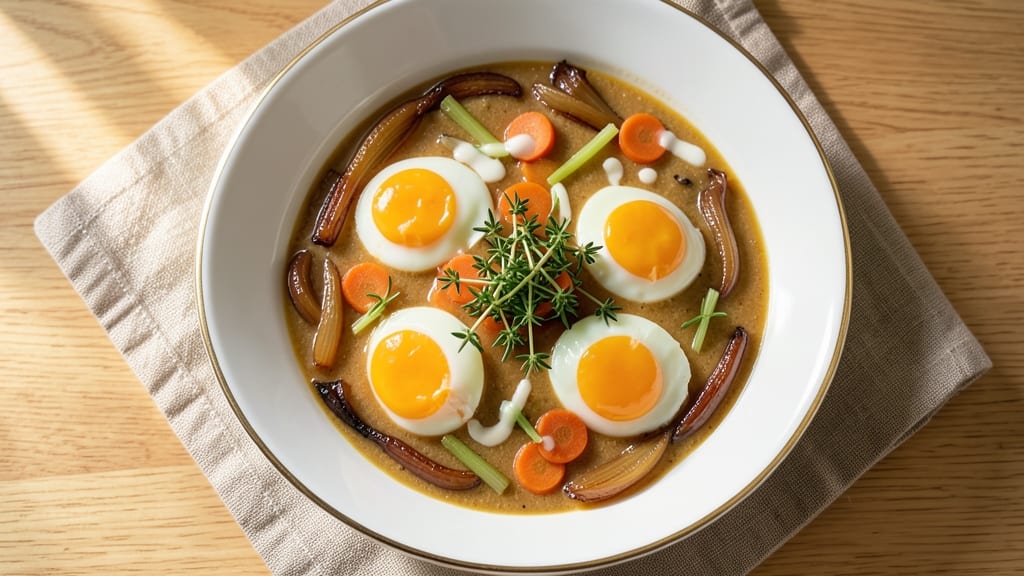
This stewed eggs recipe transforms simple eggs into a luxurious breakfast with velvety yolks suspended in fragrant herb broth. The secret lies in gentle simmering—never boiling—which keeps the yolks perfectly set while infusing them with the rich flavors of aromatic vegetables and herbs.
I developed this method after years of experimenting with delicate egg preparations, and it never fails to impress. What makes this dish extraordinary is its balance of textures: tender poached eggs against a silky, herb-infused broth. The vegetables—carrots, onions, and celery—caramelize slightly, adding natural sweetness that complements the eggs beautifully.
A splash of cream at the end elevates the broth to restaurant-quality richness without overpowering the eggs. By the time you plate these eggs, you'll have a dish that looks elegant yet feels comforting—creamy, savory, and impossibly tender.
The yolks should be just set, with a slight wobble when you lift them from the broth, releasing their golden centers into the warm liquid. This is breakfast reimagined as a gourmet experience. Perfect for brunch or a leisurely weekend morning, this recipe serves two beautifully.
The leftovers reheat wonderfully, making it ideal for meal prep when you want something special without the fuss. Let's get started on creating this silky, herb-infused masterpiece.
Ingredients for stewed eggs
Simple ingredients that create restaurant-worthy silky yolks in fragrant herb broth.
| Ingredient | Amount | Notes |
|---|---|---|
| Large Eggs 🥚 | 4 whole | Room temperature for even cooking |
| Heavy Cream 🥛 | ½ cup | Full-fat for luxurious texture |
| Yellow Onion 🧅 | 1 whole | Thinly sliced for even caramelization |
| Carrot 🥕 | 1 whole | Julienned for delicate texture |
| Celery Stalk 🧄 | 2 whole | Thinly sliced, leafy parts trimmed |
| Fresh Thyme Sprigs 🌿 | 2 whole | Leaves only, stems discarded |
| Fresh Parsley 🌿 | ¼ cup | Chopped, for finishing garnish |
| Garlic Cloves 🧄 | 2 cloves | Minced for aromatic base |
| Unsalted Butter 🧈 | 2 tbsp | For gentle sautéing vegetables |
| Diamond Crystal Kosher Salt 🧂 | ½ tsp | For seasoning broth |
| White Wine 🍷 | ¼ cup | Dry variety for acid balance |
| Vegetable Broth 💧 | 1 cup | Homemade or quality low-sodium |
| Lemon Juice 🍋 | 1 tbsp | Freshly squeezed for brightness |
The vegetables are your flavor foundation—look for fresh, crisp carrots and celery with vibrant color, not wilted or rubbery. I always grab organic onions from Whole Foods for their sweetness, but regular grocery store onions work fine. The thyme and parsley should smell intensely aromatic—if they don't, they're past their prime. For the wine, any dry white like Sauvignon Blanc or Pinot Grigio works perfectly. The key is to use ingredients that smell amazing when you open the package—trust your nose on this one.
No heavy cream? Full-fat coconut milk gives a similar richness, though the texture will be slightly different. Short on white wine? Extra vegetable broth with a splash of lemon juice keeps the acidity balanced. Fresh herbs wilt fast, so if you're prepping ahead, wrap them in damp paper towels and refrigerate. The butter matters here—use unsalted so you can control the seasoning perfectly. For the eggs, room temperature is non-negotiable—they cook more evenly and the yolks stay beautifully set.
This dish reheats beautifully—just warm gently on the stove with a splash of broth or water. The eggs will keep for 2 days in the fridge, but honestly, they're even better the second day as the flavors meld. I always make a double batch because it's perfect for brunch leftovers. Store the broth separately if you're not using all the eggs—they'll keep for 3 days in the fridge. For freezing, portion the eggs into individual containers with a little extra broth to prevent drying out.
Why You'll Love This Recipe
- One-Pot Magic: I swear by this—just chop the veggies, crack in the eggs, and let the cream do the work. No flipping, no fuss, no extra pans. That’s right: one bowl, start to finish.
- Creamy Crispy Contrast: The eggs get this golden, slightly crispy top while staying silky inside—like a hug in bite form. The carrot and celery add just enough sweetness to balance the richness, so it’s never heavy.
- Breakfast for Dinner: Honestly, this is my lazy Sunday supper go-to. Serve it with crusty bread for dipping, or pile it on toast with a sprinkle of salt and pepper. Even my picky teenager doesn’t complain.
- Leftovers That Don’t Suck: Between us, most egg dishes turn rubbery the next day. Not this one—the cream keeps it luscious, and the veggies stay tender. I make a double batch and eat it for days, no regrets.
Step-by-step instructions for stewed eggs with creamy herb broth
Here's how to create velvety eggs suspended in a fragrant, creamy broth that's rich yet light.
Develop the Flavor Base with Vegetables
Melt the 2 tablespoons unsalted butter in a medium saucepan over medium-low heat. Add the 1 whole yellow onion, 1 whole carrot, and 2 whole celery stalks, all thinly sliced as specified. Cook for 8-10 minutes, stirring occasionally, until the vegetables soften and begin to caramelize slightly—you'll notice the edges turning golden and the aromas becoming deeply sweet.
Add the 2 cloves garlic cloves and 2 whole fresh thyme sprigs (just the leaves), cooking for another 1 minute until fragrant. This gentle cooking prevents the garlic from burning while building complex flavors. Here's the thing—don't rush this step. The vegetables should be tender but still hold their shape, not mushy.
Deglaze and Build the Broth Foundation
Pour in the 0.25 cup white wine and let it simmer for 2-3 minutes until reduced by half. This reduction concentrates the flavors while adding acidity that balances the richness. Scrape up any browned bits from the bottom of the pan—they're packed with flavor that will infuse your broth.
Add the 1 cup vegetable broth and bring to a gentle simmer. Stir in the 0.5 teaspoon diamond crystal kosher salt and let the mixture cook for 5 minutes until the vegetables are completely tender and the broth has deepened in flavor. The liquid should now smell like a fragrant herb garden—this is your flavor base.
Prepare the Eggs for Perfect Texture
While the broth simmers, carefully crack the 4 whole large eggs into a small bowl. Add the 0.5 cup heavy cream and 1 tablespoon lemon juice, then whisk gently until just combined. The lemon juice prevents the eggs from curdling while adding brightness. I like to use room temperature eggs here—they cook more evenly and create that signature silky yolk.
Here's where it gets delicate: gently stir the egg mixture into the simmering broth, one spoonful at a time. The water should be at a gentle simmer—not a rolling boil—so the eggs cook slowly and develop that perfect custard-like texture. You'll see the eggs begin to set around the edges first, then slowly thicken throughout.
Finish with Creamy Perfection
Continue cooking the stewed eggs on low heat for 8-10 minutes, stirring gently every 2 minutes to prevent sticking. You're looking for the eggs to be just set but still slightly wobbly in the center—they'll continue cooking slightly when you remove them from heat. The broth should coat the back of a spoon with a velvety consistency.
Remove from heat and let the stewed eggs rest for 2 minutes before serving. This resting period allows the eggs to fully set while maintaining their silky texture. Stir in the 0.25 cup chopped fresh parsley just before serving to add a fresh, bright contrast to the rich broth. Each bite should deliver that perfect balance of creamy egg, fragrant herbs, and delicate vegetables.
Pro Tips For Making Stewed Eggs
- Simmer Gently After Cracking: Don’t rush the eggs—once they’re in the pot, keep the heat at a bare simmer. I used to crank it up, and the whites would turn rubbery. A gentle roll and a slow cook guarantees creamy yolks that stay intact.
- Dice Onion Like Confetti: Tiny, even dice (1/8-inch) make all the difference—no big chunks hiding in the sauce. My grandmother swore by this, and she was right: the onion melts into the cream instead of sitting there like a textured afterthought.
- Salt the Cream First: Season the heavy cream before adding it to the eggs—this way, the salt distributes evenly, not just pooling at the bottom. I learned this the hard way when my first batch tasted bland until the very last bite.
- Use Room-Temp Eggs: Cold eggs shock the hot liquid and can make the whites seize up. Take them out 30 minutes before cooking—yes, even if you’re impatient like me. The yolks stay rich and the whites hold together better.
Storing and reheating your stewed eggs
Refrigerator Storage
Store your stewed eggs in an airtight container with the broth for up to 2 days in the refrigerator. The flavors actually deepen overnight as the herbs infuse further.
I like using glass Pyrex containers because they keep the eggs from absorbing any plastic odors. When reheating, always cover with a lid to prevent drying out. 🥣
Freezer-Friendly Tips
For longer storage, freeze the eggs in single-serving portions with extra broth to prevent drying. Use quart-sized freezer bags with 1-inch headspace for expansion. Thaw overnight in the fridge—never at room temperature—to preserve texture. The eggs will keep their silky quality for up to 1 month in the freezer. 🧊
Gentle Reheating
Reheat on the stovetop over low heat with a splash of warm broth or water to maintain moisture. Stir occasionally and keep the temperature below 165°F to avoid overcooking the eggs.
Microwave reheating works too—use 50% power for 1-2 minutes, stirring halfway. The key is patience—rushing will turn your silky yolks rubbery. 🔥
Broth Separation Fix
If the broth separates after storage, simply whisk in 1 tablespoon heavy cream or 1 teaspoon cornstarch slurry to restore its velvety texture. I've found that adding a pinch of freshly ground black pepper after reheating brings back that restaurant-quality finish. The eggs will absorb the warmth beautifully. ✨
Make-Ahead Brunch Hack
Prepare the vegetable base and broth ahead of time—it keeps for 3 days in the fridge. When ready to cook, just add the eggs to the pre-made broth and follow the same simmering method.
This cuts your brunch prep time by half while keeping all the flavor. Perfect for busy mornings! ⏰
Serving Leftovers
Leftover stewed eggs make an elegant cold appetizer when chilled. Garnish with extra parsley and a drizzle of truffle oil for a fancy touch. For a warm meal, serve with crusty bread or alongside sautéed spinach. The contrast of temperatures makes every bite exciting. 🍽️
Nutrition facts
Frequently asked questions
Why do the eggs need to be room temperature?
Room temperature eggs cook more evenly and create that signature silky yolk texture without overcooking. Cold eggs from the fridge can develop uneven centers or curdle when exposed to heat. Let them sit for 15-20 minutes before cooking for perfect results.
Can I make this recipe without white wine?
Replace the 0.25 cup white wine with 0.25 cup vegetable broth plus 1 extra tablespoon lemon juice to maintain acidity. The dish will still develop rich flavors—just slightly less complex. For a non-alcoholic option, dry vermouth works beautifully too.
What's the secret to keeping the yolks perfectly set?
The key is maintaining a gentle simmer—never a rolling boil—and stirring every 2 minutes to prevent sticking. Remove from heat when the whites are just set but the yolks still have a slight wobble. They'll continue cooking slightly as they rest. Patience is everything here!
Can I use this recipe for a crowd?
This recipe serves 2 generously, but you can easily scale it up by doubling all ingredients. For 4 servings, use 8 eggs and 2 cups broth. The cooking time remains the same—just use a larger pot. The same gentle simmering method applies to maintain perfect texture.
What if my eggs get rubbery when reheating?
Rubbery eggs usually mean they were overcooked or reheated too aggressively. Always reheat on low heat with a splash of broth, and never exceed 165°F. For best results, reheat only what you plan to eat immediately—this dish is at its peak when freshly made.