
Breakfast & Brunch
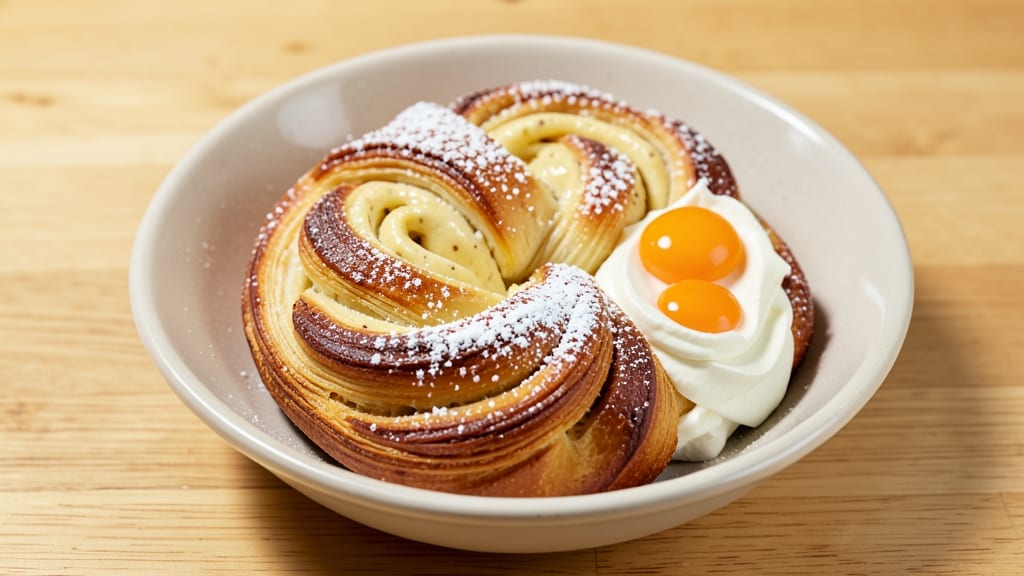
This sweet egg challah recipe transforms a simple braided loaf into a luxurious breakfast centerpiece with custard-filled twists. The secret lies in the eggs—rich, tender, and golden—binding the dough while adding that signature custard-like richness.
I developed this version after years of perfecting the balance between soft, pillowy layers and a crisp, golden crust that holds up beautifully for hours.
The process begins with a slightly enriched dough that incorporates whole eggs for structure and flavor, creating a texture that's both tender and sturdy enough for braiding. What sets this apart is the custard filling—creamy, lightly sweetened, and swirled into the loaf before baking.
The result? A challah that's as impressive to look at as it is to eat, with each bite offering that perfect harmony of buttery dough and velvety custard.
Baking at the right temperature ensures a soft interior and that coveted golden-brown crust, while the egg wash adds a glossy sheen that makes it look fresh out of a bakery.
This recipe delivers a foolproof method for achieving restaurant-quality results at home, whether you're serving it warm with butter or saving slices for toast the next morning.
Perfect for Shabbat mornings, brunch gatherings, or even as a decadent dessert, this sweet egg challah combines tradition with a modern twist. The custard filling adds an extra layer of indulgence that makes it unforgettable. Let's get started on creating this showstopping loaf.
Ingredients for sweet egg challah
Six eggs, one cup butter, and a touch of custard create this luxurious sweet egg challah.
| Ingredient | Amount | Notes |
|---|---|---|
| Large Eggs 🥚 | 6 whole | Room temperature for even mixing |
| Unsalted Butter 🧈 | 1 cup | Cold, cubed for easier incorporation |
| Granulated Sugar 🍚 | ½ cup | Superfine preferred for smooth texture |
| All-Purpose Flour 🌾 | 6 cups | Sifted for light, airy dough |
| Instant Yeast 🍞 | 2 ½ tsp | Single-use packet for accuracy |
| Salt 🧂 | 1 tsp | Diamond Crystal preferred |
| Milk 🥛 | ½ cup | Warm, whole milk for richness |
| Vanilla Extract 🌿 | 2 tsp | Pure, high-quality extract |
| Large Egg Yolks 🥚 | 4 whole | Separated for custard filling |
| Powdered Sugar 🍚 | ¼ cup | For custard sweetness |
| Cream Cheese 🧀 | 8 oz | Room temperature for smooth filling |
| Egg Wash 🥚 | 1 whole | 1 egg beaten with 1 tbsp water |
| Poppy Seeds 🌱 | 2 tsp | Optional for decorative topping |
The eggs are the foundation—room temperature ensures even incorporation into the dough for a tender crumb. Kirkland Signature or Organic Valley eggs work best for their rich yolks. Butter should be cold and cubed to prevent melting during mixing, which could weaken the gluten structure. For the custard filling, cream cheese needs to be at room temperature to blend smoothly with the yolks—Whipped or Philadelphia brands are ideal. Poppy seeds, if using, should be lightly toasted in a dry pan for 30 seconds to enhance their nutty flavor before sprinkling on top.
No superfine sugar? Pulse granulated sugar in a food processor for 30 seconds to achieve a similar texture. Substituting milk? Oat or almond milk will work, but the dough may be slightly less tender—whole milk is preferred for richness. For the custard, Greek yogurt can replace half the cream cheese if you're watching fat content. The vanilla extract should be pure, not imitation—Nike or McCormick brands are reliable choices. If you're short on time, instant yeast can be substituted with active dry yeast at the same quantity, but remember to proof it first in warm milk.
Dough keeps covered at room temperature for up to 4 hours or refrigerated overnight for improved flavor. The custard mixture should be prepared 1 hour ahead to allow flavors to meld fully. Once baked, challah stays fresh 3 days at room temperature wrapped in a clean kitchen towel, or up to 1 week in the fridge. For longer storage, slice and freeze portions—they reheat beautifully in a 350°F oven for 10 minutes to restore freshness.
Why You'll Love This Recipe
- No-Knead Magic: I swear by this dough—just mix, let it rise, and shape. The eggs and butter do all the heavy lifting while you sip your coffee.
- Buttery Sweet Payoff: That first bite? Rich, tender crumb with a whisper of vanilla from the eggs and sugar. The butter keeps it moist for days, honestly.
- Weeknight Hero: Pull it out for breakfast, pack it for lunch, or serve it at brunch. It’s my go-to when I need something impressive but zero stress.
- Budget-Friendly Luxury: Five basic ingredients stretch far—enough for a family loaf with leftovers that taste just as good reheated. (Yes, even on a Tuesday night.)
Step-by-step instructions for sweet egg challah
This braided sweet bread delivers tender layers and creamy custard filling with precise technique.
Prepare the Custard Filling
In a medium mixing bowl, combine the 4 whole large egg yolks, 0.25 cup powdered sugar, and 8 oz room temperature cream cheese. Whisk until completely smooth and lump-free—no visible streaks of cream cheese should remain. This mixture forms the signature sweet filling that will be piped into the braided loaves.
For best results, ensure the cream cheese is fully softened before mixing. I like to microwave it for 10-15 seconds if needed, then let it sit for 2 minutes to reach room temperature. The filling should be thick enough to hold its shape when piped but still spreadable. Cover the bowl and set aside while you prepare the dough.
Mix the Dough Components
In the bowl of a stand mixer fitted with the dough hook, combine the 6 whole large eggs (room temperature), 1 cup cold cubed unsalted butter, 0.5 cup granulated sugar, 0.5 cup warm milk, 2 tsp vanilla extract, 2.5 tsp instant yeast, and 1 tsp salt. Mix on low speed for 3 minutes until the butter is fully incorporated and the mixture resembles a thick batter.
Add the 6 cups sifted all-purpose flour gradually, mixing on low speed for another 5 minutes until the dough pulls away from the sides of the bowl and forms a smooth, elastic ball. The dough should be slightly tacky but not sticky—if it's too dry, add 1 tablespoon milk at a time until it reaches the proper consistency. Cover the bowl and let the dough rest for 30 minutes at room temperature.
Knead and Shape the Dough
After the initial rest, turn the dough onto a lightly floured surface and knead by hand for 5 minutes until smooth and elastic. Divide the dough into 3 equal portions, each weighing about 12 ounces. Roll each portion into a 24-inch long rope, tapering the ends slightly to create a rounded shape.
To form the classic braid, lay the three ropes side by side. Cross the right rope over the middle, then the left rope over the new middle, repeating this pattern until you reach the end. Seal the braid by pinching the ends together and tucking them underneath. Place each braided loaf on a parchment-lined baking sheet, cover with a clean kitchen towel, and let rise in a warm place for 1-1.5 hours or until doubled in size.
Pipe and Bake the Challah
Preheat your oven to 350°F. Using a piping bag fitted with a large star tip, pipe 1-inch wide lines of the custard filling down the center of each braided loaf, leaving ½-inch gaps between each line. Brush the tops generously with the egg wash and sprinkle with 2 tsp poppy seeds for decoration.
Bake for 30-35 minutes until the challah is golden brown and sounds hollow when tapped on the bottom. For even baking, rotate the pans halfway through. The internal temperature should reach 190°F when checked with an instant-read thermometer. Let cool on a wire rack for 10 minutes before slicing—this prevents the custard from oozing out.
Rest and Serve
Transfer the baked challah to a cutting board and let rest for 15-20 minutes to allow the filling to set slightly. The braids should hold their shape when lifted, with a tender crumb and creamy custard center. For the best texture, serve at room temperature rather than warm.
Slice each loaf into 8 equal pieces using a serrated knife for clean cuts. The custard filling should be smooth and sweet, complementing the buttery, slightly chewy dough. Store any leftovers in an airtight container for up to 3 days or freeze for 1 month—the filling remains creamy even when reheated briefly.
Pro Tips For Making Sweet Egg Challah
- Warm the Eggs First: Crack those eggs into a bowl first, then dip the bowl in warm (not hot) water for 2 minutes before mixing. The yeast loves the jumpstart—your dough will puff up faster and taste richer, especially with that buttery sweetness.
- Use Cold Butter: Cut that unsalted butter into tiny cubes and chill it for 10 minutes before mixing into the dough. Cold butter creates flaky layers in the final braid, and skipping this step means a denser, less tender challah.
- Skip the Over-Kneading: The instant yeast in this recipe works fast—stop kneading once the dough springs back when poked (about 8-10 minutes). Overworking it makes the texture tough, and you’ll end up with a chewy mess instead of that light, airy sweetness.
- Proof at Room Temp: Let the shaped challah rise in a warm (not hot) spot—like the oven with the light on—for 1.5 hours. Cold air slows the yeast, and skipping this step means a flat, dense loaf instead of that perfect, domed rise.
Make-ahead tips for sweet egg challah
Dough Prep Ahead
Mix your dough the night before and refrigerate it overnight for deeper flavor development. The cold temperature slows yeast activity, giving you more control during shaping.
I wrap mine in plastic wrap and place it in the fridge—this also makes the dough easier to handle when you're ready to braid. 🌙
Custard Prep
Prepare the custard filling at least 1 hour before baking to let flavors meld. Store it in an airtight container in the fridge until ready to use.
The longer it sits, the creamier it becomes—perfect for piping into the braided loaves. I like to make it 2 days ahead for maximum flavor intensity.
Rise Timing
Shape your braided loaves in the morning and let them rise in a warm oven with a bowl of hot water on the bottom. This creates a consistent 80°F environment that speeds up proofing to 1-1.5 hours.
For overnight rising, cover the shaped loaves and refrigerate for 8-12 hours, then let them warm to room temperature before baking.
Filling Storage
If you're making multiple batches, store the unused custard in a sealed container with parchment paper pressed directly on the surface. It keeps for 3 days in the fridge or 1 month frozen. Thaw overnight in the fridge before using—microwaving can make it grainy. 🧀
Baking Schedule
Preheat your oven 30 minutes before baking to ensure even heat distribution. For busy mornings, bake one loaf immediately and refrigerate the remaining shaped loaves. They'll keep for 24 hours before baking—just let them rise at room temperature for 1 hour before proceeding.
Make-Ahead Serving
Slice cooled challah and freeze portions between parchment paper. To serve, reheat individual slices at 350°F for 8-10 minutes until warm. The custard filling stays creamy without turning rubbery.
I love making extra to use for French toast the next morning—just dip slices in egg mixture and cook in butter. ✨
Nutrition facts
Frequently asked questions about sweet egg challah
Why does this recipe use so many eggs?
The eggs create that signature custard-like richness while binding the dough for a tender crumb. Six whole eggs enrich the dough itself, while four extra yolks make the creamy filling. This combination gives the bread its luxurious texture and golden color.
Can I make this without a stand mixer?
Mix the dough by hand in a large bowl using a wooden spoon first, then turn onto a floured surface and knead for 8-10 minutes until smooth and elastic. Just be prepared for more arm work—the butter takes longer to incorporate by hand.
What if my custard filling is too thick or too thin?
If too thick, whisk in 1 teaspoon warm milk at a time until it reaches piping consistency. Too thin? Add 1 tablespoon cream cheese (softened) and mix until smooth. The filling should hold its shape when piped but still spread easily.
How do I prevent the braids from falling apart?
Make sure your dough is properly rested after mixing (at least 30 minutes) and shaped when it's doubled in size after proofing. Seal the ends tightly by pinching them together and tucking underneath. Also, don't overpipe the custard—1-inch lines with ½-inch gaps prevent overfilling.
Can I substitute the custard filling with something else?
For a different flavor, try lemon curd or chocolate ganache instead of the cream cheese filling. Just adjust sweetness—these alternatives are more intense. The texture should remain similar: smooth, spreadable, and able to hold its shape when piped.