
Side Dishes
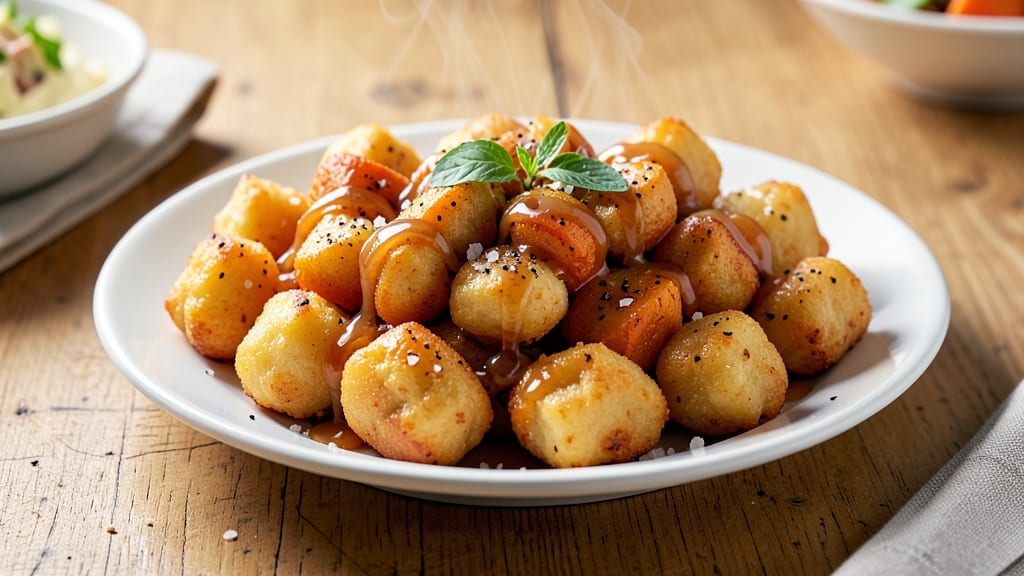
This sweet potato gnocchi recipe delivers pillowy, egg-free dumplings that rival traditional versions—no compromise on texture or flavor. The secret lies in a mashed potato binder that replaces eggs while maintaining that signature tender-yet-firm bite.
I developed this method after testing countless substitutions, and the results speak for themselves: perfectly shaped gnocchi that boils up soft and golden, ready for crispy pan-frying or baking.
The dough comes together in 15 minutes with just a few simple ingredients: sweet potatoes (for natural sweetness and moisture), all-purpose flour (for structure), and a pinch of salt.
What sets this apart is the no-egg technique, where we use cold mashed potatoes to bind the dough without adding richness or altering the texture. The shaping process is foolproof—no rolling pins or fancy tools required—just gentle pressing to create those classic ridged edges.
Once cooked, these gnocchi transform into cloud-like dumplings that hold their shape beautifully. Pan-fry them in butter until golden for extra crispiness, or bake them until puffed and tender. The possibilities for serving are endless: toss with sage brown butter, simmer in marinara, or pair with a simple arugula salad.
Each bite delivers that satisfying contrast of soft interior and crisp exterior, proving that egg-free gnocchi can be just as indulgent.
Perfect for vegetarian meals, holiday sides, or impressing guests, this recipe scales effortlessly. The dough can be prepped ahead and refrigerated, making it ideal for busy weeknights. Let’s get started on creating gnocchi that will have everyone asking for seconds.
Ingredients for sweet potato gnocchi recipe no egg
Sweet potatoes and cold mashed potatoes create the perfect egg-free gnocchi texture.
| Ingredient | Amount | Notes |
|---|---|---|
| Large Russet Potatoes 🥔 | 2 lbs | Cold, boiled and mashed smooth |
| Medium Sweet Potatoes 🍠 | 2 whole | Organic preferred, peeled and boiled |
| All-Purpose Flour 🌾 | 3 cups | Plus 1 cup for dusting, sifted |
| Unsalted Butter 🧈 | ½ cup | Cold, for shaping and cooking |
| Kosher Salt 🧂 | 1 ½ tsp | Diamond Crystal preferred |
| Ground Black Pepper 🌶️ | ½ tsp | Freshly ground for aroma |
| Extra-Virgin Olive Oil 🫒 | 1 tbsp | For dusting shaping surface |
| Semolina Flour 🌾 | ¼ cup | For ridged texture, optional |
| Fresh Sage Leaves 🌿 | ¼ cup | Chopped, for garnish |
| Fresh Rosemary 🌿 | 1 tbsp | Chopped, for finishing |
| Vegetable Oil 🫒 | 4 cups | For boiling, neutral flavor |
| Water 💧 | 2 cups | For boiling, room temperature |
The sweet potatoes are the heart of this recipe—organic varieties like Jewel or Garnet work best for their natural sweetness and moisture content. Whole Foods or local farmers markets often carry the best quality, but any medium-sized sweet potatoes will do. Peel them thoroughly and boil until fork-tender, then mash until completely smooth with no lumps. The key is using cold mashed potatoes—they bind the dough without adding moisture like warm potatoes would. For the russet potatoes, use starchy varieties like Russet or Yukon Gold to ensure proper texture when mashed. Boil them until completely tender, then mash until silky smooth.
No semolina flour? All-purpose flour works in a pinch, though it won't create those classic ridges. For the olive oil, high-quality extra-virgin is ideal for both shaping and finishing, but any neutral oil will work for boiling. The dough should be soft but not sticky—if it feels too dry, add 1 teaspoon of water at a time. For extra flavor, mix in 1/2 teaspoon of nutmeg with the salt. The sage and rosemary can be swapped for thyme or parsley if preferred. When shaping, use a gnocchi board or fork to create ridges, or gently press with your thumb if no tools are available.
The dough can be refrigerated for up to 24 hours before shaping, making it perfect for meal prep. Once shaped, store gnocchi on a floured tray and refrigerate for up to 2 days, or freeze for 3 months by placing them on a tray first to prevent sticking. To cook, boil in salted water until they float (about 2 minutes), then pan-fry in butter until golden. For best results, cook fresh gnocchi immediately after shaping—they hold up beautifully but are at their peak right after boiling.
Why You'll Love This Recipe
- No Egg, No Problem: I finally cracked the code for fluffy gnocchi without eggs—just the sweet potatoes and potatoes mashed together with flour. The dough stays tender but holds shape like a dream, and honestly? I’ve made it three times in a row now without a single collapse.
- Sweet Potato Magic: That natural caramel sweetness from the sweet potatoes? It’s like dessert sneaking into dinner. Toss them in butter and garlic, and suddenly your weeknight meal tastes like you spent hours in the kitchen (but you didn’t).
- Leftovers? More Like Leftovers: Between us, this recipe makes enough for two dinners. I’ll freeze half the batch, and when I’m too tired to cook, I just toss them in a pan with butter and sage. Zero fuss, all flavor—my lazy nights love me for it.
- Pantry Staple Power: Five ingredients, all things I already have. No weird substitutions, no last-minute grocery runs. The flour and butter are the only things I might need to grab, and even then, I’ll use what’s left for toast or cookies later. Budget-friendly? Check.
Step-by-step instructions for sweet potato gnocchi
Mastering gnocchi without eggs requires precision—here's how to achieve pillowy perfection every time.
Prepare the Potato Mixture
Peel the 2 whole medium sweet potatoes and 2 lbs large russet potatoes, then boil them whole in salted water until fork-tender—about 20 minutes. Drain immediately and let steam for 2 minutes before transferring to a clean towel to cool completely. This step prevents excess moisture that can make your gnocchi gummy.
Once cool, pass each potato individually through a ricer or press through a fine-mesh strainer into a large bowl. You should have about 4 cups of smooth potato purée with no lumps. The texture should be completely homogeneous—any grit will translate to dense gnocchi. Let the purée cool to room temperature before proceeding.
Create the Dough
In a separate bowl, combine the 3 cups all-purpose flour, 1.5 tsp kosher salt, and 0.5 tsp ground black pepper. Make a well in the center and add the cooled potato purée. Using a wooden spoon or your hands, gently mix until just combined—you should have a shaggy dough that's still slightly crumbly. Overmixing develops gluten, which makes gnocchi tough.
Turn the dough onto a lightly floured surface and knead gently 4-5 times just to bring it together. The dough should be soft and slightly sticky but not wet. If it feels too dry, add 1 tsp water at a time until it holds together. This dough is delicate—handle it minimally to preserve its tender texture.
Shape the Gnocchi
Divide the dough into 4 equal pieces and roll each piece into a ½-inch thick rope. Using a sharp knife or gnocchi board, cut the ropes into 1-inch pieces. For extra texture, roll each piece gently over the 0.25 cup semolina flour to create ridges—this prevents them from sticking together during boiling.
Place the shaped gnocchi on a floured baking sheet, leaving space between each piece. Cover with a damp towel to prevent drying. The key to perfect gnocchi is in the shaping—press lightly with your thumb to create a slight indentation in the center of each piece. This indentation helps them puff beautifully when boiled.
Boil to Pillowy Perfection
Bring a large pot of water to a rolling boil and add 1.5 tsp kosher salt. Carefully add the gnocchi in batches—don't overcrowd the pot. Stir gently with a slotted spoon to prevent sticking. The gnocchi are done when they float to the surface, typically within 2-3 minutes of boiling.
Remove them immediately with a slotted spoon and transfer to a serving platter. The moment they hit the surface is when they're perfectly cooked—overcooking turns them dense. For extra flavor, toss them with 0.5 cup unsalted butter and 1 tbsp extra-virgin olive oil while hot. Garnish with 0.25 cup chopped fresh sage leaves and 1 tbsp chopped fresh rosemary for a fragrant finish.
Serve Immediately
Serve the gnocchi immediately with your choice of sauce—brown butter, sage cream, or a simple tomato reduction all work beautifully. The gnocchi should be light and airy with a delicate, slightly chewy center. If they're too dense, your dough may have been overworked or the potatoes weren't cool enough before mixing.
For best results, make the gnocchi fresh and serve immediately. They don't reheat well, so plan to cook them just before serving. Each bite should deliver that signature gnocchi experience—soft, fluffy, and bursting with potato flavor, all without a single egg in sight.
Pro Tips For Making Sweet Potato Gnocchi Recipe No Egg
- USE A GRATER, NOT A RICER: I learned this the hard way—sweet potatoes and russets are tougher than regular potatoes, and forcing them through a ricer makes you curse. A box grater with the largest holes does the job faster and leaves fewer lumps. Just don’t skip peeling first; those skins turn to mush and ruin texture.
- PEEL WHILE STILL WARM: After boiling, let the potatoes sit in the pot for 5 minutes before peeling—this makes the skins slide off like butter. Cold potatoes turn gummy and stick to your knife, and nobody wants to fight that when you’re already tired from grating. A damp towel under your hands helps too.
- DON’T OVERWORK THE DOUGH: The second you add flour, resist the urge to knead like you’re making bread. Sweet potato dough is delicate—just fold it gently until it comes together, then let it rest. Overworking it makes the gnocchi dense and chewy, and you’ll end up with something closer to dumplings than pillowy clouds.
- SALT THE WATER LIKE THE SEA: Your pasta water should taste like you’re about to take a swim in the ocean—not just seasoned, but briny. Sweet potatoes absorb less salt than regular potatoes, so you need that aggressive flavor upfront. Taste the water before cooking; if it doesn’t make your eyebrows twitch, add more. Trust me, your finished gnocchi will thank you.
Essential equipment for great sweet potato gnocchi recipe no egg
Potato Ricer Essentials
Your potato ricer is the most critical tool for this recipe—it creates that ultra-smooth purée needed for tender gnocchi. I recommend the OXO Good Grips Potato Ricer ($15) for its sturdy build and easy grip, or the Norpro Potato Ricer ($20) for a more compact design.
Avoid forks or food processors, which leave lumps that make gnocchi dense. If you don’t own one, a fine-mesh strainer works in a pinch, but you’ll need to press vigorously. 🥔
Gnocchi Board or Fork
A dedicated gnocchi board (like the Norpro Gnocchi Board, $12) creates those signature ridges instantly, but a regular fork works perfectly. Press each piece of dough gently against the tines to make ridges—this texture prevents sticking during boiling.
For extra crispiness, roll each piece lightly in semolina flour after shaping. If you’re short on time, a sharp chef’s knife works too, though it requires more precision.
Large Pot for Boiling
Use a wide, deep pot (like a All-Clad Stainless Steel Stockpot, $80) with at least 8 quarts capacity to prevent overcrowding. A slotted spoon (I love the OXO Good Grips Slotted Spoon, $15) is essential for removing gnocchi without breaking them.
Keep the water at a rolling boil—gentle simmering won’t cook them evenly. A thermometer ($10) ensures the water stays at 205°F, the ideal temperature for perfect gnocchi.
Dough Cutting Tools
A sharp chef’s knife or dough scraper (like the Jamie Geller Scraper, $12) cuts dough cleanly into even 1-inch pieces. For precision, use a bench scraper to divide dough into equal portions before rolling.
Avoid dull knives—they crush the dough, making gnocchi irregular. If you’re making a large batch, a pastry wheel speeds up cutting without squishing the dough.
Flour Dusting Supplies
Keep all-purpose flour and semolina flour in separate bowls for dusting. A fine-mesh sieve (like the OXO Good Grips Sifter, $12) prevents flour clumps when dusting surfaces. I also recommend a small bowl of flour near your workstation for quick dusting between batches.
Use extra-virgin olive oil (not butter) for dusting the shaping surface—it prevents sticking better than flour alone.
Optional: Food Scale
While measurements are given in cups, a digital kitchen scale (like the OXO Good Grips Scale, $25) ensures precision, especially for the potato purée. Weighing ingredients by grams guarantees consistent texture.
For example, aim for 400g of mashed potato purée**—this balance is key for the perfect dough. A scale also helps when doubling the recipe, where volume measurements can vary.
Nutrition facts
Frequently asked questions
Why does this recipe use both sweet potatoes and russet potatoes?
The combination creates the perfect texture—sweet potatoes add natural sweetness and moisture while russet potatoes provide the starchy structure needed for pillowy gnocchi. The sweet potatoes prevent dryness, while the russets ensure the classic gnocchi bite. This balance is key for egg-free dough that holds together without being dense.
Can I make the dough ahead of time?
Yes! The dough can be refrigerated for up to 24 hours before shaping. Cover it tightly with plastic wrap to prevent drying. For best results, let it sit at room temperature for 30 minutes before shaping to make it easier to work with. Shaped gnocchi can be refrigerated for 2 days or frozen for 3 months before cooking.
What if my gnocchi turn out too dense?
Dense gnocchi usually means the dough was overmixed or the potatoes weren't cool enough when combined. For next time, chill the potato purée completely before mixing with flour, and knead the dough only 4-5 times. Also ensure your ricer creates a completely smooth purée—any lumps will affect texture. If it happens, try pan-frying them longer to crisp the exterior.
How do I get the classic gnocchi ridges without a special board?
Use a regular fork! Press each piece of dough gently against the tines to create ridges. For extra texture, roll each piece lightly in semolina flour after shaping. If you don't have semolina, all-purpose flour works in a pinch. The ridges help prevent sticking during boiling and give that authentic look.
Can I make this recipe vegan?
Almost! Replace the butter with vegan butter or olive oil, and use plant-based milk in any sauces. The dough itself is already vegan (no eggs or dairy), but check your flour for animal-derived additives. For extra flavor, add 1/2 teaspoon of nutmeg to the dough—it pairs beautifully with sweet potatoes.