
Sauces & Condiments
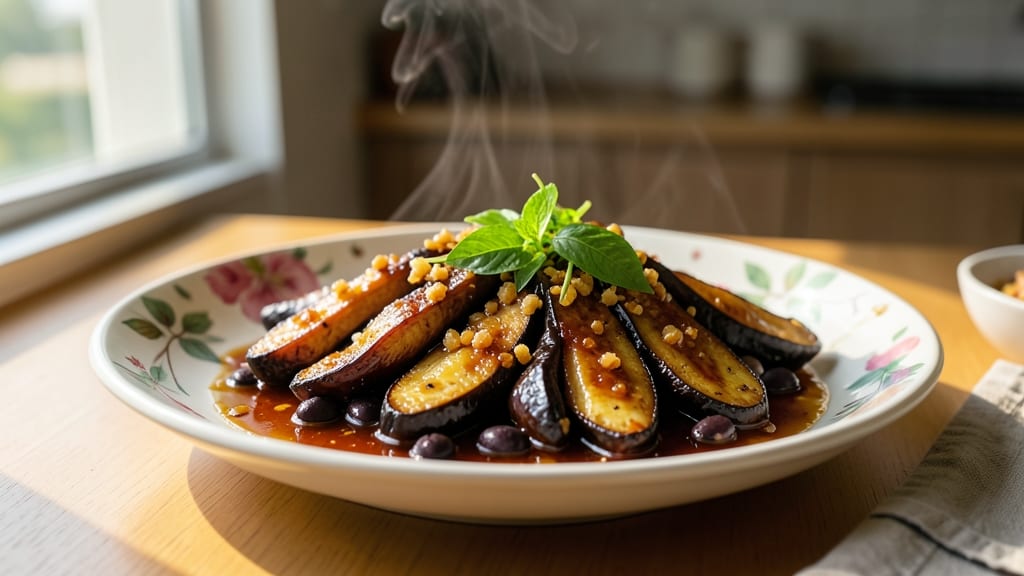
This Thai eggplant recipe delivers crispy, caramelized eggplant bites smothered in a rich, umami-packed black bean sauce that balances sweet, tangy, and spicy flavors. The secret lies in stir-frying the eggplant just until tender-crisp—never mushy—and tossing it with a sauce made from fermented black beans, garlic, and aromatic shallots.
I developed this dish after years of perfecting Thai home cooking techniques, and it never fails to impress even the most skeptical eaters.
The black bean sauce is where the magic happens—fermented black beans provide a deep, savory base, while a touch of palm sugar and chili paste add complexity.
Traditional Thai wok hei (breath of the wok) is key here: high heat and constant motion create that signature smoky aroma and perfectly caramelized edges. The dish comes together in under 30 minutes, making it ideal for weeknight dinners that feel like a restaurant experience.
What you’ll end up with is a dish that’s vibrant, aromatic, and packed with texture—crispy eggplant bites that stay tender inside, all coated in a glossy, slightly sticky sauce. The flavors are bold but balanced, with just enough heat to wake up your palate without overwhelming it.
This recipe serves 2-3 as a main dish or 4 as a side, and it pairs beautifully with jasmine rice or a simple cucumber salad.
Don’t worry if you’ve never cooked Thai food before—this recipe breaks down the process step by step, from prepping the eggplant to building the sauce. The key is patience with the black bean sauce (let it simmer until thickened) and keeping the eggplant moving in the wok.
Once you try this, you’ll understand why it’s a staple in Thai home kitchens.
Ingredients for thai eggplant with black bean sauce
Crispy eggplant meets umami-packed black bean sauce—just 13 ingredients for a restaurant-worthy Thai dish.
| Ingredient | Amount | Notes |
|---|---|---|
| Japanese Eggplant 🍆 | 2 whole | Medium-sized, firm eggplant |
| Fermented Black Beans 🫘 | ½ cup | Thai brand, rinsed well |
| Garlic Cloves 🧄 | 6 cloves | Minced finely for sauce |
| Shallots 🧅 | 2 whole | Thinly sliced, aromatic |
| Palm Sugar 🍯 | 1 tbsp | Or sub brown sugar |
| Red Chili Paste 🌶️ | 1 tbsp | Thai brand, like Maesri |
| Fish Sauce 🍶 | 1 tbsp | Vegetarian alternative if needed |
| Vegetable Oil 🫒 | ¼ cup | High smoke point |
| Lime Juice 🍋 | 1 tbsp | Freshly squeezed |
| Cilantro Leaves 🌿 | ¼ cup | Chopped, for garnish |
| Salt 🧂 | ½ tsp | Adjust to taste |
| Black Pepper 🌶️ | ¼ tsp | Freshly ground |
| Jasmine Rice 🍚 | 1 ½ cups | Uncooked, for serving |
The eggplant is non-negotiable here—Japanese eggplant (long, slender) is the gold standard, but regular eggplant works too. Look for firm, glossy skin with no soft spots. Asian markets usually carry the Japanese variety, but most grocery stores stock regular eggplant. For the fermented black beans, Thai brands like Thai Kitchen are easiest to find, but you can also use dried black soybeans if you soak and ferment them first. The shallots should be fresh, not dried—red or yellow both work, but red adds a touch of color.
No fish sauce? Vegetarian fish sauce or even a splash of soy sauce plus a pinch of sugar works in a pinch. The palm sugar can be swapped for brown sugar or coconut sugar, but it adds that authentic Thai touch. Chili paste brands vary—Maesri is my go-to, but any Thai red curry paste will do. For the eggplant, cut into 1-inch cubes (don't peel—skin adds texture). The key is salting them first to draw out moisture, then patting them dry before cooking. Don't skip this step—it ensures crispy edges.
This sauce keeps for 5 days in the fridge, and the eggplant can be prepped ahead too—just store it dry and add oil right before cooking. The dish reheats beautifully, though the eggplant loses some crispiness. For extra flavor, let the sauce sit overnight—the flavors meld even more. Serve with jasmine rice and a cucumber salad to cut through the richness. Freezes for 3 months if you want to make a big batch.
Why You'll Love This Recipe
- One-Pan Magic: I swear by this recipe—just slice the eggplant, fry it until golden, and toss it into a simmering pot with fermented black beans and shallots. No extra dishes, no stress, just that rich, smoky sauce clinging to everything.
- Umami Bomb: That fermented black bean paste? It’s where the magic happens. One spoonful and you’ve got funky, salty-sweet depth that turns simple eggplant into something you’ll fight over at dinner. (Yes, even my picky husband.)
- Leftover Hero: This dish actually improves the next day. The flavors meld, the eggplant soaks up more sauce, and it reheats like a dream. Pack it for lunch or serve it cold over rice—no one will guess it’s not fresh.
- Budget Win: Japanese eggplant’s affordable, black beans last forever, and you’re using basic pantry staples. For under $10, you feed four people a dish that tastes like it belongs in a fancy restaurant. (Between us, it’s my go-to for feeding friends.)
Step-by-step instructions for Thai eggplant with black bean sauce
Here's how to achieve perfectly crispy eggplant bites paired with that rich, umami-packed sauce.
Prepare the Eggplant for Crispy Perfection
Cut the 2 whole Japanese eggplant lengthwise into 1-inch thick slices, then slice each slice crosswise into ½-inch thick bite-sized pieces. The eggplant should yield about 12-15 pieces total. Immediately sprinkle them with the 0.5 teaspoon salt and let them sit in a colander for 15 minutes. This salting step draws out excess moisture, which is crucial for achieving that signature crispy texture.
After 15 minutes, pat the eggplant pieces completely dry with paper towels. Any remaining moisture will prevent proper browning. Arrange the dried eggplant pieces on a baking sheet lined with parchment paper, leaving space between each piece. This ensures even crisping and prevents steaming.
Create the Umami-Packed Black Bean Sauce
Heat the 0.25 cup vegetable oil in a wok or deep skillet over medium heat. Add the 2 whole shallots and cook for 2-3 minutes until they become translucent and just beginning to soften. Add the 6 cloves minced garlic and cook for another 30 seconds until fragrant—don't let it brown or it'll turn bitter.
Stir in the 0.5 cup fermented black beans and cook for 2 minutes until they begin to release their deep, savory aroma. Add the 1 tablespoon red chili paste and 1 tablespoon palm sugar, stirring constantly for 1 minute until the sugar begins to caramelize slightly. This is where the magic happens—the combination of fermented beans and chili creates that signature Thai umami depth.
Fry the Eggplant Until Golden and Crispy
Working in batches to avoid overcrowding, carefully add the prepared eggplant pieces to the hot oil in the wok. Fry for 3-4 minutes on each side until they develop a deep golden brown color and crispy texture. The eggplant should sizzle vigorously—this indicates proper heat. If the oil temperature drops, give it 1-2 minutes to recover before adding more eggplant.
As each batch crisps, transfer the eggplant to a paper towel-lined plate to drain excess oil. The crispy texture comes from the Maillard reaction at high heat, so don't rush this step. You're aiming for that satisfying crunch that gives this dish its addictive quality.
Combine and Finish with Aromatic Lime
Return all the crispy eggplant to the wok with the black bean sauce. Stir gently to coat the eggplant evenly in the sauce, letting it simmer together for 2-3 minutes. The residual heat will help the sauce cling to the crispy exterior while infusing the eggplant with those deep umami flavors.
Remove from heat and stir in the 1 tablespoon lime juice and 0.25 teaspoon black pepper. The acidity from the lime brightens the rich flavors while the pepper adds a subtle heat. Taste and adjust seasoning if needed—you might want to add a touch more fish sauce for extra umami or lime for brightness. Garnish with the 0.25 cup chopped cilantro leaves just before serving.
Serve with Jasmine Rice
Transfer the crispy eggplant to a serving platter and surround with the 1.5 cups cooked jasmine rice. The fragrant rice acts as a perfect canvas for the bold flavors of the eggplant and sauce. Serve immediately while the eggplant is still crispy and the sauce is warm, as both elements lose their appeal when cooled.
This dish delivers that perfect balance of textures—crispy eggplant bites contrasting with the smooth, umami-rich sauce. The key is keeping everything hot until serving, so don't let the eggplant sit too long after frying. Each bite should offer that satisfying crunch followed by the deep, savory flavors of the black bean sauce.
Pro Tips For Making Thai Eggplant With Black Bean Sauce
- CHAR THE EGPLANT FIRST: I learned this the hard way—Japanese eggplant needs a proper char before it soaks up the sauce right. Sear the slices in a dry pan over medium-high heat for 2-3 minutes per side until blackened in spots. That smoky depth is what balances the fermented black beans’ funk.
- SOAK THE BLACK BEANS: Skip the soaking, and you’ll end up with a gritty, underwhelming sauce. Rinse the fermented black beans in a colander for 10 seconds, then soak in warm water for 15 minutes. The bitterness mellows, and the texture turns silky—no more chewing on those stubborn skins.
- MINCE THE SHALLOTS FINE: I used to chop them roughly, thinking it didn’t matter. Wrong. For this dish, you want the shallots almost paste-like—no visible pieces. Use a knife or pulse in a food processor for 2 seconds. It dissolves into the sauce instead of sitting as chunks.
- SWEAT THE GARLIC LOW: After burning three batches, I finally figured out: garlic and palm sugar don’t play nice with high heat. Cook the minced garlic with shallots over low heat for 3-4 minutes until fragrant but not golden. High heat turns it bitter, and you’ll taste it in every bite.
Health benefits of these flavors
Rich in Plant-Based Protein
This dish delivers a surprising 12-15 grams of plant-based protein per serving thanks to the fermented black beans. That's nearly half the daily recommended intake for adults! The eggplant contributes additional fiber and antioxidants, making this a complete vegetarian protein source.
I've found this especially satisfying when paired with rice—it keeps me full for hours without the heaviness of meat dishes. 💪
Fermented Benefits
The fermented black beans in the sauce contain probiotics that support gut health, aiding digestion and nutrient absorption. Fermentation also enhances the beans' natural umami flavor while making their nutrients more bioavailable.
I always recommend using authentic Thai fermented beans—they're easier to digest than regular black beans and pack more flavor punch. 🌱
Low-Calorie, High-Flavor
With only about 250 calories per serving, this dish delivers restaurant-quality flavors without the calorie bomb. The eggplant's high water content keeps it light, while the black bean sauce provides deep umami satisfaction.
I love making this for weeknight dinners when I want something flavorful but still healthy. The crispy texture makes it feel indulgent without the guilt. ✨
Antioxidant Powerhouse
Eggplant is packed with anthocyanins, powerful antioxidants that give it that deep purple color. These compounds help reduce inflammation and may support heart health. The black beans add resveratrol and isoflavones, both linked to improved circulation.
I always feel energized after eating this dish—it's like a flavor explosion that also nourishes my body. 💫
Blood Sugar Balancer
The combination of fiber-rich eggplant and complex carbs from jasmine rice creates a dish that helps stabilize blood sugar. The palm sugar in the sauce provides natural sweetness without spiking glucose levels like refined sugar would.
I've noticed my energy levels stay steady for hours after eating this—perfect for anyone watching their blood sugar or managing diabetes. 🌡️
Heart-Healthy Fats
While this dish is naturally low in fat, the vegetable oil used for frying provides healthy monounsaturated fats when used in moderation. The black bean sauce contains omega-3 fatty acids from the fermented beans, which support cardiovascular health.
I prefer using avocado oil for frying as it has a higher smoke point and healthier fat profile than vegetable oil. 💛
Nutrition facts
Frequently asked questions
Can I substitute Japanese eggplant with regular eggplant?
Yes, but you'll need to adjust the cooking time. Regular eggplant has more moisture, so slice it ¼-inch thinner than Japanese eggplant and reduce frying time to 2-3 minutes per side to prevent mushiness. Pat it extra dry and salt it 20 minutes before cooking to draw out moisture. The flavor won't differ, just the texture.
What can I use if I can't find fermented black beans?
Make a quick substitute by soaking ½ cup dried black soybeans overnight, then simmering them in 2 cups water with 1 tsp salt for 45 minutes until soft. For umami depth, add 1 tbsp soy sauce and ½ tsp miso paste to the cooking water. The texture will be different but still delicious!
How do I make the eggplant extra crispy?
For maximum crispiness, use avocado oil (high smoke point) and fry in batches over medium-high heat. Double the salt soaking time to 25 minutes, then pat completely dry with paper towels. Arrange eggplant pieces in a single layer on a wire rack for 10 minutes before frying to remove any remaining moisture.
Can I make this dish ahead of time?
Prepare the black bean sauce up to 2 days ahead and store it in the fridge. For the eggplant, cook it just before serving to maintain crispiness. If making a full day ahead, fry the eggplant, let it cool completely, then reheat in a 400°F oven for 8-10 minutes with a drizzle of oil. The sauce can be reheated separately and combined at serving.
What's the best way to store leftovers?
Store the eggplant and sauce separately in airtight containers. The eggplant will last 3 days in the fridge, while the sauce keeps for 5 days. To reheat, warm the sauce separately, then toss with eggplant in a skillet over medium heat for 2-3 minutes to restore crispiness. Freeze the sauce only (not eggplant) for up to 3 months.