
Breakfast & Brunch
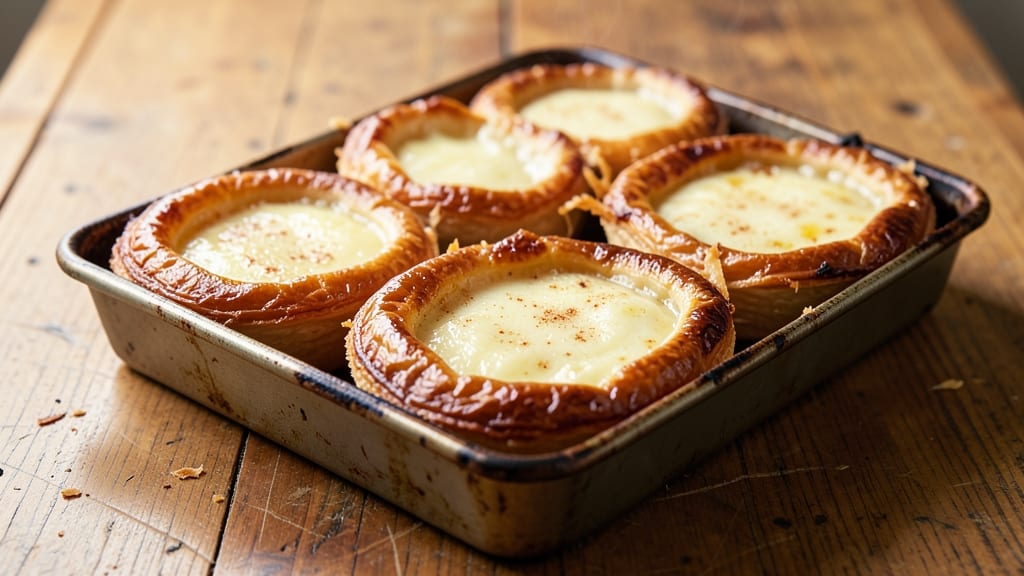
This traditional Portuguese egg tart recipe brings the iconic pastel de nata to your kitchen with its signature flaky pastry hugging silky custard. 🌟 Born in the kitchens of Belém Convent in Lisbon, these delicate tarts have become a symbol of Portuguese cuisine, and now you can recreate their golden perfection at home.
The secret lies in the puff pastry dough, rolled paper-thin and baked until crisp, paired with a rich custard made from eggs, sugar, and milk. The key technique is baking the custard first to create a caramelized top, then finishing with the pastry to form that signature dome shape.
It’s a process that requires patience but delivers results worth every minute.
What you’ll end up with is a stack of golden egg tarts with a crackly, caramelized crust and a custard so smooth it practically melts in your mouth. The aroma alone—warm, buttery, and slightly caramelized—will transport you to Lisbon’s bustling pastelarias.
These are the kind of treats that disappear quickly, so be prepared to make a second batch.
While the traditional recipe uses butter and eggs, modern adaptations include vegan versions using plant-based milk and flax eggs. Whether you stick to the classic or experiment with variations, the result is always a taste of Portugal in every bite. Let’s get started on mastering this timeless recipe.
Ingredients for traditional portuguese egg tart
Golden layers of flaky pastry and silky custard—just 11 ingredients transform Lisbon’s pastelarias into your kitchen.
| Ingredient | Amount | Notes |
|---|---|---|
| Unsalted Butter 🧈 | 1 cup | Cold, cubed for pastry |
| All-Purpose Flour 🌾 | 3 cups | Plus 1 tbsp for dusting |
| Large Eggs 🥚 | 4 whole | Room temperature preferred |
| Granulated Sugar 🍚 | ¾ cup | Plus 1 tbsp for custard |
| Whole Milk 🥛 | 1 ½ cups | Full-fat for richness |
| Vanilla Extract 🌿 | 1 tsp | Pure vanilla preferred |
| Salt 🧂 | ½ tsp | Fine sea salt |
| Cornstarch 🌾 | 2 tbsp | For custard thickness |
| Baking Powder 🍞 | ½ tsp | For pastry lift |
| Ice Water ❄️ | ¼ cup | For dough binding |
| Puff Pastry Dough 🥧 | 1 sheet | Store-bought or homemade |
The butter matters most here—European-style unsalted (like Plugrá or Land O'Lakes European) gives that authentic flakiness. If you can't find it, cultured butter works too, but avoid margarine. The flour should be all-purpose, not bread flour—we want tender layers, not chewiness. For the custard, whole milk is non-negotiable (it's what creates that signature caramelized top), but if you're making vegan versions, full-fat coconut milk mimics it best. The vanilla extract? Pure Madagascar bourbon if you're splurging, but imitation works in a pinch.
No vanilla? 1 tsp vanilla sugar or a scraped vanilla bean pod gets you close. Short on cornstarch? Arrowroot powder at the same amount works too. The baking powder is crucial—double-check it's fresh (old baking powder won't give those tarts their lift). For the puff pastry, store-bought is fine (like Pepperidge Farm), but if you're ambitious, homemade puff pastry with more butter layers (up to 72) takes these to restaurant quality. The custard can be made a day ahead—it actually tastes better after resting overnight.
Butter cubes freeze beautifully—wrap them in parchment and store for up to 3 months. The custard mixture keeps 3 days in the fridge before baking, but the baked tarts? Room temperature for 2 hours max—they go stale fast. For make-ahead prep, bake the custard cups, then freeze them unbaked. When ready, just pop them in the oven with the pastry. The secret to reheating? 5 seconds in the microwave—just enough to melt the custard without sogging the pastry.
Why You'll Love This Recipe
- Here’s what sold me: that shatteringly crisp, buttery crust with a custard so silky it melts on your tongue. The secret’s in the baking—hot enough to brown the edges fast, but not so fast you burn the top. First bite? Pure satisfaction. (Yes, even on a Tuesday night.)
- Five-Ingredient Magic: I swear by this—just butter, flour, eggs, sugar, and milk. That’s it. No fancy substitutions, no hunting for obscure spices. The dough comes together in minutes with cold butter cut into dry flour, and the custard? Whisk eggs, milk, and sugar until smooth. Honestly, if you can crack an egg, you can do this.
- Golden Crisp Edge: Here’s what sold me: that shatteringly crisp, buttery crust with a custard so silky it melts on your tongue. The secret’s in the baking—hot enough to brown the edges fast, but not so fast you burn the top. First bite? Pure satisfaction. (Yes, even on a Tuesday night.)
- Breakfast or Dessert: Between us, these are my go-to for brunch and late-night cravings. Serve them warm with a sprinkle of cinnamon for a morning treat, or dust with powdered sugar for an after-dinner bite. My kids grab them straight from the fridge for school lunches—no complaints, just empty plates.
Step-by-step instructions for traditional Portuguese egg tarts
Here's how to make these iconic pastéis de nata with perfect flaky layers and creamy custard.
👨🍳 Step 1: Make the Custard Filling
In a medium saucepan, combine the 1.5 cups whole milk, 0.75 cup granulated sugar, and 1 tsp vanilla extract. Heat over medium-low heat until steaming but not boiling—you'll see small bubbles forming around the edges. This takes about 5-7 minutes. I stir occasionally to prevent scorching, but don't let it boil.
In a separate bowl, whisk together the 4 whole large eggs, 2 tbsp cornstarch, 0.5 tsp salt, and 0.5 tsp baking powder. The mixture should be smooth with no lumps. Slowly pour the warm milk mixture into the egg mixture while whisking constantly. This tempering step prevents the eggs from scrambling when they hit the hot milk.
Return the combined mixture to the saucepan and cook over low heat, stirring constantly with a wooden spoon. The custard will thicken dramatically—you'll know it's ready when it coats the back of the spoon and leaves a clear path when you run your finger through it. This takes about 5-7 minutes. Immediately transfer to a bowl, cover with plastic wrap (pressed directly on the surface to prevent skin), and chill for at least 1 hour.
👨🍳 Step 2: Prepare the Pastry Dough
In a large bowl, cut the 1 cup cold unsalted butter into small cubes. Add the 3 cups all-purpose flour and 0.5 tsp baking powder, then use a pastry cutter or your fingers to work the butter into the flour until you have pea-sized crumbs. Add the 0.25 cup ice water and mix gently until the dough just comes together.
Turn the dough onto a lightly floured surface and knead lightly for 30 seconds—just until it forms a rough ball. Don't overwork it or the pastry will become tough. Wrap in plastic wrap and refrigerate for 30 minutes while you roll out the puff pastry dough.
🥘 Step 3: Roll and Cut the Puff Pastry
Roll out the 1 sheet puff pastry dough on a lightly floured surface to about ⅛-inch thickness. Use a 3-inch round cutter to cut out 12 circles—you should have enough dough for 12 tarts with some scraps for patching. I like to keep the scraps in the fridge while I work to prevent them from drying out.
Place the pastry circles on a parchment-lined baking sheet, spacing them about 1 inch apart. Prick each circle all over with a fork to prevent puffing. Use a small glass to gently press down the centers to create a slight well for the custard. Chill the prepared shells in the refrigerator for 15 minutes while you preheat the oven.
🔥 Step 4: Assemble and Bake to Golden Perfection
Preheat your oven to 375°F. Remove the pastry shells from the refrigerator and fill each one about ¾ full with the chilled custard mixture. The custard should mound slightly above the pastry edges—this is normal and will settle as it bakes.
Bake for 20-25 minutes until the pastry is deep golden brown and the custard is set but still slightly jiggly in the center. The edges should be crisp while the top remains soft and slightly caramelized. I like to rotate the baking sheet halfway through for even browning—watch for the bottoms starting to brown too quickly.
Remove from the oven and let cool for 5 minutes before serving. The tarts are best enjoyed warm, with the custard still silky and the pastry crisp. For that classic Portuguese touch, sprinkle with a little powdered sugar just before serving—though I often skip this as the caramelized sugar on top is already perfect.
Pro Tips For Making Traditional Portuguese Egg Tart
- Chill the Dough: Roll out the puff pastry cold—literally. Keep it in the fridge while prepping the custard filling. I learned this the hard way after my first batch turned into a greasy mess because the butter melted too fast. A 10-minute rest in the fridge keeps it firm and flaky.
- Whisk Eggs Like Mad: Beat the eggs and sugar until the mixture is thick and pale—no streaks, no lumps. Use a whisk, not a fork, and don’t rush it. My grandmother swore by this, and she was right: the custard will be silky, not grainy, if you put in the effort.
- Blind-Bake the Crust: Prick the pastry, line it with parchment, and weigh it down with dried beans or rice before baking. This prevents puffing and guarantees a flat, crisp base—no soggy bottoms. Skip this, and you’ll end up with a sad, uneven tart.
- Bake Slow and Low: Start at 350°F (175°C) for 15 minutes, then drop to 325°F (160°C) until the custard sets—about 20-25 minutes total. High heat burns the sugar; low and slow gives you that golden, caramelized finish without scorching. I know, I know, but trust the process.
Storing and reheating this traditional portuguese egg tart
Refrigerator Storage
Store freshly baked egg tarts in an airtight container at room temperature for up to 2 hours—they're best enjoyed warm. Once cooled, transfer to the fridge where they'll keep for 2-3 days, though the pastry loses crispness over time.
I like to separate layers with parchment paper to prevent sticking. 🌟
Freezer Prep
For long-term storage, bake the custard cups first, then freeze them uncovered on a tray before transferring to a freezer bag. Add the pastry shells when ready to bake—this method preserves texture better than freezing assembled tarts. Label with dates as they keep 2 months in the freezer.
Reheating Perfection
For oven reheating, warm at 350°F for 5-7 minutes until the pastry is crisp again. A microwave works in 10-second bursts—just enough to soften the custard without sogging the pastry. I avoid the toaster as it burns the sugar too quickly.
Make-Ahead Custard
The custard mixture can be made 2 days ahead and stored in the fridge. For freezer prep, bake custard cups without pastry, cool completely, then freeze. When ready, add pastry shells and bake together—this shortcut saves hours on busy days. ✨
Portuguese Pro Tip
In Lisbon, pastelarias serve these warm from wood-fired ovens—the residual heat keeps them perfect. At home, reheat in a preheated oven with a tray of water below for 3-5 minutes to restore that bakery-fresh aroma. The steam prevents drying while the water keeps the pastry crisp.
Serving Suggestions
Serve warm with a sprinkle of powdered sugar or a dusting of cinnamon for that classic touch. Pair with espresso or Portuguese black coffee—the bitterness cuts through the custard's richness beautifully. For a modern twist, drizzle with orange blossom syrup. 💛
Nutrition facts
Frequently asked questions
Why do traditional Portuguese egg tarts have that signature caramelized top?
The caramelized top comes from baking the custard first in the oven, then adding the pastry. This creates a Maillard reaction between the sugars and milk proteins, giving that golden, slightly crispy finish. The key is using whole milk and baking the custard until it's just set but still jiggly—this prevents cracking when the pastry goes on.
Can I make these egg tarts without puff pastry?
Yes! You can use homemade choux pastry or even phyllo dough for a lighter version. The choux method (like cream puffs) works well—just fill the baked shells with custard and top with a second choux ring. For phyllo, layer 3-4 sheets per tart and brush with melted butter between layers for extra crispness.
What's the best way to store leftover egg tarts?
Keep them in an airtight container at room temperature for up to 2 hours—they're best warm. For longer storage, refrigerate for 2-3 days, but the pastry gets softer. Freeze unbaked custard cups (without pastry) for up to 2 months
Why did my egg tarts crack or puff up too much?
Cracking usually happens when the custard is too hot before baking, or if the pastry isn't chilled enough. For puffing, your pastry might need more pricking with a fork or a longer chill time. Always use cold butter in the pastry dough and bake at 375°F—higher temps cause excessive puffing. If cracks appear, brush with egg wash before baking for a smoother finish.
Are there gluten-free or vegan versions of this recipe?
For gluten-free, use a 1:1 gluten-free flour blend and ensure your puff pastry is certified GF. Vegan adaptations replace eggs with flax eggs (1 tbsp ground flax + 3 tbsp water per egg) and use coconut milk instead of dairy. The texture will be slightly denser, but still delicious!