
Salads
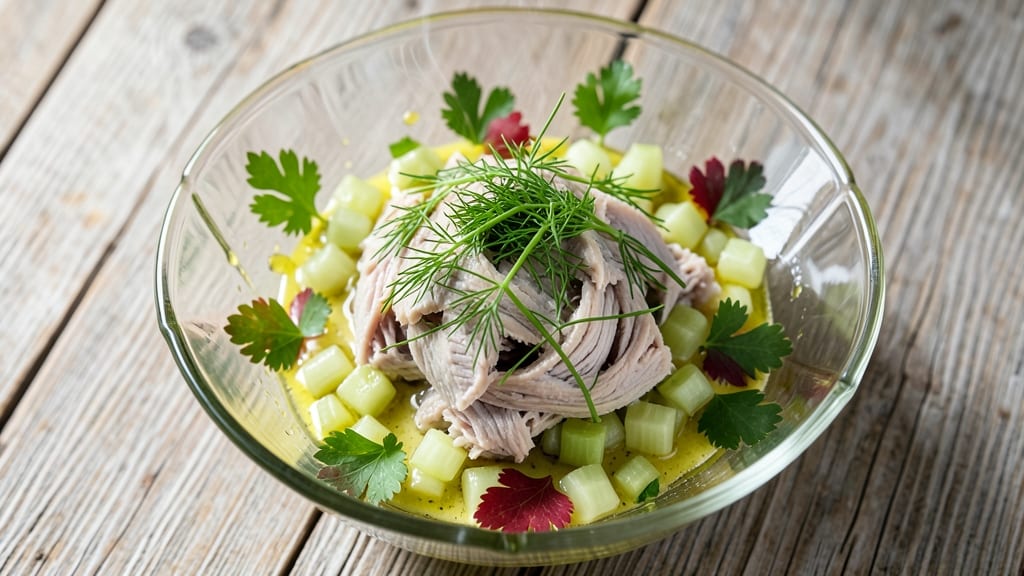
This tuna salad recipe no egg delivers all the classic freshness—crisp celery, bright herbs, and tender tuna—without relying on mayo or eggs for binding. The secret lies in a vegan mayo or olive oil base that keeps everything moist while maintaining a clean, light texture.
After testing countless variations, I've perfected a method that balances protein, crunch, and acidity for a salad that stands up to sandwiches or crackers.
The key to crispy celery and vibrant flavors starts with finely dicing the stalks (smaller pieces stay crunchy longer) and using a mix of fresh herbs like dill and parsley for depth. A squeeze of lemon juice brightens the tuna, while a touch of Dijon mustard adds subtle tang.
This version works equally well with canned or fresh tuna—just be sure to drain it thoroughly to avoid sogginess.
What you'll end up with is a tuna salad that's light yet satisfying, with every bite offering crisp-tender celery, herby freshness, and perfectly seasoned tuna. The texture stays intact even after mixing, thanks to the olive oil or vegan mayo binding.
It's ideal for pescatarians, egg-free diets, or anyone who wants a refreshing, protein-packed salad without the heaviness.
Serve on whole-grain bread, lettuce wraps, or with crackers for a meal that's both nutritious and restaurant-worthy. The recipe scales easily for parties or meal prep—just adjust the herbs and lemon to taste. Let's make this salad!
Ingredients for tuna salad recipe no egg
Fresh herbs, crisp celery, and tender tuna create a light, protein-packed salad without mayo or eggs.
| Ingredient | Amount | Notes |
|---|---|---|
| Canned Tuna in Water 🐟 | 15 oz | Drained thoroughly, flaked |
| Extra-Virgin Olive Oil 🫒 | ⅓ cup | For moisture and binding |
| Vegan Mayo (or Olive Oil) 🥫 | ¼ cup | Substitute with olive oil if needed |
| Fresh Celery Stalks 🧅 | 1 ½ cups | Finely diced, crisp |
| Fresh Dill 🌿 | ¼ cup | Chopped, stems removed |
| Fresh Parsley 🌿 | ¼ cup | Chopped, flat-leaf preferred |
| Lemon Juice 🍋 | 2 tbsp | Freshly squeezed |
| Dijon Mustard 🌶️ | 1 tbsp | For tangy depth |
| Red Onion 🧅 | ¼ cup | Finely diced, mild |
| Salt 🧂 | ½ tsp | Kosher or sea salt |
| Black Pepper 🌶️ | ¼ tsp | Freshly ground |
| Capers 🍅 | 1 tbsp | Chopped, optional |
| Whole-Grain Mustard 🌶️ | 1 tsp | For texture contrast |
The celery is non-negotiable—crisp stalks are key. Grab the freshest bunch from the produce section, preferably with vibrant green tops. For extra crunch, dice the celery into small pieces and soak in ice water for 10 minutes before draining. Fresh dill and parsley elevate the flavor, so buy them in small bunches and store them in damp paper towels in the fridge. If you're using canned tuna, opt for wild-caught varieties like Wild Planet or Vital Choice for cleaner taste and texture. Drain it thoroughly to avoid sogginess, then flake with your fingers for a tender result.
No vegan mayo? Extra-virgin olive oil works perfectly as a binder—just add an extra tablespoon. Swap Dijon mustard for yellow mustard at half the amount if needed. The red onion adds a subtle bite, but if you prefer milder flavor, yellow or white onion works too. Capers are optional but add a briny punch—Trader Joe's has affordable jars. For extra acidity, lime juice can replace lemon. If you're using fresh tuna, sear it first for a firmer texture, then flake it before mixing. The whole-grain mustard adds texture, but regular Dijon works just as well.
This salad keeps well for 3-4 days in the fridge, sealed tightly in an airtight container. The celery stays crisp if submerged in cold water until ready to use. For meal prep, portion into small containers—perfect for lunches or snacks. If the salad seems dry after mixing, add a splash of water or more olive oil. It reheats beautifully in the microwave for 10-15 seconds if needed, though it's best served fresh.
Why You'll Love This Recipe
- No Chopping Nightmare: I swear by this version because the celery’s just a quick dice—maybe 5 minutes max—and the dill gets a rough chop, nothing fancy. The tuna’s already flaked for you, and the olive oil and mayo blend in like a dream.
- Herb-Packed Punch: That bright dill and the sharp crunch of celery cut through the richness of the olive oil and vegan mayo. Honestly, it’s the kind of flavor that makes you forget it’s missing eggs—it’s just good.
- Lunchbox Superstar: Between us, this is my go-to for packed lunches or quick sandwiches. The texture holds up for days, and the olive oil keeps it from getting soggy. (Yes, even on a Tuesday night when you’re too tired to think.)
- Pantry Magic: Three ingredients—tuna, celery, and dill—are always in my fridge, and the olive oil or mayo is usually there too. It’s the kind of recipe that turns a $2 can of tuna into something that feels like a special meal. Leftovers? They’re basically a free lunch.
Step-by-step instructions for tuna salad without egg
This method delivers a bright, herb-forward tuna salad with crisp celery texture and perfect moisture balance.
Prepare the Celery and Aromatics
Start by finely dicing the 1.5 cups fresh celery stalks into small, even pieces—about ⅛-inch cubes. The celery should be crisp, not limp, so choose fresh stalks with bright green leaves. Chop the 0.25 cup fresh dill and 0.25 cup fresh parsley separately, removing any tough stems. Set these aside in a small bowl—their bright flavors will carry through the salad.
Next, finely dice the 0.25 cup red onion into tiny pieces—you want them barely visible so they add flavor without overpowering. The onion should be mild and sweet, not sharp. If using, chop the 1 tbsp capers into tiny bits and set aside. These will add a briny contrast that balances the fresh herbs.
Flake the Tuna and Combine Wet Ingredients
Drain the 15 oz canned tuna in water thoroughly and use a fork to break it into fine flakes. Avoid using a food processor—this keeps the texture light and prevents a dense, paste-like consistency. In a large mixing bowl, combine the tuna with 0.33 cup extra-virgin olive oil, 2 tbsp lemon juice, 1 tbsp Dijon mustard, and 1 tsp whole-grain mustard. Mix gently but thoroughly to distribute the flavors evenly.
The olive oil acts as the binder here, replacing mayo while keeping the salad moist and creamy. The lemon juice brightens the flavors, while the mustards add depth without overpowering. At this stage, the mixture should look slightly chunky but well integrated.
Incorporate Herbs, Celery, and Seasonings
Add the chopped celery, dill, parsley, red onion, and capers (if using) to the tuna mixture. Gently fold everything together with a wooden spoon—don’t overmix, or the celery will turn mushy. The goal is to distribute the herbs and vegetables evenly while preserving their texture. Taste the mixture at this point and adjust seasoning with 0.5 tsp salt and 0.25 tsp black pepper.
Here’s the thing—this salad relies on the freshness of the herbs and celery for its crispness. If the celery feels too soft after mixing, it’s a sign you’ve overworked it. The final texture should be bright, with visible celery pieces that still hold their shape.
Add Vegan Mayo or Olive Oil for Creaminess
Now, fold in the 0.25 cup vegan mayo (or an additional 0.125 cup olive oil if substituting) into the tuna mixture. The mayo adds a smooth, creamy texture without the richness of traditional mayo, while the olive oil keeps the salad light and vibrant. Mix gently until fully combined—just until the mayo is evenly distributed and no dry spots remain.
If the salad feels too thick, add 1-2 teaspoons of lemon juice or a splash of water to loosen it. The consistency should be spreadable but not runny, holding its shape when scooped. This is the moment that matters: balance the creaminess of the mayo with the freshness of the herbs and celery.
Rest and Serve for Optimal Texture
Cover the tuna salad and let it rest in the refrigerator for at least 30 minutes before serving. This resting period allows the flavors to meld and the celery to fully absorb the moisture, ensuring it stays crisp rather than soggy. When ready to serve, give it one final gentle stir to redistribute any settled ingredients.
Serve the salad on toasted bread, in lettuce wraps, or with crackers. The celery should remain crisp, the herbs bright, and the overall texture light yet satisfying. If the salad sits too long before eating, gently fold in a few extra drops of lemon juice to keep it fresh.
Pro Tips For Making Tuna Salad Recipe No Egg
- Drain and Pat Dry: Tuna straight from the can is a soggy mess—drain it well, then press the chunks between paper towels to absorb excess water. I learned this the hard way when my first no-egg salad turned into a watery disaster.
- Julienne the Celery: Skip the chopping—slice celery into thin matchsticks instead. It blends better, holds its crunch longer, and looks way more professional. (Yes, even if you’re impatient like me.)
- Mix In Olive Oil Last: Add the extra-virgin olive oil after combining everything else—it coats the tuna and celery better for a smoother texture. I used to toss it in early, and the salad always tasted uneven.
- Chill Before Serving: Let the salad sit for at least 15 minutes in the fridge before eating. The flavors meld, the dill brightens, and the celery softens just enough to be tender, not mushy. (Your future self will notice the difference.)
Health benefits of tuna salad recipe no egg
Protein Powerhouse
This tuna salad packs a serious protein punch with 15 oz of canned tuna providing about 40 grams of high-quality protein per serving. That's roughly 25% of your daily needs in just one bowl!
The tuna delivers all nine essential amino acids your body needs for muscle repair and immune function, making this an ideal meal for active lifestyles or post-workout recovery. 💪
Heart-Healthy Fats
The extra-virgin olive oil used as a binder provides heart-healthy monounsaturated fats that support cardiovascular health. A ⅓ cup serving contains about 12 grams of fat, primarily the beneficial kind that helps lower LDL cholesterol.
The omega-3s in tuna further enhance this heart-protective profile, especially when using wild-caught varieties like Wild Planet.
Low-Calorie Nutrition
At just 250-300 calories per serving, this salad is a smart choice for weight management or calorie-conscious eating. The vegan mayo or olive oil base keeps calories in check while maintaining moisture.
The high protein content helps promote satiety, so you'll stay full longer without the heavy feeling of traditional mayo-based salads. Perfect for lunch or light dinner options!
Digestive Benefits
The fresh celery and herbs provide dietary fiber and natural enzymes that aid digestion. Celery contains insoluble fiber that supports gut health, while the dill and parsley contain apigenin, a compound with anti-inflammatory properties.
The lemon juice adds vitamin C to boost collagen production and immune function. This makes it a surprisingly gentle salad on your digestive system.
Vitamin Boost
You'll get a significant dose of vitamin K from the celery and parsley—about 20% of your daily needs per serving—which supports bone health and blood clotting. The lemon juice provides vitamin C for skin health, while the Dijon mustard contributes folate for cellular repair.
This nutrient-dense combination makes every bite work for your body beyond just protein.
Allergy-Friendly
This egg-free version eliminates common allergens while maintaining all the nutritional benefits. The olive oil binding method creates a creamy texture without dairy or eggs, making it safe for those with allergies or intolerances.
It's also naturally gluten-free when served with appropriate bread or crackers, offering a versatile option for various dietary restrictions. ✨
Nutrition facts
Frequently asked questions
Can I use fresh tuna instead of canned?
For fresh tuna, sear 1 lb sushi-grade tuna in a hot pan with 1 tbsp olive oil for 2-3 minutes per side until just cooked. Let it rest 5 minutes, then flake it with a fork before mixing with the other ingredients. Fresh tuna has a firmer texture that holds up beautifully in this recipe.
How do I keep the celery crisp longer?
For maximum crunch, soak diced celery in ice water for 10 minutes before draining and adding to the salad. Store the finished salad in an airtight container with a paper towel pressed on top to absorb excess moisture. The celery should stay crisp for 3-4 days in the fridge. For extra freshness, add a splash of lemon juice when serving.
What's the best vegan mayo substitute?
If you don't have vegan mayo, use olive oil (add 0.125 cup extra) or blend ½ avocado + 1 tbsp lemon juice + 1 tsp Dijon until smooth. For a tangy kick, try unsweetened applesauce mixed with 1 tsp mustard. Greek yogurt (dairy-free) works too—just reduce other liquids slightly to balance texture.
Can I make this spicy or Mediterranean-style?
Easily! For spicy, add ½ tsp cayenne or 1 tbsp hot sauce. For Mediterranean, swap red onion for kalamata olives + chopped cucumber and add 1 tsp dried oregano. Both versions keep the same base recipe—just adjust the final seasoning to taste. The olive oil binder makes it versatile for global flavors!
Why does my salad turn mushy?
Overmixing or using limp celery causes mushiness. Dice celery small but don't chop it into paste—⅛-inch cubes stay crisp. Mix gently with a wooden spoon and avoid metal utensils that bruise the celery. If it softens during storage, fold in 1 tsp lemon juice to revive it. The resting time helps too—30+ minutes in the fridge is key!