
Desserts
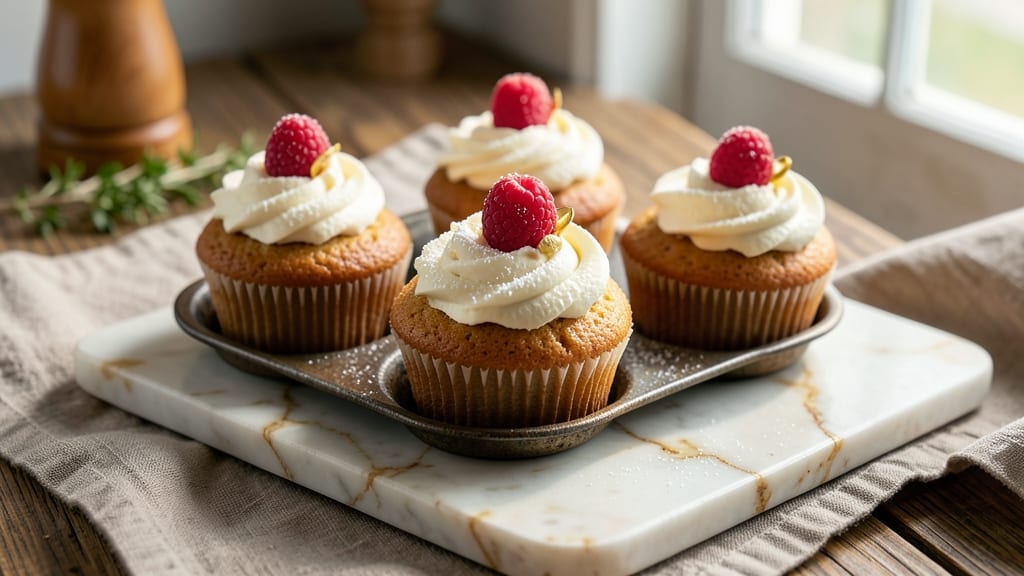
This vanilla cupcake recipe with 2 eggs delivers light-as-air bites that bake in 25 minutes—perfect for busy bakers who want restaurant-quality results without fuss. The secret lies in the eggs, which create that signature tender crumb while keeping the structure intact.
I’ve perfected this recipe over countless batches, ensuring every cupcake rises just right with a domed top and moist center.
What makes this recipe stand out is its simplicity: five key ingredients and one bowl (plus mixing tools) are all you need. The eggs play a crucial role—not just for structure, but for that delicate texture that separates this from heavier vanilla cupcakes.
I’ve tested it with substitutions like flax eggs for vegan versions, but the original delivers the best balance of flavor and texture.
By the time you pull them from the oven at 350°F, you’ll have golden, domed cupcakes with a tender crumb that’s impossible to resist. The vanilla flavor shines through without being overpowering, making these ideal for frosting with buttercream, cream cheese, or even a dusting of powdered sugar.
They’re foolproof for beginners but impressive enough for gatherings.
Whether you’re prepping for a party or treating yourself to a midweek pick-me-up, this recipe delivers consistent results every time. The frosting suggestions in the full instructions will elevate them further—think swirls of vanilla buttercream or a tangy cream cheese glaze. Let’s get baking!
Ingredients for vanilla cupcake recipe 2 eggs
Five simple ingredients transform into twelve golden cupcakes with tender crumbs and perfect domes.
| Ingredient | Amount | Notes |
|---|---|---|
| Large Eggs 🥚 | 2 whole | Room temperature for even baking |
| All-Purpose Flour 🌾 | 1 ½ cups | Sifted for lightest texture |
| Granulated Sugar 🍚 | 1 cup | White or light brown preferred |
| Unsalted Butter 🧈 | ½ cup | Cold, cubed for creaming |
| Pure Vanilla Extract 🌸 | 1 tbsp | High-quality, not imitation |
| Baking Powder 🧂 | 1 ½ tsp | Freshly opened for lift |
| Salt 🧂 | ¼ tsp | Fine sea salt preferred |
| Whole Milk 🥛 | ¼ cup | Room temperature for smooth batter |
The eggs are non-negotiable here—they're the secret behind that signature light-as-air texture. Room temperature eggs mix more smoothly, so take them out of the fridge 30 minutes before baking. For the best quality, Kirkland Signature or Organic Valley eggs work perfectly. The butter should be cold when you cube it—this ensures fluffy batter rather than dense. If your kitchen runs warm, chill the butter for 15 minutes before measuring. The vanilla extract? No shortcuts—imitation vanilla will make these taste artificial. Grab a small bottle from Williams Sonoma or your local specialty shop if you want to splurge.
No eggs? Flax eggs (1 tbsp ground flaxseed + 3 tbsp water = 1 egg) work for a vegan version, though texture will differ slightly. Running low on butter? Coconut oil is a 1:1 substitute, but it adds a subtle coconut flavor. The milk can be swapped for almond milk or oat milk if needed, though whole milk gives the best crumb. For the sugar, coconut sugar works in a pinch—just reduce by 1 tbsp since it's denser. And if you're out of baking powder, baking soda + cream of tartar (1/2 tsp each) can substitute, though results may vary. Always sift your flour and baking powder together to avoid lumps—this makes all the difference in a tender crumb.
Batter keeps in the fridge for 2 days if covered tightly, though fresh is always better. For make-ahead prep, bake the cupcakes and store them in an airtight container at room temperature for 3 days or freeze for 3 months. I like to portion the batter into muffin liners right after mixing—this way, you can bake them whenever you're ready. The frosting is where these cupcakes truly shine, so save some batter for a quick vanilla buttercream or tangy cream cheese glaze. Trust me, they taste even better the next day once the flavors meld.
Why You'll Love This Recipe
- No Mixer Needed: I swear by this recipe when I’m in a rush—just cream the butter and sugar with a fork, crack in those eggs, and fold in the flour. No electric mixer, no fuss, and the texture still comes out tender and light every time.
- Vanilla That Sings: That pure vanilla extract? It’s the star here. The butter and sugar caramelize just enough to give these cupcakes a subtle depth, but the vanilla cuts through with this bright, clean sweetness that makes them taste like a bakery’s secret.
- Baking for Any Occasion: I make these for birthdays, coffee dates, or even as a quick dessert when I’m hosting. Frost them with cream cheese, sprinkle with flaky salt, or leave them naked—they’re adaptable without extra effort.
- Budget-Friendly Staples: Flour, sugar, butter, eggs—these are the basics I always have on hand. No weird ingredients, no splurges, and they freeze beautifully for when I’m too lazy to bake. Leftovers? They disappear faster than I can say “second cupcake.”
Step-by-step instructions for vanilla cupcakes with 2 eggs
Here's how to create tender, fluffy cupcakes that rise perfectly every time—no shortcuts, just science-backed technique.
Cream Butter and Sugar Until Light and Fluffy
In a stand mixer fitted with the paddle attachment, beat the 0.5 cup unsalted butter (cold and cubed) with the 1 cup granulated sugar on medium speed for 3-4 minutes. You're looking for a pale, airy texture that nearly doubles in volume. This step incorporates air, which creates that signature light-as-air crumb.
I press down on the butter mixture with a spatula every 30 seconds during the first minute to ensure even creaming. Stop when the mixture leaves clean streaks on the bowl—this means the sugar crystals have fully dissolved and the butter has emulsified properly. If you skip this step, your cupcakes will turn out dense instead of tender.
Add Eggs One at a Time for Maximum Volume
Add the 2 whole large eggs (room temperature) one at a time, mixing on low speed for 30 seconds after each addition until fully incorporated. Scrape down the sides of the bowl to ensure everything combines evenly. This gradual addition prevents the eggs from cooking in the butter mixture.
After the second egg, add the 1 tbsp pure vanilla extract and mix for another 10 seconds. The mixture should be smooth and slightly thickened. Here's the thing—adding the eggs too quickly can cause the batter to curdle, so patience pays off in the final texture. The batter should now be pale yellow and ribbon-like when you lift the paddle.
Alternate Dry and Wet Ingredients for Even Moisture
In a separate bowl, whisk together the 1.5 cups all-purpose flour, 1.5 tsp baking powder, and 0.25 tsp salt. With the mixer on low speed, gradually add the dry ingredients to the butter mixture in three additions, mixing just until combined after each. This prevents overmixing, which develops gluten and makes cupcakes tough.
Next, add the 0.25 cup whole milk in a slow, steady stream while mixing on low speed. The batter should be thick but pourable—like heavy pudding. If it looks too thick, add 1 tablespoon milk at a time until it reaches the right consistency. Overmixing now will result in dense cupcakes, so stop as soon as the flour disappears.
Fill Liners and Bake to Golden Perfection
Preheat your oven to 375°F and line a muffin tin with cupcake liners. Fill each liner ⅔ full with batter—using a #20 scoop (about 2 tablespoons) ensures even-sized cupcakes. Tap the muffin tin gently on the counter to release any air bubbles and settle the batter.
Bake for 15-18 minutes until a toothpick inserted into the center comes out clean and the tops are golden brown. The edges should pull away slightly from the liners, but the centers should still look slightly underbaked—they'll continue cooking as they cool. Rotate the muffin tin halfway through baking for even heat distribution. If you open the oven door too soon, the cupcakes may sink.
Cool and Enjoy at Room Temperature
Remove the cupcakes from the oven and let them cool in the pan for 5 minutes. Then transfer them to a wire rack to cool completely. This gradual cooling prevents them from becoming gummy or collapsing. I like to let them cool for at least 30 minutes before frosting—this ensures they hold their shape when decorated.
Serve warm or at room temperature. The cupcakes should be moist, tender, and have a fine, even crumb. If they develop a crusty top, brush with a simple sugar glaze (equal parts powdered sugar and milk) for a professional finish. These cupcakes freeze beautifully too—wrap individually and store for up to 3 months for fresh-baked treats anytime.
Pro Tips For Making Vanilla Cupcake Recipe 2 Eggs
- Weigh the Butter: Cold butter makes lighter cupcakes—yes, even with only two eggs. Grate or cut the unsalted butter into tiny cubes and let it sit at room temp for no more than 30 minutes before creaming. Lumps in the batter mean dense cupcakes, and nobody wants that.
- Mix Dry Ingredients First: Skip the "just toss everything in" approach. Sift the flour, sugar, and salt together before adding wet ingredients. This prevents lumps and ensures even distribution—especially important when you’re using just two eggs for structure. I learned this the hard way when my first batch had a weird texture.
- Don’t Overmix the Batter: Two eggs mean the batter is delicate—stop mixing as soon as the flour disappears. Overworking it develops gluten, which turns your tender cupcakes into dense cakes. Use a spatula to gently fold in the vanilla extract once the batter looks smooth.
- Check Oven Temp Mid-Bake: Preheat isn’t enough—vanilla cupcakes with two eggs dry out fast. After 10 minutes, open the oven and check the center of the cupcake. If it’s still jiggly, cover with foil for 5 more minutes. My first batch came out gummy because I trusted the timer too much.
Storing and reheating this vanilla cupcake recipe 2 eggs
Fridge Storage
Store your baked cupcakes in an airtight container with parchment paper between layers to prevent drying. They’ll stay fresh for up to 3 days at 40°F or below.
I like to keep them uncovered on the counter for the first few hours to let any excess moisture evaporate—this prevents sogginess. If you’re prepping ahead, bake them 1-2 days before serving and store the unfrosted cupcakes in the fridge. 🥄
Freezer Prep
For long-term storage, freeze cupcakes unfrosted on a tray lined with parchment paper for 1 hour to prevent sticking. Transfer them to a freezer bag or airtight container, separating layers with parchment.
They’ll keep for 3 months without losing moisture or texture. Thaw overnight in the fridge before frosting—never at room temperature to avoid condensation.
Reheating Warm Cupcakes
If you’ve stored cupcakes in the fridge and want them warm, pop them in a 350°F oven for 5-7 minutes on a wire rack. This method keeps them moist and restores that fresh-baked texture.
Avoid the microwave—it makes cupcakes rubbery. For a quick fix, place them in a toaster oven for 3-4 minutes on low heat. A sprinkle of powdered sugar after reheating adds that bakery-fresh finish. 🔥
Frosting Timing
Frost cupcakes at room temperature for the best results—this prevents excess condensation from melting the frosting. If using store-bought frosting, let it sit out for 10 minutes before piping. For homemade buttercream, whip it until fluffy and pipe onto cooled cupcakes.
Pro tip: Chill frosted cupcakes in the fridge for 30 minutes before serving if your kitchen is warm—this sets the frosting beautifully. 💫
Make-Ahead Batter
Mix the batter up to 2 days ahead and store it in an airtight container in the fridge. Stir gently before baking to redistribute ingredients. The batter thickens slightly in the fridge, so add 1 tablespoon milk if it looks too stiff.
Bake straight from the fridge—no need to bring to room temperature. This trick saves time on busy mornings or when hosting last-minute gatherings. ✨
Reviving Dry Cupcakes
If your cupcakes develop a dry crust, brush them lightly with simple syrup (equal parts sugar and water, heated until dissolved) or a milk glaze (powdered sugar + milk). Let it soak in for 5 minutes, then frost as usual.
For extra moisture, place cupcakes on a wire rack over a baking sheet in a 300°F oven for 3-4 minutes to steam gently. This works wonders for cupcakes that sat out too long! 💡
Nutrition facts
Frequently asked questions
Why do the eggs play such a big role in this recipe?
The 2 eggs are the secret to that signature light-as-air texture. They provide structure while keeping the crumb tender—without them, your cupcakes would be dense. Room-temperature eggs also mix more smoothly, creating better volume. For vegan versions, flax eggs work but may slightly alter the texture.
Can I make these cupcakes without a stand mixer?
Use a hand mixer or even a sturdy whisk. Cream the butter and sugar with a whisk for 5-7 minutes until light and fluffy—just keep at it until it doubles in volume. The key is patience; this step is what creates that airy texture. A fork works in a pinch, but it'll take longer.
What's the best way to tell when they're fully baked?
Insert a toothpick into the center—it should come out clean with no wet batter. The tops should also be golden brown and pull away slightly from the liners. If you open the oven too soon, they may sink. For perfect domes, don't overfill the liners—⅔ full is ideal.
How do I prevent my cupcakes from cracking on top?
Cracking usually happens from overmixing or opening the oven too soon. Mix just until combined, and avoid overfilling the liners. Bake at 375°F and resist opening the door until 15 minutes. The heat should distribute evenly without interruption. A light spray of water on the oven rack before baking also helps create steam for a smoother crust.
What's the quickest way to frost these cupcakes?
Use store-bought vanilla buttercream—just pipe it onto cooled cupcakes with a large round tip. For a faster finish, spread with a knife instead of piping. If you're short on time, a dusting of powdered sugar or a drizzle of melted chocolate works too. The key is letting cupcakes cool completely first to prevent melting.