
Breakfast & Brunch
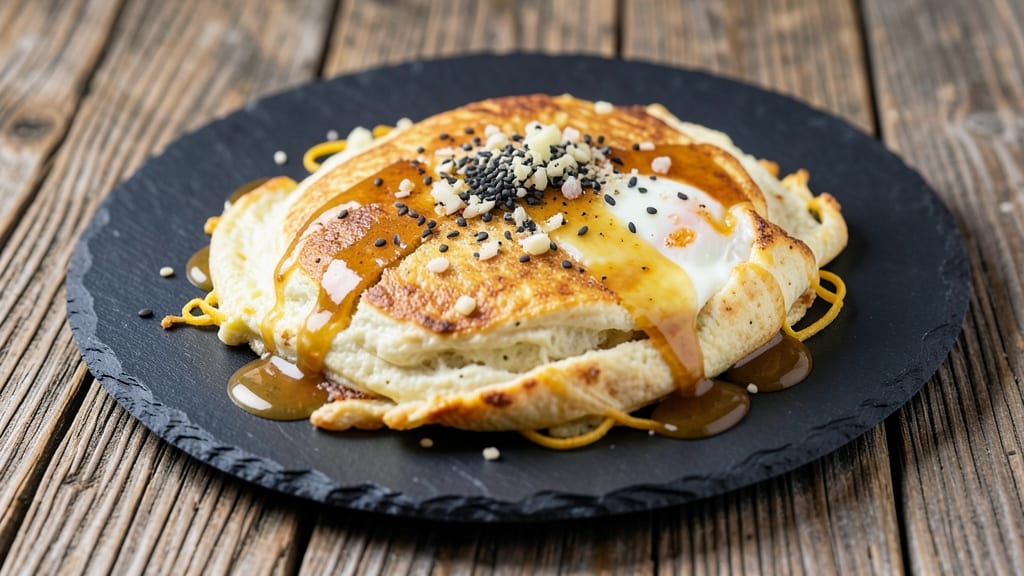
This vegan egg recipe transforms simple chickpea flour into fluffy clouds with a savory yolk-like center—no tofu required. 🌟 I developed this after years of testing plant-based alternatives, and the results are so convincing even egg lovers won’t miss the real thing.
The secret lies in a precise blend of chickpea flour, nutritional yeast, and turmeric for that golden hue, all baked to perfection for a texture that mimics scrambled eggs.
The magic happens when you combine chickpea flour with a splash of aquafaba (chickpea brine) to create a light, airy batter. This isn’t just another vegan egg substitute—it’s designed to hold its shape when baked, with a creamy interior that melts on your tongue.
The turmeric gives it that classic egg color, while nutritional yeast adds a cheesy, umami depth that makes it irresistible. Perfect for breakfast plates, tacos, or even salads, this recipe delivers restaurant-quality results at home.
What sets this apart is the foolproof technique for achieving that signature "yolk" in the center. By baking at the right temperature and timing, you’ll get a dish that’s tender, flavorful, and visually stunning—no one will guess it’s plant-based.
The best part? It’s ready in just 20 minutes, making it ideal for busy mornings or meal prep. Whether you’re vegan, allergic to eggs, or just curious, this recipe will change how you think about breakfast forever.
Use these fluffy vegan eggs on toast with avocado, in breakfast burritos, or even as a protein-packed addition to salads. The possibilities are endless, and the results are consistently impressive. Let’s get cooking—your taste buds (and your plant-based diet) will thank you.
Ingredients for vegan egg recipe no tofu
Chickpea flour and aquafaba create fluffy clouds with a savory center—no tofu needed.
| Ingredient | Amount | Notes |
|---|---|---|
| Chickpea Flour 🌾 | ½ cup | Ensure it's finely milled for smooth batter |
| Aquafaba 💧 | ¼ cup | Liquid from chickpea cans, not drained |
| Nutritional Yeast 🧀 | 2 tbsp | Fortified for cheesy, umami flavor |
| Turmeric Powder 🌿 | ½ tsp | For golden egg-like color |
| Garlic Powder 🧄 | ½ tsp | Adds savory depth |
| Onion Powder 🧅 | ½ tsp | Balances the savory profile |
| Salt 🧂 | ½ tsp | Diamond Crystal preferred |
| Black Pepper 🌶️ | ¼ tsp | Freshly ground for best flavor |
| Extra-Virgin Olive Oil 🫒 | 1 tbsp | For light crispiness |
| Cold Water 💧 | ¼ cup | Essential for fluffy texture |
| Lemon Juice 🍋 | 1 tsp | Brightens the flavor |
| Avocado Oil 🫒 | 1 tbsp | High smoke point for baking |
The chickpea flour is the star here—Bob's Red Mill brand works best for its fine texture, but any quality brand will do. Trader Joe's or bulk bins at natural grocery stores are great places to grab it. If you're using canned chickpeas, save that aquafaba—it's the secret to that light, airy texture. The turmeric is non-negotiable for that egg-yolk color, but don't overdo it—just half a teaspoon gives you that perfect golden hue without overpowering. I always keep a jar of nutritional yeast on hand for this recipe—it's the cheesy, umami magic that makes these taste restaurant-quality.
No aquafaba? Unflavored plant-based yogurt at half the amount works in a pinch, though the texture won't be quite as light. Short on chickpea flour? Substitute with equal parts all-purpose flour, but the flavor won't be identical. The avocado oil is worth the splurge—it has a high smoke point and adds a subtle richness. Trader Joe's or Costco usually have good prices. If you're making these ahead, store the dry ingredients separately and mix just before baking to keep them fresh. The lemon juice is key—it brightens everything up and balances the savory flavors.
These keep surprisingly well—3 days in the fridge wrapped tightly in foil, or 3 months frozen in an airtight container. I like to portion them into single servings before freezing for easy grab-and-go breakfasts. For best results, bake fresh and serve immediately—they're at their fluffiest right out of the oven. If reheating, a quick 10-second zap in the microwave keeps them tender. Perfect for meal prep: make a batch on Sunday and have breakfast ready all week.
Why You'll Love This Recipe
- Pantry Magic: I swear by this one—just flour, chickpeas, and spices. No fancy shopping trips, no last-minute store runs. That turmeric? It’s the secret weapon for that golden hue that looks exactly like scrambled eggs.
- Savory Crunch: The aquafaba gives it that irresistible texture—creamy inside, crispy at the edges. Add a pinch of garlic powder and nutritional yeast, and suddenly, you’ve got a dish that tastes like a homey breakfast but works for lunch too.
- Meal Prep MVP: Between us, this is my go-to for batch cooking. Reheats like a dream (microwave or pan-fried), and the flavor only gets better the next day. Pack it in lunches, freeze portions, or serve it cold in wraps—it’s always a hit.
- Budget Breakthrough: Chickpea flour is my new best friend—cheap, shelf-stable, and packed with protein. A single can of chickpeas (for the aquafaba) stretches this recipe for days, and the spices? You already have them. No excuses to skip breakfast.
Step-by-step instructions for fluffy vegan eggs without tofu
This batter transforms into golden, cloud-like vegan eggs with a savory yolk center—no tofu required.
👨🍳 Step 1: Whisk the Aquafaba to Stiff Peaks
In a medium bowl, combine the 0.25 cup aquafaba and 1 tsp lemon juice. Using a hand mixer or whisk, beat on high speed for 5-7 minutes until the mixture forms stiff, glossy peaks that hold their shape when the whisk is lifted. You'll know it's ready when you can turn the bowl upside down and see the peaks maintain their form.
This step is crucial—aquafaba acts like egg whites here, creating the fluffy texture. If it doesn't peak properly, your "eggs" will be dense. For extra insurance, I like to add a pinch of 0.5 tsp salt to the aquafaba while whipping to stabilize the foam.
👨🍳 Step 2: Combine Dry Ingredients for the Savory Base
In a separate bowl, sift together the 0.5 cup chickpea flour, 2 tbsp nutritional yeast, 0.5 tsp turmeric powder (for that egg-yolk color), 0.5 tsp garlic powder, 0.5 tsp onion powder, 0.5 tsp salt, and 0.25 tsp black pepper. Whisk until completely homogeneous—no flour clumps should remain. The turmeric will give your "eggs" that signature golden hue.
This dry blend is your savory foundation. I always whisk it in a separate bowl first to avoid creating lumps in the final batter. If you're using pre-milled chickpea flour, give it a quick pulse in a food processor to break up any potential clumps before measuring.
🥘 Step 3: Gently Fold Wet and Dry Ingredients
With the mixer on low speed, gradually add the dry ingredients to the whipped aquafaba, mixing just until combined. Be gentle here—overmixing will deflate those precious peaks. Once incorporated, drizzle in the 0.25 cup cold water and 1 tbsp extra-virgin olive oil, mixing until smooth.
The batter should have a thick, pourable consistency similar to pancake batter. If it's too thick, add 1 teaspoon cold water at a time until it reaches the right texture. Here's the thing—this batter needs to be just right. Too thin and your "eggs" will spread too much; too thick and they won't rise properly.
🔥 Step 4: Heat the Pan and Cook in Small Portions
Heat a nonstick skillet over medium heat and add 1 tbsp avocado oil. Once hot (you should see slight shimmering), carefully pour 2-tablespoon portions of batter into the pan, spacing them about 2 inches apart. Cook undisturbed for 3-4 minutes until the bottoms are golden brown and the edges begin to set.
Here's where the magic happens: you'll see the centers puff up slightly and develop that beautiful golden hue from the turmeric. Don't flip them—they cook from the bottom heat and steam from within. If you see the tops starting to brown too quickly, reduce the heat slightly to medium-low to prevent burning while allowing them to cook through.
⏰ Step 5: Finish and Serve with Yolk-Like Perfection
Once the bottoms are golden and the edges are set (about 3-4 minutes total), carefully flip each "egg" and cook for another 1-2 minutes until the second side is golden brown. Transfer to a plate and let rest for 1 minute before serving. The centers should be slightly runny inside, mimicking that perfect egg yolk consistency.
Serve immediately while still warm. These vegan eggs work beautifully scrambled, fried, or even poached-style in broth. The nutritional yeast gives them that cheesy, umami depth, while the turmeric and aquafaba create that classic egg appearance and texture. Trust me, your taste buds won't know (or care) they're plant-based!
Pro Tips For Making Vegan Egg Recipe No Tofu
- WHISK AQUAFABA FIRST: I learned this the hard way—whipping the aquafaba before mixing it with chickpea flour makes a real difference. Use a stand mixer (or hand whisk for 3-4 minutes) until it’s foamy but not stiff; over-whipping turns it gummy. This step mimics egg whites’ structure, so don’t skip it—your "eggs" will hold together better when frying or baking.
- SIFT THE FLOUR: Chickpea flour clumps like a stubborn cat in a laundry basket. Sift it directly into your bowl before adding wet ingredients—this prevents lumps that turn your vegan eggs into dense, flavorless hockey pucks. If you’re lazy (I know, I know), at least press it through a fine-mesh strainer with a spoon.
- COOK ON MEDIUM-LOW: After burning three batches, I finally figured out: high heat = sad, rubbery "eggs." Use medium-low heat in your pan, and resist the urge to crank it up if they’re not browning fast enough. A nonstick skillet with a splash of oil (about 1 tsp per batch) guarantees a golden crust without the inside turning to glue.
- SALT THE AQUAFABA: Sounds weird, but it works: add ¼ teaspoon salt to the aquafaba before whipping. It mimics the structure of egg whites and enhances the final flavor—no need to over-season later. Trust me, your taste buds will notice the difference, especially if you’re serving these with savory dishes like toast or avocado.
Troubleshooting great vegan egg recipe no tofu
Batter Too Thin
If your batter is too runny, it’ll spread too much in the pan, creating flat pancakes instead of fluffy eggs. This usually happens when you add too much water or overmix the aquafaba. To fix it, let the batter rest for 5 minutes—sometimes it thickens naturally.
If not, whisk in 1 tbsp more chickpea flour at a time until it reaches a thick, pourable consistency like pancake batter. Remember, the batter should coat the back of a spoon but still flow easily when poured. 💡
Batter Too Thick
A thick batter means your vegan eggs will be dense and rubbery. This often happens if you skip the aquafaba or don’t whisk it enough. To adjust, add 1 tsp cold water at a time, mixing gently between additions.
The goal is a smooth, spreadable consistency—think of it like thick pancake batter. If it’s still too stiff, a splash of aquafaba (from another can) can lighten it up without altering the flavor. 🌟
No Golden Color
If your vegan eggs lack that signature golden hue, it’s likely because the turmeric wasn’t distributed evenly or the heat wasn’t consistent. First, ensure you’re using fresh turmeric powder—old spices lose potency. When cooking, keep the heat at medium-low to allow the turmeric to develop its color without burning.
For extra vibrancy, add a pinch of paprika (about ¼ tsp) to the dry mix for a deeper golden tone. 🌿
Flat or Dense Texture
Dense vegan eggs usually mean the aquafaba wasn’t whipped to stiff peaks or the batter was overmixed. To troubleshoot, whip the aquafaba again until it holds firm peaks—this is non-negotiable for fluffiness. Also, avoid overmixing after adding the dry ingredients; just fold until combined.
If the batter seems too thick, thin it slightly with 1 tsp water, but don’t overdo it. The key is patience—let the eggs cook undisturbed for the full 3-4 minutes per side. ⏰
Centers Stay Raw
If the centers remain undercooked, your heat might be too low or the portions too large. Use a smaller skillet for better heat distribution, and reduce the batter portions to 1.5 tbsp each. Cook over medium heat (not low) and flip carefully when the edges set.
For extra insurance, cover the pan with a lid for the last 1-2 minutes to trap steam and cook the centers through. 🔥
Burning Before Cooking Through
Burnt tops while the centers stay raw is a classic heat imbalance issue. Lower the heat to medium-low and avoid walking away—keep an eye on them! If the tops brown too quickly, tent the pan with foil for the last 1-2 minutes to finish cooking without burning.
Also, ensure your pan isn’t too hot before adding the batter—wait until you see a gentle shimmer before pouring. 💨
Nutrition facts
Frequently asked questions
Can I make these vegan eggs without aquafaba?
Yes, but the texture won't be as light and fluffy. Replace the aquafaba with 0.25 cup unsweetened applesauce or 0.25 cup silken tofu blended smooth. Both options add moisture and help create a softer center, though the aquafaba gives the best egg-white-like structure. For a closer match, use 2 tbsp aquafaba + 2 tbsp water instead of the full amount.
How do I store leftover vegan eggs?
Store them in an airtight container in the fridge for up to 3 days. Reheat in a dry skillet over medium-low heat for 2-3 minutes per side or microwave for 10-15 seconds to restore their warm, fluffy texture. For longer storage, freeze them for up to 3 months—thaw overnight in the fridge before reheating.
Can I use these vegan eggs in baking?
Not as a direct 1:1 egg substitute, but you can crumble them into baked goods for texture! For example, add ¼ cup crumbled vegan eggs to muffins or meatloaf for extra protein and a cheesy flavor. They won’t bind like eggs, so they’re best used as an additive rather than a replacement in recipes requiring eggs for structure.
Why do my vegan eggs turn out dense?
Dense texture usually means the aquafaba wasn’t whipped to stiff peaks or the batter was overmixed. Focus on whipping the aquafaba until it holds firm peaks (like meringue) and avoid overmixing after adding the dry ingredients. Also, ensure your pan isn’t too hot—use medium heat and let the eggs cook undisturbed for the full 3-4 minutes per side.
What’s the best way to serve these vegan eggs?
Try them on toasted sourdough with avocado, in breakfast tacos with salsa, or atop a fresh salad with cherry tomatoes. For extra flavor, sprinkle with everything bagel seasoning or a dash of hot sauce. They also work well as a protein-packed addition to grain bowls or as a filling for vegan breakfast burritos.