
Sauces & Condiments
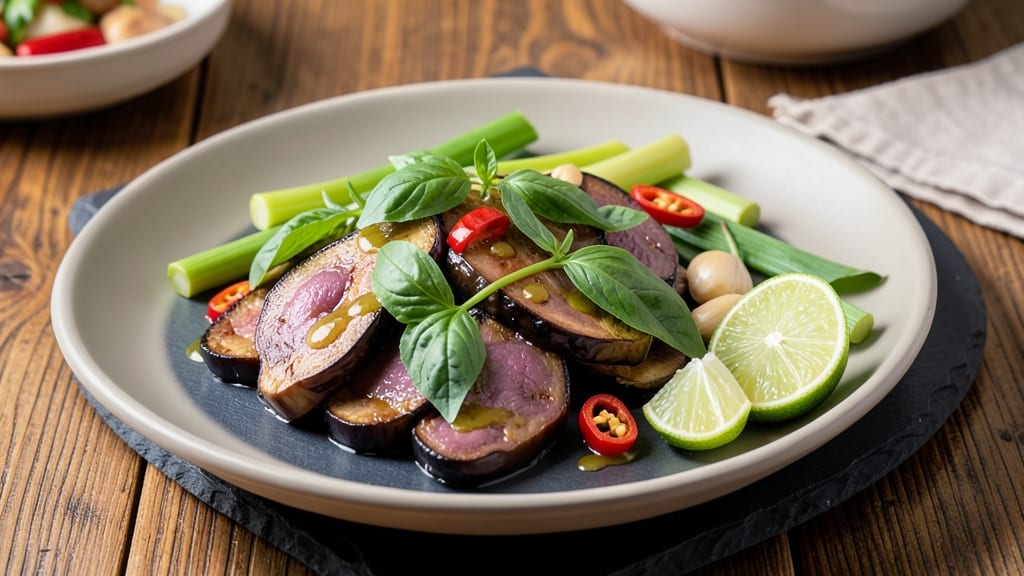
This vegan Thai basil eggplant recipe transforms simple ingredients into a restaurant-worthy dish with bold, aromatic flavors. 🌟 The secret lies in perfectly crispy fried eggplant paired with a fragrant basil sauce infused with Thai spices—no animal products, just vibrant taste.
I developed this recipe after years of adapting traditional Thai dishes for plant-based diets, and it never fails to impress even the most skeptical eaters.
The dish begins with eggplant slices marinated in a tangy blend of lime juice, garlic, and coconut aminos, then fried until golden and crispy. Meanwhile, the basil sauce simmers with lemongrass, chili, and fresh Thai basil, creating a fragrant, slightly spicy sauce that balances the eggplant's richness.
The combination of textures—crispy eggplant over velvety sauce—makes every bite satisfying.
What you'll end up with is a dish that's as visually stunning as it is delicious: golden eggplant slices stacked high, topped with vibrant green basil sauce, and finished with fresh herbs and lime wedges.
The flavors are authentically Thai—bright, aromatic, and perfectly balanced—without relying on fish sauce or other animal products. This recipe proves vegan food can be just as bold and flavorful as its traditional counterparts.
Serve it with steamed jasmine rice or over noodles for the full experience. The sauce can also be used as a marinade or dipping sauce, making this recipe versatile for any Thai-inspired meal. Let's get cooking!
Ingredients for vegan thai basil eggplant
Simple ingredients transform into a vibrant, aromatic vegan Thai basil eggplant dish with crispy textures and bold flavors.
| Ingredient | Amount | Notes |
|---|---|---|
| Japanese Eggplant 🍆 | 2 whole | Medium-sized, sliced lengthwise |
| Fresh Thai Basil Leaves 🌿 | 1 ½ cups | Stems removed, loosely packed |
| Lemongrass Stalk 🌿 | 1 whole | Lower part only, bruised |
| Garlic Cloves 🧄 | 6 cloves | Minced finely for marinade |
| Fresh Chili Peppers 🌶️ | 2 whole | Thai bird's eye, finely chopped |
| Fresh Lime Juice 🍋 | ½ cup | About 4-5 limes, freshly squeezed |
| Coconut Aminos 🥫 | ⅓ cup | Substitute for fish sauce |
| Extra-Virgin Olive Oil 🫒 | ½ cup | For frying eggplant |
| Vegetable Oil 🫒 | 1 cup | High smoke point for frying |
| Coconut Milk 🥥 | ¼ cup | Full-fat for creaminess |
| Red Curry Paste 🌶️ | 1 tbsp | Vegan, no fish sauce |
| Brown Sugar 🍚 | 1 tbsp | Light or dark preferred |
| Salt 🧂 | 1 tsp | Diamond Crystal preferred |
| Black Pepper 🌶️ | ½ tsp | Freshly ground |
| Jasmine Rice 🍚 | 1 ½ cups | Uncooked, for serving |
The eggplant is the star—Japanese eggplant with its tender, meaty texture holds up perfectly to frying. Look for firm, glossy skins with no bruising; Trader Joe's or Asian markets usually carry them fresh. Fresh Thai basil is non-negotiable for authentic flavor—Asian grocery stores often have it in abundance, or check the produce section at Whole Foods. The lemongrass should be vibrant green with no brown spots; bruise the lower part to release its fragrant oils. For the chili peppers, Thai bird's eye peppers deliver the signature heat, but any fresh chili will work if you adjust the quantity to taste. If you can't find coconut aminos, soy sauce or tamari works in a pinch, though the flavor won't be identical.
No fresh Thai basil? Regular basil with a pinch of anise seeds mimics the flavor, though it won't be the same. Substitute red curry paste without fish sauce—brands like Maesri or Thai Kitchen make vegan versions. For the marinade, if you're short on lime juice, lemon juice plus a pinch of sugar bridges the gap. The coconut milk can be swapped for cashew cream** (blend soaked cashews with water) for a richer texture. For extra crispiness, double-fry the eggplant slices: fry once, rest 10 minutes, then fry again until golden. The brown sugar in the sauce caramelizes beautifully, but maple syrup or agave** works in a 1:1 ratio if you prefer.
Store the fried eggplant slices in an airtight container with parchment paper between layers—they crisp up again when reheated. The basil sauce keeps for 5 days refrigerated or 3 months frozen in a sealed container. For best texture, reheat the sauce gently on low heat, adding a splash of water if it thickens too much. The jasmine rice should be steamed just until tender; undercooking prevents it from absorbing the sauce properly. This dish reheats beautifully—make extra sauce for leftovers, as it only gets more flavorful over time.
Why You'll Love This Recipe
- One-Pan Magic: I swear by this—just slice the eggplant, toss it in a hot pan with garlic and chili, then let the basil and lemongrass work their magic. No oven, no fuss, just that smoky-sweet aroma filling your kitchen in 15 minutes.
- Herb Bomb Flavor: That first bite? Crispy eggplant edges with a punch of garlic, fresh basil so bright it makes you close your eyes, and lemongrass cutting through like a citrusy whisper. It’s the kind of dish that makes you forget it’s vegan.
- Lunchbox Hero: Between us, this keeps perfectly for days—pack it in containers for work lunches or bring it to potlucks. The eggplant stays tender, the basil holds its aroma, and honestly? You’ll be the one people ask for seconds.
- Budget Stretch: Japanese eggplant is affordable, and Thai basil grows like a weed in my garden. Lemongrass lasts weeks in the freezer, and garlic? Always cheap. I’ve fed four people for under $10 with leftovers that taste just as good reheated.
Step-by-step instructions for vegan Thai basil eggplant
Achieve that perfect balance of crispy fried eggplant and fragrant herb sauce with this precise method.
🍳 Step 1: Prepare and Fry the Japanese Eggplant
Slice the 2 whole Japanese Eggplant lengthwise into ¼-inch thick planks. The eggplant should yield about 8-10 pieces total. Pat each slice completely dry with paper towels—this ensures maximum crispiness when frying. The slices should feel dry to the touch before proceeding.
Heat the 1 cup Vegetable Oil in a deep skillet over medium-high heat until it reaches 350°F. Use a thermometer for accuracy—oil that's too cool will make the eggplant greasy, while oil that's too hot will burn the exterior before the interior cooks. Fry the eggplant slices in batches for 2-3 minutes per side until golden brown and crispy. They're ready when they float in the oil and develop a deep golden color. Transfer to a paper towel-lined plate to drain excess oil.
👨🍳 Step 2: Create the Thai Basil Marinade
In a food processor, combine the 1 whole Lemongrass Stalk (lower part only, bruised), 6 cloves Garlic Cloves (minced), 2 whole Fresh Chili Peppers (finely chopped), 0.33 cup Coconut Aminos, 0.5 cup Fresh Lime Juice, 1 tbsp Brown Sugar, 1 tbsp Red Curry Paste, 1 tsp Salt, and 0.5 tsp Black Pepper. Pulse until you achieve a smooth, vibrant green paste—this will be the base of your sauce. The mixture should coat the back of a spoon with a bright, aromatic sheen.
Transfer the marinade to a small saucepan and simmer over medium-low heat for 5 minutes, stirring constantly. This step develops the flavors and reduces the mixture slightly. Remove from heat and stir in the 1.5 cups Fresh Thai Basil Leaves. The basil should wilt slightly but maintain its vibrant color—this indicates proper heat treatment without overcooking.
🥘 Step 3: Build the Herb Sauce
Return the pan to low heat and add the 0.25 cup Coconut Milk and 0.5 cup Extra-Virgin Olive Oil. Whisk continuously for 3-4 minutes until the sauce thickens to a glossy, velvety consistency. You're looking for a sauce that coats the back of a spoon smoothly, with a balance of creamy coconut and bright herb notes. If it thickens too much, add 1-2 tablespoons of water to reach your desired consistency.
Taste and adjust seasoning—you may need to add a pinch more salt or a splash of lime juice to balance the flavors. The sauce should be vibrant, slightly sweet, and packed with herbal aroma. Keep the sauce warm over low heat while you prepare the rice.
🍚 Step 4: Cook the Jasmine Rice
Rinse the 1.5 cups Jasmine Rice under cold water until the water runs clear, then drain well. Cook according to package instructions using a 1:1.5 rice-to-water ratio. The rice should be perfectly fluffy with individual grains that don't stick together. For best results, use a rice cooker or bring water to a boil, add the rice, reduce heat to low, cover, and simmer for 15 minutes off heat.
While the rice cooks, gently reheat the fried eggplant in a dry skillet over medium heat for 1-2 minutes per side to restore crispiness. This ensures your eggplant maintains its texture when served over the warm rice and sauce.
🍽️ Step 5: Assemble and Serve
Divide the cooked Jasmine Rice among serving plates. Arrange the crispy fried eggplant slices artfully over the rice. Spoon the Thai Basil sauce generously over the top, allowing it to cascade down the sides for visual appeal. The contrast between the golden eggplant, fragrant green sauce, and fluffy white rice creates a visually stunning dish.
Garnish with additional Fresh Thai Basil Leaves if desired, and serve immediately while the eggplant is still crispy. Each bite should deliver that perfect combination of crispy eggplant, aromatic herb sauce, and fragrant rice—all while staying completely plant-based.
Pro Tips For Making Vegan Thai Basil Eggplant
- CHAR THE EGPLANT FIRST: I learned this the hard way—Japanese eggplant needs a quick sear in a screaming-hot pan (cast iron or stainless) for 2-3 minutes per side until blackened. The char isn’t just for looks; it deepens the smoky-sweet flavor that balances the basil’s anise notes. Use enough oil (about 2 tablespoons) so it sizzles properly, and resist the urge to move it around—let it crisp in patches.
- SLICE LEMONGRASS LENGTHWISE: Skip the mincer or blender—split the stalk lengthwise and scrape out the pale inner pulp with the edge of your knife. This releases more aroma than grinding, and you’ll avoid the bitter green outer layers that can overpower the dish. If you’re lazy (like me), freeze the scraped pulp in an ice cube tray with a splash of water for future stir-fries.
- ADD BASIL LAST MINUTE: Thai basil wilts fast, so toss in the leaves and chili peppers right after removing the pan from heat. Their bright flavor and texture fade when cooked too long—just 10 seconds wilting is enough to soften them slightly without killing their punch. If you’re prepping ahead, store basil and peppers separately and add them when reheating.
- USE GARLIC LIKE A PRO: Mince the garlic very finely (almost a paste) and bloom it in the oil for 30 seconds until fragrant but not browned. Overcooking garlic turns it bitter, and you’ll taste it in every bite. If you’re in a rush, smash the cloves with the flat of your knife first—it cooks faster and releases flavor more evenly.
Best sauces and condiments for this recipe
Authentic Thai Basil Sauce
This vibrant sauce is the heart of your dish—it’s where the magic happens with fresh Thai basil, lemongrass, and red curry paste. The key is balancing the coconut aminos (fish sauce substitute) with lime juice and a touch of brown sugar for that signature Thai sweet-sour profile.
I like to simmer the lemongrass and garlic first to build deep, aromatic layers before blending in the basil. 🌿
For extra depth, toast the red curry paste in a dry pan for 1 minute before adding it to the sauce. This caramelizes the spices and intensifies their flavor. If you can’t find fresh Thai basil, holy basil works in a pinch, though it has a slightly peppery note.
Always use full-fat coconut milk—the richness helps emulsify the sauce beautifully.
Spicy Chili Oil Finish
Add a drizzle of chili oil just before serving to elevate the dish. Mix 2 tbsp neutral oil (like grapeseed) with 1 tbsp chopped Thai chilies and ½ tsp salt, then heat on low until fragrant.
Strain and drizzle over the eggplant—this adds a smoky, fiery contrast that cuts through the creamy sauce. 🌶️
For a milder version, reduce the chilies to 1 tbsp or swap in ½ tsp cayenne pepper for heat without the same aromatic punch. Store leftover chili oil in the fridge for up to 2 weeks—it’s perfect for noodles, tofu, or even popcorn!
Sweet and Tangy Dipping Sauce
Mix 2 tbsp coconut aminos, 1 tbsp lime juice, 1 tsp maple syrup, and ½ tsp grated ginger for a quick dipping sauce. This lighter option balances the richness of the fried eggplant while keeping the Thai flavors intact.
Serve it on the side for dipping or drizzle it over the dish for extra brightness. 🍋
For a smoky twist, add ½ tsp smoked paprika to the mix. This sauce also works as a marinade for tofu or grilled veggies—double the batch and store it in the fridge for 5 days or freeze for 3 months.
Creamy Coconut-Lime Dressing
Blend ½ cup coconut milk, 2 tbsp lime juice, 1 tbsp lime zest, 1 tbsp maple syrup, and ½ tsp salt for a refreshing topping.
This lighter sauce is ideal if you prefer a less heavy dish. It pairs beautifully with the crispy eggplant and adds a bright, citrusy finish. 🥥
For extra richness, stir in 1 tbsp tahini or cashew cream after blending. This dressing keeps well in the fridge for 4 days—perfect for meal prep. Use it on salads, grain bowls, or even as a base for vegan spring rolls!
Nutrition facts
Frequently asked questions
Can I use regular eggplant instead of Japanese eggplant?
You can, but Japanese eggplant has a firmer texture and fewer seeds, making it ideal for crispy frying. If using regular eggplant, slice it ⅛-inch thick and salt it 10 minutes before cooking to draw out excess moisture. This helps prevent soggy slices.
How do I make this dish less spicy?
Reduce the Thai chilies to 1 whole pepper (instead of 2) or swap them for ½ tsp mild chili flakes. For extra mildness, omit the chilies entirely and add ½ tsp extra brown sugar to balance the flavors. Taste the sauce before serving—you can always adjust with more lime juice or coconut milk.
What's the best way to store leftovers?
Store the fried eggplant slices separately in an airtight container with parchment paper between layers—they crisp up again when reheated. The basil sauce keeps for 5 days refrigerated or 3 months frozen. Reheat the sauce gently on low heat, adding a splash of water if needed. Never reheat eggplant in the microwave—it turns rubbery.
Can I make this dish ahead of time?
Prepare the sauce and cook the rice up to 2 days ahead. Store components separately: sauce in the fridge, rice at room temperature, and eggplant slices in the freezer. Reheat the eggplant in a dry skillet for 1-2 minutes per side, then assemble with freshly reheated sauce. The flavors actually improve overnight!
What's the secret to crispy eggplant?
Three keys:
- Pat slices completely dry with paper towels,
- Use high heat (350°F oil), and
- Don't overcrowd the pan. Fry in batches and maintain oil temperature. For extra crispiness, double-fry: fry once, rest 10 minutes, then fry again until golden. The secret weapon? A thermometer—oil that's too cool makes greasy eggplant.