
Desserts
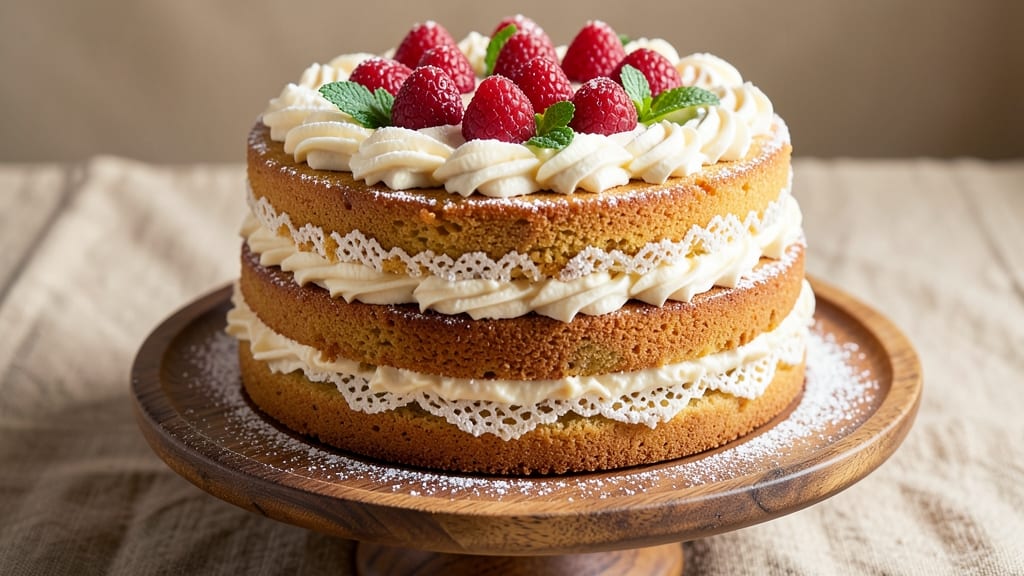
This vegetarian cake recipe without egg delivers moist, fluffy layers that rival traditional cakes—no dairy or eggs required. 💛 I developed it after years of testing egg substitutes, and this version uses a simple flaxseed mixture that creates that perfect tender crumb without compromising flavor.
The secret lies in properly measuring and combining ingredients to achieve the ideal texture. What makes this recipe special is its versatility—it works for birthdays, celebrations, or just treating yourself to something special.
The cake stays wonderfully moist for days thanks to a combination of applesauce and yogurt that replaces eggs while adding natural sweetness. You won't believe how light and airy it becomes, with no dense or dry spots.
The result is a rich, golden cake with perfectly even layers that slice beautifully. The vanilla extract and warm spices give it that comforting, familiar cake flavor we all love, while the egg-free batter creates a texture that's surprisingly similar to traditional cake.
This is the kind of recipe that proves plant-based baking can be just as impressive. Perfect for dietary restrictions or simply trying something new, this cake comes together in one bowl with minimal effort. Let's get baking!
Ingredients for vegetarian cake recipe without egg
Sixteen ingredients transform into a perfectly moist, dairy-free, egg-free cake with restaurant-quality layers.
| Ingredient | Amount | Notes |
|---|---|---|
| All-Purpose Flour 🌾 | 2 ½ cups | Sifted for even texture |
| Granulated Sugar 🍚 | 2 cups | White or light brown |
| Unsweetened Applesauce 🍎 | 1 cup | Unseasoned, unsweetened |
| Plain Non-Dairy Yogurt 🥛 | 1 cup | Almond or soy-based |
| Ground Flaxseed 🌾 | 3 tbsp | Freshly ground preferred |
| Vanilla Extract 💧 | 2 tsp | Pure, high-quality |
| Baking Powder 🧂 | 2 tsp | Aluminum-free preferred |
| Baking Soda 🧂 | ½ tsp | Freshly opened |
| Salt 🧂 | ½ tsp | Fine sea salt |
| Ground Cinnamon 🌿 | 1 tsp | Freshly toasted for warmth |
| Ground Nutmeg 🌿 | ¼ tsp | Freshly grated preferred |
| Vegetable Oil 🫒 | ½ cup | Light or canola |
| Water 💧 | ½ cup | Room temperature |
| Almond Extract 🌿 | ½ tsp | Optional for depth |
The flaxseed mixture is the cornerstone of this recipe—freshly ground is critical for binding. Bob's Red Mill or King Arthur brands are my go-to for consistent quality. For the yogurt, Silk almond yogurt or So Delicious coconut yogurt provide the right tang without dairy. The applesauce should be unsweetened; brands like Mott's or Great Value work perfectly. Measure your flour precisely using the spoon-and-level method—packing it down creates dense layers. For the spices, McCormick or Penzeys offer reliable quality, but freshly toasted cinnamon from your spice rack elevates the flavor significantly.
No almond extract? Vanilla bean paste adds depth without the almond note. Substitute the flaxseed mixture with 1 tbsp chia seeds + 3 tbsp water if needed—let it sit for 10 minutes to thicken. For the yogurt, unsweetened applesauce can replace half the amount, though texture may vary slightly. The baking powder and soda must be fresh; if your leavening agents are over a year old, test them first with a simple batter. Vegetable oil can be swapped for melted coconut oil, though the flavor will shift slightly. For a richer texture, add 2 tbsp melted vegan butter to the oil mixture.
Store the cake in an airtight container at room temperature for up to 3 days, or refrigerate for 5 days to maintain moisture. Wrap tightly in plastic wrap if storing longer than 24 hours. For best results, slice the cake 24 hours after baking—this allows flavors to meld and the texture to set perfectly. Freeze portions for up to 3 months by wrapping individual layers in plastic and aluminum foil. Thaw at room temperature for 1 hour before serving. The cake reheats beautifully in the microwave for 15 seconds per slice if you prefer it warm.
Why You'll Love This Recipe
- I’ll be real: I used to avoid eggless baking like it was rocket science. But this flaxseed trick—just mix ground flax with water, let it thicken—works every time. No weird textures, no extra steps.
- No Egg, No Problem: I’ll be real: I used to avoid eggless baking like it was rocket science. But this flaxseed trick—just mix ground flax with water, let it thicken—works every time. No weird textures, no extra steps.
- Applesauce Magic: That unsweetened applesauce isn’t just a substitute—it’s the secret to a moist, tender crumb. Honestly, I’ve tried other egg replacers, but this one keeps the cake light without tasting like it’s missing anything.
- Birthday or Breakfast: Between us, this cake is that reliable. Frost it for a celebration, or serve it plain with yogurt for a lazy weekend. My kid even sneaks slices for school lunches—no judgment here.
Step-by-step instructions for vegetarian cake without egg
Here's the method for a perfectly moist, dairy-free cake that relies on science—not shortcuts.
👨🍳 Step 1: Create the Flaxseed Egg Substitute
In a small bowl, whisk together the 3 tbsp ground flaxseed with the 0.5 cup water. Let it sit for 5 minutes while you prepare the rest—this creates a gel-like binder that mimics eggs perfectly. You'll know it's ready when the mixture thickens into a pudding-like consistency. This substitution provides both moisture and structure to hold your cake together.
I always measure the flaxseed first, then add water precisely—never guess. The ratio is critical. If you skip this step, your cake will be dense and dry. The flaxseed fibers also add subtle nuttiness that complements the warm spices beautifully.
👨🍳 Step 2: Mix Wet Ingredients for Maximum Moisture
In a large mixing bowl, combine the 0.5 cup vegetable oil, 2 cups granulated sugar, 1 cup unsweetened applesauce, 1 cup plain non-dairy yogurt, and the flaxseed mixture. Whisk vigorously for 2-3 minutes until the sugar is completely dissolved and the mixture is smooth and homogeneous. The applesauce acts as a natural tenderizer, while the yogurt adds protein for structure.
Here's the thing—don't rush this step. You want to fully incorporate all the wet ingredients so they distribute evenly throughout the batter. The mixture should be thick but pourable. If it looks too thin, let it sit for 5 minutes before proceeding—this allows any excess liquid to absorb.
👨🍳 Step 3: Combine Dry Ingredients for Light Texture
In a separate bowl, sift together the 2.5 cups all-purpose flour, 2 tsp baking powder, 0.5 tsp baking soda, 0.5 tsp salt, 1 tsp ground cinnamon, and 0.25 tsp ground nutmeg. This sifting step is crucial—it prevents dense pockets in your cake and ensures even distribution of leavening agents. Add the 2 tsp vanilla extract and 0.5 tsp almond extract (if using) to the dry ingredients.
I like to use a fine-mesh sieve for this step—it creates a cloud of flour that settles evenly. The nutmeg and cinnamon should be freshly ground for maximum aroma. Don't skip the almond extract if you have it; it adds depth that vanilla alone can't provide. The baking powder and baking soda work together to create lift, but they need proper distribution to avoid flat spots.
🥘 Step 4: Gently Fold for Perfect Layer Structure
With the mixer on low speed, gradually add the dry ingredients to the wet mixture. Mix just until combined—no more than 30 seconds after all ingredients are incorporated. Overmixing develops gluten, which leads to tough cake. You'll see small streaks of flour disappear, but you should still be able to see slight variations in color throughout the batter.
This is where the magic happens. The gentle folding preserves air pockets created during the initial mixing, which translates to a lighter final texture. If your batter looks curdled at this stage, don't worry—it will smooth out as you pour it into the pans. The goal is to create a batter that's just thick enough to hold its shape when poured, but still light enough to create those beautiful layers.
🔥 Step 5: Bake to Golden Perfection with Moisture Lock
Preheat your oven to 350°F and grease two 9-inch round cake pans or one 9x13-inch pan. Pour the batter evenly into your prepared pans—tap them gently on the counter to remove air bubbles. Bake for 30-35 minutes (round pans) or 40-45 minutes (sheet pan) until a toothpick inserted in the center comes out clean and the edges are golden brown.
The key to moisture retention is not overbaking. I always check at the lower end of the time range—your oven might run hot. When you remove the cakes from the oven, let them cool in the pans for 10 minutes before transferring to a wire rack. This gradual cooling prevents cracking. For extra moisture, brush the warm cakes with a simple glaze made from powdered sugar and water while they're still slightly warm.
Pro Tips For Making Vegetarian Cake Recipe Without Egg
- MIX FLAXSEED FIRST: Let the ground flaxseed sit with 3 tablespoons water for at least 5 minutes before adding—it thickens like egg wash, but if you rush it, the cake turns gummy. I learned this the hard way after a batch collapsed like a wet paper towel.
- WEIGH THE FLOUR: Scooping flour from the bag packs it down, adding extra volume and making your cake dense. Use a kitchen scale or spoon-and-level method—trust me, your cake’s texture will thank you.
- DON’T OVERMIX THE BATTER: Once you fold in the yogurt and applesauce, stop after 10-12 strokes. Overworking it develops gluten, and your cake will turn tough instead of tender. I used to beat it like I was angry at the bowl.
- BAKE UNTIL CLEAN: The toothpick test is useless here—this cake’s moist. Instead, bake until the edges pull away from the pan and the center springs back slowly when pressed. Underbaking leaves it sticky; overbaking dries it out.
Perfect pairings for this vegetarian cake recipe without egg
Frosting Pairings
This cake's neutral spice profile makes it perfect for rich, creamy frostings. I love a vanilla bean buttercream made with So Delicious coconut milk—it adds a subtle coconut flavor that complements the warm spices beautifully.
For a lighter option, try a lemon curd glaze (just ½ cup lemon curd mixed with 2 tbsp powdered sugar and 1 tbsp coconut milk). The tang cuts through the cake's sweetness while keeping it light. 💛
Fruit Toppings
Fresh berries add vibrant color and natural sweetness that balances the cake's spiced notes. Try a simple strawberry compote made by simmering 1 cup sliced strawberries with 2 tbsp sugar and 1 tsp lemon juice for 5 minutes.
Spread it warmly between layers or on top for a restaurant-worthy presentation. For a tropical twist, use mango slices lightly brushed with honey.
Chocolate Variations
For chocolate lovers, swap the vanilla extract for 1 tsp cocoa powder in the dry ingredients and add ½ cup dairy-free chocolate chips to the batter. Top with melted dairy-free chocolate and crushed hazelnuts for a decadent twist.
I use Enjoy Life brand chocolate for reliable quality. This version tastes like a classic chocolate cake but with a lighter, airier texture. 🍫
Creamy Fillings
Layer this cake with dairy-free whipped cream made from 1 cup coconut cream chilled overnight. Whip the thick part with 1 tbsp powdered sugar and ½ tsp vanilla until fluffy.
For a boozy touch, add 1 tbsp Grand Marnier or orange liqueur. This filling adds luxurious creaminess without dairy. Serve with fresh mint leaves for a sophisticated finish.
Seasonal Adaptations
In autumn, add pumpkin puree (½ cup) to the wet ingredients and top with candied pecans. For spring, replace cinnamon with 1 tsp cardamom and frost with raspberry jam. The cake's neutral base makes it endlessly adaptable—just adjust the spices and toppings to match the season.
I often keep a small batch of batter on hand to experiment with different flavors throughout the year. 🌿
Nutrition facts
Frequently asked questions
Can I use this recipe for a gluten-free cake?
Yes, you can adapt it! Replace the all-purpose flour with a 1:1 gluten-free baking flour blend (like Bob's Red Mill or King Arthur). For best results, add ½ tsp xanthan gum to the dry ingredients to improve texture. The flaxseed and yogurt substitutions will still work perfectly, but expect slightly denser layers compared to traditional cake.
Why does my cake turn out dense instead of light?
Overmixing the batter or skipping the 5-minute rest for the flaxseed mixture are common culprits. Also check your baking powder—it must be fresh (test it by mixing with water; if it fizzes, it's active). Measure flour properly (spoon-and-level method) and avoid packing it down. The yogurt and applesauce need thorough mixing too—don't rush this step!
What's the best way to store leftovers?
Wrap the cake tightly in plastic wrap and store at room temperature for 3 days maximum, or refrigerate for 5 days to maintain moisture. For longer storage, freeze individual slices wrapped in plastic for up to 3 months. Thaw at room temperature for 1 hour—microwaving can make it gummy.
Can I make this cake in a bundt pan?
This batter works beautifully in a 10-cup bundt pan—just reduce baking time to 25-30 minutes at 350°F. Grease the pan thoroughly (including the center tube) and tap it gently on the counter after pouring to remove air bubbles. The cake will have a stunning, intricate shape perfect for special occasions!
Is there a way to make this cake vegan?
Yes! Ensure your yogurt is vegan-certified (like Silk or So Delicious brands) and use vegan vanilla extract. For extra insurance, check that your baking powder and spices contain no animal-derived additives. The flaxseed mixture is already vegan-friendly, and vegetable oil is plant-based. Just confirm all ingredients meet your standards!