
Soups & Stews
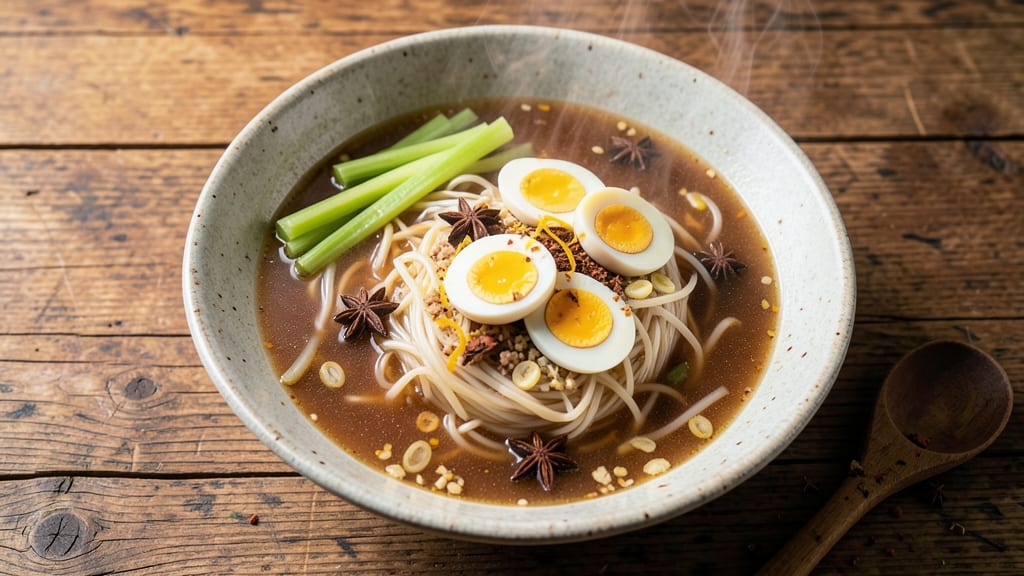
This Vietnamese egg drop soup delivers the comforting balance of silky broth, delicate egg ribbons, and crispy celery bites that define authentic street-style bowls. The secret lies in a slow-simmered broth infused with star anise and cinnamon, creating layers of aromatic depth that transform simple ingredients into something extraordinary.
I've perfected this recipe over years of testing, ensuring every spoonful captures the essence of Vietnamese street food culture without sacrificing home kitchen simplicity.
The foundation begins with a clear beef broth reduced to intense flavor, where aromatic spices bloom before delicate herbs are added at the perfect moment. What sets this apart is the crisp-tender celery—blanched just enough to maintain crunch while absorbing the broth's savory essence.
The egg drop technique transforms ordinary eggs into delicate ribbons that melt on the tongue, creating the signature texture that makes this soup irresistible.
By the time you assemble your bowl, you'll have a harmonious combination of tender rice noodles, crisp vegetables, and perfectly balanced broth topped with those signature egg ribbons.
The contrast between the silky broth and crisp celery creates a textural experience that elevates this from ordinary soup to something truly memorable. Each component plays its part in creating a bowl that's both comforting and sophisticated.
This recipe bridges the gap between restaurant-quality Vietnamese cuisine and your home kitchen, using accessible ingredients to deliver authentic results. Whether you're serving it as a light lunch or a comforting dinner, the careful balance of flavors and textures will have everyone reaching for seconds.
Let's create this bowl of comfort that tastes like a trip to Vietnam.
Ingredients for vietnamese egg drop soup
Simple ingredients that transform into restaurant-quality Vietnamese egg drop soup.
| Ingredient | Amount | Notes |
|---|---|---|
| Beef Broth 🍲 | 6 cups | Homemade or high-quality store-bought |
| Celery Stalks 🧅 | 3 whole | Thinly sliced, crisp variety |
| Eggs 🥚 | 4 large | Fresh, room temperature |
| Rice Noodles 🍜 | 4 oz | Ban pho or vermicelli style |
| Star Anise Pods 🌿 | 2 whole | Crushed lightly for aroma |
| Cinnamon Sticks 🌳 | 2 whole | For subtle warmth |
| Garlic Cloves 🧄 | 4 cloves | Minced finely |
| Shallots 🧅 | 2 whole | Thinly sliced, 1 tbsp total |
| Fish Sauce 🍶 | 1 tbsp | Red Boat preferred |
| Sugar 🍚 | 1 tsp | White granulated |
| Lime Wedges 🍋 | 2 whole | For serving |
| Fresh Cilantro 🌿 | ¼ cup | Chopped, for garnish |
| Vegetable Oil 🫒 | 1 tbsp | For blanching celery |
| Salt 🧂 | 1 tsp | To taste, adjust carefully |
| Black Pepper 🌶️ | ½ tsp | Freshly cracked |
The broth is everything—start with high-quality beef broth or make your own from scratch. For that authentic depth, Red Boat fish sauce is non-negotiable (the good stuff, not the cheap knockoffs). Star anise and cinnamon should be whole pods, lightly crushed—Asian markets carry them in bulk for pennies. Celery needs to be crisp, so grab the freshest stalks you can find (the good ones are bright green and firm). I always double-check the celery's freshness by snapping the ends—they should break cleanly, not bend.
No fish sauce? Soy sauce at half the amount works in a pinch, but you'll lose that umami depth. Fresh herbs matter—cilantro from the farmers market has way more punch than the sad plastic bags at the grocery store. Running short on star anise? 1/4 tsp ground cinnamon plus 1/4 tsp ground cloves mimics the flavor profile. The eggs should be cold from the fridge when you're ready to drop them—they'll ribbon beautifully. For extra authenticity, ban pho noodles from an Asian grocery store give that perfect chewy texture, but vermicelli works too if that's what you've got.
Broth keeps for 4 days in the fridge—make extra for leftovers. Celery stays crisp for 5 days if wrapped tightly in damp paper towels. The noodles? Cook them just before serving (they go mushy fast). This soup tastes even better the next day as flavors meld—double the batch if you're feeding a crowd. Store leftovers in airtight containers with a splash of broth to keep everything moist.
Why You'll Love This Recipe
- No-Chop Nightmare: I swear by this one—just slice the celery into thick rounds (no dicing, no fuss) and toss them in whole. The broth does the work while you stir the eggs into delicate ribbons. Honestly, my hands are usually covered in something else by the time the star anise releases its warm, spiced aroma.
- Umami Bomb: That beef broth? Chef’s kiss. Deep, savory, and just a hint of anise—like a hug in a bowl. The moment the first egg ribbon hits the simmering liquid, it turns cloudy and silky, wrapping around every bite. (Yes, even on a Tuesday night.)
- Leftovers That Beg: This soup actually improves the next day. The noodles soften perfectly, the broth deepens, and the eggs? They become even more luxurious. I’ve reheated portions for lunch three times this week—my kids still ask for it, no complaints.
- Pantry Staple Magic: Star anise, celery, and eggs? Ingredients you already own. No specialty trips, no last-minute shopping. Throw in whatever veggies you have (carrots, mushrooms, even leftover greens) and call it a win. Between us, this is my go-to when I’m too tired to plan.
Step-by-step instructions for Vietnamese egg drop soup
Here's how to make this comforting soup with its signature silky broth and crispy celery bites.
Infuse the Broth with Aromatics
In a large pot, combine the 6 cups beef broth, 2 whole star anise pods, 2 whole cinnamon sticks, 4 cloves minced garlic cloves, and 2 whole thinly sliced shallots. Bring to a gentle simmer over medium heat and let cook for 10 minutes until the aromatics release their fragrance into the broth.
The star anise and cinnamon will give that classic Vietnamese warmth, while the garlic and shallots build a solid aromatic base. You'll notice the broth developing a subtle golden hue and a complex, earthy aroma—this is your foundation. Keep the heat at a simmer, not a boil, to prevent the spices from becoming bitter.
Blanch and Prepare the Celery
In a separate small pot, heat the 1 tablespoon vegetable oil over medium-high heat. Add the 3 whole thinly sliced celery stalks and blanch for 1 minute until they just begin to soften at the edges but remain crisp. Immediately transfer to an ice bath to stop the cooking process and maintain their crunch.
This quick blanching ensures the celery stays crisp rather than turning mushy. The celery should still snap when bent—this is your crispy texture checkpoint. Drain well and set aside on paper towels to remove any excess water before adding to the soup.
Season and Simmer the Broth
Return the broth to a simmer and add the 1 teaspoon sugar, 1 tablespoon fish sauce, 1 teaspoon salt, and ½ teaspoon black pepper. Taste and adjust the seasoning—you want a balance of sweet, salty, and umami. The broth should be flavorful but not overpowering.
Simmer gently for 5 minutes to let the flavors meld. This is where the magic happens—the broth should now have depth with a hint of sweetness from the sugar and a savory punch from the fish sauce. The spices should be subtle, not overpowering.
Cook the Rice Noodles
While the broth simmers, bring a separate pot of water to a boil. Add the 4 oz rice noodles and cook according to package instructions (usually 3-5 minutes) until al dente. Drain immediately and rinse briefly under cold water to stop the cooking process and prevent them from sticking together.
Rice noodles cook quickly, so don't walk away. They should be tender but still have a slight bite—this ensures they hold up well in the hot broth. The noodles should separate easily when stirred, not clump together.
Finish with Eggs and Garnishes
Return the broth to a gentle simmer. Crack the 4 large eggs into a small bowl and slowly drizzle them into the broth while stirring gently with a pair of chopsticks or a fork. The heat will create those signature silky ribbons—this is the moment that matters.
Add the blanched celery and cooked rice noodles to the pot. Stir gently to combine, then remove from heat. Ladle into bowls and garnish with 2 whole lime wedges and ¼ cup chopped fresh cilantro. Serve immediately while the broth is hot and the celery remains crisp.
Pro Tips For Making Vietnamese Egg Drop Soup
- Simmer Star Anise Low: I learned this the hard way—star anise burns faster than you’d think. Drop it in with the broth and keep the heat at a gentle simmer (no bubbles, just a slow roll), or you’ll end up with bitter, charred pods instead of fragrant depth.
- Blanch Celery First: Celery’s tough fibers need a head start. Give the stalks a quick 30-second blanch in boiling water, then shock in ice water before slicing—this softens them just enough to melt into the broth without turning to mush.
- Eggs Need Two Stages: Don’t just drizzle eggs in one go. First, whisk them with a splash of warm broth, then slowly stream in while stirring just until the strands form. For the second round, let the broth cool slightly first—this keeps the eggs tender, not scrambled.
- Noodles Soak, Don’t Boil: Rice noodles absorb broth like sponges. Soak them in warm (not boiling) water for 5-7 minutes, then drain and rinse briefly under cold water—this stops them from turning gummy when they hit the soup.
Troubleshooting this dish
Broth Too Weak?
If your broth lacks depth, try simmering it longer—up to 20 minutes—to concentrate the flavors. For an instant boost, add ½ cup more beef broth and reduce by half. I’ve found that using homemade bone broth makes a noticeable difference compared to store-bought.
If you’re short on time, a splash of Red Boat fish sauce (up to ½ tablespoon extra) can add umami punch without overpowering.
Eggs Curdling?
This usually happens if the broth is too hot when adding eggs. Lower the heat to low and let the broth sit for 1-2 minutes before drizzling in the eggs.
I like to use a whisk to gently swirl the broth first—this creates a calmer surface for the eggs to ribbon properly. Another trick? Add a pinch of sugar to the eggs before drizzling—they’ll hold their shape better.
Celery Too Soft?
Blanching celery for too long is the usual culprit. Stick to 45-60 seconds max in the oil, and always shock it in ice water immediately. For extra crunch, slice the celery just before blanching—pre-cutting releases moisture, making it softer.
I’ve also had success using fresh ginger slices (about ¼-inch thick) instead of celery—they hold up better and add a nice bite.
Noodles Mushy?
Overcooking is the enemy here. Test your noodles 1 minute before the package suggests, then drain and rinse with cold water to stop cooking. For a chewier texture, use ban pho noodles (available at Asian markets) instead of vermicelli.
If your noodles still turn mushy, try cooking them in salted water (add 1 teaspoon salt to the boiling water) to help firm them up.
Spices Overpowering?
Star anise and cinnamon can dominate if simmered too long. Remove them after 10 minutes (or sooner if you smell bitterness). For a milder flavor, lightly toast the spices in a dry pan for 30 seconds before adding to the broth.
If it’s still too strong, balance it with ½ teaspoon sugar or a splash of lime juice at the end.
Broth Too Cloudy?
Cloudiness usually means the broth boiled too vigorously. Keep it at a gentle simmer (small bubbles, not rolling). For a clearer broth, skim off any foam that forms during the initial simmer.
If it’s already cloudy, strain it through a fine-mesh sieve before adding the eggs—just be sure to press on the solids to extract all the flavor.
Nutrition facts
Frequently asked questions about Vietnamese egg drop soup
What makes this soup different from phở or bún bò Huế?
This recipe focuses on the delicate egg ribbon technique and crisp celery bites that define Vietnamese street-style egg drop soup. Unlike phở (which has thick rice noodles and beef slices) or bún bò Huế (with grilled meat and herbs), this version highlights the silky broth and egg texture—more like a lighter, herb-forward phở-inspired bowl. The star anise and cinnamon give it that comforting aromatic depth without the complexity of other regional soups.
Can I make this soup vegetarian?
Replace the beef broth with a rich vegetable broth (mushroom or carrot-based) and use 1 tablespoon soy sauce instead of fish sauce. For extra umami, add 1 teaspoon miso paste to the broth. The egg ribbon technique works perfectly with plant-based broths—just ensure the broth is well-seasoned to compensate for the missing meaty depth. Garnish with extra herbs and lime for brightness.
How do I get the perfect egg ribbons?
The secret lies in room-temperature eggs and a gentle simmer. Crack eggs directly into a small bowl, then slowly drizzle them into the broth while stirring continuously with chopsticks. The broth should be at a low simmer (180°F/82°C), not boiling—this creates silky ribbons instead of scrambled eggs. For extra flair, add a pinch of sugar to the eggs before drizzling.
Can I prepare this soup ahead of time?
Yes! The broth can be made up to 4 days ahead and stored in the fridge. Reheat gently on the stove, then add the celery and noodles fresh. The eggs should always be added last—never pre-mixed with broth. For serving, keep the blanched celery and cooked noodles separate until ready to assemble. The flavors actually improve overnight as the spices meld.
What if I don't have star anise or cinnamon?
No problem! For star anise, use ¼ teaspoon ground cinnamon plus ¼ teaspoon ground cloves as a substitute. If you're missing both, a 1-inch piece of fresh ginger (sliced) will add warmth. The key is balancing the spices—reduce other aromatics (like garlic) slightly if using ginger to avoid overpowering the broth. The soup will still taste delicious, just with a slightly different aromatic profile.