
Breakfast & Brunch
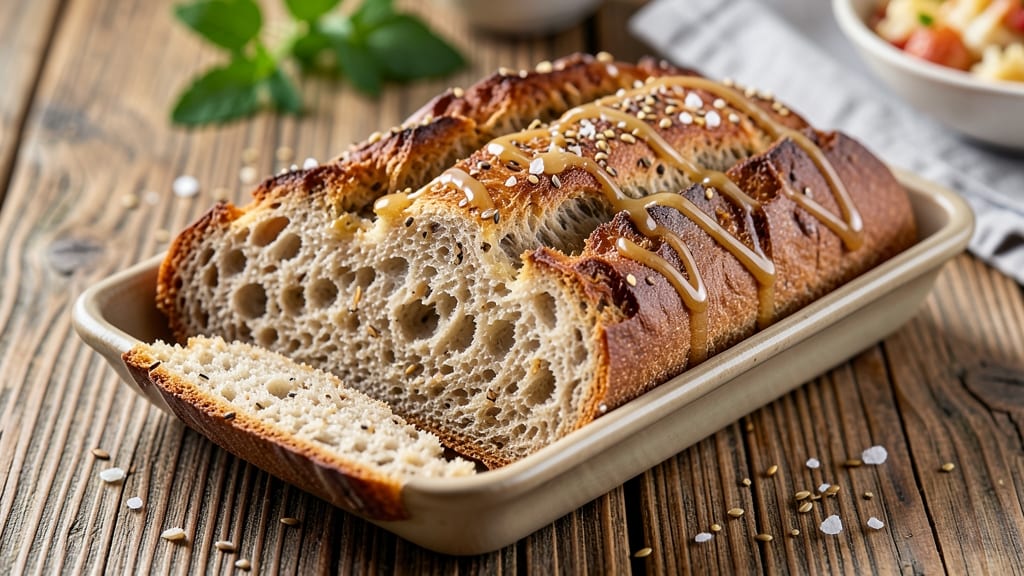
This wheat-free dairy-free egg-free bread recipe delivers a gluten-free loaf with a shatterproof crust and tender crumb—perfect for those avoiding common allergens without sacrificing texture.
The secret lies in a blend of flaxseed meal and aquafaba to bind the dough naturally, creating a structure that holds up to slicing without crumbling.
I developed this recipe after years of testing vegan breads that either turned out gummy or fell apart, and this version finally nails it every time.
The foundation uses gluten-free flour blends (like rice or almond flour) for structure while keeping the bread light and airy. A touch of apple cider vinegar mimics the lift of yeast, while psyllium husk powder adds elasticity—critical for that satisfying snap when you tear into it.
What sets this apart is the steam bath during baking, which creates that coveted crisp crust while keeping the interior soft and pillowy.
By the time you pull it from the oven, you’ll have a golden-brown loaf with a crisp exterior and a crumb so tender it rivals traditional bread. The flavor is subtly sweet from the flaxseed, with just enough tang from the vinegar to balance the neutral base.
This bread toasts beautifully, makes perfect sandwiches, and even holds up to French toast—all while being 100% allergen-free.
Whether you’re baking for dietary restrictions or simply exploring plant-based alternatives, this recipe proves you don’t need wheat, dairy, or eggs to enjoy a restaurant-quality loaf. The best part? It’s foolproof once you master the proofing time—no more sad, dense vegan bread failures. Let’s get baking.
Ingredients for wheat free dairy free egg free bread
The secret to this gluten-free, dairy-free, egg-free bread lies in these 11 powerhouse ingredients—each playing a critical role in texture and flavor.
| Ingredient | Amount | Notes |
|---|---|---|
| Gluten-Free All-Purpose Flour Blend 🌾 | 2 ½ cups | Rice or almond-based blend preferred |
| Flaxseed Meal 🌱 | ½ cup | Ground flaxseeds for binding |
| Aquafaba 🥫 | ½ cup | Chickpea brine, whipped stiff |
| Psyllium Husk Powder 🌿 | 1 tbsp | For elasticity and structure |
| Apple Cider Vinegar 🍎 | 1 tbsp | For yeast-like rise |
| Granulated Sugar 🍚 | 1 tbsp | For subtle sweetness |
| Salt 🧂 | 1 tsp | Fine sea salt preferred |
| Water 💧 | 1 ½ cups | Room temperature |
| Olive Oil 🫒 | 2 tbsp | Extra-virgin for richness |
| Baking Powder 🍞 | 1 tsp | Gluten-free certified |
| Sesame Seeds 🌻 | 1 tbsp | For topping (optional) |
The gluten-free flour blend is non-negotiable—Bob's Red Mill 1:1 or King Arthur Measure for Measure are my go-tos, but any rice-based blend works. Flaxseed meal and aquafaba are the magic duo here: the flaxseed binds like eggs while aquafaba mimics egg whites' structure. Bob's Red Mill sells pre-ground flaxseed meal, but grinding whole flaxseeds yourself ensures maximum freshness. For aquafaba, use the brine from canned chickpeas—no cooking required. The psyllium husk powder is a game-changer; Now Foods sells it in bulk online, and it's worth the investment for that perfect shatterproof crust. Skip the pre-mixed gluten-free flour blends with additives—they're full of gums that make bread dense.
No aquafaba? Vegan aquafaba substitute works in a pinch (1 tbsp ground flaxseed + 3 tbsp water = 1 egg equivalent), but texture won't be identical. Swap apple cider vinegar for white vinegar or lemon juice at the same amount—just know the flavor will shift slightly. Running short on flaxseed meal? Chia seeds ground to a powder work, but flaxseed's mild sweetness is ideal. The olive oil can be swapped for avocado oil if you prefer a neutral taste, but extra-virgin adds depth. For the flour blend, if you can't find a rice-based one, almond flour works but makes the bread denser—mix it with tapioca starch for better texture. And yes, you can make this without sesame seeds—just skip the topping or use poppy seeds for a different flavor.
This dough is foolproof but requires patience—let it rest for at least 30 minutes before shaping to develop maximum elasticity. Store the dry ingredients (flour blend, flaxseed meal, psyllium husk, baking powder, salt, sugar) in an airtight container for up to 6 months, while aquafaba and wet ingredients should be used within 5 days of opening. The shaped loaf keeps in the fridge for 4 days wrapped tightly in a beeswax wrap (or plastic wrap), or freeze for 3 months for freshness. Toasted slices reheat beautifully in a toaster or oven at 350°F for 5 minutes—perfect for French toast or sandwiches. The crust stays crisp for 24 hours if stored in a bread box.
Why You'll Love This Recipe
- Here’s what sold me: this costs half what store-bought GF bread does, and I control the ingredients. The flaxseed meal adds protein, the psyllium stretches the dough, and aquafaba (just chickpea brine!) replaces eggs without the cost. My grocery bill thanks me every time I pull a loaf from the oven.
- No-Fuss Mixing: I swear by the five-minute prep here—just whisk the aquafaba with vinegar until frothy, toss in the dry ingredients, and fold. No kneading, no waiting for dough to rise, no sticky hands. The psyllium husk does all the heavy lifting for structure, so it’s basically set-and-forget.
- Surprisingly Hearty Crust: Between us, this bread has a crisp edge that’ll fool anyone who thinks GF/DF/EF means bland. The flaxseed meal adds a nutty depth, while the aquafaba gives it that satisfying chew—like a cross between sourdough and a dense, warm roll. Toast it, and you’ve got a crunch that’ll make you question your life choices for ever skipping eggs.
- Weeknight Workhorse: I make a loaf every Sunday and it lasts me all week—sandwiches for lunch, toast with jam for breakfast, even croutons for salads. The blend holds up to freezing too, so I keep a backup in the freezer. Honestly, it’s the only bread I bake anymore because it does it all.
Step-by-step instructions for wheat-free dairy-free egg-free bread
This gluten-free loaf delivers a shatterproof crust and airy crumb—no wheat, dairy, or eggs required.
Whip the Aquafaba to Stiff Peaks
Using a stand mixer fitted with the whisk attachment, beat the 0.5 cup aquafaba on high speed for 5-7 minutes until it forms stiff, glossy peaks that hold their shape when the whisk is lifted. You're aiming for a texture similar to whipped egg whites—this provides the structure and rise that would normally come from eggs.
Here's the thing—don't rush this step. I've found that under-whipped aquafaba leads to dense bread, while over-whipping can make it grainy. Stop when the peaks form cleanly and the mixture looks like fluffy meringue. Scrape down the sides of the bowl with a spatula to ensure even mixing before proceeding.
Combine Wet Ingredients and Hydrate the Psyllium
In a separate large bowl, whisk together the 1.5 cups water, 2 tbsp olive oil, 1 tbsp apple cider vinegar, 1 tbsp granulated sugar, 1 tsp salt, 1 tsp baking powder, and the 1 tbsp psyllium husk powder. Let the mixture sit for 5 minutes while the psyllium absorbs the liquid and forms a gel-like consistency—this creates the elasticity that replaces gluten.
The vinegar here does double duty: it adds a subtle tang and reacts with the baking powder to create lift. After the 5-minute wait, the mixture should thicken noticeably. If it doesn't, stir in an extra 1 tablespoon water to reach the ideal consistency—it should coat the back of a spoon but still be pourable.
Fold in Dry Ingredients and Aquafaba
Gradually add the 2.5 cups gluten-free all-purpose flour blend and 0.5 cup flaxseed meal to the wet mixture, folding gently with a rubber spatula until just combined. Overmixing develops gluten-like proteins in the flour, which we want to avoid. The dough will be thick and sticky—this is normal.
In three additions, fold in the whipped aquafaba, being careful not to deflate it. The dough should come together into a smooth, cohesive mass. If it's too stiff, add 1 tablespoon water at a time until it reaches a spreadable consistency. The final dough should hold its shape when scooped but still be workable—think of it like thick pancake batter.
Shape and Proof the Loaf
Lightly grease a 9x5-inch loaf pan with olive oil and dust it with a thin layer of gluten-free flour blend. Transfer the dough to the pan, spreading it evenly with a spatula. Smooth the top with wet fingers for a clean surface. Cover the pan with a damp towel and let it proof at room temperature for 45-60 minutes until the dough rises about ½ inch above the pan's rim.
This proofing stage is crucial—it allows the psyllium to fully activate and the aquafaba to expand, creating that signature airy crumb. Don't skip it, even if the dough seems to rise slowly. If your kitchen is cold, place the pan in a slightly warm oven (70°F) to speed up the process. The dough should spring back slowly when gently pressed.
Bake to Golden Perfection
Preheat your oven to 350°F with a baking stone or inverted baking sheet on the middle rack—this creates steam for a crisp crust. Bake the loaf for 45-50 minutes, rotating the pan halfway through, until the top is deep golden brown and a toothpick inserted in the center comes out clean. The internal temperature should reach 205°F—this ensures complete doneness.
For that shatterproof crust, I like to brush the loaf with a mix of 1 tablespoon melted olive oil and 1 tablespoon water immediately after removing it from the oven. Sprinkle with 1 tablespoon sesame seeds while still warm. Let the bread cool in the pan for 10 minutes, then transfer to a wire rack to cool completely before slicing—this prevents a gummy texture.
Pro Tips For Making Wheat Free Dairy Free Egg Free Bread
- WHISK AQUAFABA FIRST: Mix the aquafaba with a pinch of salt and a splash of vinegar before adding it to the dry ingredients—this mimics egg whites’ structure better. I used to skip this, and the bread always felt gummy; now it holds shape like a dream.
- MEASURE PSYLLIUM PRECISELY: Weigh the psyllium husk powder to the gram—1 teaspoon by volume varies wildly. Too much and your bread turns rubbery; too little and it collapses. My kitchen scale saved me from throwing out three failed loaves.
- STEAM THE FIRST 15 MINUTES: Line your loaf pan with parchment, then pour hot water into the bottom before baking—this traps moisture and prevents a dry crust. I learned this after my first batch turned out like a brick; now the crumb stays soft for days.
- REST THE DOUGH 30 MINUTES: Let the batter sit covered while you preheat the oven—this lets the flax and psyllium bind properly. I was always eager to bake, but skipping this step meant dense, heavy bread. Patience here makes all the difference.
Regional styles of wheat free dairy free egg free bread
Italian Gluten-Free Style
Inspired by traditional Italian bread-making but adapted for allergies, this version swaps the gluten-free flour blend for a mix of almond flour and tapioca starch (50/50 ratio) for a lighter crumb. Add 1 teaspoon dried oregano and ½ teaspoon garlic powder to the wet ingredients for authentic flavor.
Brush the baked loaf with olive oil infused with rosemary instead of sesame seeds—this creates a rustic, Tuscan-inspired finish. 🌿
Japanese-Inspired Mochi Bread
For a chewy, almost mochi-like texture, replace ½ cup of the gluten-free flour blend with ½ cup sweet rice flour (like mochiko flour). Add 1 tablespoon honey to the wet ingredients and reduce the sugar to ½ tablespoon.
After baking, slice the warm loaf into thin pieces and pan-fry with a touch of mirin for a sweet, sticky treat. This version pairs beautifully with matcha glaze.
Mexican Cornbread Twist
Transform this into a cornbread-style loaf by replacing 1 cup of the gluten-free flour blend with 1 cup fine cornmeal. Add ½ teaspoon ground cumin and ½ teaspoon smoked paprika to the dry ingredients.
Top with chopped cilantro and crushed red pepper flakes before baking. Serve warm with vegan sour cream or avocado slices for a Southwestern-inspired dish. 🌶️
German-Style Seed Bread
For a heartier, seed-packed loaf, fold in ¼ cup each of sunflower seeds, pumpkin seeds, and sesame seeds directly into the dough before shaping. Add 1 teaspoon caraway seeds to the wet ingredients for a classic German flavor.
Brush the baked loaf with melted vegan butter and sprinkle extra seeds on top. This version holds up beautifully for open-faced sandwiches with vegan mustard and sauerkraut.
Southern-Style Cornbread Loaf
Swap the gluten-free flour blend for 100% cornmeal (ensure it's gluten-free) and reduce the baking powder to ½ teaspoon. Add 1 tablespoon maple syrup to the wet ingredients and top with crushed pecans before baking.
This version is perfect for vegan chili or BBQ sandwiches, with a crumb that's slightly denser but packed with flavor. 🥜
Nutrition facts
Frequently asked questions
Can I substitute aquafaba with another egg replacer?
Yes! For 0.5 cup aquafaba, use either 1 tbsp ground flaxseed + 3 tbsp water (let sit for 5 minutes) or 1 tbsp commercial vegan egg replacer powder mixed with 2 tbsp water. However, aquafaba creates the lightest texture—other substitutes may result in a slightly denser crumb. For best results, stick with aquafaba if possible.
Why does my gluten-free bread turn out gummy?
Gummy texture usually means the bread didn't bake long enough or was sliced too soon. Always bake until the internal temperature reaches 205°F and let the loaf cool completely (at least 1 hour) before slicing. The steam bath during baking helps prevent gumminess—place a baking stone in the oven or use an inverted baking sheet for steam.
How do I store this bread to keep it fresh?
Wrap the cooled loaf tightly in beeswax wrap or plastic wrap and store at room temperature for 2-3 days in a bread box. For longer storage, freeze slices wrapped individually—they'll stay fresh for 3 months. Toast frozen slices directly from the freezer for best texture. Avoid refrigerating unless necessary, as it dries out the bread faster.
Can I make this bread without psyllium husk?
Psyllium husk is crucial for the bread's structure, but you can try a 1:1 substitution with xanthan gum (use ¼ tsp instead of the 1 tbsp psyllium). However, the texture will be less elastic and more crumbly. For best results, invest in psyllium husk powder—it's the secret to that satisfying shatterproof crust. If you must skip it, reduce the water by 2 tbsp to compensate for lost elasticity.
Is this bread safe for nut allergies?
Only if you use a nut-free gluten-free flour blend. Many store-bought blends contain almond flour, which can trigger nut allergies. For safety, choose a blend made with rice flour, tapioca starch, and sorghum flour. Always check labels for hidden nut traces, especially if you're highly sensitive. Cross-contamination is also a risk—bake this bread in a clean oven where no nuts have been processed recently.