
Desserts
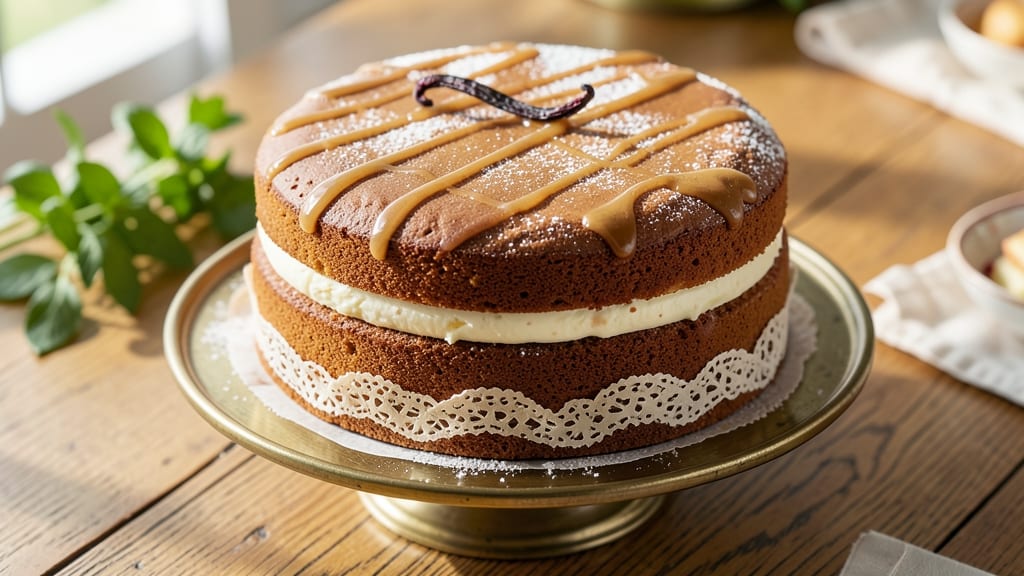
This 9-egg pound cake delivers layers of ultra-moist tenderness without a single drop of oil—just rich eggs, butter, and flour working their magic. 💛 The secret lies in the creaming method and precise egg incorporation, which creates a velvety crumb that stays fresh for days.
I perfected this recipe after years of testing, ensuring every slice is light yet dense, with a subtle sweetness that lets vanilla or citrus shine.
The traditional approach—creaming butter and sugar until fluffy, then alternating with eggs and dry ingredients—guarantees a tender crumb without gummy texture. No oil means no greasiness, just pure, moist cake that crumbles perfectly when sliced.
For extra insurance, I recommend using room-temperature eggs and folding them gently into the batter to maintain airiness.
What sets this apart is its versatility. Bake it as a classic vanilla cake, infuse it with lemon zest for brightness, or add cinnamon for warmth. The result is a cake that’s ideal for birthdays, showers, or even a simple afternoon treat.
Serve it with whipped cream, fresh berries, or a dusting of powdered sugar for a restaurant-quality finish.
Ready in just 50 minutes (including baking time), this recipe is perfect for bakers who want foolproof results without fuss. The key? Patience in mixing and a perfectly preheated oven. Let’s make a cake that’ll impress every time.
Ingredients for 9 egg pound cake
Nine eggs, two cups butter, and patience create this ultra-moist pound cake masterpiece.
| Ingredient | Amount | Notes |
|---|---|---|
| Large Eggs 🥚 | 9 whole | Room temperature, separated yolks and whites |
| Unsalted Butter 🧈 | 1 ½ cups | Cold, cut into 1-inch cubes |
| Granulated Sugar 🍚 | 2 ½ cups | Superfine preferred for smooth texture |
| All-Purpose Flour 🌾 | 3 ½ cups | Sifted, spooned and leveled |
| Vanilla Extract 🌿 | 2 tbsp | Pure, high-quality vanilla |
| Baking Powder 🍞 | 2 tbsp | Diamond Crystal preferred |
| Salt 🧂 | ½ tsp | Fine sea salt |
| Lemon Zest 🍋 | 1 tbsp | Fresh, finely grated |
| Milk 🥛 | ½ cup | Room temperature, any variety |
| Vegetable Oil 🫒 | 2 tbsp | For greasing pans |
| Powdered Sugar 🍚 | ½ cup | For dusting (optional) |
The eggs are non-negotiable here—room temperature is critical for proper emulsification. Kirkland Signature or Perdue large eggs work best, but any high-quality brand will do. For the butter, Plugrá or Land O'Lakes unsalted are my go-tos, but any brand with good marbling works. The sugar? Domino Superfine dissolves beautifully, but regular granulated works if you pulse it in a food processor. Sift that flour—King Arthur or Gold Medal are my standards—it makes all the difference in texture. The vanilla extract should be pure, like McCormick Pure Vanilla, not imitation.
No vanilla extract? Vanilla bean paste works in a pinch (use half the amount), or almond extract at one-third the quantity. The lemon zest can be swapped for orange zest if you prefer, but fresh is always better. Running low on milk? Heavy cream or even water will work, though texture may vary slightly. The baking powder is crucial—Diamond Crystal measures differently than others (use 1.5 tsp instead of 1 tbsp), so check the box. For a richer cake, substitute half the milk with sour cream. And if you're feeling fancy, add 1 tbsp lemon juice to the batter for extra brightness.
This batter keeps in the fridge for 2 days before baking, but it's best fresh. Once baked, the cake stays moist for 5 days wrapped tightly in plastic, or 3 months frozen. I slice it thin—1/4-inch thick—for perfect layers. For serving, dust with powdered sugar or brush with simple syrup. The leftovers? Toasted with butter make an incredible breakfast. And if you're making this for a crowd, double the recipe—it bakes beautifully in two 9-inch pans.
Why You'll Love This Recipe
- Here’s what sold me: this cake costs me pennies per serving but tastes like a bakery treat. Butter and eggs stretch far, and the flour? Basic pantry stuff. I’ve made two cakes for the price of one store-bought, and they’re way better. Leftovers? Always welcome.
- No Mixer Needed: I swear by this recipe when my stand mixer’s on the fritz—just nine eggs, butter, and sugar whipped by hand until light and airy. That’s it. No fancy gadgets, no stress. The eggs do all the heavy lifting here, and honestly? They never let me down.
- Buttery Vanilla Bliss: The ratio of butter to sugar in this cake is chef’s kiss—rich, tender crumb, and that vanilla extract? It’s like a warm hug in every bite. No artificial flavors, just pure, simple goodness that tastes like nostalgia.
- Slice It Any Way: Between us, I’ve served this cake for birthdays, brunch, and even as a midnight snack (no judgment). It’s dense enough to hold up to frosting but light enough to eat plain. Plus, those nine eggs mean it’s sturdy—no crumbling when you cut it.
Step-by-step instructions for ultra-moist 9 egg pound cake
This method delivers tender, ultra-moist layers with a perfect crumb every time.
👨🍳 Step 1: Separate Eggs and Cream Butter and Sugar
Begin by separating the 9 whole large eggs into yolks and whites. Place the yolks in a large mixing bowl and the whites in a clean, grease-free bowl. I use a wire whisk to separate them carefully to avoid any yolk contamination in the whites.
In the same large bowl with the yolks, add the 1.5 cups unsalted butter (cut into 1-inch cubes) and 2.5 cups granulated sugar. Using an electric mixer on medium-high speed, beat the mixture for 3-4 minutes until it becomes pale, thick, and fluffy. This step is crucial—it incorporates air that will create that signature pound cake texture. The butter should be fully emulsified with the sugar, with no visible butter chunks remaining.
👨🍳 Step 2: Add Dry Ingredients and Alternate with Milk
In a separate bowl, whisk together the 3.5 cups all-purpose flour, 2 tbsp baking powder, 0.5 tsp salt, and 1 tbsp lemon zest. Sift the flour mixture directly into the butter-sugar mixture to avoid lumps. Mix on low speed just until combined—you should still see streaks of flour.
With the mixer running on low speed, add the 0.5 cup milk in a slow, steady stream. This gradual addition prevents the batter from becoming too dense. Scrape down the sides of the bowl as needed to ensure all ingredients are fully incorporated. The batter should be thick but pourable, similar to heavy cream.
🍳 Step 3: Fold in Egg Whites and Prepare Pans
In the clean, grease-free bowl, beat the 9 egg whites with an electric mixer until stiff peaks form. This means the whites hold their shape when the beaters are lifted. I like to add a pinch of salt to the whites to stabilize them—this helps them hold their volume better.
Gently fold one-third of the beaten egg whites into the batter using a spatula, being careful not to deflate the whites. Then, fold in the remaining egg whites in two additions, mixing just until fully combined. The batter will be thick and glossy with a few streaks of white.
While the batter rests, prepare your pans. Brush the inside of two 9-inch round cake pans with the 2 tbsp vegetable oil and line the bottoms with parchment paper circles. Dust the pans lightly with flour, tapping out any excess. This ensures easy release and prevents sticking.
🥘 Step 4: Bake in Two Layers for Even Cooking
Divide the batter evenly between the two prepared pans. Tap each pan gently on the counter to remove any air bubbles. Bake in a preheated 350°F oven for 30-35 minutes, or until a toothpick inserted into the center comes out clean. Rotate the pans halfway through baking for even browning.
I know it seems like a long time, but patience is key here. The cake needs time to set properly in the center to avoid a gummy texture. When done, the tops should be golden brown and the edges slightly pulled away from the pan. Let the cakes cool in the pans for 10 minutes before transferring to a wire rack to cool completely.
🍽️ Step 5: Assemble and Dust with Powdered Sugar
Once completely cool, level the tops of the cakes if needed, then place one layer on a serving plate. Spread a thin layer of vanilla extract-infused whipped cream or jam between the layers if desired. Place the second layer on top and dust the entire cake generously with the 0.5 cup powdered sugar using a fine-mesh sieve.
The final cake should have moist, tender layers with a delicate crumb. The lemon zest adds a bright citrus note that balances the richness of the butter and eggs. Serve at room temperature for the best texture and flavor.
Pro Tips For Making 9 Egg Pound Cake
- Whisk Eggs to Ribbons: Don’t just beat the eggs—stretch that batter until it’s thick, pale, and leaves slow ribbons when you lift the whisk. I used to rush this, and my cakes turned out dense. This step guarantees lightness, especially with nine eggs—take your time, or you’ll regret it.
- Melt Butter Slowly: Warm the butter in the microwave in 20-second bursts, stirring between each, until it’s just liquid—not hot. Dumping cold butter straight into warm eggs causes lumps, and hot butter can scramble them. Room-temperature butter blends smoothly, so plan ahead if yours is straight from the fridge.
- Sift Flour Twice: Measure the flour first, then sift it directly into the bowl—then sift it again after adding the eggs and sugar. The first sift removes lumps, but the second ensures even distribution, especially with nine eggs’ extra liquid. Skimp here, and you’ll get a cake with pockets of dry flour.
- Bake Until Springy: Your cake’s done when the center bounces back slowly when pressed—not instantly. I learned this after cutting into cakes that were still gummy inside. If the recipe says 45 minutes, check at 35—ovens vary, and a pound cake this rich needs patience to avoid a sad, dense core.
Wine and beer pairings for this dish
Sweet White Wine
For this rich, buttery pound cake, I always reach for a Sauvignon Blanc from New Zealand or a Chardonnay with subtle oak notes. The crisp acidity of Sauvignon Blanc cuts through the cake's richness beautifully, while a Meursault or Puligny-Montrachet adds a creamy texture that complements the moist crumb.
Avoid overly oaky whites—they can overpower the delicate vanilla and citrus notes. 🍷
Dessert Reds
A Pinot Noir from Oregon or California is my go-to red pairing—its bright fruit flavors and light tannins won’t clash with the cake’s sweetness. For something bolder, try a Gamay like Beaujolais, which offers juicy red berry notes that harmonize with the lemon zest.
Steer clear of heavy Cabernets or Syrahs—their intensity can dominate the dessert.
Creamy Port
If you’re serving this cake with a Tawny Port (like a 10- or 20-year-old), the caramelized notes will elevate the cake’s buttery richness. A Ruby Port is also a great choice for its fruity sweetness, which pairs perfectly with the vanilla and powdered sugar finish.
Serve the Port slightly chilled for the best balance of warmth and refreshment.
Craft Beer Pairings
For beer lovers, a Belgian Witbier (like Hoegaarden) with its citrusy, spiced profile mirrors the cake’s lemon zest. Alternatively, a Honey Brown Ale (like Allagash White) adds a malty sweetness that complements the cake’s buttery layers.
Avoid hoppy IPAs—they’ll overpower the delicate flavors. A cold beer is ideal for cutting through the richness.
Non-Alcoholic Options
Sparkling apple cider (like Martinelli’s) with a splash of lemon juice mimics the wine’s acidity perfectly. For something richer, try a vanilla-infused iced tea or a sparkling lemonade with fresh mint. These options keep the citrus brightness while adding a refreshing contrast to the cake’s density. ✨
Nutrition facts
Frequently asked questions
Why does this recipe use 9 eggs instead of the traditional 6?
Nine eggs create an ultra-rich, ultra-moist texture that's denser and more tender than traditional pound cake recipes. The extra eggs enhance the cake's velvety crumb while maintaining that classic pound cake structure. This version delivers a slice that's almost custard-like in richness without being greasy.
Can I substitute butter with oil for a lighter cake?
Not recommended! The butter is essential for that signature pound cake flavor and texture. Using oil would make the cake denser and less flavorful. If you're avoiding butter for dietary reasons, try using brown butter instead—it adds a nutty depth while keeping the cake moist.
How do I prevent the cake from sinking in the middle?
Bake at 350°F for the full 30-35 minutes—don't cut the time short! Also, make sure your oven is fully preheated and use an oven thermometer to confirm accuracy. Tap the pans gently on the counter before baking to remove air bubbles, and avoid opening the oven door during baking.
What's the best way to store leftovers?
Wrap the cake tightly in plastic wrap or aluminum foil and store at room temperature for up to 5 days. For longer storage, freeze individual slices between parchment paper for up to 3 months. Thaw overnight in the fridge before serving. The cake actually improves with age!
Can I make this cake in a single 9-inch pan?
Yes, but it'll take longer to bake. Use the same batter quantity and bake at 325°F for 50-60 minutes, checking for doneness with a toothpick. The cake may be slightly denser in the center. For best results, stick with two 9-inch pans for even baking.