
Breakfast & Brunch
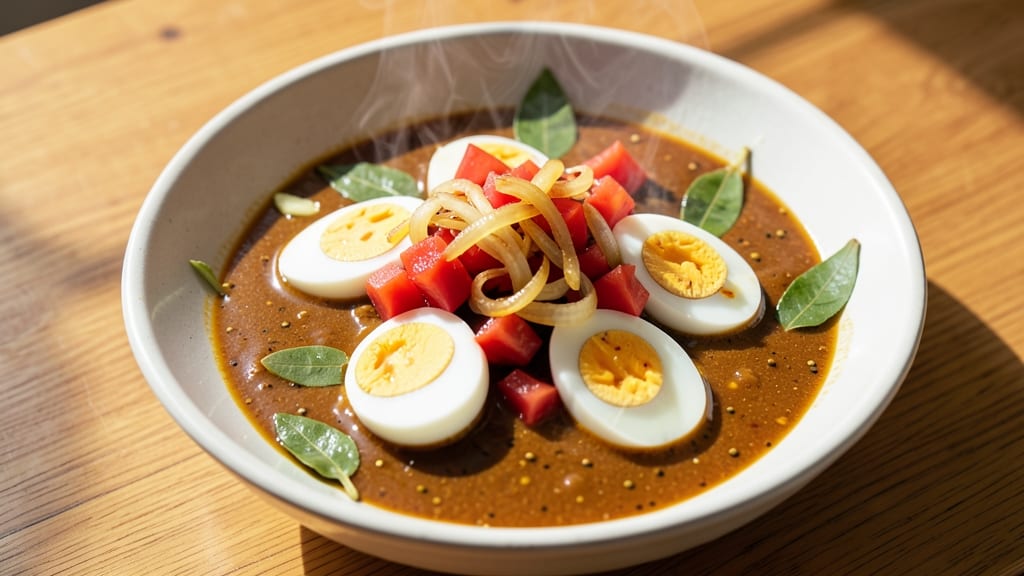
Aachi egg curry masala delivers the bold, aromatic flavors of South India's most beloved breakfast in just 30 minutes. This vegetarian dish transforms simple eggs into a fragrant, spiced curry with a perfect balance of tangy tamarind and fiery chili.
The secret lies in the tempering—whole spices toasted until they release their essential oils, creating layers of flavor that elevate every bite.
The recipe begins with a vibrant red masala base, where mustard seeds, curry leaves, and dried red chilies sizzle in hot oil until fragrant. Eggs are gently poached in this spiced oil, absorbing the flavors before being simmered in a tangy tomato-onion gravy.
The result is a dish that's both comforting and restaurant-quality, with eggs that stay tender yet absorb the rich, complex spices.
What sets this apart is the harmony of flavors—sweet, tangy, spicy, and umami all working together. The tamarind adds a bright acidity that cuts through the richness, while coconut milk at the end creates a velvety finish.
It's the kind of dish that transforms a simple breakfast into a memorable meal, perfect for weekdays or special occasions.
Serve with steamed rice or appam for the full South Indian experience. The recipe scales easily, so you can make a batch for the week ahead. Let's create this flavor-packed breakfast masterpiece.
Ingredients for aachi egg curry masala
Simple ingredients transform into South India's most aromatic breakfast in just 30 minutes.
| Ingredient | Amount | Notes |
|---|---|---|
| Large Eggs 🥚 | 6 whole | Room temperature for even cooking |
| Yellow Onions 🧅 | 1 medium | Finely chopped, about 1 cup |
| Medium Tomatoes 🍅 | 2 whole | Chopped, about 1 cup |
| Fresh Ginger 🌿 | 1 inch | Peeled, grated, about 1 tbsp |
| Mustard Seeds 🌶️ | 1 tsp | Whole, for tempering |
| Curry Leaves 🌿 | 10 whole | Fresh, about 1 tbsp |
| Dried Red Chilies 🌶️ | 4 whole | Kashmiri or cayenne |
| Vegetable Oil 🫒 | ½ cup | For tempering and cooking |
| Tamarind Paste 🍯 | 1 tbsp | Adjust for tanginess |
| Garam Masala Powder 🌶️ | 1 tsp | For finishing |
| Coconut Milk 🥥 | ¼ cup | Full-fat for creaminess |
| Salt 🧂 | 1 tsp | Adjust to taste |
| Turmeric Powder 🌿 | ¼ tsp | For color and flavor |
| Cumin Seeds 🌶️ | ½ tsp | Toasted for aroma |
| Asafoetida 🌿 | ⅛ tsp | Optional, for depth |
The spices are the soul of this dish. Mustard seeds and curry leaves are non-negotiable—grab them from the Indian grocery aisle for the best quality. Kashmiri dried chilies add vibrant color and mild heat, while tamarind paste from a jar (like Herbals brand) gives that signature tang. Fresh ginger and garlic are worth the extra trip to the market—they make all the difference. For the coconut milk, full-fat canned versions work best, but make sure it's unsweetened. The garam masala should be freshly ground if possible, but store-bought blends like MDH are fine in a pinch.
No tamarind paste? Lemon juice with a pinch of sugar works in a bind, though the flavor won't be identical. Running low on curry leaves? Fresh bay leaves can substitute at half the amount, but the aroma won't be the same. The asafoetida (hing) is optional but adds that unmistakable umami depth—if you can't find it, skip it entirely. For the tomatoes, San Marzano canned tomatoes are ideal, but fresh works just as well if you're in season. The mustard seeds should be light brown or yellow—avoid black mustard seeds, which are for pickling. Toast them until they pop for maximum flavor.
This curry tastes even better the next day as the flavors meld. Store in an airtight container in the fridge for up to 4 days. For longer storage, freeze portions for up to 3 months. The eggs stay tender when reheated gently—just warm on the stove with a splash of water. Double the batch and freeze half for lazy weekdays. The spices keep their potency for 6 months if stored in a cool, dark place, so buy them in small quantities to avoid waste.
Why You'll Love This Recipe
- No Fuss, Big Payoff: I swear by this recipe because it’s the kind of dish where you chop onions and ginger, toss in whole spices, and walk away—the mustard seeds sizzle, the tomatoes soften, and the eggs cook just enough to stay tender. Honestly, my weeknights thank me for it.
- Umami Bomb: That first crack of mustard seeds in hot oil, the slow simmer of onions until they’re caramelized gold, and the way ginger and tomatoes meld into a sauce that clings to eggs like a hug? It’s the kind of flavor that makes you pause mid-bite. The tomatoes here aren’t just chopped—they’re cooked down until they’re sweet and jammy, balancing the spice perfectly.
- Leftover Hero: This curry tastes better the next day—yes, really. The eggs soak up the masala, the sauce thickens just enough to cling to rice or roti, and it reheats like a dream. I make a double batch on Sundays because it’s my go-to for lazy lunches or when unexpected guests show up. (Yes, even on a Tuesday night.)
- Pocketbook-Friendly Powerhouse: Eggs are cheap, onions and tomatoes are always on sale, and a little ginger goes a long way. The spices? A handful of mustard seeds and basic pantry staples turn this into a meal that feeds four for under $10. It’s the kind of dish that proves you don’t need fancy ingredients to make something feel special.
Step-by-step instructions for aachi egg curry masala
Achi egg curry comes together quickly with bold South Indian flavors. Here's how to make it perfectly every time.
🍳 Step 1: Prepare the Eggs and Base Spices
Crack the 6 whole large eggs into a bowl and whisk them lightly until just combined. You don't need to overbeat them—just enough to blend the yolks and whites. Set aside. In a heavy-bottomed pan, heat 0.5 cup vegetable oil over medium heat until shimmering but not smoking.
Add the 0.5 tsp cumin seeds and let them sizzle for 30 seconds until they release their aroma and turn golden. This is your signal to add the 1 tsp mustard seeds—they'll pop audibly when they're ready. Immediately follow with the 4 whole dried red chilies and 10 whole curry leaves, stirring constantly for 1 minute until the spices darken slightly. Here's where the magic begins—this tempering layer carries the dish's signature flavor.
🍳 Step 2: Build the Curry Base
Add the 1 medium finely chopped yellow onions and cook for 3-4 minutes until they soften and turn translucent. Stir in the 2 whole chopped medium tomatoes, 1 inch grated fresh ginger, and 0.25 tsp turmeric powder. Cook for 5-6 minutes until the tomatoes break down into a thick, glossy sauce. This is your flavor foundation—don't rush it.
Now add the 1 tbsp tamarind paste and 1 tsp salt, stirring well to dissolve. The tamarind should brighten the flavors and give that signature tang. Let the mixture simmer for 3 minutes until it thickens slightly. Taste and adjust seasoning—you want a balance of spice, tang, and saltiness at this stage.
🥘 Step 3: Cook the Eggs and Finish the Curry
Pour the whisked eggs into the pan and stir gently but continuously for 2-3 minutes until they begin to set. The eggs should form soft, creamy curds rather than a scrambled texture. Here's the thing—if the eggs start to stick, add 2-3 tablespoons of water to loosen them. The goal is tender, silky eggs that absorb the rich flavors.
Once the eggs are mostly cooked, reduce heat to low and stir in the 0.25 cup coconut milk and 0.125 tsp asafoetida. The asafoetida adds a subtle depth that's characteristic of South Indian cooking. Simmer for 2 minutes until the curry reaches your desired consistency—it should coat the back of a spoon but remain smooth. Finish with 1 tsp garam masala powder, stirring just until incorporated.
⏰ Step 4: Rest and Serve
Remove from heat and let the curry rest for 5 minutes. This allows the flavors to meld completely and the eggs to finish cooking gently. Serve hot with steamed rice or roti, garnished with fresh curry leaves if desired. The curry should be vibrant red-orange in color, with tender eggs suspended in a rich, tangy sauce that's neither too thick nor too thin.
For best results, eat immediately while the eggs are warm and the spices are aromatic. The curry will keep well in the refrigerator for up to 3 days, but the texture of the eggs is best when freshly made. This dish proves that quick doesn't mean sacrificing flavor—every spoonful delivers the essence of South Indian breakfast culture in one perfect bite.
Pro Tips For Making Aachi Egg Curry Masala
- CRACK EGGS IN HOT WATER: First, drop whole eggs into boiling water for 3-4 minutes—just until whites set but yolks stay runny. Then peel under cold water; this keeps them intact for the curry and saves you from the messy business of cracked eggs in the gravy. (Trust me, your future self will curse you if you skip this.)
- PEEL ONIONS LAST MINUTE: Slice onions only when you’re ready to temper the mustard seeds—yellow onions darken fast, even in the fridge. If you prep them early, keep them submerged in ice water, but even then, they’ll lose that bright snap. Freshness matters more here than you’d think.
- LOWER HEAT AFTER TOMATOES: Once tomatoes turn to a thick, glossy pulp, reduce heat to medium-low. I used to blast it high to speed things up, but that burns the ginger and turns the curry bitter. Let it simmer gently—this is where the flavors marry, not where you rush.
- USE WHOLE SPICES, THEN STRAIN: Toast cumin, coriander, and black pepper in a dry pan until fragrant, then grind with ginger and green chilies. Add this paste to the onions, but strain the curry before adding eggs—whole spices left in too long make the gravy gritty. (Yes, even if you’re impatient like me.)
Regional styles of this recipe
Kerala-Style Aachi
In Kerala, this dish is called Aachi Egg Curry and is a staple in homes and restaurants. The key difference is the use of grated coconut (about ¼ cup) in the tempering, which adds a subtle sweetness and creaminess.
I like to toast ½ cup freshly grated coconut in the oil alongside the mustard seeds for that authentic flavor. The dish is often served with appam—soft, lacy rice pancakes—rather than plain rice. 🥥
Tamil Nadu Twist
In Tamil Nadu, they call it Kai Puli Masiyal and take the spice level up a notch. Add ½ tsp black pepper to the tempering for a sharper kick, and finish with 1 tsp chili powder instead of garam masala.
The Tamil version also uses sour buttermilk (about ¼ cup) instead of tamarind for a tangier profile. Serve with idli or dosa for a complete breakfast.
Andhra Pradesh Adaptation
The Andhra version is richer and heartier, using coconut milk (about ½ cup) right from the start in the gravy. They also add ½ cup chopped green chilies to the tempering for extra heat.
The dish is called Kai Pulao in some regions, where the eggs are partially cooked in the gravy before being simmered. Garnish with fresh coriander and serve with fluffy jeera rice.
Karnataka Variation
In Karnataka, this curry is called Kai Masala and features a spicier tempering with 1 tsp fennel seeds alongside the mustard seeds. The gravy is thicker, almost like a stew, and includes ½ cup chopped onions sautéed until golden.
The dish is often made with half-boiled eggs for extra tenderness. Serve with bisi bele bath (millet rice) for a comforting meal. 🌶️
Goan Fusion
Goa’s version blends Portuguese and Indian flavors, using vinegar (about 1 tbsp) instead of tamarind for tanginess. The curry includes ½ cup chopped potatoes for heartiness and is finished with ½ tsp cinnamon in the tempering.
Serve with Goan pao bread or batata vada for a fusion twist. The dish is called Ovos Curry in local parlance.
Modern Adaptations
For a contemporary touch, try adding ½ cup chopped bell peppers for sweetness or ½ cup spinach at the end for freshness. Some chefs use coconut yogurt (about ¼ cup) instead of milk for a tangy finish.
Garnish with toasted coconut flakes or crispy fried shallots for texture. These tweaks keep the dish traditional while making it more versatile for modern palates. ✨
Nutrition facts
Frequently asked questions
Can I make this recipe without tamarind paste?
Yes! Use 1 tbsp lemon juice plus ½ tsp sugar as a substitute, though the flavor won't be identical. For a closer match, try ½ cup yogurt (thinned with water) instead—it adds tanginess and helps tenderize the eggs. The curry will still taste delicious, just with a slightly different profile.
Why are my eggs turning rubbery instead of staying tender?
Overcooking is the most common cause. Stir the eggs constantly for only 2-3 minutes on medium heat, then reduce to low. If they start sticking, add 2 tbsp water to loosen them. The key is gentle heat—they should be softly set but still creamy. For extra tenderness, use room-temperature eggs and avoid high heat.
How can I adjust the spice level for kids?
Reduce the dried red chilies to 2-3 and omit the asafoetida. For extra mildness, add ½ cup coconut milk at the end to balance any residual heat. Kids often love the creamy texture—this version is just as flavorful but much gentler on sensitive palates. The tamarind's tanginess remains a kid-friendly favorite.
What's the difference between this and regular egg curry?
Aachi egg curry uses a tempering technique (toasting whole spices in oil) that creates deeper flavor layers. The tamarind adds signature tang, while coconut milk gives it a velvety finish. Regular egg curry often skips these elements, relying more on ground spices and yogurt. This version is richer, more aromatic, and has a distinct South Indian character.
Can I prepare this ahead of time?
Make it 1 day ahead—the flavors actually improve as they meld. Store in an airtight container in the fridge. Reheat gently on low heat with a splash of water to prevent drying. For longer storage, freeze portions for up to 3 months. The eggs stay tender when reheated properly, though texture is best when freshly made.