
Breakfast & Brunch
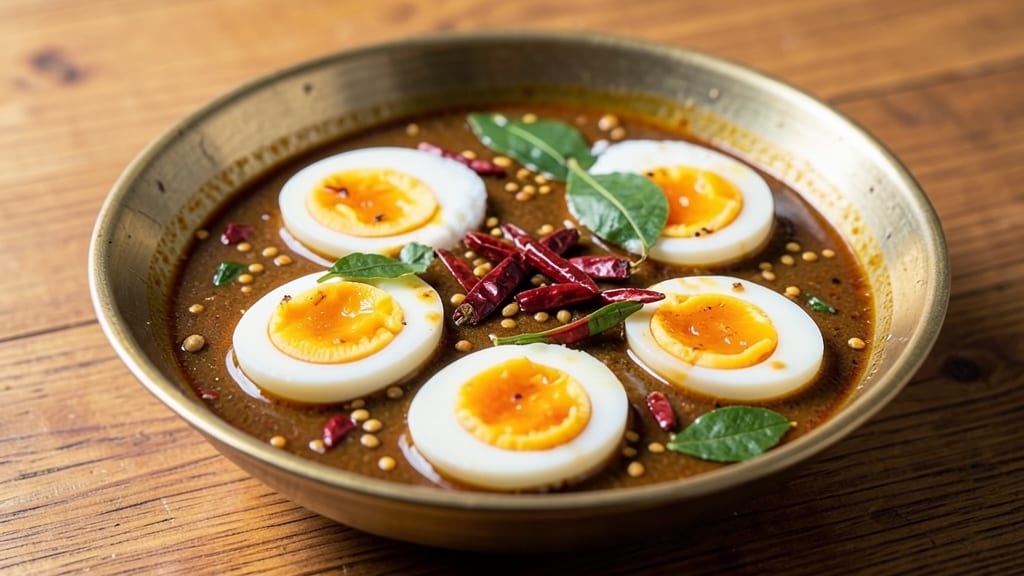
This South Indian egg masala recipe transforms simple eggs into a fragrant, tangy-spicy curry that's a staple in Tamil Nadu homes. The magic lies in the coconut-tamarind gravy, where toasted spices and coconut milk create a velvety base that balances the tamarind's tang.
I first tasted this dish at my grandmother's kitchen—where it was always served with steamed rice and crispy papadums—and it became my go-to recipe for quick, flavorful breakfasts.
The secret to authentic flavor starts with tempering mustard seeds, curry leaves, and dried red chilies in hot oil until they pop—this step forms the aromatic foundation.
The eggs, whether scrambled or hard-boiled, soak up the spiced coconut-tamarind gravy beautifully, giving each bite a perfect balance of heat, tang, and creaminess. Unlike many egg curries, this version relies on traditional South Indian techniques that make it both restaurant-quality and foolproof for home cooks.
What makes this dish special is its versatility—it works as a breakfast staple, a light lunch, or even a comforting dinner. The tamarind adds a bright acidity that cuts through the richness of the coconut, while the spices (cumin, coriander, and black pepper) deliver warmth without overpowering.
The result is a curry that's deeply satisfying yet light enough for any meal.
Serve it with steamed basmati rice and a side of coconut chutney for the full South Indian experience, or pair it with roti for a heartier meal. The recipe scales easily, making it perfect for feeding a crowd or prepping leftovers. Let's get cooking!
Ingredients for south indian egg masala
Six eggs, coconut milk, and tamarind create this fragrant South Indian curry staple.
| Ingredient | Amount | Notes |
|---|---|---|
| Large Eggs 🥚 | 6 whole | Hard-boiled or scrambled preferred |
| Coconut Milk 🥥 | 1 cup | Full-fat for creaminess |
| Tamarind Paste 🍯 | 2 tbsp | Adjust for tang preference |
| Mustard Seeds 🌱 | 1 tsp | Lightly toasted for aroma |
| Curry Leaves 🌿 | ¼ cup | Fresh, slightly crushed |
| Dried Red Chilies 🌶️ | 2 whole | Adjust for heat preference |
| Cumin Seeds 🌿 | ½ tsp | Toasted for depth |
| Ground Coriander 🌿 | ½ tsp | Freshly ground preferred |
| Black Peppercorns 🌶️ | ¼ tsp | Crushed lightly |
| Ginger 🧄 | 1 tbsp | Freshly grated |
| Green Chilies 🌶️ | 2 whole | Slit lengthwise for heat |
| Asafoetida Powder 🌿 | ⅛ tsp | Essential for authentic flavor |
| Vegetable Oil 🫒 | ¼ cup | For tempering |
| Salt 🧂 | 1 tsp | Adjust to taste |
| Tomato Puree 🍅 | ¼ cup | Or 1 medium tomato blended |
The coconut milk is non-negotiable—full-fat canned brands like Thai Kitchen give that rich, velvety texture. Tamarind paste can be tricky to find, but Indian grocery stores or Amazon carry it easily. For the mustard seeds and curry leaves, bulk bins at Whole Foods are your best bet for freshness. Dried red chilies should be dark red, not faded—look for them in the international aisle. Fresh ginger and green chilies? Hit the produce section early; they wilt fast. The asafoetida (hing) is the secret weapon—M.P. Birla or Everest brands are reliable.
No tamarind paste? Lemon juice plus 1 tsp sugar mimics the tang, though it won't be identical. Running short on coconut milk? Half coconut milk, half water works, but the texture will be lighter. Fresh curry leaves hard to find? Dried leaves at half the amount are better than skipping them entirely. The tomato puree can be swapped for 1 tbsp tomato paste, but blend it with a splash of water first. For extra heat, add 1/4 tsp cayenne with the black pepper.
Store the tamarind paste in the fridge after opening—it keeps for 6 months. Fresh curry leaves? Wrap them in damp paper towels and store in a resealable bag for 5 days. The cooked curry reheats beautifully—just add a splash of water and simmer for 3-4 minutes. Freezes well for 3 months if you want to prep ahead. I always make a double batch—leftovers taste even better the next day as the flavors meld.
Why You'll Love This Recipe
- Here’s what sold me: this reheats like a dream. Pack it cold for work or warm it up in 2 minutes—still tastes fresh. My kids grab it for school lunches, and honestly? I’ve eaten it straight from the fridge more times than I’ll admit.
- I’ll be real: this recipe costs less than takeout but feels like a treat. Coconut milk and tamarind are shelf-stable, and eggs? Always on sale. Plus, leftovers taste just as good the next day—no sad, dry eggs here.
Step-by-step instructions for South Indian egg masala
Here's how to create this aromatic, tangy-sweet egg curry with perfect texture every time.
Prepare the Eggs for Cooking
Start by boiling the 6 whole large eggs for 9-10 minutes until fully cooked. Immediately transfer them to ice water to stop cooking and make peeling easier. Once cooled, peel the eggs and set them aside. For extra flavor, you can also use scrambled eggs—just cook them separately until just set and keep warm.
I prefer hard-boiled eggs for this recipe as they hold their shape beautifully in the rich coconut-tamarind sauce. If using scrambled eggs, be sure they're fully cooked before adding to the sauce to prevent overcooking. The eggs should be at room temperature when you add them to the curry for even cooking.
Temper the Spices and Aromatics
Heat 0.25 cup vegetable oil in a heavy-bottomed pan over medium heat. Add the 0.5 tsp cumin seeds and 1 tsp mustard seeds and let them sizzle for 30 seconds until they begin to pop. Add the 2 whole dried red chilies and 0.25 cup curry leaves and cook for another 30 seconds until the curry leaves darken slightly.
This is where the magic happens—the spices should be fragrant but not burnt. Immediately add the 0.125 tsp asafoetida powder and 1 tbsp freshly grated ginger, stirring constantly for 10 seconds to release the aroma. The asafoetida gives that unmistakable South Indian depth, while the ginger adds a bright, fresh note that balances the richness.
Build the Tangy-Sweet Base
Lower the heat to medium-low and add the 2 tbsp tamarind paste, stirring to dissolve completely. The mixture will bubble slightly as it incorporates. Add the 0.25 cup tomato puree and cook for 3-4 minutes until the raw taste disappears and the mixture thickens slightly.
Here's where you'll notice the tamarind's tang developing—it should be well integrated but still retain its bright acidity. If the mixture seems too thick, add 2-3 tablespoons water to help it blend smoothly. The tomato puree provides a subtle sweetness that balances the tamarind's sharpness, creating the signature flavor profile of this dish.
Add Coconut Milk and Seasonings
Pour in the 1 cup coconut milk and stir well to combine. Add the 0.5 tsp ground coriander, 0.25 tsp crushed black peppercorns, 2 slit green chilies, and 1 tsp salt. Simmer gently for 5 minutes until the coconut milk begins to thicken slightly and the flavors meld together.
The coconut milk should be warm but not boiling—this prevents it from curdling. The green chilies add a fresh heat that contrasts with the dried chilies' smoky depth. Taste and adjust the salt if needed; the tamarind and coconut milk can sometimes mask the need for additional seasoning. The sauce should be creamy but still have a slight sheen.
Finish with Eggs and Garnish
Gently add the peeled eggs to the sauce and simmer for 5-6 minutes on low heat, spooning the sauce over them occasionally to coat evenly. The eggs should absorb the flavors without breaking. For scrambled eggs, add them at the very end and cook for just 1-2 minutes to prevent overcooking.
Remove from heat and let the curry sit for 2 minutes to thicken slightly. Garnish with additional curry leaves if desired. Serve hot with steamed rice or appam for the full South Indian experience. The eggs should be perfectly tender with a creamy sauce that clings to them, offering a perfect balance of spice, tang, and richness in every bite.
Pro Tips For Making South Indian Egg Masala
- CRACK EGGS HOT: After boiling the eggs, plunge them into ice water for 2 minutes, then peel while still warm. I used to peel them right after boiling and wondered why the shells kept sticking—this step guarantees clean, intact eggs every time.
- TOAST TAMARIND FIRST: Dry-roast the tamarind paste in the same oil as the mustard seeds for 30 seconds before adding water. This deepens its tangy flavor and prevents a metallic aftertaste—trust me, your tongue will notice the difference.
- LOW-HEAT COCONUT MILK: Simmer the coconut milk on lowest heat after adding it, or it’ll curdle faster than you can say "idli." I learned this the hard way when my first batch turned into a lumpy disaster.
- CURRY LEAVES LAST: Add curry leaves only in the final 30 seconds of cooking—any longer, and they’ll turn bitter. Toss them in with the eggs just before turning off the heat for that fresh, herbal punch.
Storing and reheating this south indian egg masala
Refrigerator Storage
Let your egg masala cool completely before transferring it to an airtight container—I use glass Pyrex with snap-on lids. Store it in the refrigerator for up to 4 days, but I've found the flavors actually deepen after 24 hours as the tamarind and spices meld together.
The coconut milk may separate slightly, but a quick stir before reheating fixes that. 🥥
Freezer Storage
For longer storage, freeze portions in quart-sized freezer bags with 1-inch headspace to prevent expansion cracks. The curry freezes beautifully for up to 3 months, though I recommend using it within 2 months for best texture.
Thaw overnight in the fridge before reheating—never microwave directly from frozen to avoid breaking the eggs. 🧊
Reheating Methods
My preferred method is stovetop reheating—simmer on low heat for 5-7 minutes, stirring occasionally and adding 2 tablespoons water if the sauce thickens too much. For microwave reheating, cover with a damp paper towel and heat in 1-minute intervals on 50% power until reaching 165°F.
The eggs should remain tender, not rubbery. ✨
Texture Preservation
The key to perfect reheating is gentle heat. Never boil the curry—this turns the coconut milk grainy and makes the eggs rubbery. If the sauce separates, whisk in 1 teaspoon coconut milk to restore creaminess.
For extra richness, add a pat of butter during reheating to compensate for any lost fat. 💛
Make-Ahead Tips
Double the recipe and freeze half—this dish tastes even better the next day! When reheating leftovers, add 1 extra tablespoon water per serving to prevent sticking. I always make 2 servings on Sunday so I have ready-to-eat meals for busy weeknights.
The tamarind's tang becomes more pronounced as it sits, making every bite more flavorful. 📅
Serving Leftovers
Leftovers work perfectly as a lunchbox meal—pack in a thermos with warm rice for a satisfying midday repast. For extra freshness, garnish with chopped cilantro before serving.
The curry pairs beautifully with appam or dosa if you want to switch up your sides. Just avoid reheating more than once to maintain quality. 🌿
Nutrition facts
Frequently asked questions about South Indian egg masala
Can I make this recipe without tamarind paste?
Yes! For a similar tang, mix 2 tbsp lemon juice with 1 tsp sugar and 1/4 tsp salt. The acidity won't be identical, but it'll give that bright flavor. For a closer match, try amchur (dry mango powder) instead—use 1 tbsp dissolved in 2 tbsp warm water.
What's the best way to make the eggs extra flavorful?
For maximum flavor, use hard-boiled eggs and make small slits in each one before adding to the sauce. This lets the spiced coconut-tamarind gravy penetrate deeply. If using scrambled eggs, cook them separately with 1/2 tsp turmeric and 1/4 tsp black pepper before adding to the curry.
Can I make this dish without coconut milk?
You can substitute with half coconut milk and half water, but the texture will be lighter. For a creamier alternative, use cashew cream (soak 1/4 cup cashews in hot water for 15 minutes, then blend) or Greek yogurt (thinned with water). The dish will still taste delicious but lose its signature richness.
Why does my curry taste too sour?
Too much tamarind or lemon juice creates sourness. Balance it by adding 1/2 tsp sugar or 1 tbsp tomato puree to sweeten the acidity. If it's still too sharp, stir in 1/4 cup coconut milk to dilute the tang. Taste as you go—South Indian egg masala should have a bright tang, not overpowering sourness.
How spicy should this dish be?
The recipe uses mild heat from green chilies and dried red chilies. For extra spice, add 1/4 tsp cayenne pepper with the black peppercorns. If you prefer less heat, reduce the green chilies to 1 whole or remove the seeds. Remember, the coconut milk helps balance the spice, so adjust gradually.