
Breakfast & Brunch
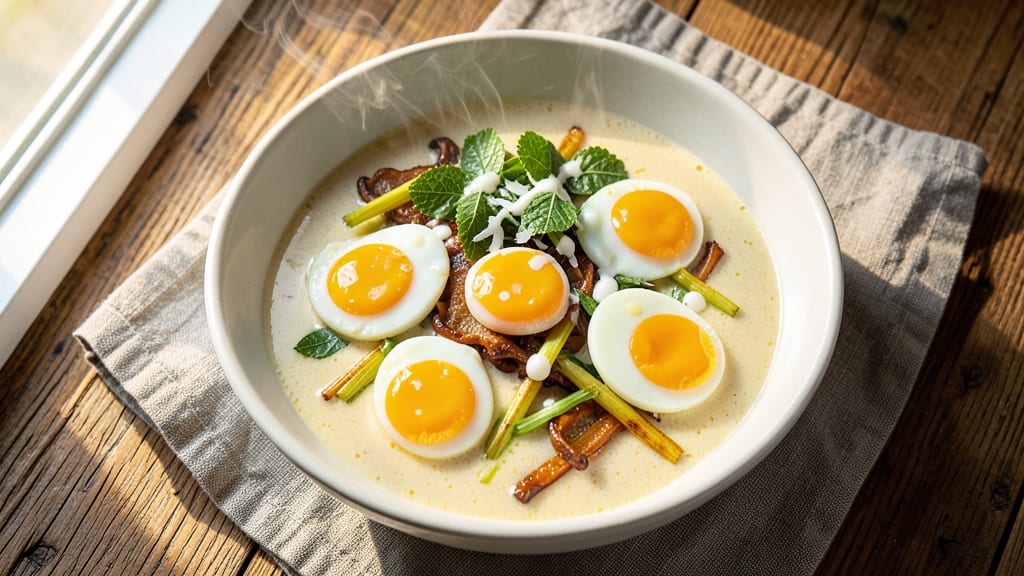
This Thai egg curry recipe delivers restaurant-quality flavors with fragrant lemongrass, creamy coconut milk, and perfectly soft poached eggs. The aromatic curry base builds slowly with traditional Thai spices—galangal, kaffir lime leaves, and chili—creating depth that transforms simple vegetables into something extraordinary.
What makes this vegetarian version special is how it captures the soul of Thai cuisine without relying on fish sauce.
The secret lies in balancing sweet, sour, and spicy notes through careful spice toasting and coconut milk reduction. Fresh herbs like Thai basil and cilantro brighten the dish at the end, while lime wedges add a tangy finish that cuts through the richness.
The eggs cook gently in the simmering curry, emerging tender and silky with just a hint of set.
By the time you serve this dish, your kitchen will smell like a bustling Bangkok street market, and every spoonful will deliver layers of flavor—creamy coconut, aromatic herbs, and the delicate texture of poached eggs.
It's the kind of meal that feels both comforting and exciting, perfect for brunch or a light dinner when you crave something bold and satisfying.
Pair with jasmine rice or crusty bread to soak up every last drop of that fragrant curry sauce. The recipe scales easily for a crowd, and leftovers reheat beautifully while maintaining those vibrant Thai flavors. Here's how to make it perfectly every time.
Ingredients for thai egg curry
Fragrant lemongrass, creamy coconut milk, and silky eggs—this curry builds flavor layer by layer.
| Ingredient | Amount | Notes |
|---|---|---|
| Large Eggs 🥚 | 4 whole | Room temperature for perfect poach |
| Coconut Milk 🥥 | 1 can | Full-fat for creaminess, unsweetened |
| Vegetable Oil 🫒 | 2 tbsp | Neutral flavor for toasting spices |
| Lemongrass 🌿 | 1 whole | Fresh stalk, bruised and cut into 2-inch pieces |
| Galangal 🍃 | 1 piece | Fresh root, peeled and sliced thin (or 1 tbsp dried) |
| Kaffir Lime Leaves 🍋 | 4 whole | Fresh, torn into strips (or 1 tbsp dried) |
| Red Curry Paste 🌶️ | 2 tbsp | Thai brand for authentic flavor |
| Garlic Cloves 🧄 | 4 cloves | Minced for aromatic depth |
| Fresh Chili Peppers 🔥 | 1 piece | Thai bird's eye or jalapeño, sliced (seeds removed for less heat) |
| Red Bell Pepper 🍅 | 1 whole | Medium, sliced into strips |
| Zucchini 🥒 | 1 whole | Medium, sliced into half-moons |
| Coconut Sugar 🍯 | 1 tbsp | Or brown sugar for depth |
| Fish Sauce Substitute 🥢 | 1 tbsp | Vegetarian soy sauce or coconut aminos |
| Fresh Thai Basil 🌿 | ¼ cup | Or regular basil if unavailable |
| Fresh Cilantro 🌿 | ¼ cup | Chopped for bright finish |
| Lime 🍋 | 1 whole | Juiced for tangy finish |
| Jasmine Rice 🍚 | 1 ½ cups | Uncooked, for serving |
| Salt 🧂 | 1 tsp | Adjust to taste |
The Thai ingredients make or break this dish. Fresh lemongrass and galangal are non-negotiable—skip the dried versions. Most Asian markets carry them, or order online if your local store doesn't stock them. For galangal, look for firm, pale roots with a citrusy aroma. Kaffir lime leaves add that signature Thai tang, and you can usually find them frozen in the international aisle at Whole Foods or Trader Joe's. If you can't find fresh Thai basil, regular basil works, but it won't have that same anise-like kick. The red curry paste? Maesri or Thai Kitchen brands are my go-tos—they've got the right balance of heat and sweetness without needing extra adjustments.
No galangal? Extra ginger at half the amount gets you close, though it won't be identical. Running low on coconut milk? Light coconut milk plus a splash of heavy cream keeps it creamy. The fish sauce substitute is key—vegetarian soy sauce or coconut aminos work best, but if you're using soy sauce, reduce the salt at the end. Chili too spicy? Remove seeds and membranes before slicing. For the veggies, anything firm and fresh works—bell peppers, zucchini, or even snap peas. If you're prepping ahead, store the curry paste and coconut milk separately until ready to cook—they'll keep for months in the pantry.
This curry tastes even better the next day as flavors meld. Store leftovers in airtight containers for up to 4 days, or freeze for 3 months. I always make a double batch because it reheats beautifully—just warm gently on the stove with a splash of water. The rice? Cook it fresh for serving, but you can prep it ahead too. For extra convenience, keep the eggs at room temperature while the curry simmers—this ensures that perfect silky texture when they poach. Garnish with fresh herbs right before serving, as they wilt quickly in the heat.
Why You'll Love This Recipe
- One-Pot Magic: I swear by this recipe when I’m too tired to wash dishes. Just crack eggs into the same pan where you’re sautéing lemongrass and galangal—no extra bowls, no fuss. The coconut milk thickens into a luscious sauce while you stir, and suddenly, dinner’s ready.
- Creamy-Spicy Balance: That first bite—silky eggs floating in a curry so rich it makes you pause—is what keeps me coming back. The galangal adds a peppery kick without overpowering, and the coconut milk smooths it into something ridiculously satisfying. Honestly, it’s the kind of flavor that sticks with you.
- Meal Prep Hero: Between us, this is my go-to for lazy Sundays or busy weeknights. The leftovers reheat like a dream—just add a splash of water to loosen the sauce, and it’s just as good the next day. Pack it for lunch or freeze portions for when you’re too wiped to cook.
- Budget-Friendly Luxury: Eggs and coconut milk stretch this dish into a full meal without breaking the bank. Lemongrass and galangal (or ginger in a pinch) add depth for pennies, and you’ll use the whole can of coconut milk—no waste. It’s fancy enough for guests, but simple enough for a Tuesday.
Step-by-step instructions for lemongrass-kissed Thai egg curry
Here's how to build this fragrant, creamy curry with perfectly poached eggs—simple steps for big flavor.
Toast the Aromatics for Deep Flavor
Heat the 2 tablespoons vegetable oil in a large skillet over medium heat. Add the 1 whole lemongrass (bruised and cut into 2-inch pieces), 1 piece galangal (peeled and sliced thin), and 4 whole kaffir lime leaves (torn into strips). Cook for 3-4 minutes until the galangal turns golden and the lemongrass releases its citrusy aroma.
Next, add the 4 cloves garlic cloves (minced) and 1 piece fresh chili peppers (sliced, seeds removed). Stir for 30 seconds until the garlic turns fragrant but doesn't brown—burnt garlic ruins the delicate balance. You're building the flavor foundation here, so don't rush this step. The galangal and lemongrass should smell bright and citrusy, like a mix of ginger and lime.
Build the Curry Base
Add the 2 tablespoons red curry paste and stir for 1 minute to toast the spices further. This step deepens the curry's complexity—you'll see the paste darken slightly as it releases its oils. Pour in ½ can coconut milk (reserve the other half for later) and stir to combine. Let this simmer for 3-4 minutes until the mixture thickens slightly and the raw curry taste mellows.
Now add the 1 whole red bell pepper (sliced into strips) and 1 whole zucchini (sliced into half-moons). Stir gently to coat the vegetables in the curry sauce. The veggies should soften slightly but still hold their shape—this ensures they stay tender without turning mushy. If the sauce looks too thick, add 1-2 tablespoons water to loosen it.
Finish the Curry Sauce
Pour in the remaining ½ can coconut milk and stir to combine. Add the 1 tablespoon coconut sugar, 1 tablespoon fish sauce substitute, and 1 teaspoon salt. Taste and adjust the seasoning—you want a balance of sweet, salty, and slightly spicy. The sauce should coat the back of a spoon with a velvety texture.
Simmer for 5-6 minutes until the vegetables are tender but still vibrant. Stir in the 0.25 cup fresh Thai basil and 0.25 cup fresh cilantro, reserving a few leaves for garnish. The herbs should wilt slightly but still retain their bright color. Remove from heat and stir in the juice of 1 whole lime—this adds a tangy brightness that cuts through the richness of the coconut milk.
Poach the Eggs to Perfection
While the curry simmers, bring a small pot of water to a gentle simmer (not a rolling boil) and add 1 tablespoon white vinegar. Crack the 4 whole large eggs (room temperature) into small bowls. Using a slotted spoon, carefully lower each egg into the simmering water. Poach for 3-4 minutes for runny yolks or 4-5 minutes for firmer yolks. The whites should be set but still slightly translucent.
Use the slotted spoon to gently transfer the poached eggs to the curry. The heat of the curry will finish cooking them slightly—you want the yolks still soft and creamy. Sprinkle the reserved Thai basil and cilantro on top and serve immediately over 1.5 cups cooked jasmine rice. The eggs should float in the creamy curry, their runny yolks blending into the sauce with each bite.
Pro Tips For Making Thai Egg Curry
- CRACK EGGS INTO HOT OIL: Dump the eggs directly into the sizzling oil—no pre-whisking, no gentle sliding. The shock of heat cooks them faster and keeps the yolks intact, which is what you want in a Thai curry where the eggs should stay soft and custardy. I used to poach them first, but that just made them rubbery and sad.
- SLICE GALANGAL THIN: Galangal’s tough fibers need to break down, so slice it paper-thin (about 1/16-inch) and pound it lightly with the flat side of your knife before adding to the oil. Skipping this step means you’ll taste raw, chewy bits instead of that bright, citrusy kick. Yes, it’s tedious, but it’s the thing that matters most.
- LOW AND SLOW WITH COCONUT: Once the coconut milk hits the pot, drop the heat to a bare simmer—no boiling, no rushing. High heat curdles the milk into a greasy mess, and you’ll end up with a dish that looks like it’s been through a war. Let it bubble gently for 8-10 minutes, stirring occasionally, and the curry will thicken naturally.
- USE FRESH LEMONGRASS STALKS: Buy a whole stalk, trim the woody ends, and bruise the bottom with the side of your knife before slicing into 2-inch chunks. The released oils infuse faster than pre-sliced bundles, and you’ll get that signature aroma without fishing for soggy bits at the end. Frozen lemongrass? Skip it—it’s a flavor ghost.
Storing and reheating this thai egg curry
Refrigerator Storage
Let your Thai egg curry cool completely before transferring to an airtight container—I use glass Pyrex with snap-on lids. Store in the fridge at 40°F or below for up to 4 days.
The flavors actually deepen overnight as the spices meld, and the coconut milk develops a richer texture. Just be sure to keep the poached eggs separate if storing for more than 2 days to maintain their perfect texture. 🥥
Freezer Prep Tips
For longer storage, freeze the curry sauce (without eggs) in quart-sized freezer bags—leave 1 inch of headspace for expansion. Label with the date and freeze for up to 3 months.
When ready to reheat, thaw overnight in the fridge. The eggs should be cooked fresh, but you can poach them separately and add to the reheated curry just before serving. 🧊
Stovetop Reheating
This is my go-to method for bringing back that restaurant-quality creaminess. Pour the curry into a heavy-bottomed pot and warm over medium-low heat for 5-7 minutes, stirring occasionally. Add 2 tablespoons water or coconut milk if the sauce thickens too much.
The key is gentle heat—never boil or the sauce will separate. Taste and adjust seasoning with a pinch of salt or a squeeze of lime to brighten flavors. ✨
Microwave Shortcut
For quick meals, transfer a portion to a microwave-safe bowl and cover loosely with a damp paper towel. Heat on 50% power for 2-3 minutes, stirring halfway. The microwave can make coconut milk curry watery, so add a splash of coconut milk if needed.
Poach fresh eggs separately and nestle them into the reheated curry just before eating. 🍳
Egg Handling
If reheating leftovers with eggs, remove them first and warm gently in a small saucepan with 1 tablespoon water over low heat for 1-2 minutes. The eggs should stay warm without overcooking. Add them back to the curry just before serving to keep those silky yolks perfectly runny.
For extra flair, garnish with fresh Thai basil and a drizzle of lime juice to revive the dish. 🥚
Rice Refresh
Reheat jasmine rice separately in a steamer basket over simmering water for 3-5 minutes or microwave with 1 tablespoon water for 1 minute. Fluff with a fork and serve alongside the curry.
For a shortcut, use pre-cooked microwaveable rice—just add 1 tablespoon coconut milk while reheating to prevent dryness. 🍚
Nutrition facts
Frequently asked questions
Can I make this Thai egg curry with scrambled eggs instead of poached?
Scrambled eggs work beautifully and are easier for beginners. Cook the eggs separately in a nonstick pan with 1 tablespoon butter over low heat until just set, then fold them into the curry at the very end. For extra flavor, stir in a splash of the curry sauce while scrambling. The texture will be slightly different but still delicious.
What can I substitute if I can't find galangal?
Use extra ginger (½ the amount) or a mix of ginger and lime zest for a close approximation. For deeper flavor, add a pinch of turmeric or cardamom to mimic galangal's earthy notes. The dish won't be identical, but it'll still taste aromatic and balanced.
How spicy should this curry be?
The recipe balances heat with sweetness and coconut creaminess. For mild heat, remove all seeds and membranes from the chili before slicing. For extra spice, add ½ teaspoon chili flakes or an extra Thai chili pepper (seeds in). Taste as you go—adjust with more coconut sugar if needed to balance.
Can I make this curry ahead of time?
Yes! Prepare the curry sauce (without eggs) up to 3 days ahead and store in an airtight container in the fridge. Reheat gently on the stove with a splash of coconut milk. Poach eggs fresh when ready to serve—they'll stay perfect. The flavors actually improve overnight as spices meld.
What other vegetables work well in this curry?
Stick to firm, flavorful veggies that hold up to simmering. Great options include bell peppers, snap peas, carrots, or bamboo shoots. For extra protein, add tofu cubes (pan-fried first) or mushrooms. Avoid leafy greens—they'll turn mushy. Adjust cooking time by 2-3 minutes if using denser vegetables.