
Beverages
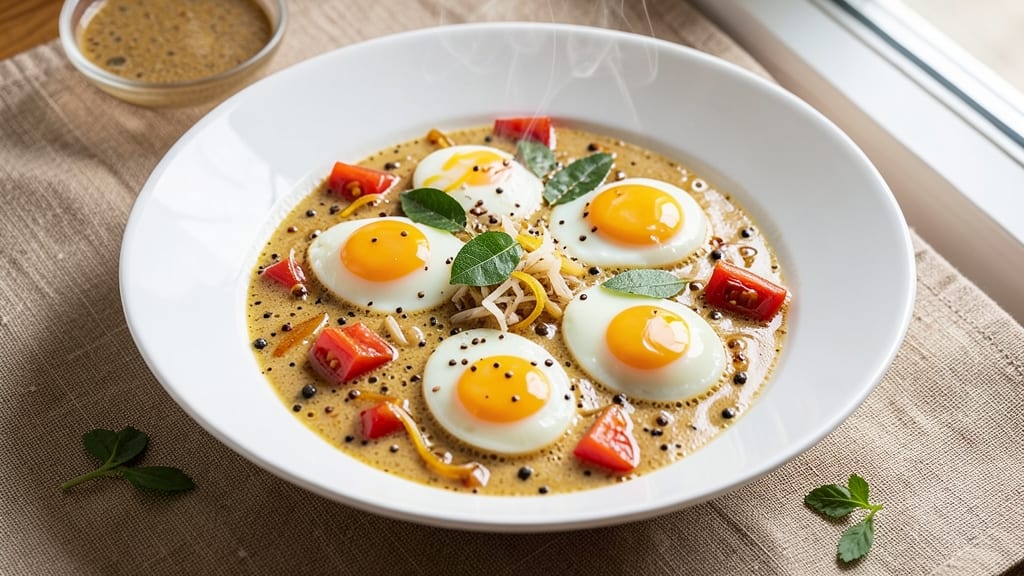
This steamed egg curry recipe transforms simple eggs into a fragrant, silky dish that’s rich in coconut and spices—perfect for vegetarian meals. The secret lies in gentle steaming, which preserves the eggs' tender texture while infusing them with aromatic broth.
No frying required, just layers of flavor that come together effortlessly.
The base starts with a fragrant blend of cumin, mustard seeds, and curry leaves, toasted until fragrant. Coconut milk and tomatoes create a velvety, slightly tangy broth that steams the eggs to perfection—keeping them moist and infused with every spice.
This method ensures no dryness, just creamy, flavorful bites every time.
Serve over steamed basmati rice or with warm flatbread to soak up every drop of that luscious coconut curry. The dish balances protein, healthy fats, and vibrant spices, making it both satisfying and nutritious. Ready in under 45 minutes, it’s ideal for weeknight dinners or meal prep.
For extra depth, add a squeeze of lemon or a sprinkle of fresh cilantro before serving. The steaming technique makes this dish foolproof—no overcooking, just restaurant-quality results at home. Let’s get cooking!
Ingredients for steamed egg curry
Simple eggs meet aromatic spices and velvety coconut for this fragrant vegetarian dish.
| Ingredient | Amount | Notes |
|---|---|---|
| Large Eggs 🥚 | 8 whole | Room temperature preferred |
| Light Coconut Milk 🥥 | 1 ½ cups | Full-fat for creamier texture |
| Medium Tomatoes 🍅 | 2 whole | Ripe, preferably Roma |
| Yellow Onion 🧅 | 1 whole | Medium, finely chopped |
| Fresh Curry Leaves 🌿 | ¼ cup | Dried substitute at 1/4 amount |
| Fresh Ginger Root 🧅 | 1 inch | Peeled, finely grated |
| Ground Cumin Seeds 🌶️ | 1 tsp | Toasted for deeper flavor |
| Mustard Seeds 🌿 | ½ tsp | Whole, for tempering |
| Garlic Cloves 🧄 | 4 cloves | Peeled, minced |
| Salt 🧂 | 1 tsp | Adjust to taste |
| Black Peppercorns 🌶️ | ¼ tsp | Freshly cracked preferred |
| Lemon Juice 🍋 | 1 tbsp | Freshly squeezed |
| Fresh Cilantro 🌿 | ¼ cup | Chopped, for garnish |
| Vegetable Oil 🫒 | 1 tbsp | For tempering |
| Basmati Rice 🍚 | 1 ½ cups | Uncooked, for serving |
The curry leaves are non-negotiable—they carry that signature South Indian aroma. Indian grocery stores or specialty markets have the freshest, but if you can't find them, dried curry leaves work at one-quarter the amount. For ginger, organic ginger root from the produce section is ideal—just peel and grate. The mustard seeds and cumin should be toasted in oil until they sizzle; this releases their full flavor. Whole Foods or Trader Joe's carry high-quality whole spices in bulk, which is worth the investment for frequent cooking.
No fresh curry leaves? Dried curry powder at half the amount is a decent substitute, though it lacks the same depth. The coconut milk can be swapped for light coconut cream if you prefer an even richer texture. For tomatoes, canned San Marzano tomatoes (drained) work beautifully if fresh aren't available. The eggs must be room temperature for even steaming—take them out 30 minutes before cooking. If you're short on time, a quick soak in warm water works too. The cilantro is optional but adds a bright finish—skip it if you dislike strong herbs.
Store the cooked curry in an airtight container for up to 4 days in the fridge, though it reheats best when fresh. The rice can be cooked ahead and stored separately. For meal prep, portion the curry into containers with a side of rice—freezes beautifully for up to 3 months. The spices in this dish mellow over time, so leftovers often taste even better the next day as the flavors meld. If you have extra coconut milk, freeze it in ice cube trays for future use.
Why You'll Love This Recipe
- No Chopping Chaos: I swear by this one—just dice the onion and tomatoes, no fancy knife work. The curry leaves and coconut milk do all the heavy lifting while you steam those eggs whole, so soft they practically melt.
- Creamy Without Guilt: That light coconut milk turns the tomatoes into a velvety sauce that’s rich but never heavy. Honestly, the first time I tasted it, I thought, "This is the kind of curry I’d order at a restaurant—but for half the price."
- Leftover Lifesaver: Between us, this reheats like a dream. The eggs stay tender, the sauce clings perfectly, and it’s my go-to for lunch the next day. Even my picky roommate, who hates "mushy" eggs, finishes his portion.
- Weeknight Wonder: Twenty minutes, one pot, zero stress. The eggs steam while you sauté the onions and tomatoes—no babysitting required. I’ll be real: this is the dish I make when I’ve had a long day and just need something warm, flavorful, and done.
Step-by-step instructions for steamed egg curry
Here's how to create a delicate balance of silky coconut broth and perfectly steamed eggs.
Prepare the Spiced Coconut Broth
In a medium saucepan, combine the 1.5 cups light coconut milk, 2 whole medium tomatoes (chopped), 1 whole yellow onion (finely chopped), 1 inch fresh ginger root (grated), 1 tsp ground cumin seeds, 1 tsp salt, and 0.25 tsp black peppercorns. Bring to a gentle simmer over medium heat and cook for 10 minutes until the tomatoes break down and the flavors meld.
Strain the mixture through a fine-mesh sieve into a clean saucepan, pressing gently on the solids to extract maximum flavor. This step ensures your broth remains silky smooth. Return the strained broth to the stove and keep it warm over low heat—it should maintain a gentle simmer without boiling.
Temper the Eggs with Mustard Seeds
In a small bowl, whisk together the 8 whole large eggs with 1 tbsp lemon juice and 1 tbsp vegetable oil. This creates a protective coating that helps the eggs steam evenly. In a separate small saucepan, heat 1 tbsp vegetable oil over medium heat until shimmering.
Add the 0.5 tsp mustard seeds and 0.25 cup fresh curry leaves to the hot oil. Let them sizzle for 30 seconds until the mustard seeds pop and the curry leaves turn fragrant. Immediately pour this tempering mixture over the egg mixture, whisking constantly to distribute evenly. This step adds depth of flavor and prevents the eggs from curdling during steaming.
Steam the Eggs in Coconut Broth
Gently pour the tempered egg mixture into the warm coconut broth, stirring lightly to distribute the eggs evenly. The broth should completely cover the eggs. Place a steamer basket or colander filled with 1.5 cups basmati rice (uncooked) in a pot with 1 inch of water at the bottom. Bring the water to a boil over high heat until steam rises steadily.
Carefully place the saucepan with the egg mixture on top of the steamer basket. Cover with a tight-fitting lid and steam for 12-15 minutes until the eggs are just set but still slightly runny in the center. The eggs should be opaque but not fully firm—this ensures a delicate, custard-like texture. Check for doneness by gently shaking the pan; the eggs should move freely without breaking.
Finish and Garnish
Remove the saucepan from the steamer and let it sit for 2 minutes to allow the eggs to set slightly. Stir in 4 cloves garlic cloves (minced) and 0.25 cup fresh cilantro (chopped), reserving a few sprigs for garnish. Taste and adjust seasoning with additional salt if needed. The curry should be fragrant with a delicate balance of spices and coconut sweetness.
Serve the steamed egg curry immediately, garnished with reserved cilantro. The eggs should be silky and slightly custardy, perfectly suspended in the aromatic coconut broth. Pair with steamed basmati rice to complete the meal—each bite should deliver a harmonious blend of creamy eggs and spiced coconut.
Pro Tips For Making Steamed Egg Curry
- CRACK EGGS GENTLY: Tap the shell twice on the counter before sliding the egg into the boiling water—this prevents cracks that turn your curry into a scrambled mess. I learned this the hard way when my first batch of "steamed" eggs ended up as overcooked chunks.
- SAUTÉ ONIONS UNTIL GOLDEN: Don’t rush the onions—cook them over medium heat for 8-10 minutes until they’re deep golden, not browned. This builds flavor that carries through the coconut milk, making the curry richer without needing extra spices.
- SKIP THE BOILING WATER: Use a steamer basket with just enough water to create steam, not a rolling boil. Eggs cook evenly in 6-7 minutes this way, staying intact and creamy instead of rubbery or cracked from aggressive heat.
- STRAIN COCONUT MILK: If your light coconut milk has lumps, strain it through a fine-mesh sieve before adding it to the curry. Thin, smooth milk blends better with the tomatoes and eggs, giving you a velvety texture instead of a grainy one. (Yes, even if the carton says "blended.")
Flavor customization for this steamed egg curry
Spice Level Control
Adjust the heat to your preference by modifying the mustard seeds and curry leaves. For a mild version, reduce mustard seeds to ¼ tsp and skip extra-spicy curry leaves. If you love heat, add ½ tsp cayenne pepper to the broth or a pinch of red chili powder when finishing.
I often keep a small bowl of Penzeys brand chili powder on hand for quick adjustments. 🌶️
Creamy vs. Tangy
Balance the coconut's richness by adding a splash of tamarind paste (½ tsp) for a tangy twist, or a dollop of Greek yogurt (2 tbsp) for creaminess.
For extra depth, stir in 1 tsp coconut sugar while simmering to enhance the coconut flavor. I find this especially helpful when using light coconut milk, which can taste slightly flat.
Herb Variations
Swap out cilantro for fresh mint (¼ cup) for a refreshing Middle Eastern touch, or add basil leaves (¼ cup) for an Italian-inspired twist.
For a South Indian flavor, include ½ tsp fenugreek seeds toasted in the tempering oil. Always taste before serving—herbs can make or break the balance of flavors.
Protein Swaps
Make this dish even more versatile by replacing eggs with tofu (1 block, cubed) or chickpeas (1 can, drained). For a richer texture, try silken tofu—it steams beautifully and absorbs flavors like eggs.
If using chickpeas, add them to the broth during the final 5 minutes of steaming to prevent mushiness. 🥚
Sweet & Savory Fusion
Add a touch of sweetness with ½ tsp cardamom powder or a pinch of cinnamon while tempering. For a dessert-like finish, drizzle with 1 tsp honey or maple syrup before serving. This works surprisingly well with the coconut—think of it as a spiced egg custard with a tropical twist.
Texture Adjustments
For firmer eggs, steam for an extra 2-3 minutes until fully set. For a more custardy texture, reduce steaming time to 10 minutes and finish with a quick stir on the stove over low heat.
If the broth becomes too thick, whisk in 1-2 tbsp water to restore silkiness. The goal is always to keep the eggs tender and the broth luscious. ✨
Nutrition facts
Frequently asked questions
Can I use poached or scrambled eggs instead of whole eggs in this recipe?
The recipe is designed for whole eggs to create a silky, custard-like texture when steamed. Poached eggs would break apart during steaming, while scrambled eggs would overcook. For a similar effect, try soft-boiled eggs (steamed for 6 minutes) or silken tofu cubes as a protein swap. The steaming process relies on the eggs' natural binding properties in the coconut broth.
How do I prevent the coconut broth from curdling when adding eggs?
Always whisk the eggs with 1 tbsp lemon juice and 1 tbsp oil before adding them to the broth. This creates a protective coating. Keep the broth at a gentle simmer (not boiling) when combining, and stir lightly to distribute heat evenly. If the broth starts to curdle, reduce heat immediately and whisk vigorously to restore smoothness.
What's the best way to reheat leftovers without drying out the eggs?
Reheat gently in a saucepan over low heat for 3-4 minutes, stirring occasionally. Add 1-2 tbsp water if the curry thickens too much. For microwave reheating, cover with a damp paper towel and heat in 20-second intervals, stirring between each. Never microwave uncovered—the eggs will dry out quickly.
Can I make this curry ahead of time for meal prep?
Yes! Prepare the spiced coconut broth up to 2 days ahead and store in an airtight container. On serving day, reheat the broth, then temper and steam the eggs fresh. The eggs should always be cooked just before serving for the best texture. For full meal prep, cook the rice separately and store it in a sealed container alongside the curry components.
Why do my eggs turn rubbery instead of staying silky?
Oversteaming is the most common cause. The eggs should be opaque but still slightly runny in the center (12-15 minutes total). Check doneness by gently shaking the pan—the eggs should move freely without breaking. If they've overcooked, try reducing steaming time by 2 minutes next time, or finish with a quick stir on the stove over low heat for 1-2 minutes.