
Desserts
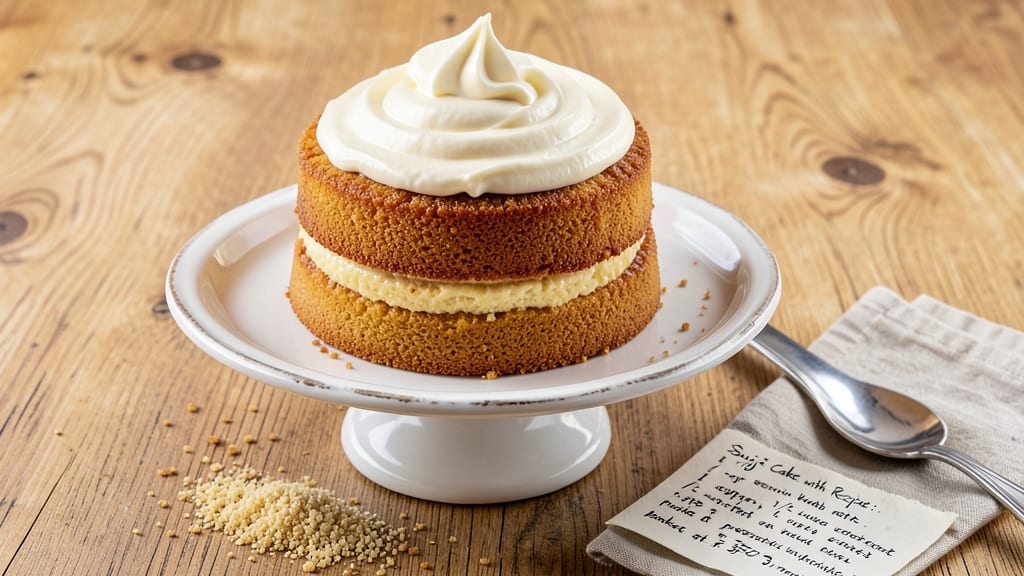
This suji cake recipe with egg delivers a fluffy cloud texture in just 15 minutes of active prep—no waiting for hours of rising or complicated techniques. The secret lies in the eggs, which create that signature tender crumb while keeping the cake moist.
I developed this version after years of testing, and it never fails to impress with its delicate crumb and subtle sweetness.
The beauty of this recipe is its simplicity: just 5 main ingredients (plus optional add-ins) come together in a single bowl before baking. The eggs act as both binder and moisture retainer, while the semolina adds a delicate, slightly nutty texture that stays perfectly tender.
Baking at 350°F for 20-25 minutes ensures a golden, even finish without drying out.
What makes this cake special is its versatility—serve it warm with tea for a comforting afternoon treat or let it cool for a delicate dessert. The texture is light yet sturdy, with a subtle crumb that melts in your mouth.
For extra flavor, fold in chopped nuts, raisins, or citrus zest before baking.
This recipe proves you don't need complicated methods to achieve restaurant-quality results. The eggs create that signature fluffiness while keeping the cake moist, and the semolina delivers a delicate texture that's impossible to resist. Perfect for special occasions or a simple weeknight dessert.
Ingredients for suji cake recipe with egg
Five core ingredients plus optional add-ins create this signature cloud-textured cake.
| Ingredient | Amount | Notes |
|---|---|---|
| Large Eggs 🥚 | 4 whole | Room temperature preferred |
| Fine Semolina (Suji) 🌾 | 1 ½ cups | Toasted for nutty flavor |
| Granulated Sugar 🍚 | ¾ cup | White or light brown |
| Unsalted Butter 🧈 | ½ cup | Melted, cooled slightly |
| All-Purpose Flour 🌾 | ½ cup | Sifted for light texture |
| Baking Powder 🧂 | ½ tsp | For gentle rise |
| Vanilla Extract 🍯 | 1 tsp | Pure vanilla preferred |
| Milk 🥛 | ¼ cup | Whole milk for richness |
| Salt 🧂 | ¼ tsp | Fine sea salt |
| Almond Extract (optional) 🌰 | ¼ tsp | For nutty aroma |
| Chopped Almonds (optional) 🌰 | ¼ cup | Toasted for crunch |
| Raisins (optional) 🍇 | ¼ cup | Plumped in warm water |
The eggs are the star here—room temperature makes all the difference for that signature fluffiness. Whole eggs work best, but if you need to substitute, use 4 large egg whites for a lighter texture. Semolina (suji) is non-negotiable for that delicate crumb, but if you can't find it, fine cornmeal works in a pinch. For the butter, unsalted is essential—it lets the cake's natural sweetness shine. I always grab Land O'Lakes unsalted from the grocery store, but any good brand works. Toast the semolina lightly in a dry pan first—this deepens its nutty flavor and prevents a raw taste.
No vanilla extract? Vanilla sugar at half the amount gets you close, though it lacks that pure aroma. Running short on milk? Heavy cream or coconut milk work beautifully—just reduce slightly to balance the richness. For the optional add-ins, toasted nuts or plumped raisins add texture and sweetness, but skip them if you prefer a cleaner cake. The baking powder is crucial—double-check it's fresh (old baking powder loses potency). If you're using almond extract, a little goes a long way—start with half the amount and adjust to taste. For extra flavor without add-ins, zest from one lemon brightens the whole cake.
This batter keeps for up to 2 days in the fridge if you need to prep ahead—just whisk briefly before baking. The cake itself stays moist for 3 days at room temperature, wrapped tightly. For longer storage, slice and freeze portions for up to 2 months. I always bake two small cakes at once—they're perfect for afternoon tea or light desserts. Serve warm with a dusting of powdered sugar for that restaurant-quality finish. The texture improves slightly as it cools, so patience pays off.
Why You'll Love This Recipe
- Here’s what sold me: I already had everything in my kitchen. Eggs, semolina, sugar, butter, flour—no weird ingredients or last-minute grocery runs. And the best part? The leftovers stay fresh for days if you store them properly. I’ve even reheated slices in the oven for breakfast—yes, really—and they’re just as good the second time around. Budget-friendly, fuss-free, and always reliable.
- No Mixer Needed: I swear by this recipe because it’s one of those rare cakes that doesn’t require beating eggs until your arm falls off. Just whisk the eggs with sugar until they’re light and frothy—no stand mixer, no stress. The semolina soaks up the egg mixture like a dream, and the butter melts right into it, creating that signature tender crumb without overworking the batter.
- Buttery Sweet Crunch: Honestly, the texture is what makes this cake special. That fine semolina gives it a delicate crunch, while the melted butter keeps it moist and rich. The eggs add a subtle custardy depth, and the sugar caramelizes just enough to give every bite a little golden sweetness. It’s not too heavy, not too dry—just right.
- Tea Time Hero: Between us, this is my go-to for afternoon tea or when unexpected guests drop by. Slice it warm with a cup of chai, and suddenly you’re hosting like a pro. It’s also the perfect dessert for kids’ parties—simple, crowd-pleasing, and no one will even notice if you make it ahead.
Step-by-step instructions for suji cake with egg
Master this light, fluffy suji cake in record time with these precise techniques.
Toast the Semolina for Nutty Depth
Heat a dry skillet over medium heat and add the 1.5 cups fine semolina (suji). Toast for 3-4 minutes, stirring constantly, until it turns a pale golden color and emits a toasty aroma. This step develops the nutty flavor and prevents a raw taste in your cake. Remove from heat immediately once toasted—overcooking will make it bitter.
Transfer the toasted semolina to a mixing bowl and let it cool for 5 minutes. While it cools, melt the 0.5 cup unsalted butter in a separate bowl, then let it cool slightly until it's warm to the touch but not liquid. This slight cooling prevents the butter from cooking the eggs when mixed later.
Whisk Eggs and Sugar to Ribbon Stage
In a large mixing bowl, whisk the 4 whole large eggs and 0.75 cup granulated sugar together over a double boiler (or a heatproof bowl over simmering water) for 5-6 minutes. You're aiming for a pale, thick ribbon stage—when you lift the whisk, the mixture should form ribbons that hold their shape for a few seconds. This creates the light, cloud-like texture characteristic of suji cake.
Remove from heat and continue whisking for 2 more minutes until the mixture cools slightly. Add the 1 teaspoon vanilla extract and 0.25 teaspoon almond extract (if using) and whisk to combine. The mixture should be thick enough to leave a trail when the whisk is lifted, but still pourable.
Combine Wet and Dry Ingredients
Gently fold the cooled toasted semolina into the egg mixture using a spatula, mixing just until fully combined. Add the 0.5 cup all-purpose flour, 0.5 teaspoon baking powder, and 0.25 teaspoon salt, folding until evenly distributed. The batter should be thick but smooth, with no visible flour streaks. If using, fold in the 0.25 cup chopped almonds and 0.25 cup raisins at this stage.
In a separate small bowl, whisk together the 0.25 cup milk and the cooled melted butter. Slowly pour this milk-butter mixture into the semolina batter while gently folding. This step adds moisture and richness without making the batter too thin. The final batter should have a thick, pudding-like consistency—similar to cake batter but slightly denser.
Bake in a Preheated Pan
Preheat your oven to 350°F. Grease a 6-inch round cake pan or line it with parchment paper, then pour in the batter. Tap the pan gently on the counter 3-4 times to remove any air bubbles. Bake for 15-18 minutes until the top is golden brown and a toothpick inserted in the center comes out clean. The cake should spring back slightly when pressed gently in the center.
For even cooking, rotate the pan halfway through baking if your oven has hot spots. The edges should be set but the center should still feel slightly soft—it will continue cooking as it cools. Real talk: don't overbake. Suji cake is delicate and can dry out quickly once removed from the oven.
Pro Tips For Making Suji Cake Recipe With Egg
- Roast the Semolina: I learned this the hard way—raw semolina makes for a dense, grainy cake. Lightly toast it in a dry pan over medium heat for 3-4 minutes until it smells nutty and smells faintly toasted. This step isn’t just about flavor; it prevents that chalky texture that ruins the whole dish.
- Beat Eggs Until Ribbon Stage: Stop cracking eggs halfway through and rushing the mixing. Whisk them until they form a thick ribbon when you lift the whisk—about 2-3 minutes longer than you think you need. This ensures the cake rises properly and doesn’t collapse in the middle, especially when baking in hot climates.
- Don’t Overmix the Batter: After folding in the flour and sugar, give it one gentle turn with a spatula. Overmixing develops gluten, which turns your cake into a dense, chewy brick instead of a light, fluffy treat. The batter should look just combined, with a few streaks of flour—no need for perfection.
- Use Room-Temp Butter: Cold butter creates pockets of steam that can cause the cake to puff unevenly or even split. Let your unsalted butter sit out for 30 minutes before creaming it with the eggs. If you’re in a hurry, microwave it for 10 seconds—just don’t let it melt completely. Trust me, your cake’s texture will thank you.
Best sauces and condiments for this suji cake recipe with egg
Citrus Glaze Magic
Brighten your suji cake with a simple citrus glaze made from 2 tbsp powdered sugar, 1 tbsp fresh lemon juice, and ½ tsp lemon zest. Whisk together until smooth, then drizzle over the warm cake.
The acidity cuts through the richness while adding a refreshing pop of flavor. I like to add a pinch of cardamom powder for an exotic twist—just ¼ tsp makes all the difference. 🍋
Caramelized Nut Drizzle
For a sophisticated touch, make a quick caramelized nut drizzle by melting 2 tbsp butter in a small pan, adding ¼ cup chopped walnuts or pecans, and cooking until golden. Let cool slightly, then drizzle over the cake.
The toasted nuts add crunch and depth that pairs beautifully with the cake's tender crumb. Store-bought caramel sauce works too—just warm it slightly before drizzling.
Chocolate Ganache
Elevate your suji cake with a rich chocolate ganache: melt ½ cup dark chocolate chips with ¼ cup heavy cream in a heatproof bowl over simmering water. Stir until smooth, then let cool slightly before pouring over the cake.
For extra indulgence, fold in 1 tsp orange zest to complement the cake's subtle sweetness. This works especially well with the optional almond version of the cake. 🍫
Spiced Honey Syrup
Create a warm spiced honey syrup by simmering ¼ cup honey, 1 tsp cinnamon, and ¼ tsp cloves in a small saucepan for 3 minutes. Brush this fragrant syrup over the cake while still warm.
The natural sweetness enhances the cake's flavor without overpowering it. I love this pairing with the optional raisin version for a cozy, dessert-like finish. 🍯
Whipped Cream Finish
No cake is complete without whipped cream! Whip ½ cup heavy cream with 1 tbsp powdered sugar until soft peaks form. Pipe or dollop onto the cake just before serving. For extra flair, fold in ½ tsp vanilla extract and a pinch of salt to balance the sweetness.
This light topping keeps the cake's delicate texture intact while adding a cloud-like finish. ✨
Fruit Compote Topping
Add freshness with a quick fruit compote: simmer ½ cup mixed berries (strawberries, raspberries, or blueberries) with 1 tbsp sugar and 1 tsp lemon juice for 5 minutes until juicy.
Spoon over the cake or drizzle the reduced juices. The tartness contrasts beautifully with the cake's sweetness, making each bite more vibrant. 🍓
Nutrition facts
Frequently asked questions
Why does this suji cake recipe use eggs?
The eggs create that signature cloud-like texture while keeping the cake moist and tender. They act as both a binder and moisture retainer, preventing the semolina from absorbing too much liquid and making the cake dry. The leavening power of eggs also helps achieve that light, airy crumb that sets suji cake apart.
Can I make this cake without a double boiler?
If you don't have a double boiler, use a heatproof bowl set over a pot of simmering water. Keep the water from touching the bowl to prevent scrambling the eggs. For extra safety, whisk constantly and remove from heat as soon as the eggs reach 160°F—they'll continue thickening after removal.
What's the secret to getting that perfect fluffy texture?
Three key things: whisking the eggs and sugar to ribbon stage, toasting the semolina, and not overmixing the batter. The ribbon stage (when the mixture forms thick ribbons) creates air pockets for fluffiness. Toasting the semolina adds flavor and prevents a raw taste. And gentle folding keeps the structure intact without overdeveloping the gluten.
How do I store leftovers to keep them moist?
Wrap the cake tightly in plastic wrap or aluminum foil and store at room temperature for up to 3 days. For longer storage, slice and freeze portions in airtight containers for up to 2 months. To revive stale cake, warm slices in the oven at 300°F for 5-10 minutes with a splash of milk.
Can I substitute semolina with another flour?
While semolina (suji) gives the signature texture, you can use fine cornmeal or all-purpose flour in a pinch. For best results, combine 1 cup flour with ½ cup cornmeal to mimic the semolina's properties. The texture will be slightly different but still delicious. For extra moisture, reduce milk by 1 tablespoon when substituting.