
Breakfast & Brunch
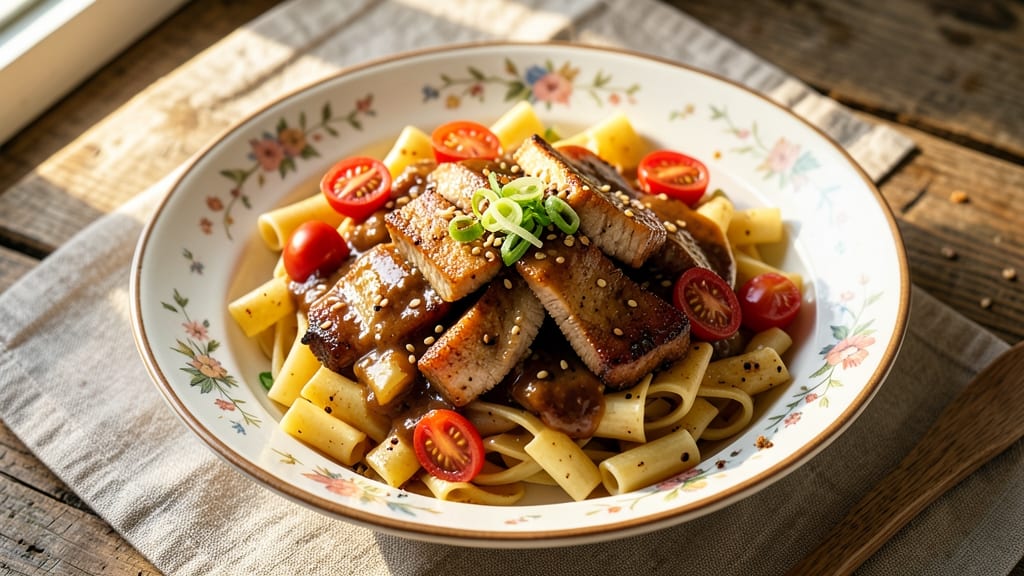
This wheat egg noodles recipe transforms simple pantry staples into silky ribbons that elevate any comfort food bowl. The secret lies in the dough—flour, eggs, and a pinch of salt create strands that cook up tender yet sturdy, perfect for stir-fries, soups, or baked dishes.
I’ve perfected this method over years of testing, balancing traditional rolling techniques with modern shortcuts for home cooks.
The dough comes together in just 10 minutes, then rests while you prep your favorite sauce or protein. Rolling it thin ensures quick cooking, while cutting with a sharp knife (or using a pasta machine) guarantees uniform strands.
What makes these noodles special is their versatility—they soak up flavors beautifully without turning mushy, making them ideal for everything from quick weeknight meals to elaborate feasts.
By the time you twist those golden strands onto your plate, you’ll have achieved restaurant-quality texture at home—smooth, chewy, and just tender enough to melt in your mouth. The egg enriches the flour, adding depth that store-bought noodles simply can’t match.
Whether you’re making a simple garlic butter stir-fry or a hearty noodle soup, these homemade ribbons will become your new staple.
Ready in under 30 minutes from start to finish, this recipe proves homemade noodles aren’t just for special occasions—they’re a foolproof way to add comfort and flavor to any meal. Let’s get started with the dough, and we’ll shape, cook, and serve these silky ribbons together.
Ingredients for wheat egg noodles
Pantry staples plus eggs—just seven ingredients for restaurant-style noodles at home.
| Ingredient | Amount | Notes |
|---|---|---|
| All-Purpose Flour 🌾 | 2 cups | High-protein preferred for chewiness |
| Large Eggs 🥚 | 3 whole | Room temperature for even mixing |
| Fine Sea Salt 🧂 | ½ tsp | Kosher or Diamond Crystal preferred |
| Olive Oil 🫒 | 1 tbsp | For dusting work surface |
| Water 💧 | ½ cup | Room temperature for smooth dough |
| Semolina Flour 🌾 | ¼ cup | For dusting cut noodles (optional) |
| Fresh Parsley 🌿 | ⅛ cup | Chopped for garnish (optional) |
The flour is where the magic starts. King Arthur or Gold Medal are my go-tos—they strike the perfect balance of protein for chew and gluten for structure. Eggs should be at room temperature (toss them in warm water for 5 minutes if they're cold straight from the fridge). The salt matters here too—Diamond Crystal dissolves more evenly than table salt. For the olive oil, Trader Joe's Italian extra-virgin is my secret weapon for dusting; it adds a subtle flavor that makes the noodles taste even more special.
No semolina? All-purpose flour works in a pinch, but semolina gives that classic texture. Short on parsley? Fresh basil or chives work just as well for garnish. The dough can feel sticky, but that's normal—don't overwork it. If it's too dry, add a splash more water (a teaspoon at a time). For the water, filtered or bottled works best if your tap water has strong flavors. And trust me, the egg enrichment is non-negotiable—store-bought noodles just can't compare once you taste these.
Dough keeps 2 days wrapped in plastic in the fridge, or 3 months frozen between parchment paper. Cooked noodles reheat beautifully in a splash of water or broth—just 1 minute in a hot pan. I always make extra dough and freeze it in portions for lazy weeknights. The parsley? Store it in a jar with a damp paper towel for up to 5 days—it stays fresher longer than you'd think.
Why You'll Love This Recipe
- Four Ingredients, Big Payoff: I swear by this recipe because it’s the culinary equivalent of a blank canvas—just flour, eggs, salt, and water. That’s it. No fancy pantry staples, no last-minute grocery runs. The eggs bind it all together so smoothly, and the olive oil keeps it tender without overpowering.
- Chef’s Kiss Texture: Here’s what sold me—the al dente bite paired with that silky, almost custardy finish. The eggs do all the work, giving it a richness store-bought noodles can’t match. Honestly, I’ll take this over pasta any day, especially when it’s fresh off the board.
- Weeknight to Dinner Party: Between us, these noodles are my go-to for both lazy Tuesdays and impressing guests. Toss them with a quick stir-fry, or serve them under a creamy mushroom sauce—no one will guess they took less than 30 minutes. (Yes, even on a Tuesday night.)
- Budget-Friendly Leftovers: A batch stretches for days, and they reheat like a dream. I make double portions, freeze half, and pull them out for lazy lunches. The eggs and flour are cheap, but the flavor feels like a splurge. Not the prettiest, but the taste makes up for it every time.
Step-by-step instructions for wheat egg noodles
Here's how to make silky, chewy wheat egg noodles that transform any dish into comfort food.
Mix the Dough to Perfect Consistency
In a large bowl, combine the 2 cups all-purpose flour and 0.5 tsp fine sea salt. Make a well in the center and add the 3 whole large eggs and 0.5 cup water. Using a fork, gently mix the ingredients until they begin to form a shaggy dough.
Once the dough starts coming together, switch to your hands and knead on a lightly floured surface for about 8-10 minutes. You're looking for a smooth, elastic dough that springs back when poked. If it feels too sticky, add just enough of the 2 cups all-purpose flour to make it pliable. This dough should be slightly softer than traditional pasta dough—it needs that extra moisture for the egg-rich flavor and silky texture.
Rest the Dough for Ideal Texture
Wrap the dough tightly in plastic wrap and let it rest at room temperature for at least 30 minutes. This resting period allows the gluten to relax and the flour to fully hydrate, which prevents the noodles from shrinking during cooking. I like to place the wrapped dough in a bowl to maintain its shape while it rests.
Here's the thing—skipping this rest can make your noodles tough. The dough should feel slightly tacky but not sticky after resting. If it's still too firm, let it rest another 10 minutes. The longer it rests within reason (up to 2 hours), the better the texture will be.
Roll and Cut the Noodles Evenly
Divide the rested dough into 4 equal portions and roll each portion through a pasta machine set to the widest setting. Gradually decrease the thickness through each setting until you reach the thinnest setting your machine offers. For extra-silky noodles, I like to roll them through the thinnest setting twice to ensure even thickness.
Cut the rolled sheets into ¼-inch wide ribbons using the pasta machine's cutter attachment. If you don't have a pasta machine, use a sharp knife to cut the rolled dough into thin strips. Immediately dust the cut noodles with 0.25 cup semolina flour to prevent sticking. This step is crucial—it gives the noodles that classic rustic texture while preventing them from clumping together.
Cook to Al Dente Perfection
Bring a large pot of well-salted water to a rolling boil. Add the noodles and cook for 2-3 minutes until they float to the surface. This brief cooking time ensures they remain silky rather than mushy. Taste one noodle—it should be tender but still have a slight bite in the center. Drain immediately and toss with a little olive oil to prevent sticking.
For the best results, use the noodles immediately in your favorite dish. They're perfect for stir-fries, soups, or even served with a simple butter and parsley sauce. If you've made more than you need, you can blanch them in boiling water for 30 seconds, then shock in ice water before storing in an airtight container in the refrigerator for up to 3 days.
Pro Tips For Making Wheat Egg Noodles
- CHILL THE DOUGH: After mixing flour, eggs, and water, wrap the dough in plastic and refrigerate for at least 30 minutes—yes, even if you’re eager to roll it out. I used to skip this and ended up with sticky, uneven noodles that stuck to the rolling pin like glue. Cold dough firms up, makes handling easier, and prevents overworking the gluten.
- WEIGH YOUR FLOUR: Ditch the scooping and use a kitchen scale for the flour—100 grams per egg, no more, no less. Packing the cup too tightly or scooping loosely throws off the ratio, and your noodles will either be gummy or dry. I learned this after making a batch that turned out like chewy playdough. Precision matters here.
- ROLL THIN, COOK FAST: Aim for noodles about 1/8-inch thick—thinner than you think. Thick noodles stay undercooked inside while the edges turn mushy. Boil in a pot of salted water (1 tablespoon salt per quart) with a splash of olive oil to prevent sticking. I used to overcook them, but now I pull them out as soon as they float and they’re perfect every time.
- SALT THE WATER HARD: Don’t be shy with the salt in the boiling water—aim for a taste like the sea. The noodles absorb flavor, and if the water tastes bland, so will your final dish. I used to use half the amount, and my noodles always lacked that satisfying savory punch. Trust me, your taste buds will notice.
Pro cooking tips for great wheat egg noodles
Dough Consistency Secrets
The magic happens when your dough feels slightly tacky but not sticky—this is the goldilocks zone for silky noodles. Start with 2 cups flour and 3 eggs, but don’t stress if it feels too dry. Add 1 tsp water at a time until it just comes together when pressed.
Overworking the dough will make it tough, so knead for 8-10 minutes until smooth and elastic. I often test consistency by poking the dough—if it springs back slowly, it’s ready. 💫
Rolling Without a Machine
No pasta machine? No problem. Roll the dough with a rolling pin on a floured surface, starting thick and gradually thinning to 1/16-inch thickness. For even ribbons, fold the dough in half like a letter, then slice with a sharp chef’s knife (I use my Wüsthof Classic).
Press the knife down firmly to avoid jagged edges. Dust with semolina flour immediately to prevent sticking—this is non-negotiable for that professional finish.
Resting: The Game Changer
Skipping the 30-minute rest is the #1 mistake I see. This step relaxes the gluten, preventing shrinking during cooking. Wrap the dough tightly in plastic and let it rest at room temperature. Pro tip: Place it in a bowl to maintain shape.
If your kitchen is cold, rest it near the oven (turned off) for even better results. The dough should feel slightly tacky but not sticky—this is your cue it’s ready to roll. ⏰
Cooking Time Mastery
These egg noodles cook in 2-3 minutes—overcooking turns them mushy. Start testing at 2 minutes by tasting one noodle. It should be tender but still hold a slight bite. Drain immediately and toss with 1 tbsp olive oil to prevent sticking.
For stir-fries, cook noodles just until al dente—finish them in the hot pan with your sauce to avoid sogginess. 🍳
Freezing for Future Meals
Make a big batch? Freeze uncooked noodles on a floured tray for 1 hour to prevent sticking, then transfer to an airtight container. They’ll keep for 3 months. To cook from frozen, drop them directly into boiling water—no need to thaw.
For pre-cooked noodles, blanch for 30 seconds, shock in ice water, then freeze in a single layer before storing. This method preserves texture perfectly for lazy weeknights. ❄️
Sauce Pairing Pro Tips
Egg noodles absorb flavors like sponges, so balance richness with acidity. For stir-fries, toss with 1 tbsp soy sauce and ½ tsp sesame oil before adding sauce. In soups, finish with a splash of rice vinegar to brighten the broth.
For baked dishes, mix with ½ cup marinara sauce and ½ cup ricotta cheese before baking. The egg in the noodles adds a luxurious mouthfeel that pairs perfectly with creamy or tangy sauces. 💛
Nutrition facts
Frequently asked questions
Can I substitute all-purpose flour for bread flour in this recipe?
For these egg noodles, stick with all-purpose flour—bread flour has too much protein and will make your noodles tough and chewy rather than silky. The recipe is designed to balance chewiness with tenderness, and bread flour would throw that off. If you're looking for extra chew, try adding 1 extra tablespoon of water to the dough instead.
How do I prevent my homemade noodles from sticking together?
Dusting with semolina flour (or all-purpose flour in a pinch) is key—do this immediately after cutting. Also, work in small batches if needed, and keep your work surface lightly floured. For extra insurance, toss the cut noodles with 1 teaspoon of olive oil before cooking. The oil creates a light barrier that prevents sticking during storage too.
Why did my egg noodles turn out too thick or uneven?
This usually happens when the dough isn't rolled evenly or the machine settings aren't used properly. Start with the widest setting and gradually decrease thickness—never skip settings. For hand-rolled noodles, aim for 1/16-inch thickness and fold the dough in thirds before slicing to create even ribbons. If your dough feels too firm, let it rest longer (up to 2 hours) to relax the gluten.
Can I make these noodles gluten-free?
Traditional wheat egg noodles rely on gluten for their signature texture, but you can adapt this recipe with 1:1 gluten-free flour blend plus 1 extra egg (for binding). Expect a slightly different texture—more delicate and less chewy. Add 1 teaspoon of xanthan gum to the flour blend if included. For best results, use a pasta machine with gluten-free settings and dust with cornstarch instead of semolina.
What's the best way to reheat cooked egg noodles?
For maximum texture, reheat in a dry skillet over medium heat for 1-2 minutes with 1 tablespoon of butter or olive oil. Add a splash of water or broth if they seem dry. Never microwave without liquid—this makes them rubbery. For baked dishes, reheat at 350°F for 10 minutes covered with foil to retain moisture.